INTRODUCTION
Mycotoxins have always been an inherent challenge in the feed industry. If there is one issue that consistently affects feed mills, integrators, dairy farmers, and poultry producers across India, Bangladesh, and Nepal, it is the unpredictability of mycotoxin contamination.
The year 2025 demonstrated once again that mycotoxins do not follow a fixed season or pattern anymore. Instead, their behaviour is being shaped by climate volatility, irregular rainfall cycles, multi‑origin sourcing of maize and by‑products, and changing storage conditions, making yesterday’s assumptions unreliable for tomorrow’s feed decisions.
The 2025 Trouw Nutrition Global Mycotoxin Review reveals a landscape that is evolving faster than ever. For feed mills, integrators, and farmers, the challenge is no longer limited to detecting toxins—it now extends to understanding shifting patterns, anticipating risks, and making informed decisions in sourcing, storage, and feed formulation.
Trouw Nutrition’s latest global review analyzed 120,000+ samples from 47 countries, showing DON and ZEN as the most detected toxins worldwide, while fumonisins continued to post the highest average concentrations (~961 ppb). Seasonal peaks shifted month‑wise versus 2024, making historical “safe months” unreliable. These trends have direct implications for South Asia’s sourcing, QC and mitigation plans in 2026.
What the Global Data Shows: Three Toxins Leading the Discussion
- DON and ZEN remain the most frequently detected worldwide
Across the global dataset, Deoxynivalenol (DON) was found in 57% of all samples, while Zearalenone (ZEN) appeared in 62%. Both toxins are increasingly showing up in regions where they were previously considered less common—especially parts of Asia.
Experts point out that ZEN’s sharp rise is especially concerning and may be linked to climate variability or changes in raw‑material management practices.
- Fumonisins are still the highest in concentration globally
While DON and ZEN dominate in frequency, fumonisins (FUM) show the highest average concentration, reaching ~961 ppb in the 2025 dataset. This makes fumonisins a major contributor to performance challenges in poultry, dairy and swine.
- Seasonal peaks are shifting
The global review confirms that toxin peaks are no longer tied to traditional seasons—concentrations varied month‑to‑month and differed from patterns seen in 2024. This reinforces a new truth: season‑based testing alone is no longer enough.
These shifts underscore the importance of knowing where raw materials come from and how they were stored, especially as global sourcing expands.
Why the Rise in ZEN Matters More Than Before
One of the strongest messages from the global review is the unexpected and sustained increase in ZEN contamination over the past two years.
Dr. Swamy Haladi, Global Category Manager, Moulds and Mycotoxin Management in Trouw Nutrition notes that this trend “is a bit of a concern,” because ZEN has direct implications for reproductive performance, especially in sows, gilts, and breeder flocks. Even moderate levels can affect fertility parameters.
This issue is not confined to colder regions anymore—many Asian samples showed elevated DON and ZEN levels, even though these toxins are typically associated with temperate conditions.
The Role of Predictive Modelling: A Major Step Forward
One of the most forward‑looking elements of the review is its emphasis on predictive modelling. Trouw Nutrition’s robust predictive model developed using global and regional contamination patterns integrates vast laboratory datasets with regional trends to forecast mycotoxin behaviour.
Its uses include:
- Identifying potential high‑risk periods
- Supporting ingredient‑sourcing decisions
- Guiding storage planning
- Tailoring mitigation strategies for farms and mills
In an era of shifting climate patterns and complex supply chains, predictive modelling offers feed mills a clearer roadmap to anticipate—not just respond to—contamination events.
Predictive modelling gives feed mills a chance to act ahead of the curve, especially when peaks no longer follow historical norms.
Understanding Species‑Specific Vulnerabilities
The review emphasizes an important point: the same level of contamination does not affect all animals equally.
- Poultry are particularly sensitive to fumonisins and aflatoxins, with even moderate levels affecting gut health and performance.
- Piglets are most vulnerable to ZEN, which can disrupt reproductive‑hormonal balance and impact early growth.
- Sows may be affected by ZEN even at levels that pose less concern in grow‑finish pigs.
- Ruminants, especially dairy calves and dairy cows, face different risks: ZEN, DON, and T2/HT2 toxins frequently appear in total mixed rations and concentrates.
This reinforces why feed mills need species‑aligned interpretation, not a single standard threshold.
Why Ingredient Origin Matters More Than Ever
The global review stresses that raw‑material origin significantly shapes risk. As global trade increases, feed mills in Asia, Africa, and the Middle East are exposed to ingredients whose toxin profiles may differ sharply from local historical norms.
For example:
- Several Asian samples showed unexpectedly high DON and ZEN, deviating from older climatic expectations.
- Maize and maize‑based ingredients remain key contributors to fumonisin load.
- By‑products and co‑products can elevate overall contamination in finished feeds.
Knowing a material’s source, handling, and storage history is now just as important as the analytical result itself.
What This Means for Feed Mills and Farmers in 2026
The Global Mycotoxin Review’s insights translate into a few clear action points for the coming year:
- Increase the frequency of raw‑material checks
Because peaks can occur unexpectedly, mills should adopt risk‑based testing, not seasonal testing.
- Evaluate risk based on ingredient origin
Expanded global trade means incoming loads may carry risks typical of completely different climates.
- Apply species‑specific mitigation strategies
Thresholds should reflect the vulnerability of broilers, breeders, piglets, sows, calves, and dairy cows—not a single number.
- Use predictive modelling to optimise procurement & storage
Forecast‑based planning can significantly reduce risk exposure and cost.
- Build flexibility into formulation
When a high‑risk ingredient shows rising contamination, mills should be ready to adjust sourcing or inclusion.
The Hidden Threat: Emerging & Masked Mycotoxins
Emerging and masked mycotoxins are becoming increasingly important in feed safety, especially as better analytical tools and climate variability reveal toxins that were previously overlooked. Enniatins, in particular, are now found frequently in small grains such as barley, oats and wheat, and are known to amplify the effects of DON and ZEN, even when those major toxins occur at low levels. Field experience suggests that unexplained diarrhoea, reduced daily gain, higher FCR, or subtle reproductive issues may sometimes be linked to these lesser‑monitored compounds. As global datasets show, animals differ widely in their sensitivity to various mycotoxins, and toxin interactions can worsen outcomes. Predictive modelling and improved surveillance now help producers stay alert to both familiar and emerging risks. As Dr. Haladi notes, understanding the specific toxin profile of raw materials and feeds is essential for making timely decisions that protect animal health and farm performance.
Conclusion
The 2025 Global Mycotoxin Review offers more than contamination data—it delivers a clear roadmap for how the industry can strengthen feed safety in 2026.
The rise in DON and ZEN, the persistent challenge of fumonisins, the impact of climate variability, and the complexity of multi‑origin sourcing all point to one reality: mycotoxin risk today requires proactive, adaptive, and data‑driven management.
With predictive modelling, better sourcing decisions, and species‑focused strategies, feed mills and farmers in India, Bangladesh, Nepal, and beyond can navigate this new landscape with confidence.
Fig 1: India: Mycotoxin prevalence comparison (Q3 vs Q4, 2025)
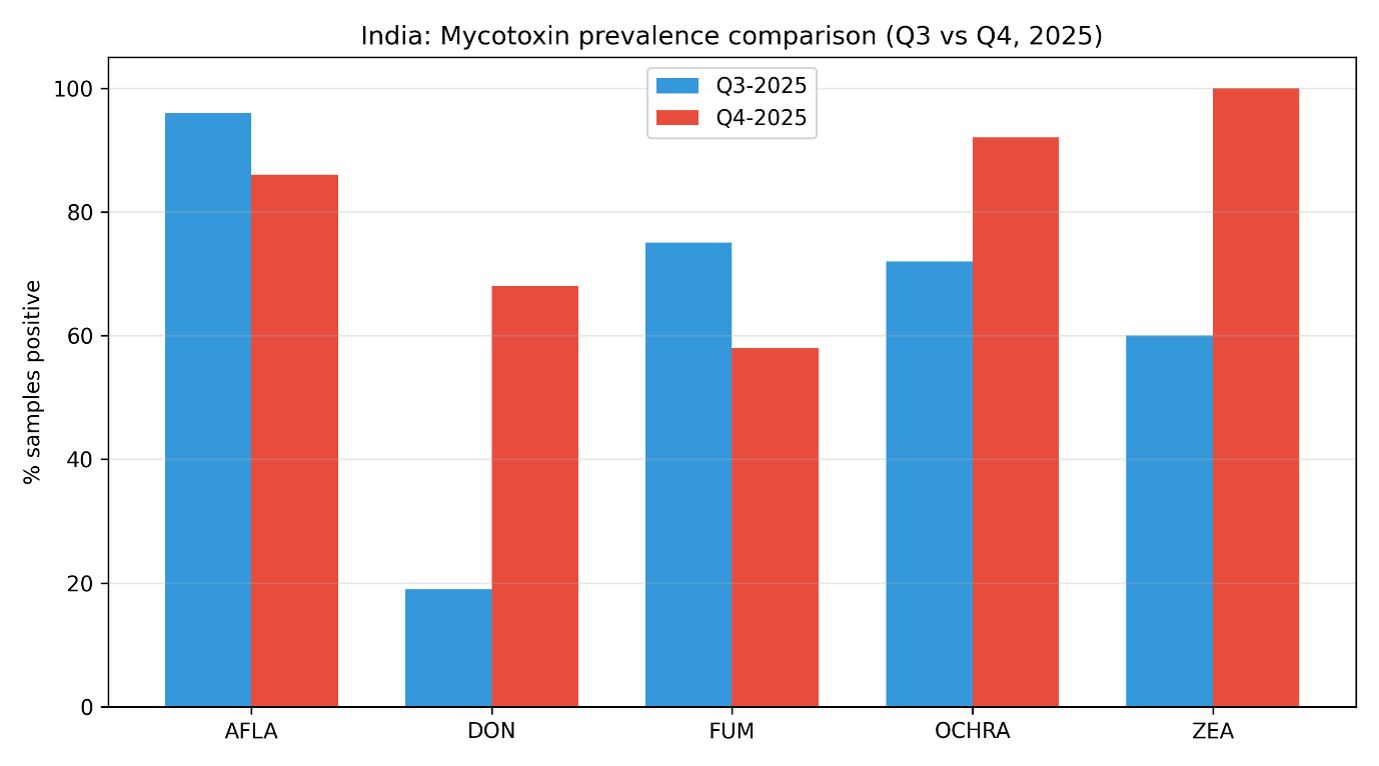
Fig 2 : India Q4‑2025: poultry feed mycotoxin averages (broiler vs layer/breeder)
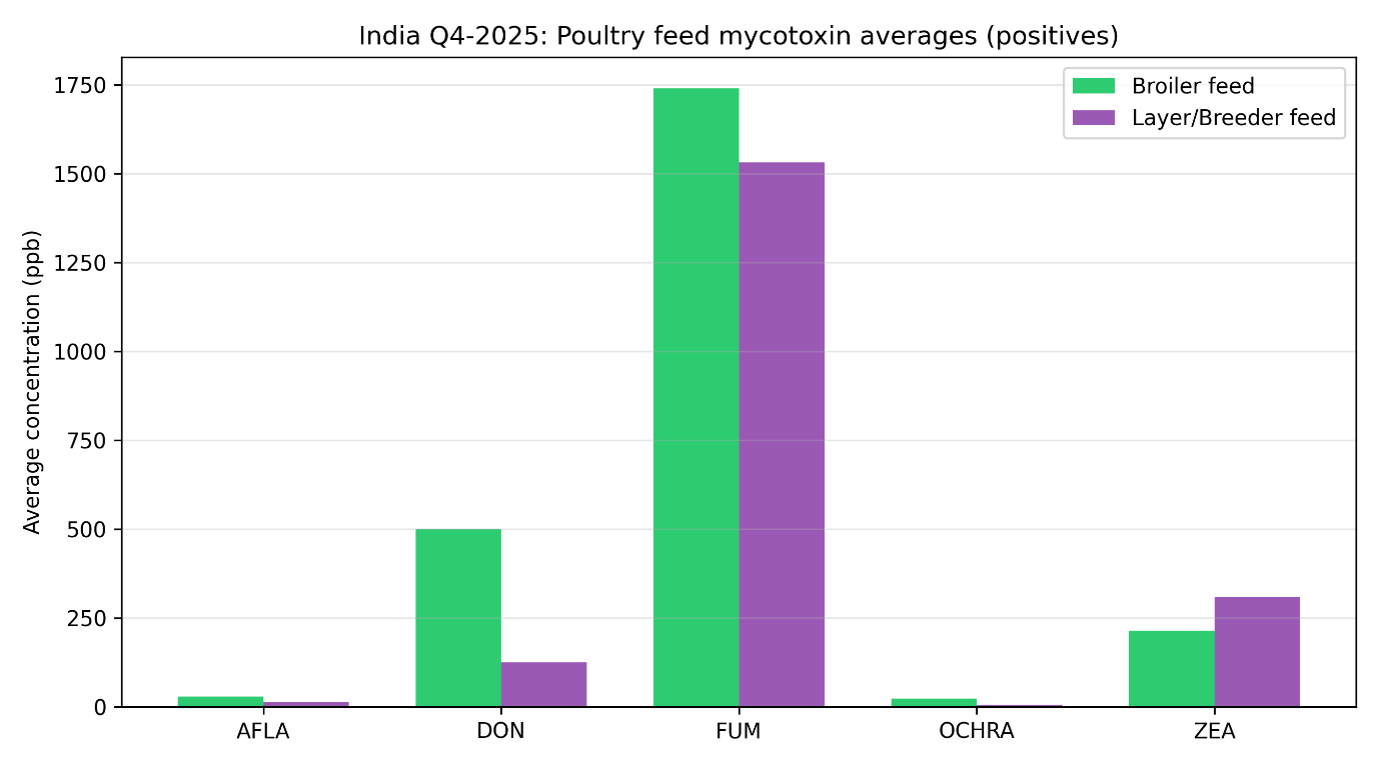
Fig3 : India Q4‑2025: average concentrations among positives (ppb)
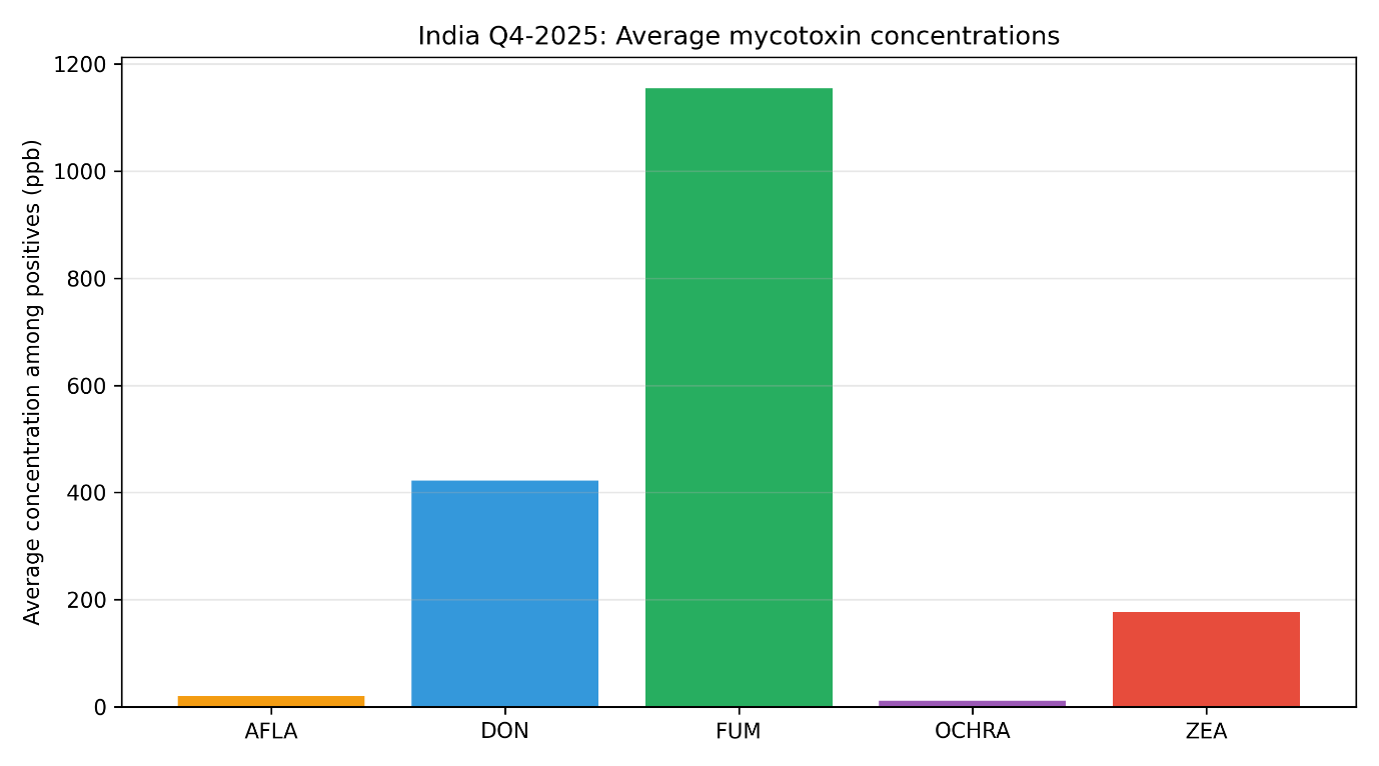
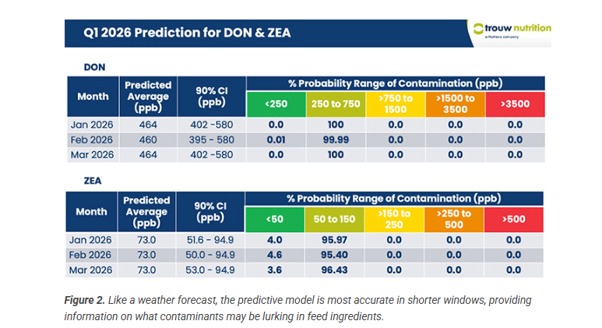
Fig 4 : Q1 2026 Prediction for DON & ZEA
By Maloshrie Bora, Program Manager – Feed Safety & Mineral Nutrition, Trouw Nutrition South Asia