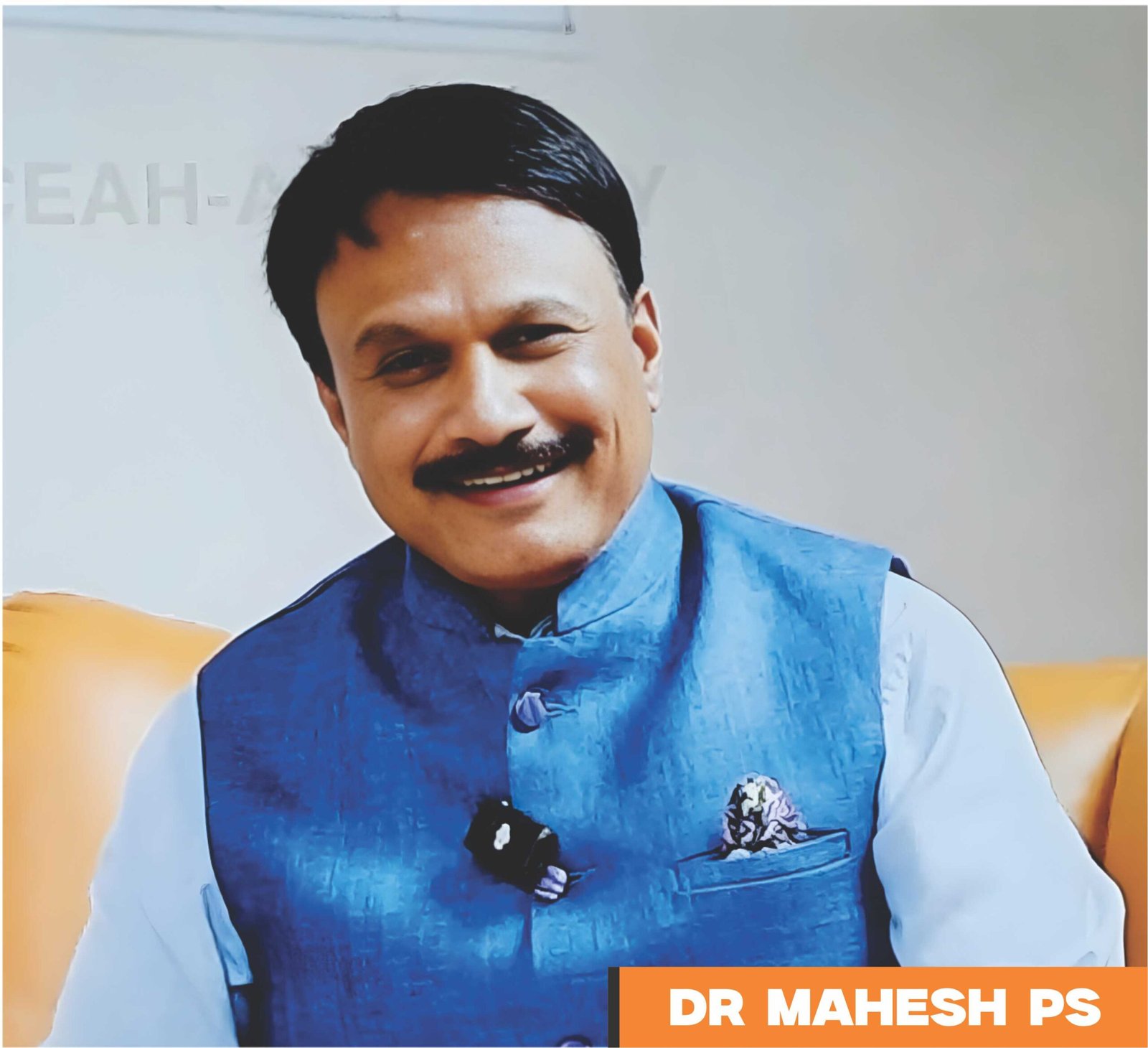
In an exclusive interaction, Dr Mahesh PS, Joint Commissioner and Director of CEAH, shares insights on the future of India’s livestock sector.
At Hesaraghatta, the Centre of Excellence in Animal Husbandry (CEAH) is transforming India’s livestock sector—blending legacy, innovation, and entrepreneurship to unlock rural prosperity and build a future-ready Agri-economy.
A Landscape Where History Meets Transformation
Located on the serene outskirts of Bengaluru, Hesaraghatta is more than just a geographic landmark—it is a space steeped in history, ecology, and scientific evolution. Once known as Vyasara Ghatta, believed to be associated with the sage Vyasamuni, the region has long held cultural and environmental significance. Today, it has been formally recognized as the Greater Hesaraghatta Grassland Reserve (GHGCR), spanning over 5,678 acres of ecologically rich terrain.
The area’s modern legacy was shaped by the visionary engineer M. Visvesvaraya, whose development of the Hesaraghatta Lake bund and auto-suction system stand as engineering marvels, with the lake supplying drinking water to Bengaluru until the 1990s. Over time, this landscape evolved into a nucleus for India’s early livestock and poultry research infrastructure.
It is here that the Centre of Excellence in Animal Husbandry (CEAH) now stands—an institution that brings together decades of scientific progress with a forward-looking vision for India’s rural economy.
A Legacy Built Over Six Decades
The roots of CEAH trace back to the 1960s, when India began investing in structured livestock development. The establishment of the Regional Poultry Farm marked a turning point, introducing scientific breeding programs at a time when such practices were virtually unknown in the country. Central Poultry Development Organisation (CPDO) was home to luminaries such as renowned genetics expert G. L. Jain, who laid the foundation for modern genetics in India.
Early imports of advanced poultry strains led to the development of India’s first commercial layer, the Hessarghatta Hybrid 260 (HH 260), setting a precedent for organized poultry breeding. Over the years, the campus expanded into a comprehensive ecosystem, encompassing poultry development and training institutes, central cattle breeding and frozen semen production facilities, regional fodder stations, and animal quarantine and certification services.
The institute offers structured training programmes for officers, industry professionals, entrepreneurs, and academia. In addition, it supplies a range of livestock products, including frozen semen, bull calves and heifers, day-old chicks and hatching eggs, ducks, fodder seeds, as well as milk and poultry products. It is also promoting emerging concepts such as compartmentalisation—creating disease-free, high-biosecurity production zones—to enhance India’s export potential.
Collectively, these initiatives have played a foundational role in shaping India’s livestock ecosystem, supporting farmers and training generations of professionals across the country.
The Birth of an Integrated Ecosystem
In April 2023, a major institutional transformation took place. Five independent entities were brought together under a single umbrella to form CEAH—creating a unified, multidisciplinary ecosystem.
This integration marked a shift from fragmented operations to a holistic, value-chain-driven approach. Today, CEAH operates across key domains:
- Livestock breeding and genetics
- Dairy and poultry production systems
- Fodder development and feed security
- Import-export certification and regulatory services
- Capacity building for farmers, veterinarians, entrepreneurs, and policymakers
At its core, CEAH functions as both a knowledge hub and a business enabler, addressing the sector’s needs across the value chain.
A INR 20 Lakh Crore Sector—Hiding in Plain Sight
Despite its scale, India’s animal husbandry sector often remains underestimated. Valued at nearly INR 20 lakh crore (approximately $200 billion), it contributes about 31% to the agricultural GDP. The dairy sector alone accounts for INR 12–15 lakh crore—surpassing the combined economic value of staple crops such as rice, wheat, and sugarcane. Yet, public perception continues to reduce livestock to everyday commodities—milk, eggs, or meat—without recognizing the vast economic engine behind them.
What makes India unique is its “production by masses” model. Unlike countries such as New Zealand, where large-scale farms dominate, India’s strength lies in millions of smallholders managing two to four animals each. Together, they form an “army of farmers” driving the country’s global leadership in milk production.
The spectrum of dairy farming in India is remarkably diverse—from large-scale operations like Bhagyalakshmi Dairy Farm in Pune with 3,500 animals, to smallholders like Mr. Rangappa, whose family depends entirely on the income from just two cows. This diversity, while a strength, also calls for a nuanced, multi-pronged policy approach. The needs of smallholder farmers and large commercial enterprises vary significantly, making one-size-fits-all strategies ineffective.
From Livelihood to Enterprise
One of CEAH’s most powerful contributions is reframing animal husbandry as a business opportunity rather than a subsistence activity.
Livestock farming offers what experts call a “Daily Revenue Model (DRM)”, where income is generated consistently—through milk, eggs, or livestock sales. Unlike seasonal agriculture, it provides continuous cash flow, making it particularly attractive for rural households.
Innovative models such as the “50-50-50” sheep farming approach demonstrate how farmers can achieve monthly profits of over INR 1.5 lakh with structured planning. Similarly, aggregation-based startups like Akshayakalpa Organic, Sids Farm, and Milky Mist are reshaping the market by integrating production, processing, and branding.
The message is clear: animal husbandry can deliver both livelihood security and entrepreneurial growth.
Bridging the Gap: From Production to Market
While Indian farmers are highly skilled in production, market access and pricing remain major challenges.
CEAH emphasizes a shift in mindset—from being producers to becoming entrepreneurs. The idea is simple yet transformative: farmers should control how and where they sell their products.
Localized retail models, direct-to-consumer approaches, and small-scale branding can empower farmers to capture more value. The philosophy—“my product, my shop, my price”—encourages ownership and independence in rural markets.
Equally important is cost optimization. For small farmers, improving profitability does not necessarily require scaling up—it requires managing inputs efficiently. Practices like Total Mixed Ration (TMR), better feed planning, and resource optimization can significantly enhance margins.
Solving the Fodder Challenge
Fodder availability remains one of the most pressing constraints in India’s dairy sector. CEAH is addressing this challenge through practical, scalable solutions—chief among them being silage—preserving green fodder for year-round use.
Silage allows farmers to preserve excess green fodder during the monsoon and use it during lean periods. Often described as “fodder pickle”, this technique ensures year-round feed availability and improves milk productivity.
CEAH’s interventions include:
- Silage production and training centres
- Demonstrations of bagging, wrapping, and pit silage
- Promotion of rotational fodder cultivation models
- Introduction of high-yield perennial grasses
States such as Maharashtra and Punjab have already showcased the economic potential of silage, with widespread adoption and organised value chains. In many cases, its use has led to an increase of 2–3 litres of milk per animal per day. In Punjab alone, the silage industry is estimated at around INR 2,000 crore, highlighting its strong commercial viability.
By promoting similar models nationwide, CEAH is working to make farmers fodder-secure and self-sufficient.
Training for Transformation
With a legacy of over 70 years in capacity building, CEAH has reimagined its training approach to align with modern needs.
Instead of focusing solely on technical knowledge, the institution now emphasizes business-oriented training. Programs are designed for a diverse audience:
- Farmers and rural entrepreneurs
- Veterinarians and extension officers
- Bankers and financial institutions
- International participants
Training modules combine classroom sessions with real-world exposure—covering everything from enterprise setup and cost management to accessing finance and navigating markets.
The demand is a testament to its relevance—programs are often fully booked months in advance, with participants even paying fees to gain access to structured, high-quality learning.
Looking ahead, digital integration is also on the horizon, with plans to launch a “BookMyTraining” platform to democratize access to learning.
Collaboration and Global Outlook
CEAH’s impact is amplified through strong collaborations with national and international institutions. Partnerships with organizations such as the United Nations Development Programme (UNDP), ICAR-NIVEDI, and ICAR-NIANP enable knowledge exchange and innovation.
Engagements with universities, industry associations, and global programs further strengthen its role as a hub for research, policy, and practice.
Inspiring Through Stories
Beyond training and infrastructure, CEAH is deeply invested in shaping mindsets. Its outreach initiatives, including a podcast series inspired by Mann Ki Baat, highlight real-life success stories from the livestock sector—featuring entrepreneurs who have risen from modest beginnings to build thriving enterprises.
These stories are increasingly being used as reference material in universities, offering practical insights for aspiring professionals. One such example is Hemant, an automotive engineer who returned from France and ventured into poultry waste management. He developed a horizontal aerobic composting technology that converts organic poultry waste into odourless powder within 15 days, using minimal energy. First introduced through CEAH’s podcast platform, his innovation has since scaled across seven states.
By showcasing such journeys, CEAH is creating a powerful knowledge ecosystem, inspiring a new generation to explore opportunities in animal husbandry.
Instead of waiting for opportunities, aspiring entrepreneurs are encouraged to actively seek them—knocking on every door until one opens.
For young veterinarians and agri-entrepreneurs, the advice is clear:
- Believe in your potential
- Combine passion with planning
- Start small but think long-term
- Focus on solving real-world problems
The livestock sector, valued at INR 20 lakh crore, offers immense opportunity—but success requires patience, discipline, and clarity of vision.
Stories of modern agri-entrepreneurs reinforce this belief. Leaders behind ventures like Akshayakalpa Organic and Sids Farm have demonstrated how innovation, aggregation, and quality focus can build scalable, high-value businesses.
The analogy is striking: the length of your runway determines how high you can fly—build patiently, scale sustainably.
The Human Story Behind the Vision
Behind the institutional vision lies a deeply personal philosophy—one rooted in values, resilience, and inspiration.
A powerful influence comes from the enduring guidance of his mother, Shakunthala, whom he and his brother often describe as a “tigress”—a symbol of strength, determination, and unwavering belief. Her message was simple yet profound: do something that others will follow, rather than following the crowd.
It is a reminder that leadership, whether in policy or farming, begins with conviction and purpose.
A Vision for 2047
As India moves towards its vision of Viksit Bharat 2047, the animal husbandry sector is poised for exponential growth. With projections suggesting a $1 trillion opportunity, the path forward lies in innovation, entrepreneurship, and inclusive development.
CEAH embodies this vision—serving as a bridge between tradition and transformation, and positioning India’s livestock sector not just as a contributor to the economy, but as a driver of sustainable growth and rural prosperity.