Introduction
The poultry industry is one of the fastest-growing animal protein sectors in the world. Driven by genetic selection, nutrition, and improved farm practices, today’s broilers can reach market weight in just 35–40 days, and commercial layers are capable of producing more than 330 eggs per year. However, such accelerated performance comes with an increased demand on the respiratory system.
Respiratory health is often taken for granted until problems appear. Even mild respiratory stress can reduce feed intake, slow growth, lower egg output, and predispose flocks to secondary bacterial infections. The result is not only bird mortality but also hidden economic losses in the form of poor feed conversion, reduced egg quality, and higher medication costs.
This article takes a comprehensive look at the causes, impacts, and prevention strategies for maintaining respiratory health in poultry — ensuring birds breathe easy and farms remain profitable.
Respiratory Health
The avian respiratory system is unique and highly efficient, allowing continuous airflow through the lungs via air sacs. Any obstruction or damage reduces oxygen delivery to tissues, directly affecting bird performance, hence it is not only a veterinary concern but an economic factor.
- High oxygen demand: A broiler consumes nearly 5–6 times more oxygen per kg of body weight compared to large mammals.
- FCR impact: Poor oxygenation results in incomplete nutrient utilization, pushing FCR upward. A rise of just 0.05 in FCR can lead to huge economic losses per flock.
- Egg production: In layers, respiratory stress reduces feed intake and calcium metabolism, leading to thinner shells and fewer marketable eggs.
- Immunity: A healthy respiratory tract is the first line of defense against pathogens. Once compromised, it opens doors to secondary infections like E. coli and Pasteurella.
Common Respiratory Challenges in Poultry
- Infectious Diseases
-
- Viral pathogens:
Infectious Bronchitis (IB) reduces egg quality and production.
Newcastle Disease (ND) can cause high mortality and trade restrictions.
Avian Influenza (AI) poses severe zoonotic and economic threats.
- Bacterial pathogens:
- Mycoplasma gallisepticum and M. synoviae cause Chronic Respiratory Disease (CRD) and Infectious synovitis.
- Ornithobacterium rhinotracheale (ORT) leads to coughing, air sacculitis, and reduced performance.
- Fungal pathogens:
- Aspergillus fumigatus from contaminated litter or hatchery environments causes brooder pneumonia, especially in young chicks.
- Environmental Factors
-
- Ammonia: Produced from manure breakdown, damages respiratory cilia, reducing the bird’s ability to clear pathogens.
- Dust particles: Act as carriers of bacteria and fungi, while mechanically irritating the respiratory lining.
- Temperature stress: Sudden cold drafts predispose to infections, while high heat increases panting, disturbing acid-base balance.
- Management Failures
-
- Overcrowding results in increased dust, humidity, and stress.
- Inadequate downtime between flocks resulting incomplete pathogen elimination.
- Inconsistent vaccination leads to poor flock immunity.
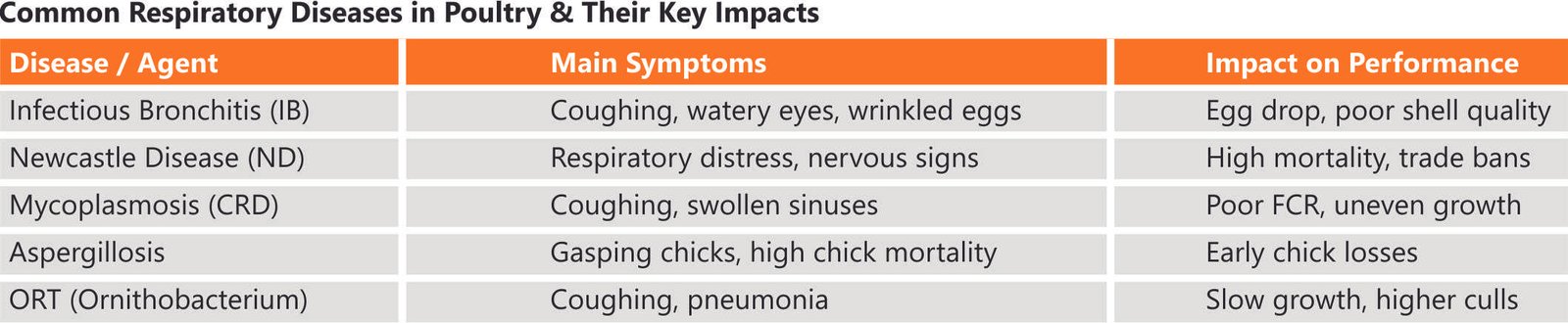 Economic Impact of Respiratory Problems
The cost of respiratory diseases is often underestimated. Losses occur in multiple ways:
- Broilers: Slow growth, poor FCR, increased culling, carcass downgrades.
- Layers: Egg production drops by 5–20% during outbreaks, often taking weeks to recover. Eggshell quality deteriorates, reducing hatchability in breeders.
- Treatment costs: Medication, supportive care, and labor add significantly to production expenses.
 Industry estimates suggest that respiratory problems account for 25–30% of total economic losses in poultry farming worldwide.
Preventing Respiratory Health Losses
- Farm Management & Biosecurity
- Controlled entry: Use disinfectant footbaths, restrict visitors, and enforce protective clothing.
- Downtime & disinfection: At least 14 days between flocks with thorough cleaning and fumigation.
- Rodent and wild bird control: It acts as carriers for ND, AI, and Mycoplasma.
- Ventilation & Air Quality
- Maintain a steady flow of fresh air, especially in closed housing.
- Keep low ammonia levels.
- Use proper litter management — regular stirring, addition of litter amendments, and removal of wet patches.
- Avoid sudden drafts, especially in young chicks.
- Vaccination Programs
- Vaccines against IB, ND, and AI are the backbone of respiratory protection.
- Monitor post-vaccination titers to ensure protective immunity.
- Nutrition & Feed Supplements
- Vitamin A maintains epithelial integrity of the respiratory tract.
- Vitamin E and Selenium act as antioxidants, reducing oxidative stress during infections.
- Vitamin C is especially important under heat stress, reducing corticosterone levels.
- Phytogenics (essential oils, eucalyptus, thyme extracts) provide antimicrobial and expectorant benefits.
- Electrolytes with antioxidants improve acid-base balance during heat-induced panting.
- Organic acids reduce pathogen load in the gut, indirectly lowering systemic infection risks.
- Water Quality & Additives
- Use sanitization protocols and acidification to maintain water hygiene.
- Deliver vitamins, electrolytes, or herbal respiratory tonics through water during stress phases.
- Keep drinker lines clean and flushed regularly to prevent biofilm formation.
- Monitoring & Early Intervention
- Daily observation of flocks for coughing, nasal discharge, uneven growth.
- Keep performance records — sudden drops in feed/water intake often indicate respiratory stress.
- Quick diagnosis through necropsy and laboratory testing allows targeted treatment.
The Role of Feed & Farm Supplements in Respiratory Health
Supplements are not substitutes for biosecurity, but they provide supportive resilience:
- Respiratory tonics (essential oil-based expectorants, mucolytics): Improve breathing comfort, reduce mucus accumulation.
- Liver tonics: Reduce ammonia load and toxin stress, indirectly protecting the respiratory system.
- Electrolytes + vitamins: Reduce heat stress-related panting and dehydration.
Strategic use of such supplements ensures that birds maintain stable performance even during unavoidable respiratory stressors.
Future Outlook
The future of respiratory health management will combine traditional preventive strategies with innovative technologies:
- Precision monitoring sensors to measure real-time ammonia, CO₂, and humidity.
- AI-based sound analysis to detect early coughing/sneezing patterns.
- Next-gen vaccines offering broader protection against variant IB and ND strains.
- Herbal-biotech combinations for natural respiratory resilience.
Such innovations will help producers maintain efficiency while meeting consumer demand for antibiotic-free poultry products.
Conclusion
Respiratory health is the foundation of poultry productivity. Birds struggling to breathe cannot eat, grow, or lay efficiently. Prevention is always more effective and economical than treatment.
A holistic approach combining biosecurity, ventilation, vaccination, nutrition, and targeted supplementation is the most effective way to minimize respiratory-related losses. As the poultry industry transitions towards antibiotic-free production, safeguarding respiratory health will remain central to achieving both bird welfare and farm profitability.
By Dr. Srijit Tripathi, Global Technical Manager, VETLINE
For more information, the author can be contacted at srijit.tripathi@vetline.in