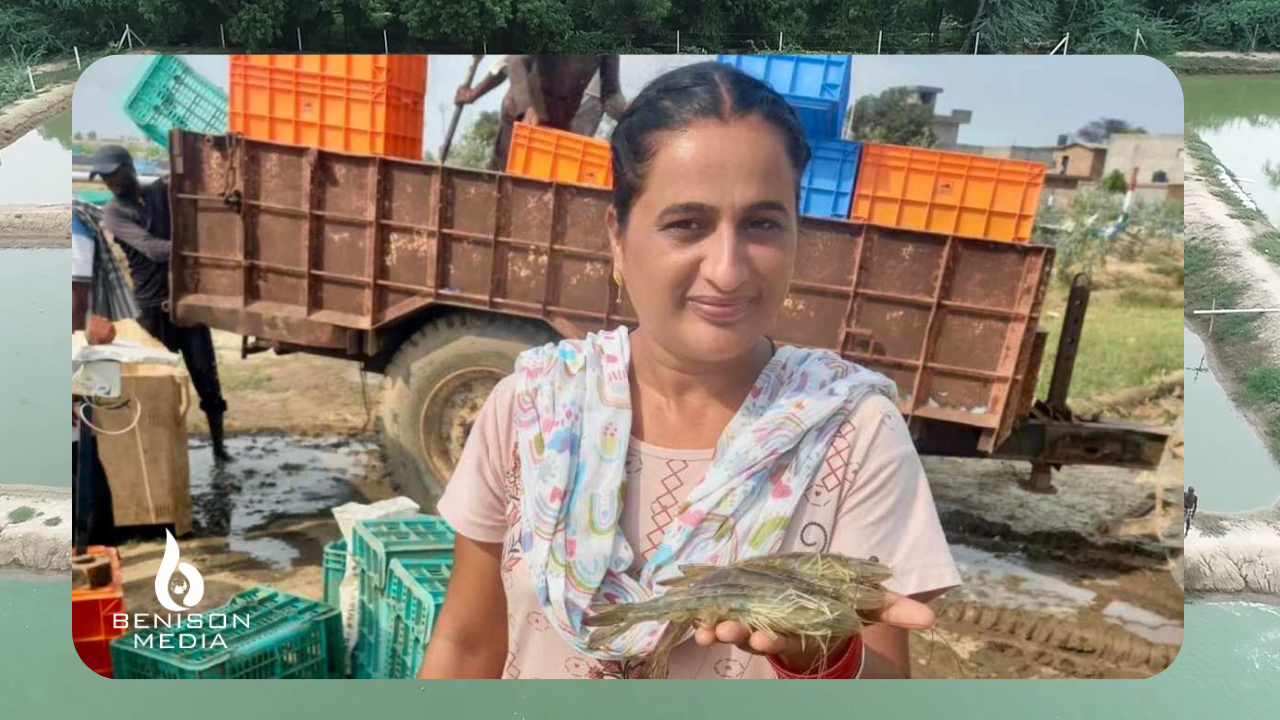
In Inna Khera village of Punjab’s Sri Muktsar Sahib, where waterlogging and high soil salinity had crippled traditional wheat and paddy yields, aquaculture has emerged as a highly profitable alternative. Rupinder Kaur, a fashion designing and cosmetology graduate, alongside her family, has transformed their agriculturally unviable land into a thriving shrimp enterprise spanning over 35 acres.
The Turning Point and Government Support
The transformation began in 2021 when conventional farming on the family’s 5.5-acre land became unsustainable. Prompted by an awareness camp hosted by Fisheries Department officials, Rupinder and her husband, Manjinder Singh Sandhu, decided to take a gamble on shrimp farming. After a seven-day training program, they set up their first ponds.
The initial infrastructure investment was substantial—around Rs 8–10 lakh per acre for excavation, aerators, and electricity systems. However, as a woman entrepreneur, Rupinder secured a crucial 60 percent government subsidy, heavily easing the financial strain. The remaining capital was arranged through a Rs 15 lakh bank loan and borrowings from relatives.
Striking Economics and Expansion
The venture broke even within its very first year. Capitalizing on early profits, the family purchased 8 additional acres and leased another 22 acres. Today, they primarily cultivate Litopenaeus vannamei, a premium shrimp variety fetching Rs 400–450 per kg.
The enterprise runs two production cycles annually, yielding 6 to 10 tonnes of shrimp per acre each year. Generating gross sales of nearly Rs 12 lakh per acre against Rs 6 lakh in operational costs, the family nets an impressive annual profit of Rs 7–8 lakh per acre.
Advanced Technology and Integration
A key driver of their success is biofloc technology, an advanced system utilizing beneficial microorganisms to maintain water quality and convert waste into protein-rich feed. Rupinder uses biofloc ponds during the initial growth stage to boost survival rates before transferring the shrimp to larger open ponds.
To supplement this, the family runs a dairy business with 17 cattle, creating an integrated farming model that provides steady local employment. For her pioneering contribution to agricultural diversification, Rupinder was honored during India’s Republic Day celebrations in 2025, proving that degraded land can fuel high-flying aspirations.