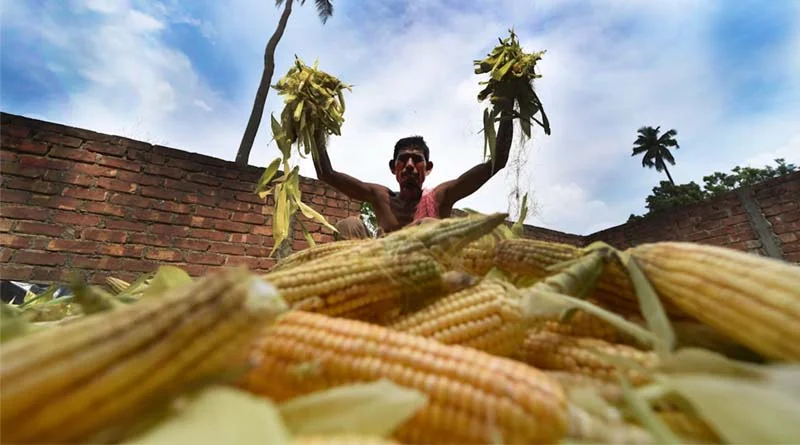
A notable shift in cropping patterns is emerging across Telangana, with farmers increasingly moving away from cotton cultivation toward maize during recent Kharif seasons. The trend, which gained momentum in 2025, is expected to strengthen further in 2026, driven by economic stability, lower risk, and rising market demand.
Maize cultivation has expanded steadily, with acreage rising from around 2.03–2.21 lakh hectares in Kharif 2024–25 to nearly 2.60 lakh hectares in 2025. Districts such as Khammam, Nirmal, Warangal, and Jagtial have witnessed a significant surge in maize sowing, reflecting farmers’ preference for more reliable returns.
In contrast, cotton cultivation has shown signs of decline, impacted by price volatility, pest infestations—particularly pink bollworm—and rising input costs. Crops like soybean and chilli have also lost ground due to inconsistent yields and market fluctuations, further accelerating the shift toward maize.
Maize offers several advantages, including lower input requirements, better resilience to weather variability, and strong demand from the poultry, livestock feed, and ethanol sectors. The national push for ethanol blending has further supported maize prices, making it an attractive alternative.
However, the expansion has increased demand for fertilizers, especially urea, prompting the state government to seek higher allocations for Kharif 2026. Supply constraints during peak months have already led to distribution challenges.
To address this, the government has introduced measures such as a Urea Booking Mobile App and revised procurement norms to support farmers. Despite challenges like pest attacks and post-harvest losses, maize is set to play a central role in shaping Telangana’s agricultural landscape in the coming seasons.