 In an era where food safety is increasingly under the global spotlight, the role of safe animal feed has never been more critical. As the first link in the food production chain, feed quality directly influences not only animal health and productivity but also the safety of milk, meat, and eggs consumed by millions. With evolving climatic conditions, globalized raw material sourcing, and the rising complexity of contaminants such as mycotoxins, the feed industry is being compelled to rethink traditional approaches to safety and risk management.
Globally, companies like Trouw Nutrition have been at the forefront of advancing feed safety frameworks through science-based solutions, predictive tools, and integrated quality systems. In markets like India, however, the challenge is uniquely complex—characterized by smallholder farming systems, fragmented supply chains, monsoon-driven variability, and gaps in post-harvest infrastructure.
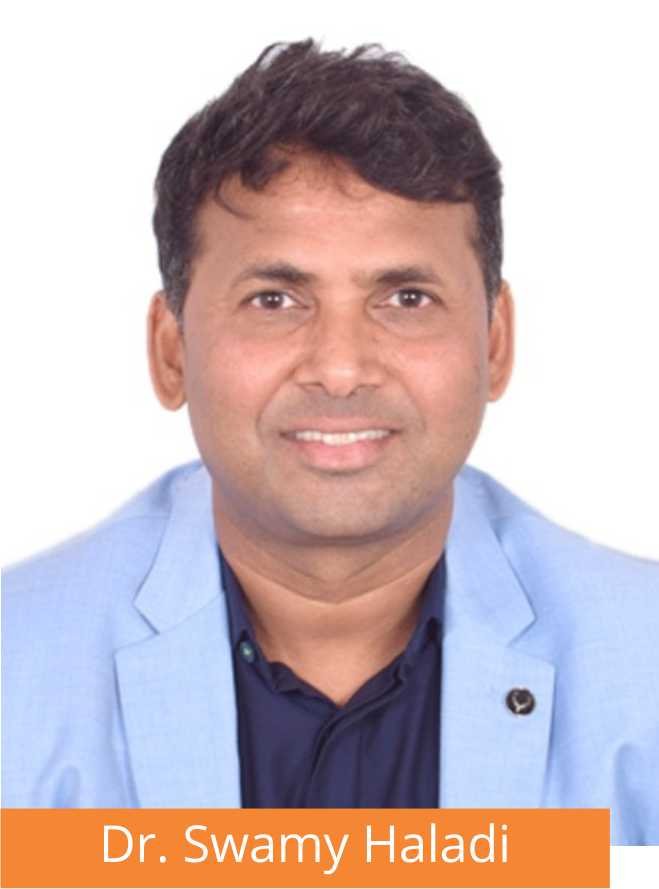
To decode these challenges and understand the way forward, Think Grain Think Feed interacted with Dr Swamy Haladi, a leading expert in mycotoxin risk management and feed safety. In this conversation, he shares deep insights into what defines “safe feed” today, how India’s risk landscape is evolving, and why the industry must transition from a reactive approach to a more predictive, data-driven model.
From shifting mycotoxin profiles across Asia to the growing importance of multi-toxin testing and advanced mitigation strategies, this discussion highlights a crucial reality: feed safety is no longer just an operational requirement—it is a strategic imperative for ensuring food safety and building consumer trust in the years ahead. Following are the key excerpts from the discussion:
How would you define “safe feed” in today’s context, considering both animal health and food safety? What are the key components of a robust feed safety system?
In today’s context, safe feed refers to animal feed that is free from contaminants which could adversely affect not only animal health but also human health. This includes hazards such as pathogenic microorganisms, mycotoxins, pesticide residues, and insecticide residues.
While the direct impact of contaminated feed on animal health is well understood, the broader concern lies in how these contaminants transfer through the food chain. Residues and toxins can pass into animal-derived products such as milk, meat, and eggs, ultimately posing risks to human health. Therefore, safe feed must ensure protection at both levels—animal productivity and food safety for consumers.
A robust feed safety system is built on three critical pillars:
- Comprehensive Monitoring Systems
The foundation of feed safety lies in a well-defined monitoring plan. This applies across the value chain—feed mills, integrated operations, dairy farms, and even silage and Total Mixed Ration (TMR) producers. Stakeholders must have a clear understanding of incoming raw materials, including their origin, quality, and potential contamination risks such as toxins or harmful microorganisms.
- Stringent Quality Control Mechanisms
Monitoring must be supported by strong quality control protocols. This involves defining acceptable limits for contaminants and making informed decisions—whether to accept, reject, or repurpose raw materials based on these thresholds. Such systems ensure consistency and prevent compromised inputs from entering the feed chain.
- Innovation-Driven Mitigation Solutions
Even with strict monitoring and quality checks, certain risks—especially mycotoxins—may persist. Therefore, incorporating advanced, science-backed feed additives and technologies is essential. These solutions help neutralize or mitigate the impact of contaminants, safeguarding animal health and improving overall feed efficiency.
In summary, an effective feed safety system integrates proactive monitoring, disciplined quality control, and continuous innovation. Together, these elements ensure that feed not only supports optimal animal performance but also upholds the highest standards of food safety.
What are the major feed safety risks specific to India’s climatic and agricultural conditions? How do factors like monsoon variability and storage infrastructure impact contamination risks?
India’s feed safety landscape is increasingly shaped by climate variability and structural challenges in post-harvest management. Among the most significant emerging risks is the impact of climate change, which is altering weather patterns through unseasonal rains, rising temperatures, and increased humidity.
These climatic shifts directly influence crop production and feed quality. Variations in temperature and moisture levels during crop growth and harvest create favourable conditions for the development of moulds, pathogenic microorganisms, and, most critically, mycotoxins. Elevated moisture levels in raw materials—especially grains—can significantly increase the risk of fungal contamination, compromising both nutrient quality and safety.
The challenge becomes even more pronounced during the post-harvest phase. If grains are not adequately dried before storage, residual moisture can accelerate mould growth and subsequent mycotoxin production. This not only reduces feed quality but also poses serious risks to animal health and productivity, with downstream implications for food safety.
Monsoon variability adds another layer of complexity. With rainfall patterns becoming increasingly unpredictable, harvesting often coincides with unexpected showers or prolonged humidity. Such conditions can sharply increase moisture content in crops at critical stages, leading to contamination risks even before the raw materials enter the feed supply chain.
Storage infrastructure remains a critical bottleneck in India. While the adoption of modern silo systems is gradually increasing, traditional storage practices—such as the use of gunny bags—are still prevalent. These methods are highly vulnerable to environmental factors like humidity and temperature fluctuations.
Even in advanced storage systems like silos, improper management can negate their benefits. Effective silo management requires strict control of temperature, moisture levels, humidity, and adequate aeration. Without these controls, silos can, in some cases, exacerbate spoilage and contamination risks rather than mitigate them.
In summary, feed safety risks in India are closely linked to a combination of climatic uncertainties and gaps in storage infrastructure. Addressing these challenges requires an integrated approach—improving weather-resilient agricultural practices, strengthening post-harvest drying systems, and adopting scientifically managed storage solutions—to ensure both feed quality and food safety.
As a mycotoxin expert, what major changes have you observed in mycotoxin prevalence across Asia in recent years? How has the mycotoxin risk profile in India evolved over time?
This is a complex and important question, as Asia’s mycotoxin risk profile is highly diverse and closely linked to regional agricultural practices and trade dynamics.
Broadly, Asia can be segmented into three regions. China is self-sufficient in human food grains (rice and wheat) but largely depends on imports for raw materials such as soybean meal and corn for animal feed production. Although India is relatively self-reliant in raw materials for animal feed production, future predictions indicate a growing dependence on imports. In contrast, Southeast Asian countries such as Vietnam, Thailand and Philippines, are heavily dependent on imported feed ingredients from regions like the United States, Argentina, Brazil, and Ukraine.
This global sourcing of raw materials has significantly altered the mycotoxin landscape, particularly in import-dependent regions. For instance, Southeast Asia is increasingly reporting the presence of Deoxynivalenol (DON) and Zearalenone (ZEN)—mycotoxins that are not normally present in Southeast Asian countries. As a result, feed producers must now account for both locally occurring and imported mycotoxins, making broad-spectrum mycotoxin analysis and mitigations essential.
Focusing on Asia as a whole, there is a noticeable rise in Fumonisins (FUM), particularly in grains produced within the region and DON & ZEN in imported raw materials.
India has traditionally focused on the analysis of Aflatoxins, owing to their high prevalence and well-established toxicity risks in tropical climatic conditions. Over time, the scope of testing expanded to include Ochratoxin A (OTA) and T-2 toxin. However, current observations indicate that the occurrence levels of T-2 toxin remain relatively low in many regions. In contrast, there is a growing detection of FUM, signalling a gradual shift in the mycotoxin risk profile.
This evolving trend suggests that while aflatoxins continue to be a primary concern, mycotoxins such as FUM are becoming increasingly relevant and warrant closer monitoring within India’s feed and raw material supply chain.
Modern feed safety programs must include a wider panel of mycotoxins, including:
- Aflatoxins (AFB1, AFB2, AFG1, AFG2)
- Deoxynivalenol (DON)
- Zearalenone (ZEN)
- Fumonisins (FUM)
- Ochratoxin A (OTA)
- T-2 toxins
- Potentially a few emerging mycotoxins, such as moniliformin
In conclusion, the mycotoxin challenge in Asia—and increasingly in India—is transitioning from a single-toxin concern to a multi-mycotoxin risk environment. This shift calls for more comprehensive testing protocols, improved risk assessment strategies, and adaptive feed safety management to ensure both animal health and food safety.
Could you explain concept of Predictive Modelling and its role in managing mycotoxin risks? How reliable are these models in practical feed industry applications?
Predictive modelling refers to the use of historical data, statistical tools, and climatic information to anticipate the likelihood and severity of mycotoxin contamination in raw materials and in turn the feed. It enables stakeholders to move from reactive management to a more proactive risk mitigation approach.
Broadly, there are two key types of predictive models used in this space:
- Statistical Models
These models rely on historical datasets—spanning several years—to identify patterns and trends in mycotoxin occurrence. Based on past contamination data, they can provide reasonably accurate forecasts of potential risks in upcoming seasons. Such models are already being applied by global organizations, including Trouw Nutrition, to guide feed safety strategies.
- Climate-Based Models
These models incorporate weather parameters such as temperature, rainfall, and humidity, and soil conditions to predict the development of fungi and subsequent mycotoxin production in crops. While highly advanced, they require extensive data infrastructure and technical resources, making them more challenging to implement, particularly in developing markets.
In principle, predictive modelling can help identify which mycotoxins are likely to occur in specific regions, allowing feed producers to take preventive measures. However, its application in Asia—especially in India—comes with certain limitations.
One of the key challenges in the Indian context is the fragmented agricultural landscape. Unlike countries such as Canada or the United States, where agricultural farms are large and relatively uniform, India is characterized by small landholdings and diverse farming practices. This variability makes it difficult to generate highly precise, location-specific predictions, particularly for climate-based models.
In terms of reliability, no predictive model is 100% accurate. However, in regions with consistent farming systems and large datasets, these models have demonstrated strong reliability. Importantly, their accuracy improves over time as more data is accumulated. For example, a model built on five years of data may offer moderate predictive accuracy, but this can significantly improve with six, eight, or more years of continuous data input.
Given current conditions in India, statistical models offer more immediate practical value, as they can be implemented using available historical data. Climate-driven predictive modelling, while promising, will require further development in terms of data collection, standardization, and infrastructure.
In conclusion, predictive modelling is a powerful tool for mycotoxin risk management, but its effectiveness depends heavily on data quality, scale, and regional agricultural dynamics. For India, a phased approach—starting with statistical models and gradually integrating climate-based systems—would be the most pragmatic path forward.
Which testing methods would you recommend for routine vs confirmatory analysis? How frequently should testing be conducted under different risk scenarios?
In practical feed industry applications, mycotoxin testing typically follows a two-tiered approach: rapid screening for routine monitoring and advanced analytical methods for confirmatory analysis.
Routine Testing: Rapid Screening Methods
For day-to-day operations, rapid diagnostic tools such as lateral flow devices (LFDs) are widely recommended. These include commercially available kits from companies like Charm, Neogen and Romer Labs, as well as customised platforms such as Trouw Nutrition’s Mycomaster.
These rapid tests offer:
- Quick turnaround times
- On-site usability
- Cost-effectiveness for high-frequency testing
While they may not deliver 100% analytical precision, they provide a reliable indication of contamination levels and are highly effective for routine decision-making. However, it is critical to emphasize that sampling accuracy is as important as the testing method itself. Poor or non-representative sampling of raw materials or finished feed can lead to misleading results, regardless of the analytical technique used.
Confirmatory Testing: Advanced Analytical Methods
For precise quantification and multi-mycotoxin detection, confirmatory analysis is essential. The gold standard today is Liquid Chromatography–Tandem Mass Spectrometry (LC-MS/MS), which is rapidly replacing older methods such as High-Performance Liquid Chromatography (HPLC).
LC-MS/MS offers significant advantages:
- Simultaneous detection of multiple mycotoxins
- High sensitivity and specificity
- Greater accuracy for regulatory and research purposes
While such advanced testing infrastructure is still developing in India, its adoption is increasingly critical to support a modern, risk-based feed safety framework.
Testing Frequency: A Risk-Based Approach
Raw Materials:
- Ideally, every incoming batch or load should be tested, especially for high-risk ingredients such as maize and grain by-products.
Finished Feed:
- If raw material sources remain consistent and controlled, testing can be conducted at least once per week using representative samples.
- High-Risk Scenarios (e.g., monsoon, new suppliers, visible spoilage):
- Testing frequency should be increased, potentially to every batch, to mitigate elevated contamination risks.
- Low-Risk, Controlled Conditions:
Frequency may be optimized, but routine monitoring should never be completely relaxed.
Importantly, testing should be proactive rather than reactive—waiting until the end of a production cycle (for example, in broiler operations) can result in significant economic losses and health impacts.
Can post-contamination mitigation fully eliminate risks, or is prevention the only sustainable solution? What immediate steps should Indian feed millers take to upgrade their safety systems?
While the principle that prevention is better than cure holds true, the real challenge lies in effectively implementing preventive measures—particularly in a complex and diverse market like India.
Given the current realities—climatic variability, smallholder farming systems, fragmented landholdings, and inherent sampling challenges—it is difficult to achieve 100% accuracy in detecting or preventing contamination. Therefore, relying solely on prevention is not sufficient.
A more practical and effective approach is to adopt a combined strategy of prevention and mitigation.
Prevention Measures
The first line of defence includes:
- Sourcing high-quality raw materials
- Ensuring proper drying before storage
- Maintaining optimal storage conditions (moisture, temperature, and hygiene)
For stored raw materials—especially those held for extended periods—it is advisable to use organic acid-based preservatives, such as propionic acid formulations. These help inhibit mould growth, reduce the risk of mycotoxin formation, and preserve nutrient quality.
Mitigation Strategies
Even with strong preventive practices, some level of contamination risk persists. Therefore, incorporating mycotoxin risk management solutions—such as scientifically validated toxin binders or deactivators—into feed becomes essential to safeguard animal health and performance.
Upgrading Feed Safety Systems: Immediate Priorities
To strengthen feed safety in India, feed mills must focus on a few critical, actionable steps:
- Strengthening Feed Mill Hygiene
Maintaining strict hygiene across the facility is fundamental. Clean production environments reduce the risk of cross-contamination and microbial growth.
- Frequent and Meaningful Testing
- Test every incoming batch of raw materials
- Ensure the right testing methods are used—not just testing for compliance, but for actionable insights
- Expand testing beyond mycotoxins to include heavy metals, pesticides, and insecticide residues, as these risks are increasing
- Integrated Data-Based Decision Making
Mycotoxin test results should not be viewed in isolation. Instead, they must be correlated with:
- Animal performance data
- Farm-level observations (symptoms)
- Veterinary post-mortem findings
Close coordination between quality control teams, nutritionists, veterinarians, and farm managers is essential to accurately assess and manage risk.
- Investment in Quality Technologies
Adopting advanced, science-backed solutions is critical. Decision-making should not be driven purely by cost considerations—efficacy and reliability must take priority over price.
- Improved Storage and Handling Systems
Upgrading storage infrastructure and practices—both at feed mills and farm level—is key to minimizing post-harvest contamination risks.
A Shift in Industry Mindset
Ultimately, the Indian feed industry must recognize that feed safety is directly linked to food safety. As consumer awareness grows, expectations around safe milk, meat, and eggs are rising rapidly.
The focus can no longer remain solely on higher production—more milk, more eggs, more meat. Equal, if not greater, emphasis must be placed on safety and quality.
This shift is not just a regulatory requirement—it is a market-driven necessity that will define the future of the industry.