How AI-Powered Precision Technologies Are Reshaping Animal Agriculture
The livestock industry is entering a new era where decisions are increasingly guided by data rather than intuition. As global demand for animal protein continues to grow, producers face the dual challenge of improving productivity while reducing environmental impact and maintaining high standards of animal health and welfare.
Meeting these expectations requires more than incremental improvements in farm management. It demands precision agriculture powered by artificial intelligence (AI), biomarker science, cloud computing, and predictive analytics. Together, these technologies are transforming livestock production from a reactive system, where interventions occur after problems arise, to a proactive model that predicts risks, optimizes performance, and supports sustainable production.
From Observation to Prediction
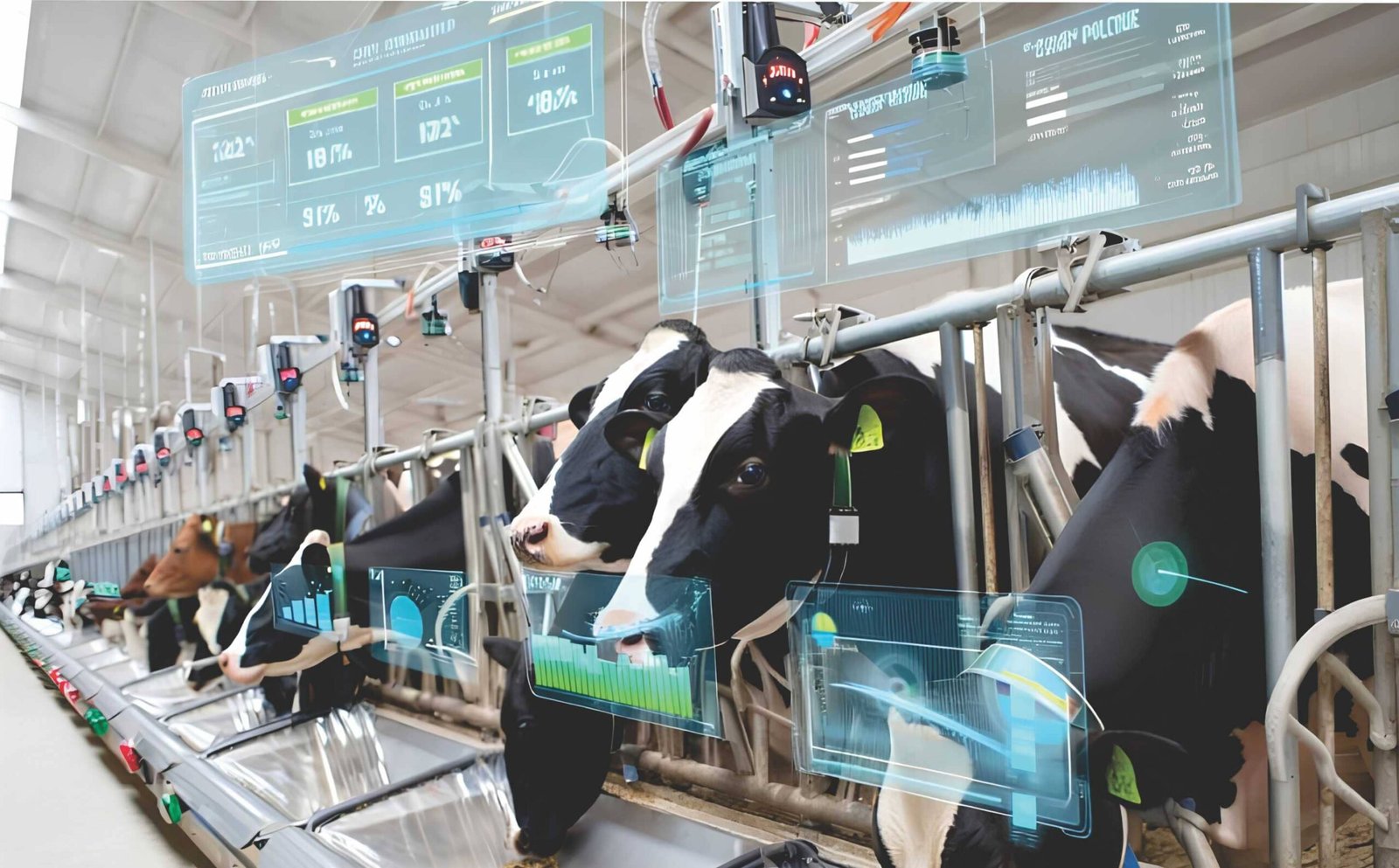
Modern livestock farms generate enormous volumes of information, from feed intake and growth performance to environmental conditions and health records. Today, AI-powered platforms can integrate these data with blood biomarkers and physiological indicators to provide a comprehensive picture of animal health.
Rather than waiting for visible clinical signs, producers can identify subtle biological changes associated with inflammation, nutritional imbalances, metabolic disorders, or disease long before production losses become evident.
Imagine identifying, early detection, which flocks are at risk of developing coccidiosis or detecting deficiencies in essential minerals, amino acids, or proteins even when feed formulations appear nutritionally balanced. Such early insights allow producers to intervene before health challenges escalate, reducing mortality, improving productivity, and minimizing economic losses.
This shift from reactive treatment to predictive management represents one of the most significant advances in modern livestock production.
Turning Biology into Better Decisions
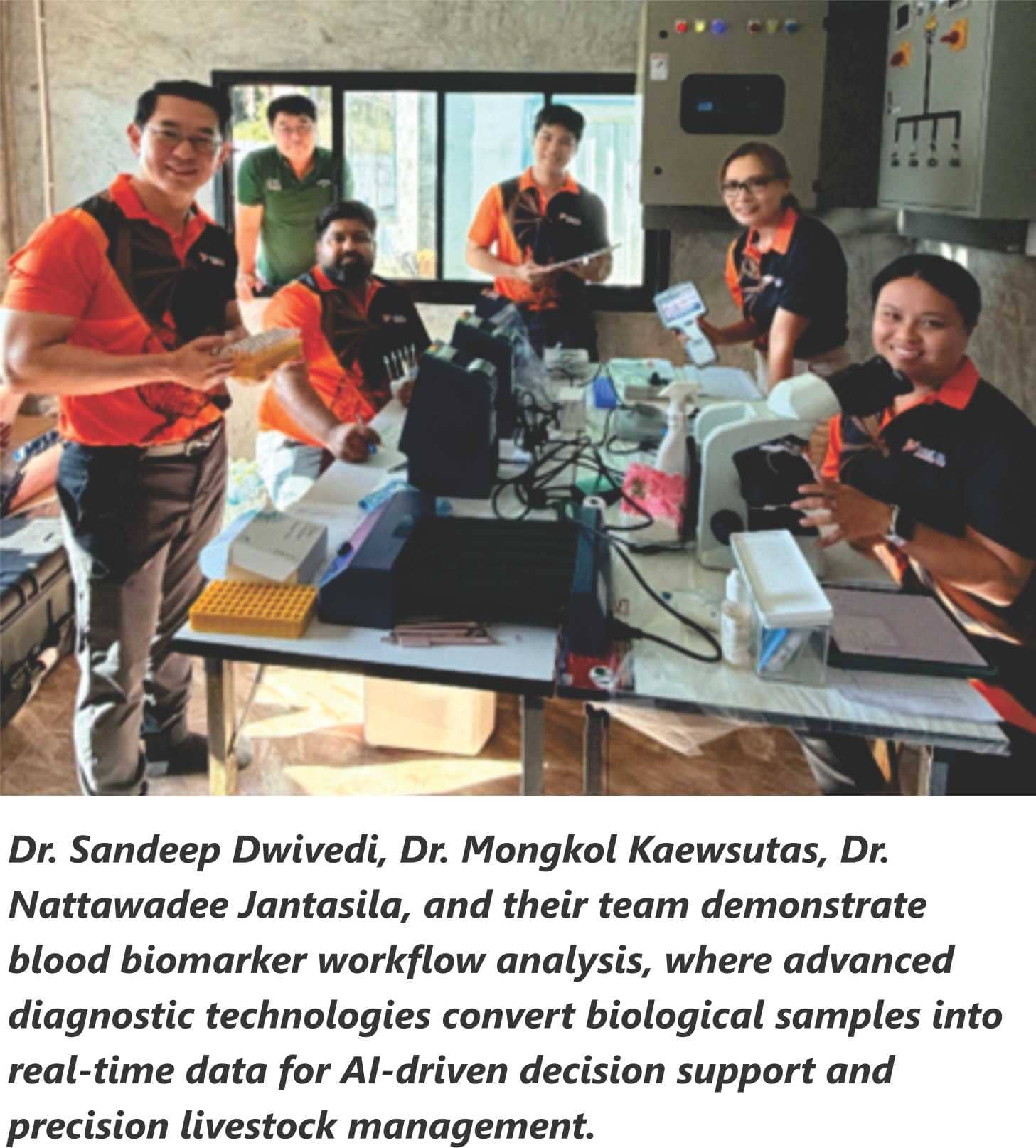
Precision livestock technologies do more than collect data, they convert biological information into actionable intelligence.
Blood biomarkers provide valuable insights into immune function, metabolic health, nutrient utilization, inflammation, and physiological stress. Portable diagnostic devices, cloud-based platforms, and AI algorithms analyse these biomarkers against extensive reference databases, delivering practical recommendations within hours.
These insights help producers make informed decisions about nutrition, health management, housing conditions, and environmental control, enabling faster, evidence-based responses that improve productivity and reduce uncertainty.
Precision Nutrition: Maximizing Feed Efficiency
Feed remains the largest operating cost in animal production, making nutritional efficiency critical for both profitability and sustainability.
Advances in biological analytics now enable nutritionists to evaluate how animals respond metabolically to different feeding programmes rather than relying solely on feed formulation. This allows diets to be fine-tuned according to the animals’ actual nutritional requirements.
The result is:
- Improved feed conversion efficiency
- Enhanced nutrient utilization
- Better growth performance
- Reduced feed waste
- Lower production costs
Precision nutrition also ensures that feed additives are used more strategically, maximizing their biological benefits while improving economic returns.
AI as a Decision-Support Tool
Artificial intelligence is rapidly becoming an indispensable component of livestock management.
Machine-learning algorithms continuously analyse production data, identify hidden trends, predict disease risks, and generate recommendations that support informed decision-making. Instead of replacing human expertise, AI strengthens it by helping producers detect problems earlier and evaluate management options with greater confidence.
AI-supported systems can assist producers in:
- Predicting disease outbreaks
- Optimizing feeding strategies
- Improving production efficiency
- Reducing operational risks
- Supporting evidence-based farm management
As these systems continue to learn from expanding datasets, their predictive accuracy and practical value will continue to improve.
 Better Health, Better Welfare, Better Sustainability
Healthy animals are naturally more productive and more efficient users of feed and other resources. Precision technologies strengthen this relationship by enabling continuous monitoring of physiological stress, metabolic status, and environmental conditions.
Real-time insights allow farmers to adjust ventilation, nutrition, housing, water availability, and management practices before animal welfare is compromised. Earlier intervention improves resilience, enhances productivity, and supports responsible livestock management.
The sustainability benefits are equally significant. Animals maintained in optimal health convert feed more efficiently, reducing resource consumption and greenhouse gas emissions per unit of production. Improved nutrient utilization also decreases nitrogen and phosphorus excretion while reducing ammonia emissions.
In this way, sustainability becomes an outcome of better biological management rather than a separate production objective.
The Future of Precision Livestock Farming
The next generation of livestock production will combine biological monitoring with environmental sensors, imaging technologies, automation, robotics, and AI-driven decision-support systems.
These integrated platforms will provide producers with a real-time understanding of animal health, nutrition, welfare, environmental conditions, and production performance. As digital technologies become more affordable and accessible, precision farming will no longer be limited to large commercial operations but will increasingly benefit producers of all sizes.
Significant investment across the global livestock industry is accelerating the development of these technologies, enabling farms to anticipate challenges, optimize resources, and make confident management decisions based on scientific evidence rather than assumptions.
The future of livestock production belongs to producers who can transform data into timely action. By combining biological science with artificial intelligence and precision technologies, the industry is building farming systems that are more productive, resilient, and environmentally sustainable than ever before. Know more, Sooner.
By Dr. Sandeep Dwivedi, Consultant – Precision Services, dsm-firmenich Animal Nutrition & Health