Antimicrobial Resistance (AMR) is one of India’s most pressing public health challenges, demanding coordinated action across human, animal, and environmental health. As the world’s largest milk producer and a leading seafood exporter, India has a unique opportunity to strengthen antibiotic stewardship within its food-animal production systems. Responsible antimicrobial use, effective surveillance, and sustainable farming practices are critical to safeguarding public health while limiting the spread of antimicrobial-resistant microorganisms through the food chain and the environment.
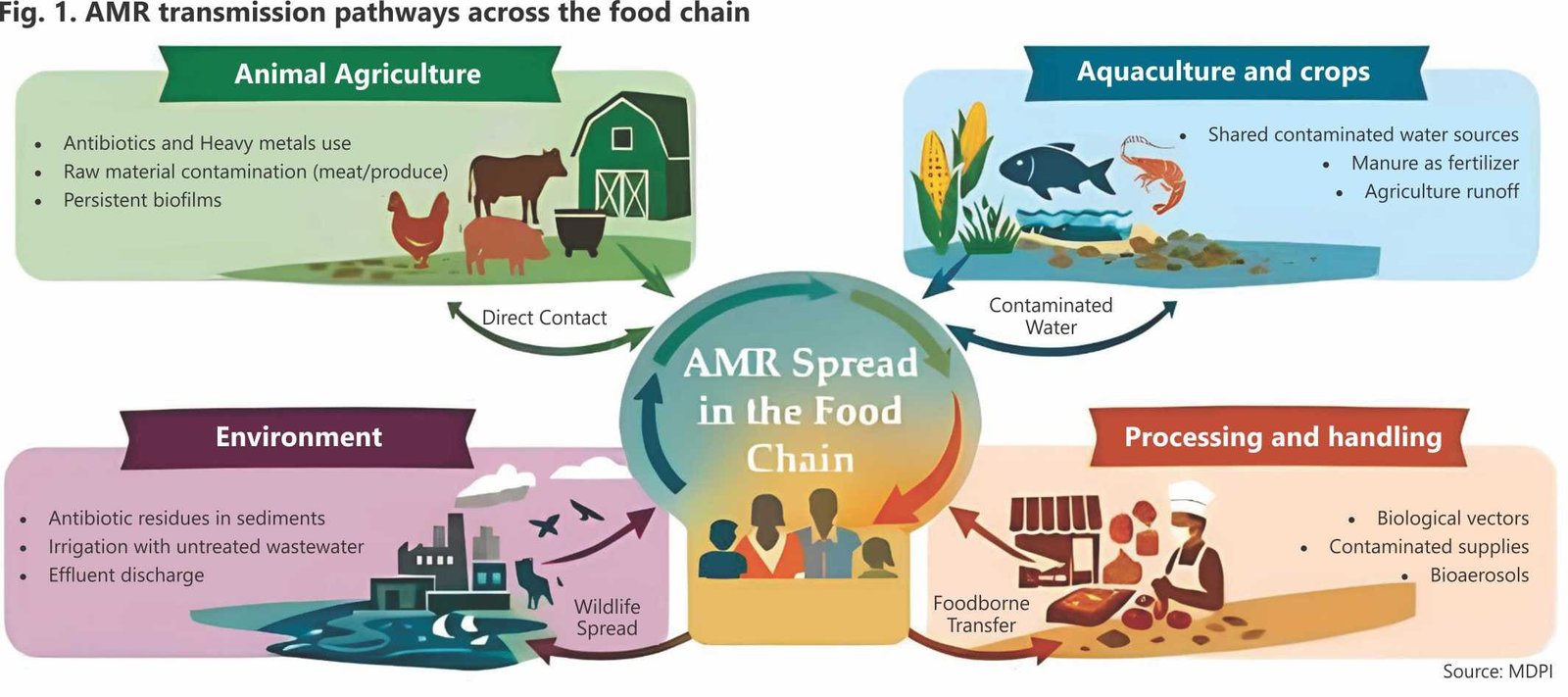 The intensification of livestock and aquaculture production, combined with the inappropriate use of veterinary antimicrobials and inconsistent regulatory oversight, has accelerated the emergence and spread of antimicrobial-resistant bacteria, increasing risks to both animal and human health.
The Dairy Industry: Mastitis and Informal Value Chains
India’s dairy sector is highly fragmented, with over 70% of milk produced and marketed through informal value chains. This decentralized system makes regulating antimicrobial use and enforcing antibiotic stewardship particularly challenging.
Inappropriate therapeutic use: Antibiotics such as oxytetracycline, ampicillin, and amoxicillin are commonly used, often without veterinary supervision, to treat mastitis in high-yielding dairy cattle and buffaloes.
Poor compliance with withdrawal periods: Many smallholder farmers do not observe the prescribed withdrawal period after antibiotic treatment, allowing antibiotic residues to enter the commercial milk supply.
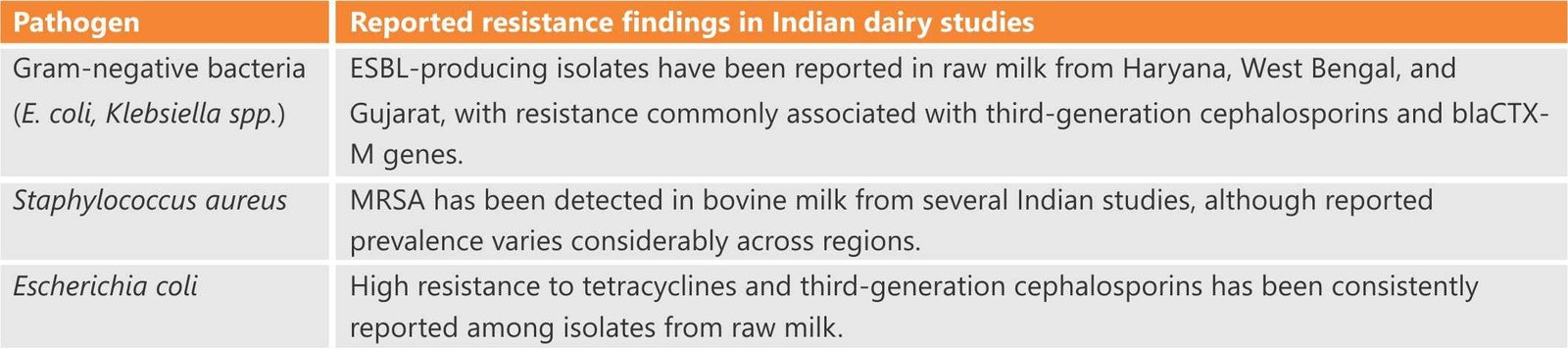
Prevalence of resistant pathogens: Surveillance studies from West Bengal and Haryana have reported antimicrobial-resistant bacteria in raw milk. In West Bengal, 12.1% (22/182) of raw milk samples contained Escherichia coli, with 54.5% (12/22) identified as Extended-Spectrum β-lactamase (ESBL)-producing isolates. A Haryana study found ESBL-producing E. coli in 30.8% (74/240) of isolates, while 37.8% of E. coli recovered from raw milk exhibited ESBL production. Most isolates showed resistance to tetracyclines and third-generation cephalosporins, highlighting the growing AMR burden in India’s dairy sector.
The Seafood and Aquaculture Industry: Environmental Dissemination of AMR
India’s brackishwater shrimp and freshwater aquaculture sectors have expanded rapidly to meet domestic and export demand. While intensification has improved productivity, it has also increased the risk of antimicrobial resistance (AMR) through inappropriate antibiotic use and the spread of resistant microorganisms.
Environmental dissemination of antibiotics: Unlike terrestrial livestock systems, a significant proportion of antibiotics used in aquaculture enters surrounding water and sediments through excretion and pond discharge, creating continuous selective pressure for antimicrobial-resistant bacteria.
High stocking density and preventive antibiotic use: Intensive farming systems with high stocking densities are more vulnerable to disease outbreaks. Inadequate biosecurity and limited access to rapid diagnostics often encourage prophylactic use of broad-spectrum antibiotics.
Occurrence of resistant pathogens: Indian studies have identified multidrug-resistant Vibrio spp. (Vibrio parahaemolyticus), Aeromonas spp., and members of the Enterobacteriaceae family in cultured shrimp, fish, pond water, and sediments.
 One Health Implications
Resistance genes generated within aquaculture systems extend beyond production ponds.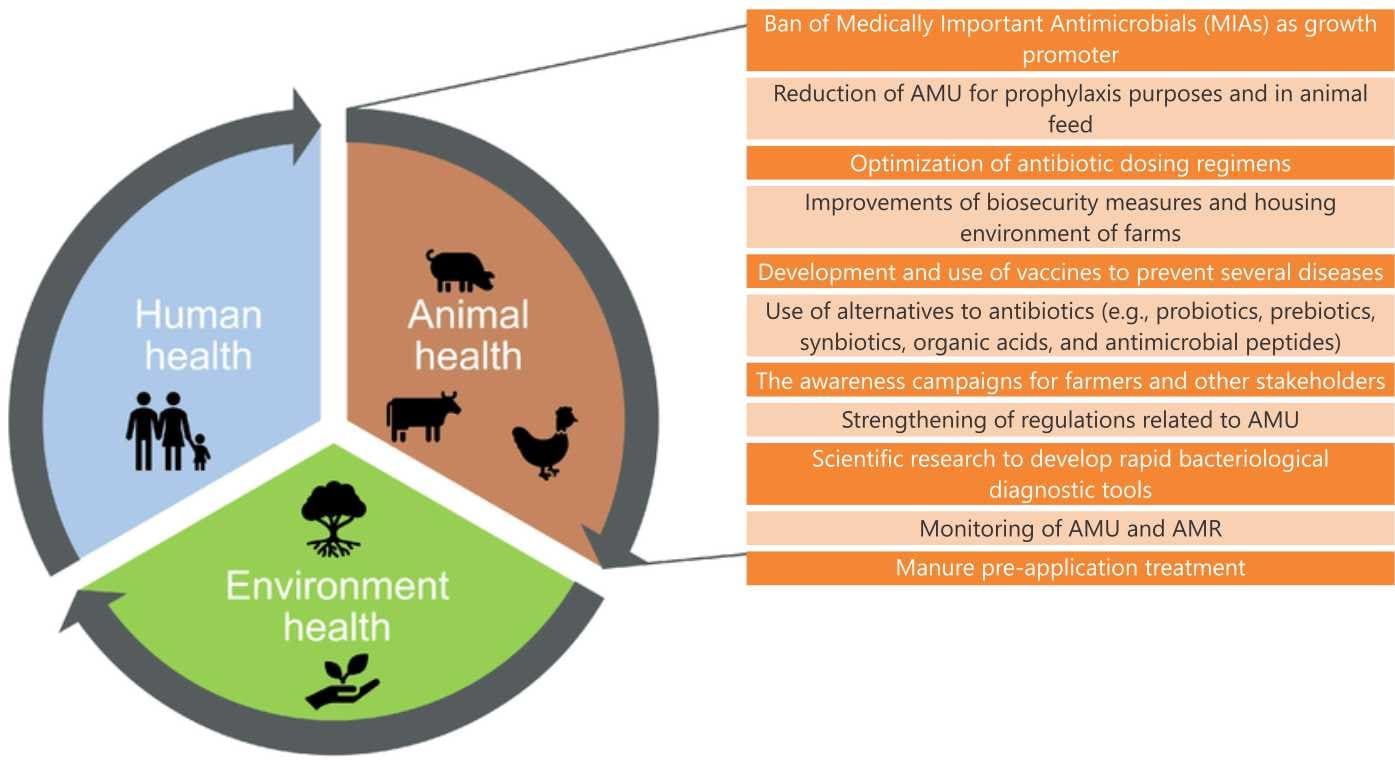 Pond effluents, flooding, irrigation canals, and surface runoff facilitate their spread into rivers, agricultural land, and drinking water sources, increasing transmission risks across animals, humans, and the environment. These interconnected pathways reinforce the need for a One Health approach integrating animal health, environmental management, and public health.
Regulatory and Mitigation Frameworks
India has progressively strengthened its AMR response through a One Health framework focused on surveillance, residue monitoring, and sustainable disease management.
AMR surveillance: The Indian Network for Fishery and Animal Antimicrobial Resistance (INFAAR), established by ICAR with technical support from FAO, monitors AMR trends in livestock and aquaculture and provides scientific evidence to support stewardship programmes.
Residue monitoring and regulatory standards: FSSAI regulates Maximum Residue Limits (MRLs) for veterinary drugs in foods of animal origin. Export-oriented seafood is subject to additional residue monitoring and certification through the Export Inspection Council (EIC) and MPEDA to meet importing-country requirements.
Promotion of non-antibiotic disease management: Research institutions, including ICAR–Research institutions, including ICAR–CIBA, are promoting biosecurity, probiotic (CIBA), are promoting biosecurity, probiotics, immunostimulants, improved farm management, and disease surveillance as sustainable alternatives to antibiotics.
Regional and State-Level Variations in AMR
AMR patterns vary across India because of differences in antibiotic use, healthcare infrastructure, agricultural practices, industrial activity, and surveillance capacity.
Delhi and Maharashtra – Urban high-resistance clusters: These regions report a high burden of carbapenem-resistant Enterobacteriaceae (CRE) and other multidrug-resistant pathogens through hospital-based surveillance networks. High population density, extensive tertiary healthcare services, frequent antibiotic use, and healthcare-associated transmission contribute to elevated resistance levels. The globally significant New Delhi metallo-β-lactamase-1 (NDM-1) resistance gene, first identified in New Delhi in 2008, remains closely associated with carbapenem resistance.
Andhra Pradesh and Telangana – Aquaculture and pharmaceutical hubs: Intensive aquaculture, livestock production, and pharmaceutical manufacturing have made these states a focus for One Health surveillance. Environmental studies have detected antimicrobial residues and multidrug-resistant Escherichia coli and Vibrio spp. in surface waters.
Kerala – A model for antimicrobial stewardship: Kerala became the first Indian state to implement a comprehensive AMR strategy through the Kerala Antimicrobial Resistance Strategic Action Plan (KARSAP) and the Kerala Antimicrobial Resistance Surveillance Network (KARS-Net). Complementary initiatives such as Operation Amrith have strengthened prescription monitoring and restricted inappropriate over-the-counter antibiotic sales.
Decadal Progression of Antimicrobial Resistance (2015–2025)
Surveillance by the ICMR Antimicrobial Resistance Surveillance and Research Network (ICMR-AMRSN) shows a steady rise in resistance among priority bacterial pathogens over the past decade, with declining effectiveness of several first-line and last-resort antibiotics.
 Macro Drivers Behind the Rise of Antimicrobial Resistance
The rise of antimicrobial resistance (AMR) in India over the past decade is driven by interconnected demographic, healthcare, and agricultural factors that have accelerated the emergence and spread of resistant pathogens while highlighting the need for stronger antimicrobial stewardship.
Rising antibiotic consumption: India remains one of the world’s largest antibiotic consumers. Population growth, improved healthcare access, widespread availability of low-cost generic medicines, and inappropriate use in both human and veterinary sectors have increased antimicrobial consumption, often outpacing stewardship and prescription monitoring.
Burden of neonatal sepsis: AMR has complicated the treatment of neonatal sepsis, a leading cause of infant mortality. Multidrug-resistant infections are estimated to contribute to tens of thousands of neonatal deaths annually, underscoring the need for improved infection prevention, diagnostics, and antimicrobial stewardship.
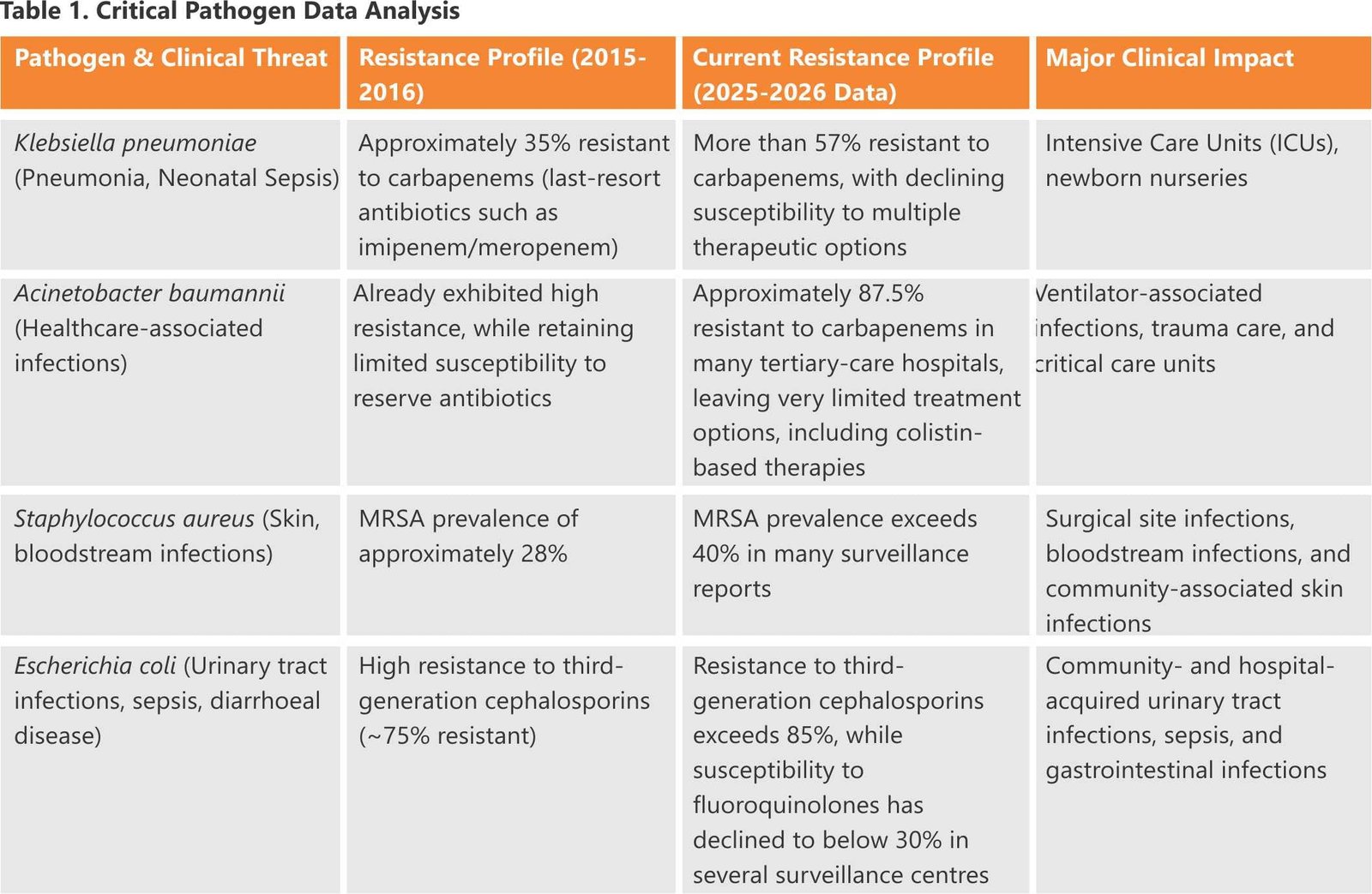 Expansion of surveillance: The apparent rise in resistance also reflects improved detection and surveillance rather than only an epidemiological increase. Expansion of the ICMR Antimicrobial Resistance Surveillance and Research Network (AMRSN) and surveillance programmes coordinated by the National Centre for Disease Control (NCDC) has strengthened national monitoring and evidence-based policymaking.
Transition Toward Antibiotic Stewardship
Recognizing the public health and economic impact of AMR, India’s dairy and aquaculture sectors are increasingly adopting science-based strategies that emphasize disease prevention, surveillance, responsible antimicrobial use, and biological alternatives. Key institutions including NDDB, MPEDA, and ICAR are leading these efforts.
Dairy Sector Initiatives
Given the fragmented nature of India’s dairy industry, dominated by smallholder farmers, mitigation strategies primarily focus on providing practical, cost-effective alternatives that reduce dependence on antibiotics.
- Ethnoveterinary Medicine (EVM)
Led by NDDB in collaboration with the University of Trans-Disciplinary Health Sciences and Technology (TDU), the most successful intervention against antibiotic misuse in Indian dairying is the institutional integration of the EVM. The programme promotes scientifically validated herbal formulations for common livestock diseases.
Mastitis management: Herbal formulations containing Aloe vera, turmeric (Curcuma longa), and calcium hydroxide (lime) have shown promise as alternatives or supportive therapies, reducing routine antibiotic use.
Field impact: NDDB reports implementation in over one million documented cases, achieving approximately 80% recovery and an 87.9% reduction in antibiotic residues in the commercial milk pool.
- Mastitis Control Sub-Models (MCSM)
Dairy cooperatives such as Amul and Mother Dairy have adopted preventive mastitis control programmes focusing on:
Early detection using the California Mastitis Test (CMT) to identify subclinical infections and enable targeted treatment.
Post-milking teat dipping, which studies indicate can reduce new intramammary infections by 40–50%.
- Milk Traceability and Quality Assurance
Large cooperatives are increasingly digitizing milk procurement and incorporating rapid antibiotic residue screening at collection centres, enabling segregation of non-compliant milk and improving adherence to withdrawal periods.
Seafood and Aquaculture Sector Initiatives
To meet stringent export requirements from markets such as the European Union, United States, and Japan, India’s aquaculture sector has strengthened traceability, residue monitoring, and certification systems through MPEDA and the Coastal Aquaculture Authority (CAA).
- SHAPHARI Certification Scheme
Developed by MPEDA, SHAPHARI is a web-based traceability and certification programme covering the aquaculture production chain.
Certified hatcheries follow prescribed biosecurity standards, while post-larvae are screened for prohibited substances, including chloramphenicol and nitrofuran metabolites.
Shrimp farms supplying export markets undergo Pre-Harvest Testing (PHT), with export approval dependent on compliance with residue limits.
- Regulation of Aquaculture Inputs
The CAA regulates aquaculture through farm registration, licensing, and oversight of feed and other production inputs.
Manufacturers must comply with regulations governing antibiotic-free aquaculture inputs.
The CAA prohibits the use of 20 antibiotics and pharmacologically active substances, including chloramphenicol and nitrofurans, in export-oriented aquaculture. Detection may result in shipment rejection and regulatory action.
- Biological Alternatives
Research institutions such as ICAR-CIBA are promoting alternatives to antibiotics, including:
- Organic acid blends to improve gut health, feed efficiency, and suppress pathogenic Vibrio spp.
- Probiotics to enhance pond microbial balance and water quality, while bacteriophage-based therapies continue to show potential against Vibrio infections.
Cross-Sectoral Monitoring: National Residue Control Programme (NRCP)
Monitoring antibiotic residues through Maximum Residue Limits (MRLs) is a key element linking India’s dairy and aquaculture sectors. For export products, the National Residue Control Plan (NRCP), implemented by the Export Inspection Council (EIC), ensures compliance with importing-country requirements. Within the domestic market, FSSAI establishes residue standards and conducts surveillance through state food safety authorities.
Export systems rely on risk-based sampling and laboratory testing before shipment, while domestic monitoring focuses on processing facilities and retail markets. However, surveillance intensity continues to vary across regions because of differences in infrastructure and enforcement capacity.
Regulatory Differences Between Export and Domestic Supply Chains
India’s export-oriented and domestic animal food supply chains operate under markedly different regulatory frameworks. Export markets are subject to stringent residue monitoring to meet international standards, whereas domestic surveillance is constrained by fragmented production systems, limited laboratory capacity, and resource limitations.
- Limited Economic Incentives
Economic considerations strongly influence compliance with antimicrobial stewardship.
Limited consumer premium: Dairy and fish products in domestic markets are largely sold as commodities, providing little financial incentive for farmers to invest in enhanced biosecurity, probiotics, or compliance with antibiotic withdrawal periods.
Cost of withdrawal periods: Export-oriented producers face significant financial risks—including shipment rejection, loss of market access, and reputational damage—if prohibited residues are detected, creating strong incentives for compliance. In contrast, smallholders supplying domestic markets often receive no premium for residue-compliant products, while observing withdrawal periods results in immediate income loss.
- Fragmented Production and Marketing Systems
India’s decentralized livestock and aquaculture sectors make residue monitoring far more challenging than in integrated export supply chains.
Dairy: More than 70% of milk is marketed through informal channels such as direct farm sales, local vendors, and small processors. Limited traceability, pooled milk collection, and inconsistent residue screening increase the risk of antibiotic residues entering the milk supply if withdrawal periods are followed.
Aquaculture: Export-oriented shrimp farming operates under structured certification and residue monitoring programmes coordinated by MPEDA and CAA. Freshwater aquaculture serving domestic markets consists largely of small and medium-scale producers, resulting in less consistent implementation of traceability and residue monitoring.
- Differences in Regulatory Capacity
Regulatory responsibilities also differ between export and domestic markets.
Export certification is coordinated by the Export Inspection Council (EIC), with support from MPEDA, and requires rigorous laboratory testing to satisfy importing-country regulations.
Domestic food safety is overseen by FSSAI and state Food Safety Officers. Although residue surveillance programmes exist, nationwide monitoring is limited by laboratory infrastructure, workforce constraints, and the large number of dispersed production and retail sites. Consequently, domestic inspections often prioritize broader food safety concerns—such as adulteration, hygiene, contaminants, and microbiological hazards—over routine antibiotic residue testing.
- Veterinary Drug Access and Diagnostic Limitations
Limited access to veterinary services and diagnostics continues to encourage inappropriate antibiotic use.
Variable enforcement: Although veterinary antibiotics are regulated, enforcement varies across regions, allowing farmers in some areas to obtain antimicrobials without adequate veterinary supervision.
Empirical treatment: Limited availability of rapid, affordable diagnostic tests often leads farmers to use antibiotics without confirming whether infections are bacterial, viral, or parasitic.
Strengthening veterinary extension services, expanding diagnostic capacity, and improving farmer awareness are essential to responsible antimicrobial stewardship.
Conclusion
Expanding antimicrobial stewardship in India’s domestic food production systems requires stronger regulatory oversight alongside better economic incentives, wider access to diagnostics and veterinary services, improved farmer education, and greater consumer awareness. As demand grows for residue-compliant and responsibly produced dairy and seafood products, producers will have stronger incentives to adopt practices that reduce unnecessary antibiotic use while maintaining productivity, food safety, and market competitiveness.
By Satish Mohite, Principal Advisor – Dairy & Food Lab Analytics