Introduction
The search for alternative feed ingredients has become a priority in the animal feed industry to reduce dependence on conventional raw materials and improve sustainability. Rising feed ingredient prices, increasing demand for animal feed, limited availability of land for maize and soybean cultivation, volatile raw material markets, and low poultry meat and egg prices have driven feed manufacturers to explore locally available alternatives.
The successful use of alternative feed ingredients depends on accurate knowledge of their chemical composition and nutritional value. However, limited and inconsistent information often restricts their effective utilization (Bell and Jeffers, 1976). Therefore, thorough evaluation and characterization are essential before incorporating these ingredients into feed formulations.
The growing interest in alternative feed ingredients is driven by several factors:
- Rapid growth of the commercial poultry sector, with annual growth rates of approximately 8% in layers and 11% in broilers
- Increasing exports to feed-deficit countries.
- Market fluctuations caused by stockpiling and supply control.
- Climate-related production losses due to droughts and floods.
- Post-harvest losses from poor handling and storage.
- Rising global demand for vegetable oils.
- Diversion of maize for biofuel and industrial uses.
- Environmental concerns surrounding soybean production and increasing competition between feed and food sectors for agricultural land.
To address these challenges, research institutions and seed breeding companies are developing improved feed resources through genetic improvement (such as canola and improved rapeseed cultivars), advanced processing technologies, and better storage practices. At the same time, feed additive companies are enhancing nutrient utilization through enzymes, phytogenic compounds, and other additives that improve digestibility and reduce the effects of anti-nutritional factors (ANFs).
Before incorporating alternative feed ingredients into animal diets, several aspects must be evaluated:
- Presence and type of anti-nutritional factors (ANFs).
- Physical characteristics.
- Chemical composition.
- Sources of variability.
Understanding these factors is essential for the economical and efficient use of alternative feed ingredients.
Ingredient variability is often compared to an iceberg—only a small portion is visible, while the larger, hidden variation can substantially influence feed quality and bird performance. This challenge is particularly evident with co-products, whose nutrient composition and digestibility may vary widely among suppliers and even between production batches.
Such variability can result in inconsistent nutrient supply, reducing nutrient utilization and limiting the birds’ genetic performance potential. Consequently, effective monitoring and management of ingredient variability are critical for producing consistent, high-quality feeds and achieving optimal animal performance.
Effect of feed Raw material variability on overall profitability
The profitability of poultry production is strongly influenced by variations in the nutrient and energy content of feed ingredients. Inconsistent raw material quality affects flock performance, uniformity, and the consistency of production results.
Even small variations in metabolizable energy, nutrient concentration, and amino acid digestibility can influence egg production, egg weight, egg mass, feed conversion efficiency, body weight, energy intake, and ultimately farm profitability. Both physical and chemical variability in feed ingredients can therefore have significant economic consequences.
Alternative feed ingredients are particularly susceptible to variability in their physical characteristics and chemical composition. Such variation alters their nutrient contribution to the final diet, increasing the risk that formulated feeds will not meet the birds’ nutritional requirements and reducing production performance.
When the nutrient composition of a raw material is uncertain and cannot be measured before use, nutritionists must assign estimated nutrient values during formulation. If the actual nutrient content is lower than the assigned value, birds may receive inadequate nutrients, leading to poorer health, reduced growth, lower productivity, and economic losses. In most cases, these losses exceed the cost of incorporating an appropriate safety margin into the formulation. Consequently, assigning slightly conservative nutrient values is a practical strategy to minimize formulation risk.
Conversely, if the actual nutrient content exceeds the assigned value, nutrients are oversupplied. For example, when the actual lysine content of a feed ingredient is higher than the value used in formulation, birds consume lysine beyond their requirement. Since excess lysine provides little additional production benefit, it becomes an inefficient and costly source of energy, reducing feed cost efficiency.
Therefore, understanding and managing the variability of alternative feed ingredients is essential for accurate feed formulation, efficient nutrient utilization, consistent animal performance, and maximum profitability.
1: Rice DDGS (RDDGS)
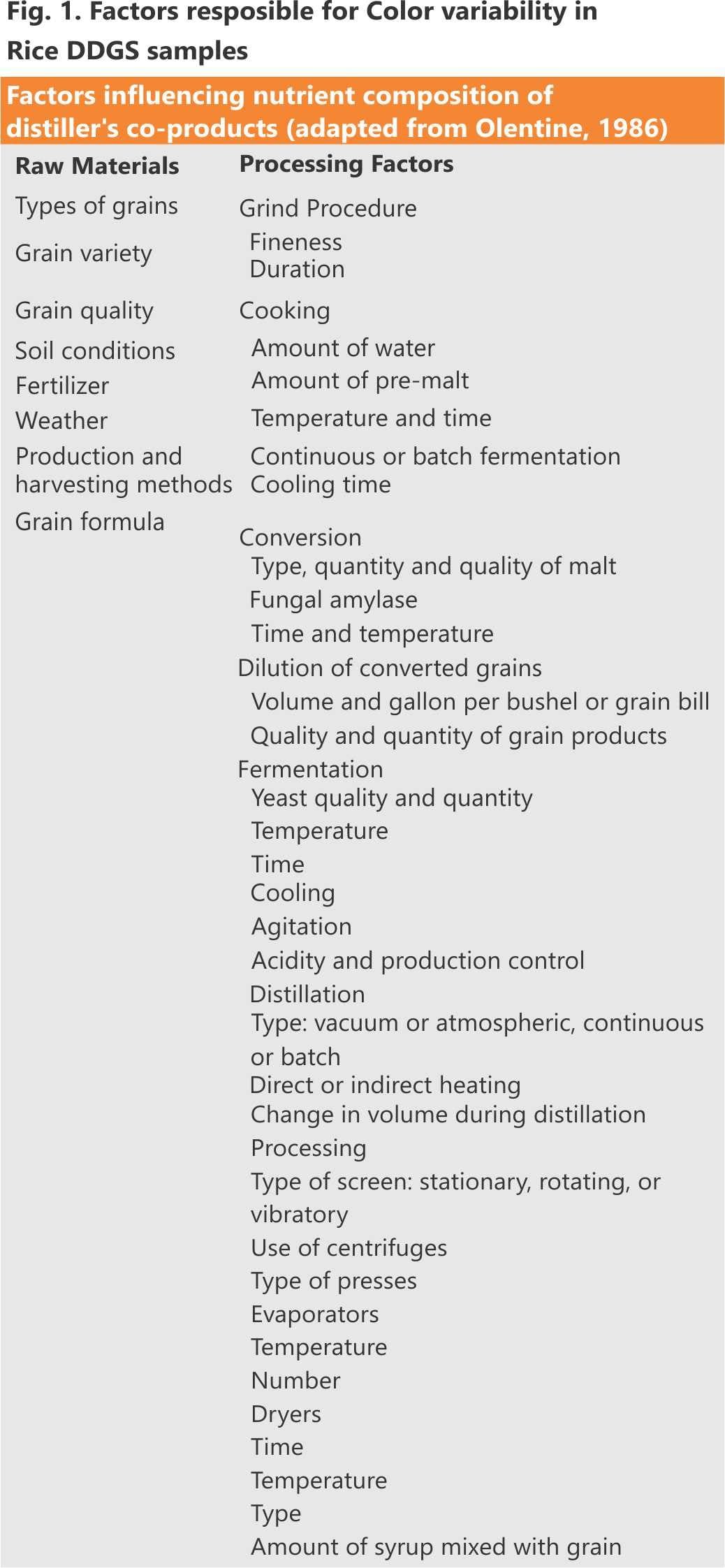
Distillers Dried Grains with Solubles (DDGS) is a co-product of ethanol production obtained through the dry-milling process. Its use in animal feeds is often limited by considerable variability in nutrient composition among distilleries, primarily due to differences in raw materials and processing methods (Liu, 2009).
Rice DDGS (RDDGS) contains concentrated levels of most nutrients originally present in rice. However, its nutritional composition varies significantly depending on the grain source and manufacturing process.
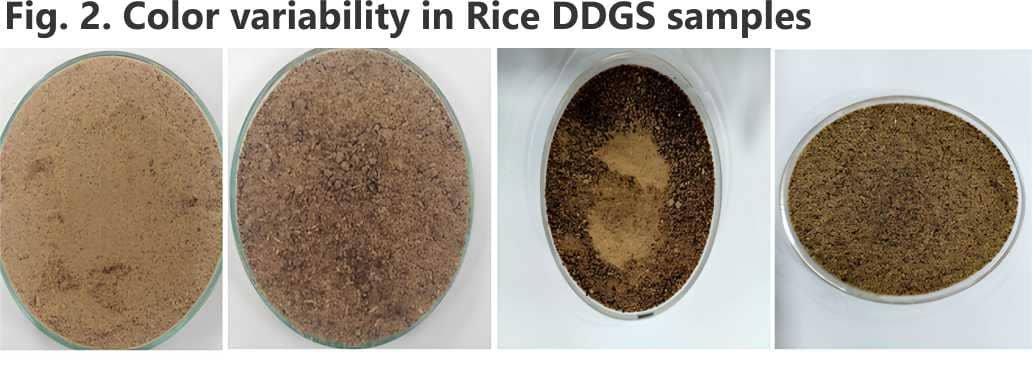
Color is a useful indicator of DDGS quality. Excessive drying temperatures produce darker-colored DDGS due to heat damage, which reduces nutrient availability and overall nutritional value (Fastinger et al., 2006).
Quality Characteristics of Good RDDGS
- Color
- Good-quality RDDGS should have a light brown color, similar to fresh de-oiled rice bran.
- Darker-color RDDGS generally indicates excessive heat treatment during ethanol production, which may reduce nutrient availability.
- Odor
- Fresh RDDGS typically have a sweet and mildly fermented aroma.
- A burnt or smoky odor indicates overheating during processing and is often associated with inferior nutritional quality (Cromwell et al., 1993).
- Particle Size
- RDDGS should have a uniform particle size.
- Uniform particles improve ingredient mixing, feed manufacturing efficiency, and diet consistency.
Crude Protein and Lysine Variability in Rice DDGS
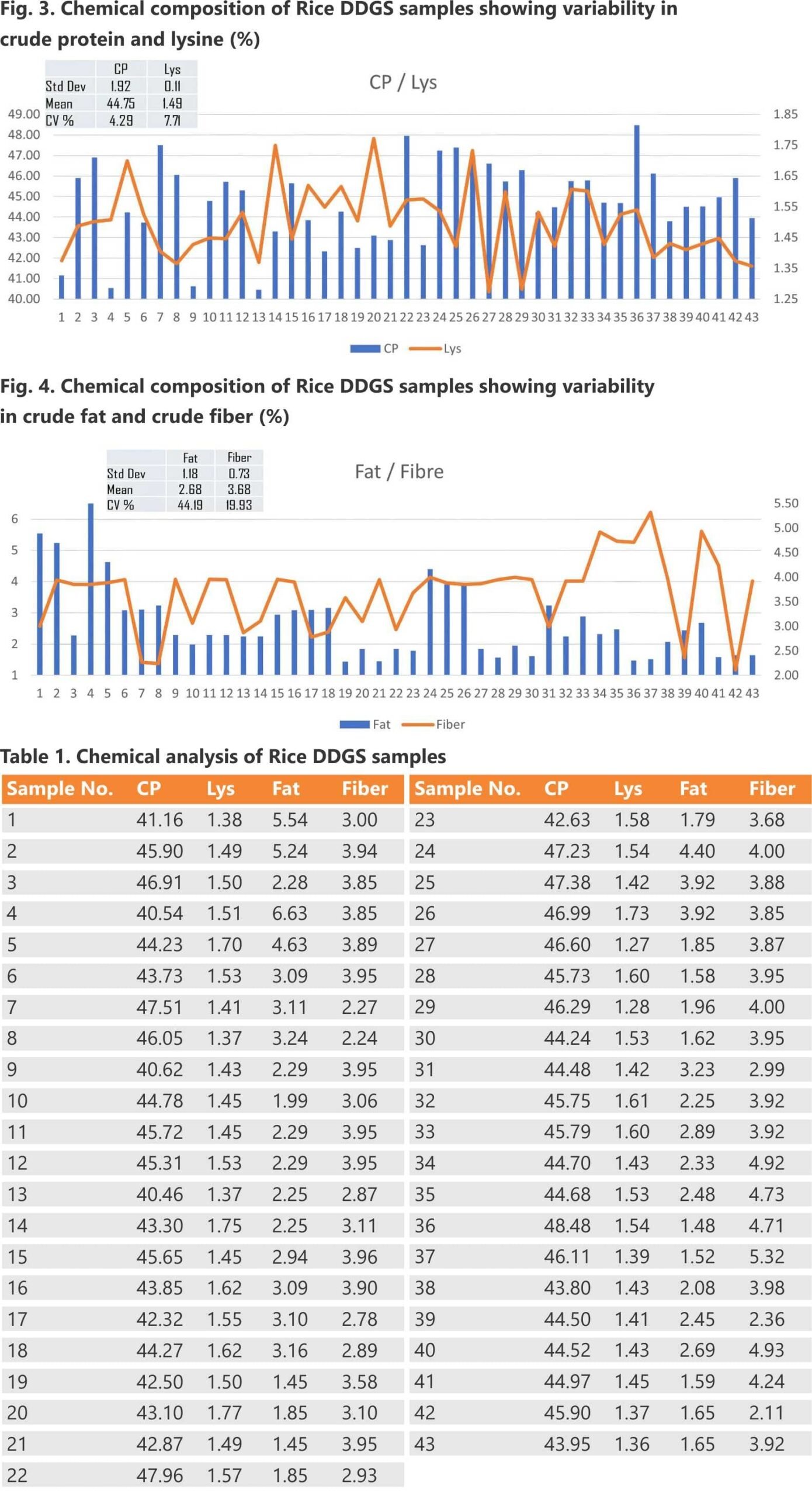
 The Regional Analytical Laboratory of JAPFA Comfeed Pvt. Ltd. analyzed 43 Rice DDGS (RDDGS) samples collected from different regions of India between January and September 2025. The results showed substantial consignment-to-consignment variation in both physical characteristics and chemical composition. No two consecutive consignments had identical quality attributes, demonstrating the inconsistency of commercially available RDDGS.
Crude Protein and Lysine
Crude protein (CP), the principal quality criterion for purchasing RDDGS, is generally expected to be around 44%. However, CP content in the analyzed samples ranged from 40% to 48%, with a coefficient of variation (CV) of 4.29%.
Lysine, one of the most critical limiting amino acids in poultry nutrition, showed even greater variability, ranging from 1.27% to 1.77% (CV 7.71%). Such differences can significantly influence feed formulation accuracy and animal performance. Whether diets are formulated using crude protein specifications or the Ideal Protein Concept, where precise amino acid balance is essential for optimum growth and efficiency.
These findings highlight the importance of routine nutrient analysis and continuous qualitymonitoring of RDDGS before its inclusion in feed formulations.
 Crude Fat and Crude Fiber
Analysis of 43 Rice DDGS (RDDGS) samples showed considerable variability in both crude fat and crude fiber content. Crude fat ranged from 1.45% to 5.54%, with a coefficient of variation (CV) of 44.19%, indicating marked inconsistency among consignments. Crude fiber ranged from 2.11% to 5.32%, with a CV of 19.93%.
Such variability can significantly influence feed quality and animal performance. Differences in crude fat affect dietary energy density, pellet quality, and feed handling characteristics, whereas variation in crude fiber influences nutrient digestibility, gut function, and overall feed utilization. Consequently, inconsistent fat and fiber levels can lead to variations in feed efficiency and production performance if not properly accounted for during feed formulation.
- Rapeseed Meal (RSM):
The nutritional value of alternative feed ingredients depends on accurate characterization of their chemical composition. In the case of rapeseed meal (RSM), despite numerous studies on well-defined experimental samples, published information on the composition and variability of commercially available RSM remains limited (Bell & Jeffers, 1976).
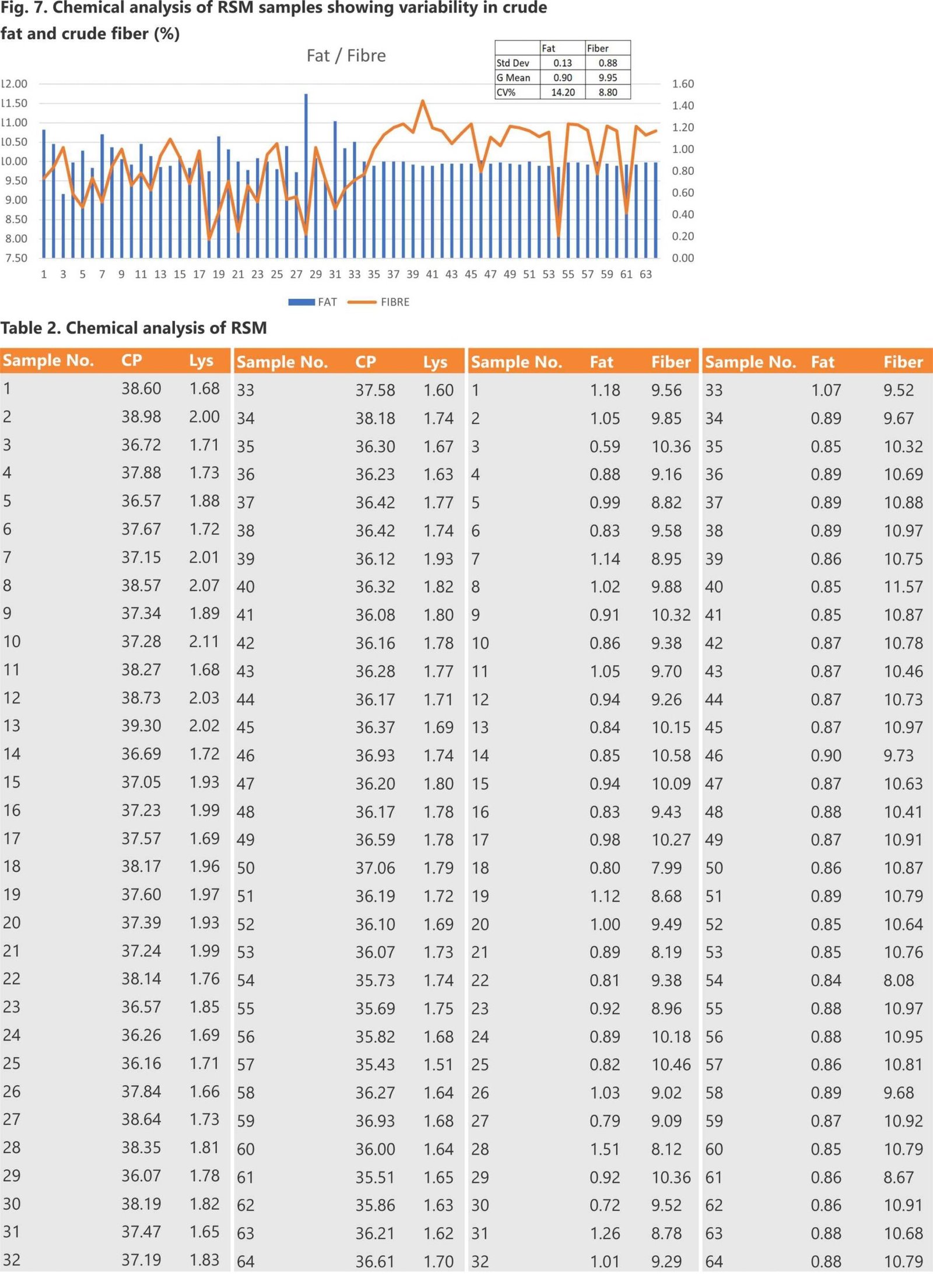
To assess the quality of RSM marketed in the Indian feed industry, 64 commercial samples were collected from different regions of India between January 1 and July 30, 2025. Considerable variation was observed among consignments in both physical appearance and chemical composition.
All samples were analyzed for proximate composition, including moisture, crude protein (CP), ether extract (fat), crude fiber (CF), and ash.
Crude Protein and Lysine
Crude protein remains the primary parameter used for pricing and feed formulation of RSM. Commercial RSM is generally assumed to contain approximately 37% CP. However, the analyzed samples ranged from 35.43% to 39.30% CP, with a coefficient of variation (CV) of 2.49%, indicating moderate variability.
 Greater variation was observed for lysine, the first limiting amino acid in poultry diets. Lysine content ranged from 1.51% to 2.11%, with a CV of 7.37%, demonstrating substantially higher variability than crude protein.
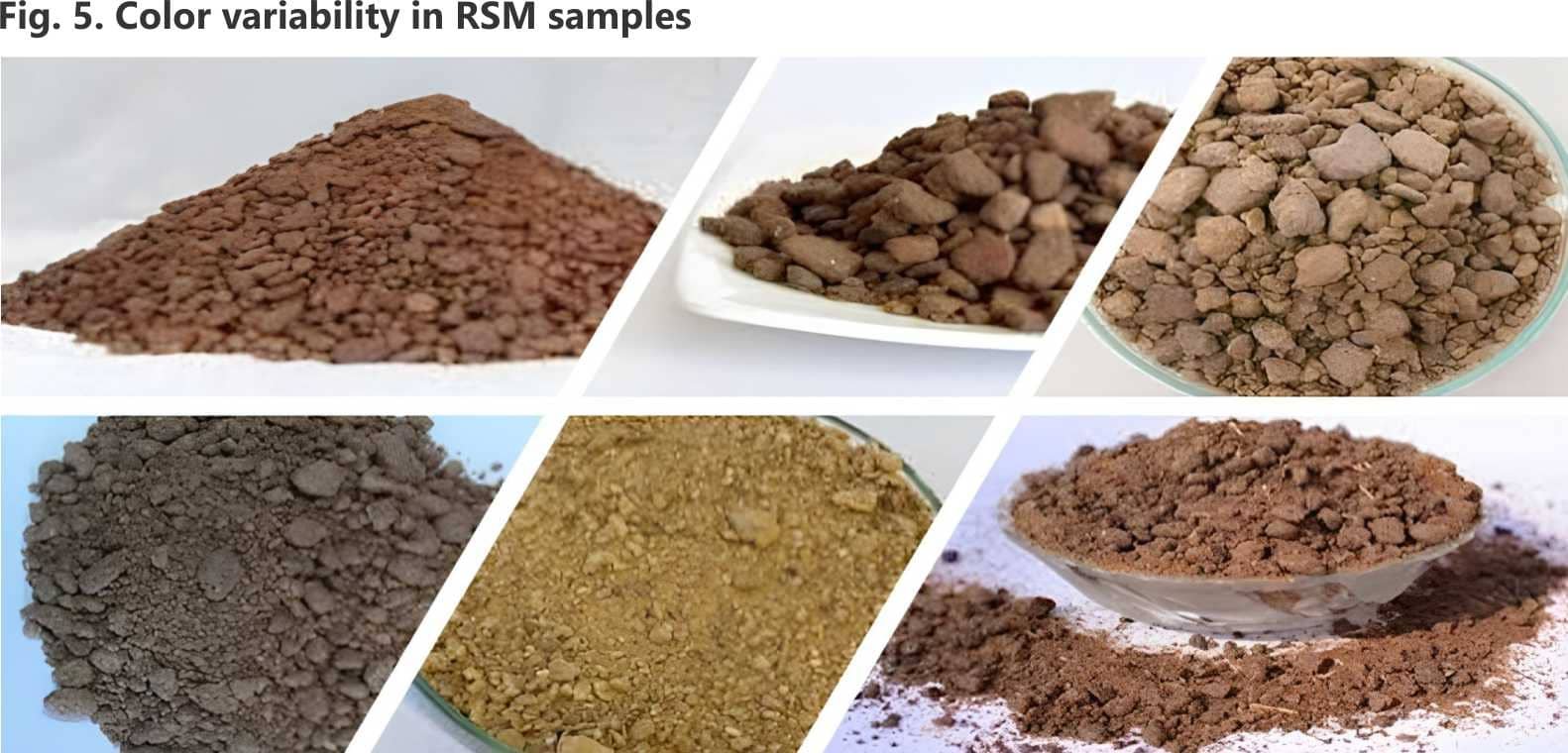 These findings indicate that batches with similar crude protein levels can differ considerably in digestible amino acid supply. Formulating diets based solely on crude protein may therefore result in lysine deficiencies or imbalanced amino acid profiles, reducing feed efficiency. Such inconsistencies can lead to poorer feed conversion ratio (FCR), slower growth, greater flock variability, or increased reliance on synthetic amino acids. These results emphasize the importance of routine amino acid analysis rather than relying on average book values in precision feed formulation.
Crude Fat and Crude Fiber
Analysis of the 64 RSM samples also revealed considerable variation in crude fat and crude fiber content. Crude fat ranged from 0.52% to 1.51%, with a CV of 14.20%, indicating high variability among consignments. Crude fiber ranged from 7.01% to 11.57%, with a CV of 8.80%.
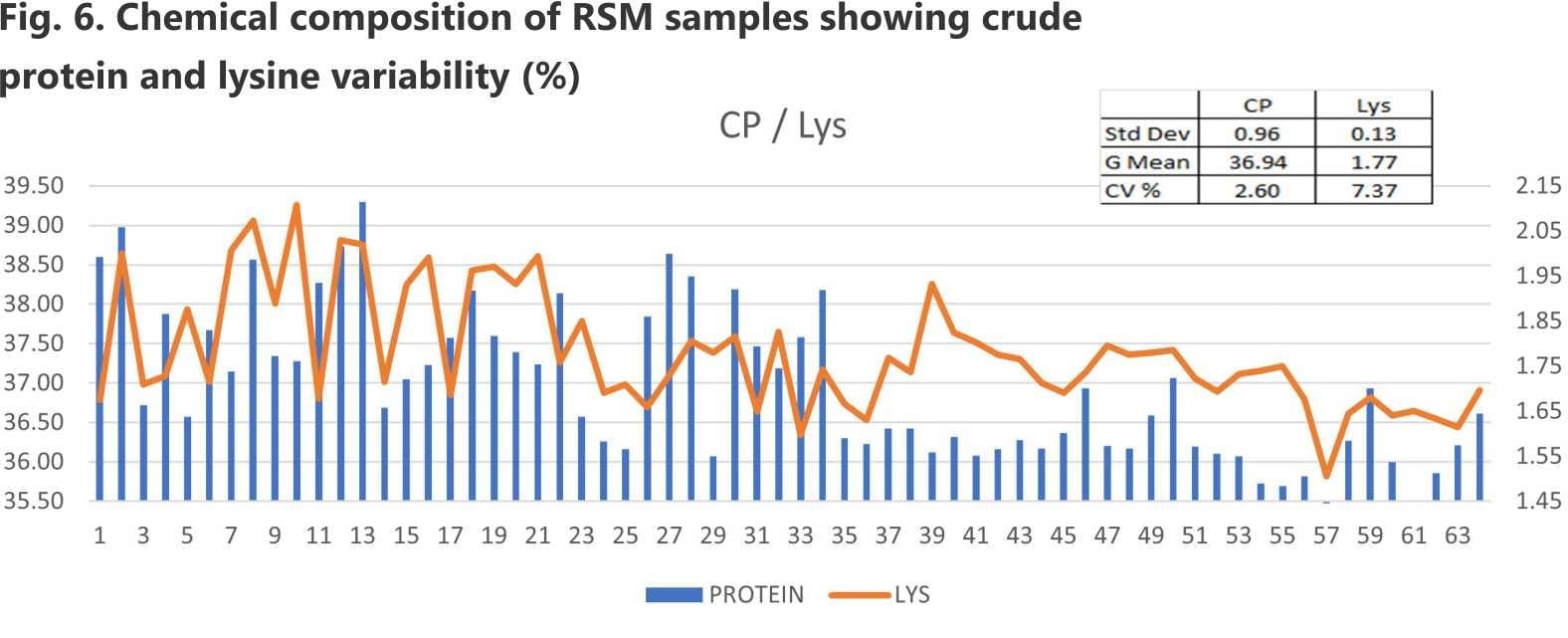 Variability in crude fat affects the energy contribution of RSM and may influence pellet quality and feed handling characteristics. Differences in crude fiber content can alter nutrient digestibility, feed intake, gut health, and nutrient utilization, ultimately affecting bird performance. These findings highlight the need for regular quality monitoring of commercial RSM to ensure consistent feed formulation and predictable production outcomes.
Summary
Analysis of 43 DDGS and 64 RSM samples collected from the East, West, and North regions between January 1 and September 30, 2025, revealed moderate to high variability in key nutritional parameters, including crude protein (CP), lysine, crude fat, and crude fiber.
Comparison of the observed analytical values with standard nutrient specifications reported for rice DDGS and RSM showed considerable variation across nutrients. These differences indicate that feed formulations based solely on standard reference values may lead to inaccurate nutrient estimations and a mismatch between expected and actual animal performance.
Therefore, regular laboratory evaluation of each consignment is essential when using alternative feed ingredients. Nutritionists should consider actual analytical data rather than relying exclusively on published nutrient tables to achieve more accurate and consistent feed formulation.
 Acknowledgment
I sincerely acknowledge the support of the Regional Laboratory In-Charge, Japfa Comfeed India Pvt. Ltd., for providing detailed analytical data for each sample and for the valuable guidance and assistance throughout this study.
I also extend my gratitude to the management of Japfa Comfeed India Pvt. Ltd. for providing the opportunity to conduct this work and granting permission to publish the findings. Their encouragement, cooperation, and support were invaluable to the successful completion of this study.
References are available upon request.
By Dr Waghmare Dilip Laxmanrao, DGM-Nutrition, JAPFA Comfeed