
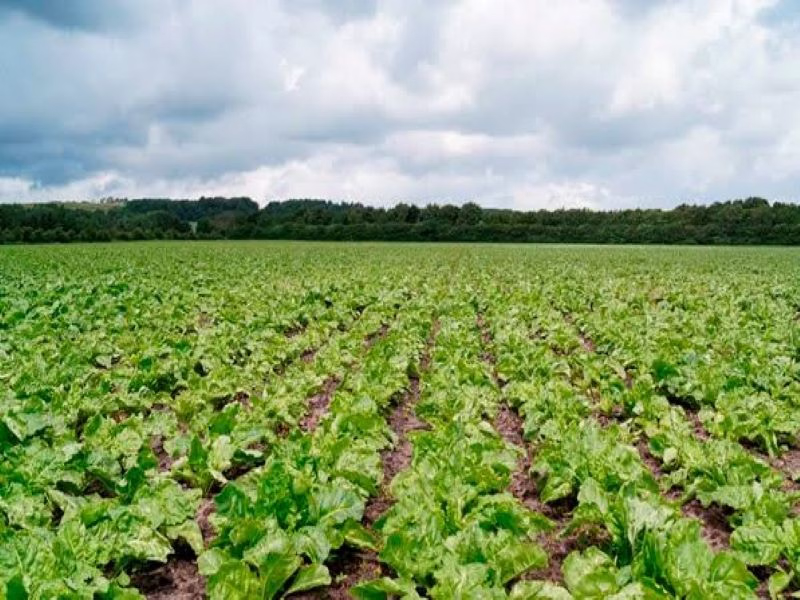
Fodder Beet (Beta vulgaris) is emerging as a high-yielding green fodder crop for arid and semi-arid regions, offering a sustainable solution to fodder scarcity. Developed and promoted by the ICAR-Central Arid Zone Research Institute (CAZRI), Jodhpur, the crop is gaining popularity among livestock farmers due to its exceptional biomass yield, water-use efficiency, and adaptability to poor soil and saline water conditions.
The crop can produce over 150–200 tonnes of green biomass per hectare within just four months, with tubers weighing around 5–6 kg each. Available during January to April — a period of acute fodder shortage — Fodder Beet has demonstrated 8–10% improvement in milk yield in Tharparkar cattle feeding trials.
Its low production cost, estimated at less than 50 paise per kg biomass, further enhances its economic viability. The crop has already been demonstrated among more than 600 farmers across Rajasthan and is now expanding to states such as Haryana, Madhya Pradesh, Maharashtra, Kerala, Chhattisgarh, and Uttar Pradesh with encouraging farmer feedback.
Experts recommend gradual feeding along with dry fodder to maximize nutritional benefits and avoid digestive issues in livestock.