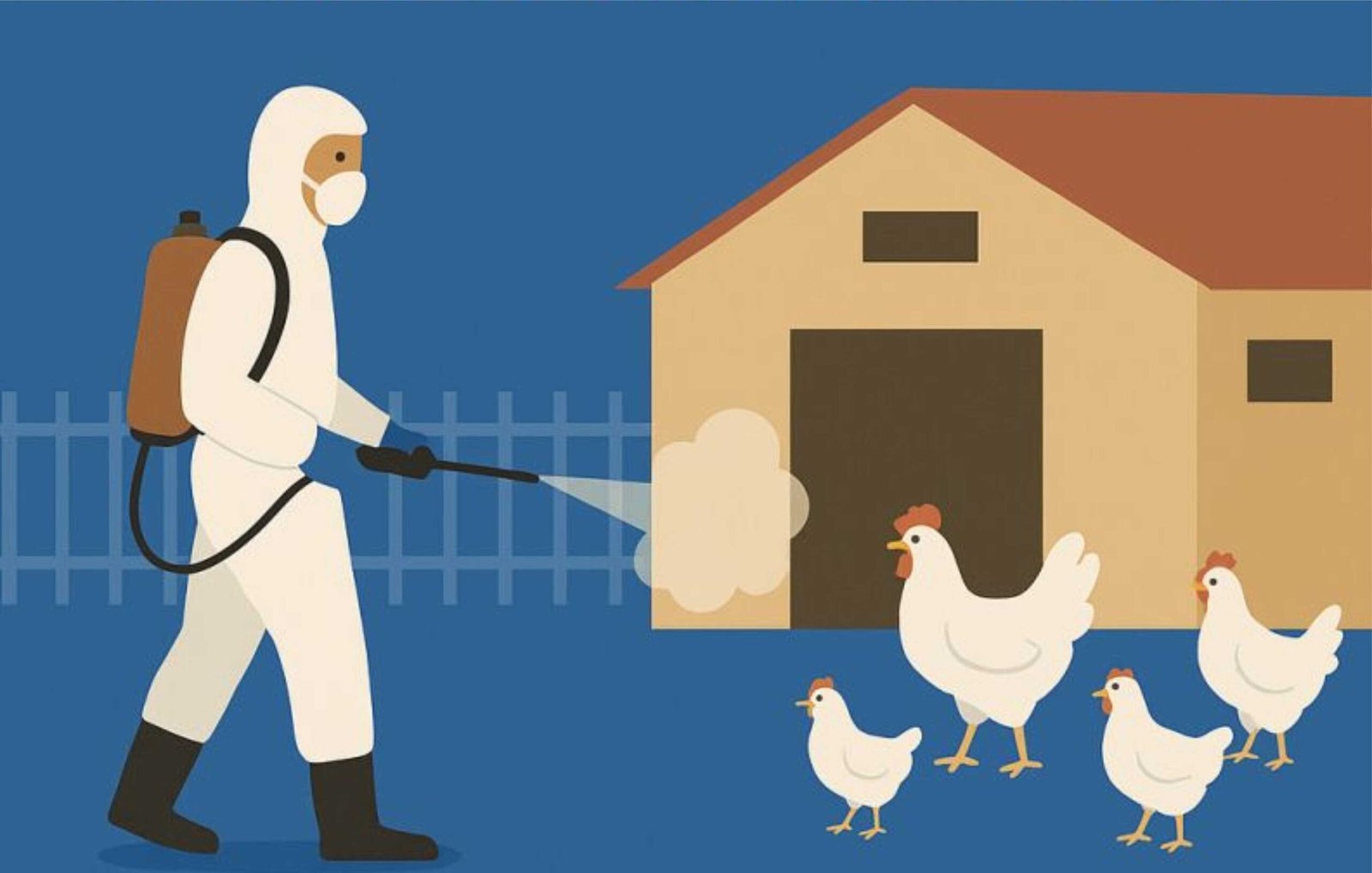
The global poultry industry continues to face mounting pressure from recurring outbreaks of infectious diseases, particularly Highly Pathogenic Avian Influenza (HPAI). These outbreaks not only result in substantial economic losses but also threaten food security, disrupt supply chains, and create instability in poultry product prices. Amid these challenges, recent research from Texas A&M University has highlighted the importance of practical and cost-effective biosecurity measures that can significantly reduce disease transmission at the farm level.
The study focused on evaluating how commonly used biosecurity tools perform under real farm conditions rather than ideal laboratory environments. Researchers observed that disease-causing microorganisms often accumulate on high-contact surfaces and equipment such as door handles, vehicle tires, floor mats, ventilation systems, and cooling pads. These contaminated surfaces become major pathways for disease spread between poultry houses and farms, especially when hygiene protocols are inconsistently followed.
One of the major findings of the study was that relatively simple interventions can substantially reduce contamination risks. Footbaths, boot covers, and tire washes were found to be effective barriers against pathogen transfer when used correctly. However, researchers stressed that the effectiveness of disinfectants depends heavily on proper cleaning before application. Organic matter such as dust, litter, and manure can reduce disinfectant activity, making routine cleaning a critical first step in any biosecurity program.
Interestingly, the study also found that powdered disinfectants performed particularly well under challenging farm conditions. Compared to liquid disinfectants, powdered products maintained better efficacy even in the presence of dirt and organic debris. In addition, they may offer logistical and economic advantages for poultry producers, especially in regions where water availability or storage conditions are limiting factors.
Another important takeaway from the research is the recognition that “perfect biosecurity” is often difficult to achieve in commercial poultry operations. Time limitations, labour shortages, environmental conditions, and operational pressures frequently prevent farms from maintaining ideal standards at all times. Nevertheless, the researchers emphasized that even partial compliance with biosecurity protocols can significantly lower disease risk. This practical perspective is especially relevant for small and medium-scale poultry farms, where implementing highly sophisticated systems may not always be financially feasible.
The findings also reinforce the growing understanding that biosecurity should not be viewed as a one-time intervention but rather as a continuous management culture. Employee training, routine monitoring, and consistent implementation remain essential to ensure that preventive measures are effective over the long term. Even small behavioural changes, such as proper footwear sanitation or restricting unnecessary farm traffic, can collectively contribute to meaningful disease reduction.
For countries like India, where poultry production continues to expand rapidly, strengthening farm-level biosecurity has become increasingly important. Dense poultry populations, variable climatic conditions, and frequent movement of birds and vehicles create ideal circumstances for rapid disease spread. Cost-effective and adaptable biosecurity solutions therefore hold immense value for safeguarding poultry health and minimizing economic disruption.
As the poultry sector navigates the evolving threat of emerging diseases and antimicrobial resistance concerns, preventive strategies are likely to become even more central to sustainable production systems. Research such as this provides valuable scientific evidence that practical, affordable, and realistic biosecurity measures can make a measurable difference in disease control.
Ultimately, the study serves as an important reminder that while advanced technologies and vaccines remain critical tools, basic hygiene and consistent preventive practices continue to form the foundation of effective poultry health management.
Source: “New research offers practical biosecurity tools to limit poultry disease spread” by Karn Dhingra, Texas A&M University, published in Phys.org.