Modern poultry production is increasingly challenged by environmental variability. Elevated temperatures, prolonged heat episodes, fluctuations in humidity and rainfall, and changes in feed and water availability can impose considerable physiological stress on birds.
In India, these challenges are particularly relevant because poultry production is closely linked to climate-sensitive agricultural and environmental resources. One important driver of climate variability is the El Niño–Southern Oscillation (ENSO). During the warm El Niño phase, changes in atmospheric circulation can influence rainfall and temperature patterns, including conditions associated with the Southwest monsoon.
For poultry, these environmental changes extend beyond farm management and production economics. Environmental stress can influence feed resources, water availability, thermoregulation, immune competence and gastrointestinal function.
Among these systems, the gut deserves particular attention because it is one of the bird’s most important interfaces with the external environment.
Why the Gut Matters More Than Ever
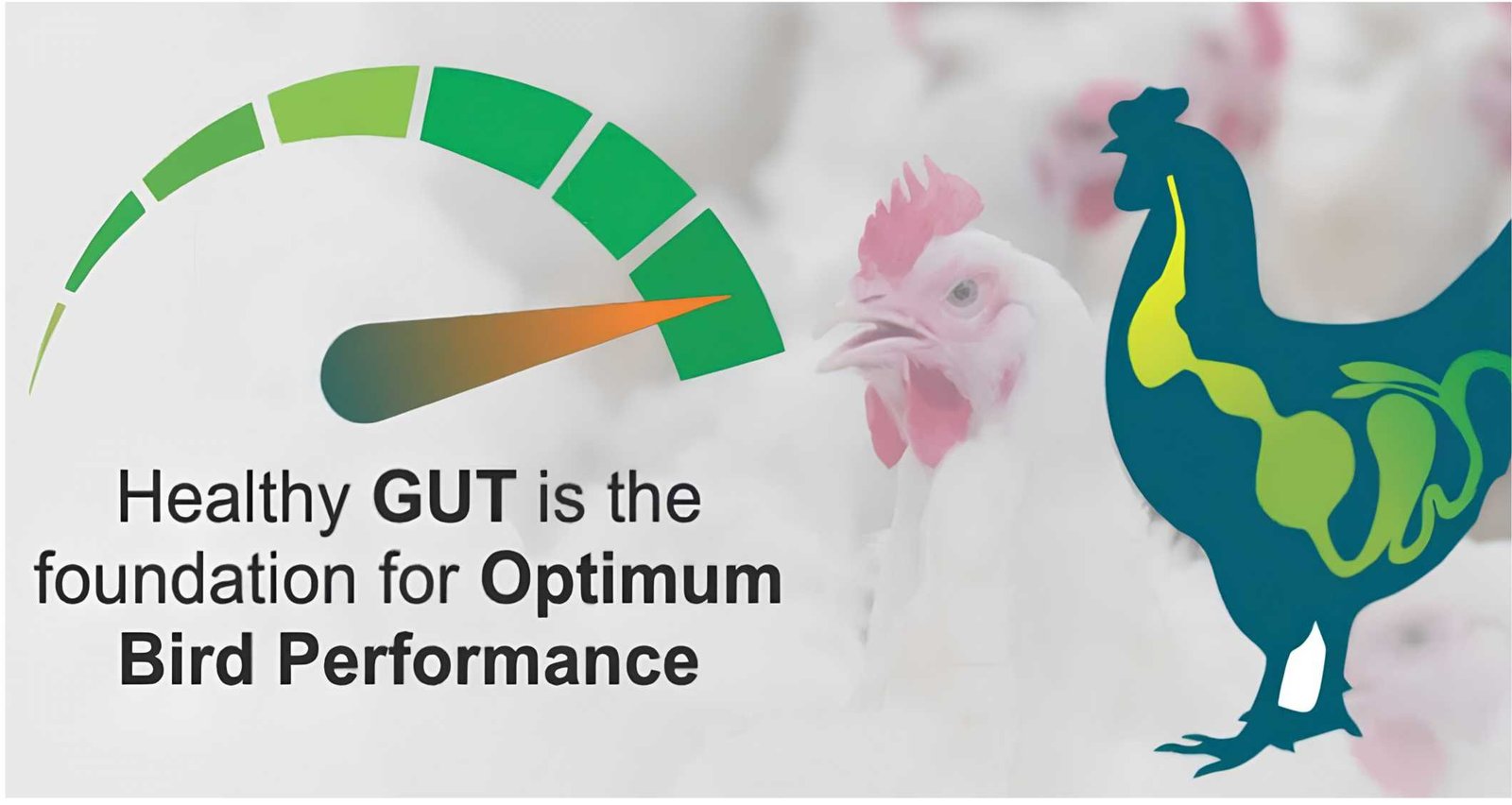
The gastrointestinal tract is responsible for digestion and nutrient absorption, but its biological role extends much further. It provides a physical, microbial and immunological barrier against potentially harmful agents entering through the oral route.
The intestinal defence system includes the mucus layer, intestinal epithelium, tight-junction complexes, microbiota and mucosal immune system. The mucus layer forms the first protective interface between luminal contents and the epithelial surface.
Beneath this layer, intestinal epithelial cells form a selectively permeable barrier that permits nutrient absorption while limiting the passage of pathogens and undesirable substances. Tight-junction proteins such as claudins and occludins help maintain epithelial integrity.
Effective gut defence therefore depends on maintaining both physical barrier integrity and biological balance.
When the Climate Changes, the Gut Feels It
The effects of El Niño on poultry production are largely indirect but can be significant. Changes in rainfall and temperature can influence agricultural production and consequently the availability and cost of important feed ingredients.
Reduced rainfall and prolonged dry periods may also increase pressure on water resources. At farm level, higher temperatures can increase water consumption and cooling requirements while reducing feed intake and productive efficiency.
Feed availability and quality influence the intestinal environment, while water availability affects hydration and thermoregulation. Ambient temperature directly influences bird physiology. Together, these factors can affect intestinal integrity, microbial balance and immune function.
Thus, climate resilience and gut resilience are closely interconnected.
Heat Stress: From Environmental Challenge to Physiological Stress
Heat stress occurs when birds cannot dissipate sufficient body heat to maintain thermal balance. Since poultry lack functional sweat glands, they rely primarily on panting, along with physiological and behavioural adaptations, to dissipate heat.
Increasing temperature and humidity can alter respiration, blood flow, feed and water intake, metabolism and immune function. Prolonged heat exposure can increase the generation of reactive oxygen species (ROS), leading to oxidative stress when antioxidant defences are overwhelmed. This may trigger cellular damage, inflammation and metabolic disturbances.
In broilers, heat stress can reduce feed intake, growth and feed efficiency, while in layers it may affect egg production, egg weight and shell quality. Severe stress can result in dehydration and mortality.
When Heat Challenges the Gut Barrier
The gastrointestinal tract must continue to digest and absorb nutrients while simultaneously maintaining a barrier against luminal microorganisms and their products.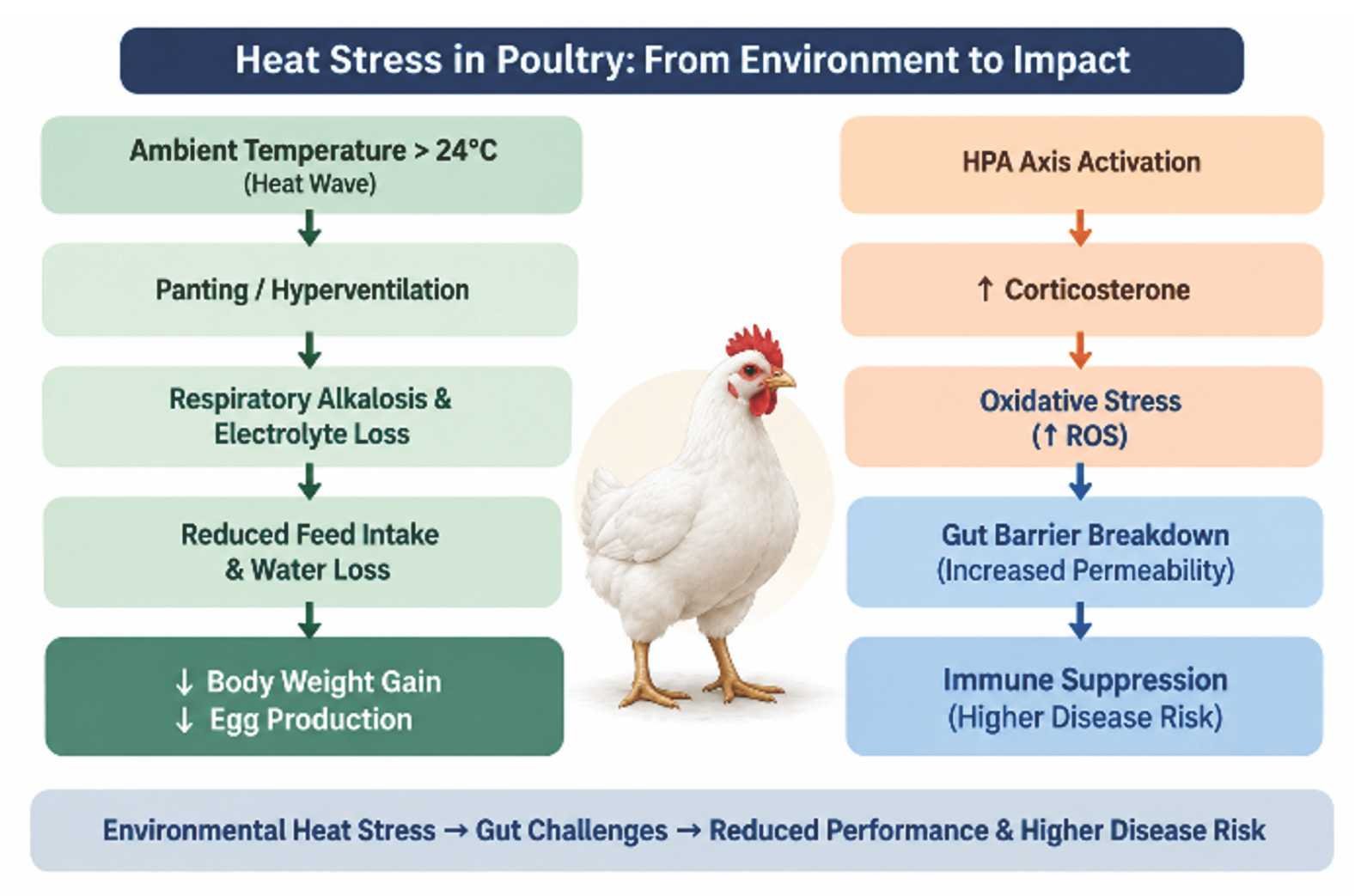
Heat stress can influence intestinal morphology, epithelial integrity, permeability and digestive function. Physiological changes in blood flow, oxidative stress and inflammatory responses can contribute to intestinal dysfunction.
When epithelial integrity is compromised, tight-junction organization may be altered and intestinal permeability may increase. This can increase exposure of underlying tissues to luminal microbial components and contribute to inflammatory responses.
The intestinal barrier is therefore not simply a structural wall. It is a dynamic physiological interface whose integrity is essential for maintaining gut homeostasis.
The Microbiome: Keeping the Gut in Balance
The intestinal microbiota contributes to nutrient metabolism, gut homeostasis and immune regulation. Beneficial microorganisms can help limit pathogen establishment through competition for nutrients and attachment sites, as well as through interactions with the host environment.
Heat stress, altered feed intake, oxidative stress and changes in intestinal physiology can disturb this microbial ecosystem, potentially leading to dysbiosis.
Dysbiosis may further compromise intestinal integrity and influence inflammatory and immune responses. Thus, oxidative stress, intestinal barrier integrity, microbial balance and immune function are closely interconnected components of gut resilience.
When Stress Weakens the Bird’s Defences
Heat stress can adversely affect immune competence by altering lymphocyte activity, antibody responses and vaccine responsiveness. Such changes may reduce the bird’s ability to respond effectively to infectious challenges.
Heat-stressed birds may become more susceptible to bacterial, viral and enteric pathogens. Organisms such as E. coli and Clostridium perfringens can become particularly important when intestinal homeostasis and host defence are compromised.
During prolonged dry conditions, increased dust and poor air quality can add further environmental pressure, particularly when ventilation, litter management and farm hygiene are inadequate.
The Road to a More Resilient Gut
Building gut resilience requires a holistic approach. No single intervention can eliminate the effects of environmental stress; rather, resilience is built through the interaction of sound farm management, nutrition, water management and targeted gut-health strategies.
- Start with the Environment
Effective environmental management is the first level of protection against heat stress. Ventilation, air movement and cooling should be optimized according to environmental conditions. Temperature should be considered together with relative humidity, while stocking density, bird handling and other management practices should be optimized to minimize additional thermal burden.
- Water: The First Line of Support
Water is fundamental to thermoregulation and becomes increasingly important as environmental temperature rises. Continuous access to clean, good-quality water should therefore be ensured.
Water quality, drinker flow, drinker availability and water consumption should be monitored routinely. During periods of heat stress, any restriction in water availability can further compromise the bird’s ability to maintain thermal balance.
- Nutrition: Fuel for Resilience
Maintaining consistent feed quality is particularly important during environmental stress. Raw materials should be carefully evaluated, mycotoxin risk should be managed, unnecessary abrupt feed changes should be avoided, and appropriate nutrient density and feed physical quality should be maintained.
Good nutritional management helps reduce additional stress on the gastrointestinal tract during periods of reduced feed intake and climatic pressure.
- Nurturing the Right Microbial Balance
Maintaining microbial stability is fundamental to gut resilience. Nutritional strategies including probiotics, prebiotics, symbiotics, postbiotics and yeast-derived functional compounds can be incorporated into comprehensive gut-health programmes.
MOS: Supporting the Gut from Within
Mannan-oligosaccharides (MOS) are yeast-derived compounds widely used and investigated for their role in poultry gut health. MOS can support gut resilience through complementary mechanisms, including interference with the adhesion of certain enteric pathogens, modulation of the intestinal microbial environment and interaction with host immune mechanisms.
By supporting microbial balance and mucosal defence, MOS can form part of a broader strategy for maintaining intestinal homeostasis during environmental and microbial challenges.
- Supporting a Balanced Immune Response
During environmental stress, supporting an appropriate immune response becomes particularly important. Nutritional immunomodulators such as MOS, β-glucans and other yeast-derived components can interact with innate immune mechanisms and support mucosal immune function.
The objective is not excessive immune activation, but maintenance of a balanced and effective host defence response.
- Strengthening the Gut Barrier
The mucus layer, epithelial cells and tight-junction complexes form essential components of intestinal defence. Strategies aimed at maintaining mucosal integrity, epithelial continuity and tight-junction function are particularly relevant during heat stress, nutritional disturbance and microbial challenges.
Protecting intestinal barrier function helps maintain the separation between luminal contents and underlying tissues while supporting overall gut homeostasis.
- Keeping Oxidative Stress in Check
Heat stress can increase oxidative pressure and disturb cellular antioxidant balance. Appropriate nutritional support for antioxidant defence can therefore complement environmental heat-stress management and help maintain normal cellular and intestinal function during periods of increased physiological demand.
- Reducing Cumulative Stress
Heat stress rarely occurs in isolation. Its effects can be compounded by poor ventilation, high stocking density, feed changes, water-quality problems, mycotoxin exposure, microbial challenges and handling stress.
Reducing avoidable stressors is therefore essential for preserving the bird’s adaptive capacity and supporting consistent performance.
Beyond Disease Prevention: Building a Resilient Gut
Gut resilience is about more than preventing disease. It means maintaining digestion, nutrient absorption, barrier integrity, microbial balance and immune defence even when birds are exposed to environmental and physiological challenges.
The goal is to help the gut adapt to challenges, maintain homeostasis, recover efficiently and support sustained performance.
Conclusion
Climate variability and heat stress can challenge gut integrity, microbial balance and immune defence in poultry. Building gut resilience therefore requires a combination of effective environmental management, good water and feed quality, microbiome support, appropriate immunomodulation and intestinal barrier protection.
Nutritional strategies such as MOS and other functional yeast-derived components can complement farm-level management by supporting the bird’s natural defence mechanisms. Ultimately, a resilient gut is an important component of a resilient bird—and, consequently, of more consistent and sustainable poultry production.
By Dr. Mounika Gali, Nanovet Nutrition