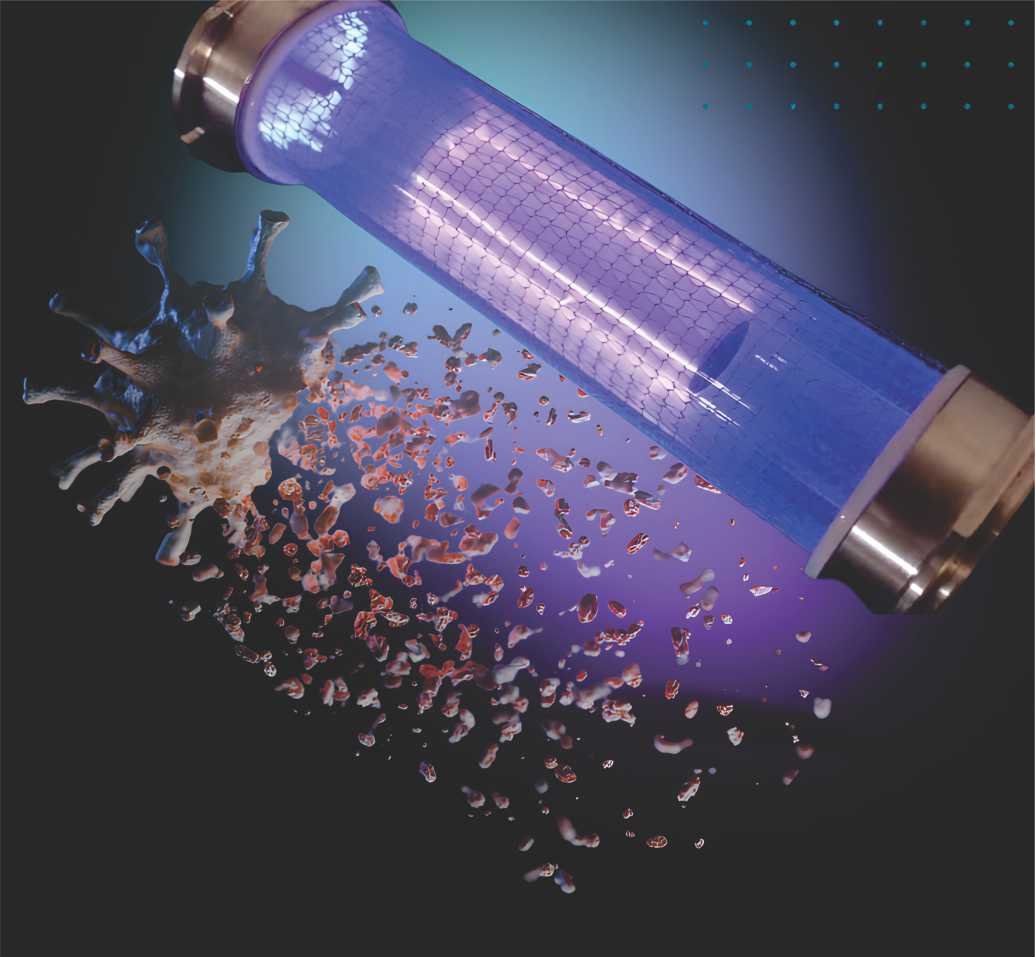
As highly pathogenic avian influenza (HPAI) continues to challenge poultry production, researchers at Texas A&M University are testing whether far-ultraviolet (far-UVC) light could become an additional tool for reducing airborne pathogens inside commercial poultry houses.
Far-UVC is a shorter-wavelength form of ultraviolet light that can inactivate viruses and bacteria while penetrating less deeply into biological tissue than conventional germicidal UV. This characteristic has generated interest in using the technology in occupied environments, including poultry houses. However, its effectiveness and practical safety under commercial production conditions still need to be established.
The Texas A&M study, led by Morgan Farnell and Ziteng “Tim” Xu, represents the third and final phase of a multi-year research programme. Earlier work conducted by researchers at Columbia University and St. Jude Children’s Research Hospital examined far-UVC activity against pathogens under controlled conditions. The Texas A&M team will now evaluate its performance in poultry houses stocked at commercial bird densities.
Researchers will collect air samples before and after far-UVC exposure and monitor indicator microorganisms, including aerobic bacteria, coliforms and Staphylococcus aureus. The results will help determine whether the technology can reduce airborne pathogen loads and potentially contribute to HPAI control.
A major challenge is the poultry-house environment itself. Dust can absorb or scatter ultraviolet radiation, reducing the amount of light reaching the air around birds. Researchers will therefore measure far-UVC exposure at bird level. AI-assisted cameras will also monitor bird behaviour, circadian rhythms and growth performance to identify any unintended effects.
The researchers are also exploring an integrated system combining far-UVC air treatment, UVC-enabled positive-pressure ventilation and robotic floor-disinfection modules.
The study will run for two years and involve four flocks, including birds raised under summer and winter conditions. If successful, the approach could eventually be evaluated for other livestock systems, including swine and dairy. For poultry producers, the technology could represent an additional layer of biosecurity alongside established measures such as hygiene, controlled movement, ventilation management and surveillance—but it is not yet a proven replacement for conventional HPAI prevention practices.