India has a large dairy cow population, but its per-animal milk production remains significantly below the global average. India’s total cattle population stands at 193.46 million, according to official figures based primarily on the 20th Livestock Census, while the Department of Animal Husbandry and Dairying initiated the updated 21st Livestock Census in late 2024.
Population Breakdown
- Total cattle: 193.46 million animals nationwide
- Indigenous/non-descript cattle: 142.11 million
- Exotic/crossbred cattle: 51.36 million
Milk Production
Driven by this large cattle population, India remains the world’s largest milk producer, producing more than 247.87 million tonnes of milk annually during 2024–25.
In India, a crossbred cow produces an average of 6.78 kg of milk per cow per day, or approximately 2,034 kg of milk per crossbred cow per year. By comparison, the USA produces 102 million metric tonnes (MMT) of milk per year from just 9.57 million cows, equivalent to approximately 28.6 kg of milk per cow per day, or 8,600 kg per dairy cow per year.
Crossbred cows, particularly Holstein Friesian (HF) and Jersey cows, are capable of producing 4,000–5,000 litres of milk per year under village conditions. However, only a small proportion of animals currently achieve this level of production, despite having the genetic potential to do so. Many Indian farmers now have dairy cows with significantly higher genetic potential, but this potential is often not fully realised due to gaps in nutrition and feeding management.
The reason is simple: many farmers continue to practise non-scientific or imbalanced feeding, resulting in dairy cows not receiving adequate nutrients to meet their production potential. A significant part of India’s low milk productivity can be attributed to underfeeding and inadequate nutrition.
Traditionally, dairy farmers kept cows with relatively low production potential and fed them crop by-products, including roughages such as stover and straw, along with concentrates such as wheat bran and rice bran. While some of these feed resources can provide valuable nutrients, their nutritional quality and availability can vary considerably.
However, many farmers have upgraded the genetic potential of their herds by moving from native cattle to exotic or crossbred animals without making corresponding changes to their feeding practices. Matching improved genetics with scientific and balanced nutrition can significantly enhance dairy cow performance, milk production and the overall profitability of dairy farming.
What Does Scientific Feeding Involve?
Simply put, scientific or targeted feeding means meeting the nutrient requirements of a dairy cow at every stage of the lactation cycle. For a dairy enterprise to be profitable, this needs to be done in a balanced and efficient manner so that no nutrients—and consequently, no money—are wasted.
What Are the Nutrient Requirements?
Dairy cows require a balanced supply of:
- Protein
- Energy – from fats and carbohydrates
- Vitamins
- Minerals, including organic minerals
- Water
- Essential feed additives, such as rumen buffers and rumen-specific yeast cultures
One of the major challenges in dairy nutrition is that these nutrient requirements are not constant; they change according to the animal’s stage of production. For instance, a lactating cow has different requirements from a dry cow, while a cow producing 25 litres of milk per day has significantly different requirements from one producing 5 litres per day.
Nutrient requirements also change during the dry period as the cow approaches calving. Determining the exact nutrient requirements of an individual animal can be difficult for farmers and requires specialist knowledge from veterinarians and dairy nutritionists.
What Does Scientific Feeding Involve?
Simple rules and practices for scientific dairy cow feeding.
A cow’s diet consists primarily of two components: roughages and concentrates, including compound cattle feed. Roughage forms the bulk of the diet and includes dry fodder, paddy straw, green fodder and silage. Dry fodder and paddy straw are generally high in bulk but lower in nutrient content, while green fodder and silage provide the required bulk along with higher nutrient availability.
Roughage Quality
The quality of roughage has a significant impact on dairy cow performance. Roughages can
broadly be classified into three categories based on their maturity and nutritional value.
High-quality roughage (forages or silage): CO-4, CO-5, Super Napier and COFS-29, when harvested at the right stage of growth, before the plants become too mature and while the stalks are still soft.
Average-quality roughage (forages or silage): CO-4, CO-5, Super Napier and COFS-29 when harvested at a more mature stage, when the stalks become hard. Mature native sorghum, roadside grasses, green maize fodder and sugarcane tops fall into this category.
Poor-quality roughage: Dry fodder, paddy straw, wheat straw and oat straw.
Dairy Cattle Feed / Concentrate Quality
The other important component of the diet is nutrient-dense compound cattle feed or concentrates. Commercial dairy cattle feeds available from reputed manufacturers in India generally contain cereal grains, milling by-products, cottonseed cake, copra DOC, wheat bran, DORB, rice polish, minerals, vitamins and essential feed supplements.
This category can also include highly nutritious forage legumes such as subabul, sesbania and agathi, which are highly digestible and contain relatively high levels of protein.
Good-quality fodder is one of the most economical sources of nutrients for dairy cows. Therefore, wherever farmers have the resources to grow good-quality green fodder, they should provide as much chopped green fodder as the dairy cow will readily consume and then supplement it with the required quantity of high-quality compound cattle feed or concentrate. This approach can help improve both milk production and the profitability of the dairy enterprise.
Importance of Nutrient Balance
A balanced dairy diet is essential to prevent the wastage of expensive nutrients and to improve the profitability of dairy farming. If a dairy cow is fed enough protein, energy, vitamins and other nutrients to support a certain level of milk production but is deficient in one critical nutrient, milk production will be limited by that deficient nutrient. The surplus nutrients are then not utilised efficiently, resulting in unnecessary feed costs.
For example, if a cow is provided with sufficient protein, energy and vitamins to support the production of 20 litres of milk per day but receives only enough calcium to support 10 litres, her milk production will be limited accordingly. The additional protein and energy supplied will not be utilised efficiently, effectively increasing the farmer’s feed costs without a corresponding increase in milk production.
The easiest way to achieve a balanced diet is to provide good-quality forage, either fresh or as silage, such as COFS-29, CO-5 or Super Napier. Ideally, the forage should be offered in chopped form and in quantities that allow the cow to consume it adequately, followed by the required amount of high-quality, scientifically formulated compound cattle feed to meet her nutritional requirements.
The quantity of compound cattle feed required will depend on the cow’s milk production and the amount and quality of forage provided each day. If the compound cattle feed is properly mixed with chopped forage to form a total mixed ration (TMR), the risk of nutritional imbalances and digestive disorders such as acidosis, indigestion and bloat can be reduced significantly.
When this feeding regime is combined with proper teat dipping and clean milk production practices, it can contribute to improved udder health and overall dairy cow performance. Over time, somatic cell count (SCC) can be reduced, milk fat content can improve, reproductive performance can improve, and the cow can maintain better overall health.
If a dairy farmer relies solely on individual home-grown feed ingredients, it is highly unlikely—if not virtually impossible—to provide a scientifically balanced diet consistently. Although individual home-grown feed ingredients may appear cheaper, an unbalanced diet, particularly with respect to protein, vitamins and minerals, can result in lower milk production, poorer reproductive performance and increased susceptibility to disease due to compromised nutritional and immune status.
In the short term, home-grown individual feed ingredients may appear cheaper. However, in the long term, an unbalanced diet can cost the farmer more than using appropriately formulated compound cattle feed.
Protein
Protein is often the limiting nutrient in dairy cow diets for two main reasons:
- Low protein content of dry fodder: Dry fodder and paddy straw are generally low in protein, which means that larger quantities of compound cattle feed or concentrate may be required to meet the cow’s protein requirements.
- High cost of protein sources: Protein ingredients used in compound cattle feed and concentrates are among the more expensive feed components, partly because many of these ingredients are also used in poultry feed.
Because dry fodder and paddy straw are low in protein, significantly larger quantities of compound cattle feed or concentrate may be required, compared with good-quality green fodder, to provide the same amount of protein. This can make feeding a lactating cow primarily on dry fodder economically inefficient.
One alternative is to include high-protein forages such as subabul, which can help reduce the requirement for compound cattle feed or concentrate while improving the overall protein supply.
Good-quality green fodders such as COFS-29, CO-5 and Super Napier can provide considerably higher nutritional value. When harvested at the appropriate stage of maturity, they can significantly reduce the need for concentrate supplementation and help improve the profitability of dairy farming.
Adequate protein nutrition is also important for maintaining milk composition. Poor protein nutrition can negatively affect milk fat and SNF levels, while improved and balanced protein nutrition can support higher milk fat and SNF. However, milk composition is influenced by several other factors as well, including overall energy supply, fibre, genetics and stage of lactation.
Energy (Fat and Carbohydrates)
Low energy intake is common when poor-quality forages such as dry fodder and paddy straw form a major part of the diet, as these feeds are generally low in available energy. This can be addressed by supplementing the diet with energy-rich feeds such as maize and other grains.
However, feeding excessive amounts of high-energy grains can create another problem. An excess of rapidly fermentable carbohydrates can increase the risk of ruminal acidosis, which can negatively affect rumen health and reduce milk fat content.
A classic sign of inadequate energy intake is a cow with a low body condition score (BCS), often accompanied by poor milk production and, in some cases, reduced milk fat.
Minerals and Vitamins
The symptoms of mineral and vitamin deficiencies can be similar and may include a rough, dry coat, poor reproductive performance and retained placenta after calving.
Fortunately, these deficiencies can often be addressed through appropriate supplementation with a good-quality dairy cattle feed supplement containing the required minerals, vitamins and essential feed additives. However, supplementation should be based on the animal’s nutritional requirements and, where necessary, professional advice.
Water
Water is the most essential nutrient and is often one of the most overlooked. Water deficiency can have a rapid impact on feed intake, milk production and overall animal health.
All dairy cows should have clean, fresh water available throughout the day, allowing them to drink whenever they need it. Adequate water availability is particularly important for lactating cows because water requirements increase significantly with milk production.
 Indicative Model Formulations for Dairy Cattle Feed
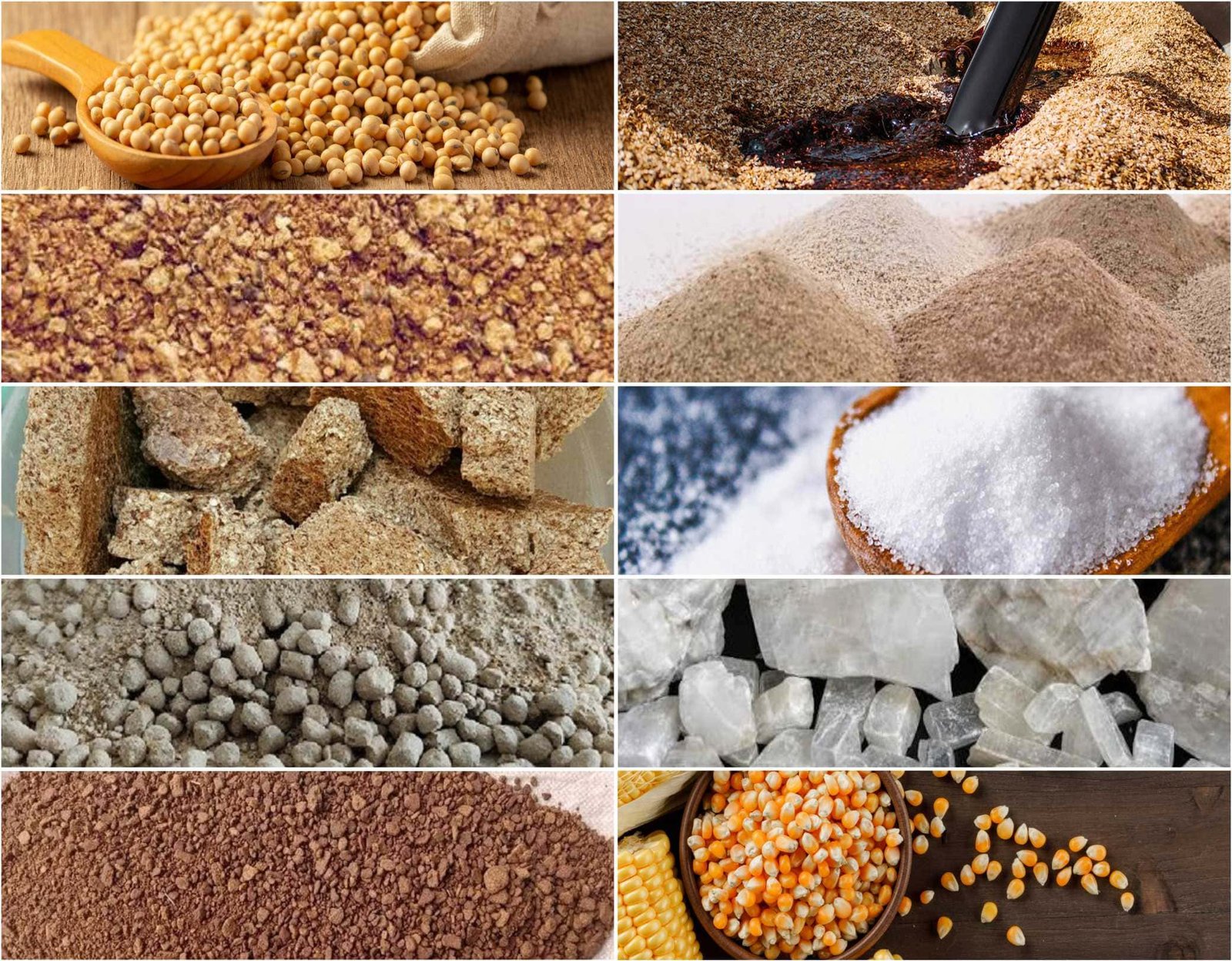
The following indicative model formulations for 100 kg of dairy cattle feed are based on commonly available Indian feed ingredients, including maize, cottonseed extraction meal, coconut extraction cake, wheat bran, DORB and rapeseed DOC. These formulations are provided strictly for educational and reference purposes and should not be considered universal or ready-to-use feed recipes.
Farmers should consult a qualified dairy nutritionist or veterinarian before adopting any formulation for actual feeding. Ingredient quality can vary substantially between sources and batches; therefore, the final feed should be validated through laboratory analysis before use.
- Calf Starter Feed — 0–3 Months
Calf starter feed is intended to support early rumen development, growth and efficient transition towards solid feed intake.
| Raw Material | kg/100 kg |
| Maize | 30 |
| Soybean meal, 44–46% CP | 22.1 |
| Cottonseed extraction meal/DOC, 36% CP | 15 |
| Coconut extraction cake, 22% CP | 10 |
| DORB, first grade | 6.9 |
| Wheat bran | 10 |
| Molasses | 1 |
| Vitamin-mineral premix | 2 |
| Salt | 1 |
| Calcite | 0.5 |
| Feed-grade vegetable oil/coconut oil | 1.5 |
| Total | 100 |
Indicative nutrient targets: CP 23–24%; TDN 70–73%; fat ≥4.5%; CF ≤9%; Ca ≥0.80%; P ≥0.50%.
- Calf Growth Feed — 3–6 Months
As calves progress beyond the starter phase, the diet can be adjusted to support continued skeletal and muscular development while gradually reducing the protein density of the concentrate.
| Raw Material | kg/100 kg |
| Maize | 35 |
| Soybean meal | 12 |
| Cottonseed extraction meal | 15 |
| Coconut extraction cake | 10 |
| DORB, first grade | 8 |
| Wheat bran | 10 |
| Rapeseed DOC | 5 |
| Molasses | 1 |
| Vitamin-mineral premix | 2 |
| Salt | 1 |
| Calcite | 1 |
| Total | 100 |
Indicative nutrient targets: CP 21–22%; TDN 68–72%; fat ≥4.0%; CF ≤10%; Ca ≥0.80%; P ≥0.50%.
- Heifer Grower Feed — 6–12 Months
The heifer-growing stage is critical for achieving appropriate body growth without excessive fat deposition. Feed formulation should therefore be aligned with the animal’s growth rate and forage availability.
| Raw Material | kg/100 kg |
| Maize | 36 |
| Soybean meal | 4 |
| Cottonseed extraction meal | 18 |
| Coconut extraction cake | 10 |
| DORB, first grade | 10 |
| Wheat bran | 12 |
| Rapeseed DOC | 5 |
| Molasses | 1 |
| Vitamin-mineral premix | 2 |
| Salt | 1 |
| Calcite | 1 |
| Total | 100 |
Indicative nutrient targets: CP 17–18%; TDN 65–68%; fat 4–5%; CF ≤12%.
- Heifer Developer Feed — 12–18 Months
During the later growing stage, the objective is to maintain steady growth and prepare the heifer for future breeding and productive life.
| Raw Material | kg/100 kg |
| Maize | 36 |
| Cottonseed extraction meal | 20 |
| Coconut extraction cake | 10 |
| DORB, first grade | 12 |
| Wheat bran | 13 |
| Rapeseed DOC | 4 |
| Molasses | 1 |
| Vitamin-mineral premix | 2 |
| Salt | 1 |
| Calcite | 1 |
| Total | 100 |
Indicative nutrient targets: CP 15–16.5%; TDN 63–67%; fat 4–5%; CF ≤13%.
- Dry Cow/Pregnant Cow Feed
Nutritional management during the dry and late-pregnancy period is important for maintaining body condition and preparing the animal for the subsequent lactation cycle.
| Raw Material | kg/100 kg |
| Maize | 32 |
| Cottonseed extraction meal | 18 |
| Coconut extraction cake | 10 |
| DORB, first grade | 15 |
| Wheat bran | 15 |
| Rapeseed DOC | 5 |
| Molasses | 1 |
| Vitamin-mineral premix | 2 |
| Salt | 1 |
| Calcite | 1 |
| Total | 100 |
Indicative nutrient targets: CP 15–16%; TDN 60–64%; fat 3.5–4.5%; CF ≤13%.
- Early Lactation/High-Yield Cow Feed
Early lactation places high nutritional demands on dairy cows. The concentrate should provide adequate energy, protein and other nutrients to support milk production while helping maintain animal health and body condition.
| Raw Material | kg/100 kg |
| Maize | 38 |
| Soybean meal | 5 |
| Cottonseed extraction meal | 18 |
| Coconut extraction cake | 7 |
| DORB, first grade | 10 |
| Wheat bran | 10 |
| Rapeseed DOC | 7 |
| Molasses | 1 |
| Vitamin-mineral premix | 2 |
| Salt | 1 |
| Calcite | 1 |
| Total | 100 |
Indicative nutrient targets: CP 18.5–20%; TDN 70–72%; fat 4.5–5.5%; CF ≤12%.
- Mid-Lactation Feed
As milk production and nutrient demand begin to moderate, the concentrate formulation can be adjusted accordingly, taking into account the quality and quantity of forage in the overall ration.
| Raw Material | kg/100 kg |
| Maize | 39 |
| Cottonseed extraction meal | 18 |
| Coconut extraction cake | 9 |
| DORB, first grade | 12 |
| Wheat bran | 13 |
| Rapeseed DOC | 4 |
| Molasses | 1 |
| Vitamin-mineral premix | 2 |
| Salt | 1 |
| Calcite | 1 |
| Total | 100 |
Indicative nutrient targets: CP 17–18%; TDN 66–70%; fat 4–5%; CF ≤13%.
- Late-Lactation/Low-Yield Cow Feed
During late lactation, nutrient requirements generally decline compared with peak production. The concentrate should nevertheless be balanced with the forage component of the ration and the animal’s milk yield.
| Raw Material | kg/100 kg |
| Maize | 34 |
| Cottonseed extraction meal | 17 |
| Coconut extraction cake | 10 |
| DORB, first grade | 15 |
| Wheat bran | 16 |
| Rapeseed DOC | 4 |
| Molasses | 1 |
| Vitamin-mineral premix | 2 |
| Salt | 1 |
| Total | 100 |
Indicative nutrient targets: CP 15–16.5%; TDN 62–66%; fat 3.5–4.5%; CF ≤14%.
Indicative Master Nutrient Specifications
The following specifications provide a consolidated reference for the different categories of cattle feed.
| Feed Type | CP % | TDN % | Fat % | CF Max % | Ca % | P % |
| Calf Starter | 23–24 | 70–73 | ≥4.5 | ≤9 | ≥0.80 | ≥0.50 |
| Calf Growth | 21–22 | 68–72 | ≥4.0 | ≤10 | ≥0.80 | ≥0.50 |
| Heifer 6–12 months | 17–18 | 65–68 | 4–5 | ≤12 | 0.75–0.90 | 0.45–0.55 |
| Heifer 12–18 months | 15–16.5 | 63–67 | 4–5 | ≤13 | 0.70–0.85 | 0.40–0.50 |
| Dry/Pregnant Cow | 15–16 | 60–64 | 3.5–4.5 | ≤13 | 0.80–1.00 | 0.40–0.50 |
| Transition Cow | 16–18 | 65–68 | 4–5 | ≤12 | 0.80–1.00 | 0.45–0.55 |
| High-Yield Cow | 18.5–20 | 70–72 | 4.5–5.5 | ≤12 | 0.90–1.10 | 0.50–0.60 |
| Mid-Lactation Cow | 17–18 | 66–70 | 4–5 | ≤13 | 0.85–1.05 | 0.45–0.55 |
| Low-Yield Cow | 15–16.5 | 62–66 | 3.5–4.5 | ≤14 | 0.70–0.90 | 0.40–0.50 |
Indicative Premix Targets
Indicative micronutrient targets per kilogram of finished feed are:
- Vitamin A: 10,000–15,000 IU/kg
- Vitamin D₃: 2,000–3,000 IU/kg
- Vitamin E: 30–75 IU/kg
- Zinc: 60 mg/kg
- Manganese: 60 mg/kg
- Copper: 15 mg/kg
- Iodine: 1.0 mg/kg
- Cobalt: 0.3 mg/kg
- Selenium: 0.3 mg/kg
These levels should be reviewed against the total diet, animal category, forage contribution and applicable feed standards before finalizing the premix specification.
Least-Cost Formulation
A least-cost formulation should not simply aim to minimize the cost of the feed. It should first meet the required nutrient specifications while respecting appropriate inclusion limits for individual ingredients.
Key constraints should include:
- Crude protein
- Energy
- Fat
- Fibre
- Calcium
- Phosphorus
- Ingredient-specific inclusion limits
- Ingredient quality and variability
The formulations presented here assume GNC = 0. Urea is excluded from calf-feed formulations.
Ingredient inclusion levels should always be adjusted based on the actual laboratory analysis of the available raw materials.
Quality Control
Laboratory testing of raw materials and finished feed is essential because nutrient composition and contaminants can vary between batches.
Depending on the ingredients used, quality-control testing should include:
- Moisture
- Crude protein (CP)
- Crude fibre (CF)
- Ether extract/fat (EE)
- Total ash
- Acid-insoluble ash (AIA)
- Calcium (Ca)
- Phosphorus (P)
- Aflatoxin
- Gossypol in cottonseed products
- Rancidity and residual oil in coconut cake
Scientific Feeding of Cows – Summary
Scientific feeding may appear complicated, but it can be made simple and economical when farmers understand the basic principles of dairy cow nutrition.
The key is to provide good-quality green fodder along with an appropriately formulated compound cattle feed in quantities that meet the cow’s nutritional requirements. Dairy nutritionists working with compound cattle feed manufacturers in India have developed feeds designed to complement good-quality forage and help address nutritional gaps.
When good-quality fodder, scientifically formulated compound cattle feed, adequate water and appropriate management practices are provided in the right quantities, dairy farmers can improve milk production, animal health and, ultimately, the profitability of their dairy enterprise.
Acknowledgement: Thanks to Dr John Niezen, Dairy Consultant, for contributing the information material on the above subject during his tenure in India.
By Dr T. M. Gowrisankar, Independent Animal Nutritionist and Feed Consultant