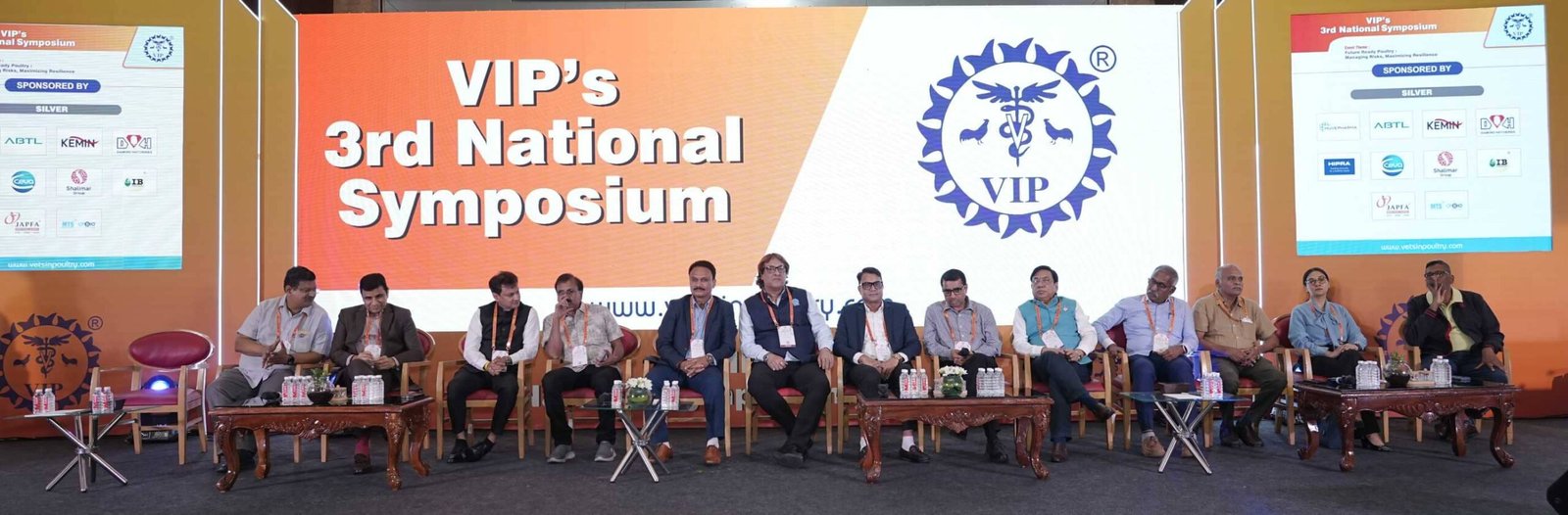
The 3rd National Symposium of Vets in Poultry (VIP), held under the theme Future Ready Poultry: Managing Risks, Maximizing Resilience, brought together industry leaders, veterinarians, researchers, policymakers, and entrepreneurs to discuss the future of India’s poultry sector. Through keynote addresses, technical sessions, and panel discussions, participants identified the key opportunities, risks, and strategic priorities needed to build a resilient, sustainable, and globally competitive poultry industry. The following sections summarize the symposium’s key takeaways.
Poultry Industry Outlook
- Strong Industry Fundamentals Support Long-Term Growth


The Indian poultry industry remains one of the fastest-growing segments of agriculture, backed by decades of consistent growth, strong demand fundamentals, and increasing consumer acceptance of poultry products. Despite periodic market disruptions, the industry’s long-term growth outlook remains positive.
- Managing Uncertainty is Critical
Production cycles, climate variability, feed prices and changing consumer demand have made traditional market cycles increasingly unpredictable. Future competitiveness will depend on proactive risk management, better forecasting and agile business planning.
- Feed Security will Shape Future Competitiveness
Feed availability and affordability emerged as the most significant strategic challenge. With feed accounting for nearly 70% of production costs, fluctuations in corn and soybean markets, climate-related crop risks, and increasing competition from alternative uses such as ethanol production could significantly influence industry profitability in the coming years.
- Growth is Shifting Towards Consumption-Centric Regions
Future expansion is expected to be driven by emerging consumption centers, particularly in states such as Uttar Pradesh, West Bengal, Odisha, and Bihar, where rising incomes and urbanisation are expanding poultry demand.
- Disease Management and Biosecurity Require Greater Attention
Disease risks, particularly highly pathogenic avian influenza (HPAI), continue to pose a serious threat. Strengthening biosecurity measures, improving surveillance systems, and developing long-term disease-control strategies were identified as critical priorities for sustainable industry growth.
- Processing, Technology and Value Addition Will Shape the Future
The industry is gradually transitioning from traditional wet markets toward processed poultry products. Investments in processing, cold-chain infrastructure, organised retail, automation, artificial intelligence and precision farming will improve productivity, reduce costs and create higher-value market opportunities.
- Consumer Awareness and Food Safety are Growing Priorities
The growing threat of diseases such as Highly Pathogenic Avian Influenza (HPAI), coupled with increasing consumer expectations around food safety and responsible antibiotic use, requires stronger biosecurity, surveillance, traceability and quality assurance systems.
- Collaboration will be Essential
Now more than ever, stronger coordination among producers, integrators, veterinarians, industry associations, and policymakers is essential. Collective action will be necessary to address common challenges, mitigate risks, and ensure the industry’s continued growth and resilience.
 Broiler Integration: Operational Excellence, Risk Management, and Sustainable Profitability
- Poultry Industry: A Key Driver of Economic Growth
Beyond providing affordable, high-quality protein, the poultry sector supports millions of livelihoods and contributes significantly to agriculture through demand for feed ingredients and allied industries.
- Operational Excellence and Loss Prevention Drive Profitability
Sustainable profitability depends on efficient processes, continuous improvement, and disciplined execution. In this context, loss prevention is even more critical than profit generation, as recovery from setbacks becomes increasingly difficult. Early problem detection and timely corrective actions are essential to maintain financial stability and protect long-term performance.
- Breeder Health is the Foundation of Broiler Performance
Healthy breeder flocks form the foundation of successful broiler production. Strong nutrition, effective vaccination, disease prevention and continuous health monitoring improve chick quality and minimise downstream production risks.
- Data, Traceability, and Precision Nutrition Drive Performance
Real-time data, end-to-end traceability, and precision nutrition enable producers to identify performance gaps quickly, optimize feed strategies, improve feed efficiency, and make informed management decisions that enhance productivity and profitability.
- Good Farm Management Creates Competitive Advantage
Good farm management practices—including optimal stocking density, adequate feeder and drinker space, and effective grower incentive programmes—improve bird welfare and production efficiency. Delivering consistent bird quality, higher dressing yields, and reliable supply also strengthens customer confidence.
- Biosecurity and Risk Management Must Continuously Evolve
Region-specific vaccination programmes, robust biosecurity, disease surveillance and proactive management of operational, financial and supply-chain risks are essential for long-term resilience.
- People and Financial Discipline Drive Business Success
Investment in skilled people, leadership development, standard operating procedures, internal controls, regular audits and prudent financial management strengthens organisational performance and safeguards profitability.
- Consistent Execution Delivers Long-Term Success
Successful broiler integration depends on consistent execution across every stage of the value chain. Organisations that combine operational excellence, disciplined management and continuous learning will remain competitive in an increasingly dynamic industry.
The Evolving Landscape of Poultry Diseases in India
- Disease Dynamics are Becoming More Complex
Increasing farm density and intensified production have heightened disease pressure, leading to the emergence of new pathogens, greater endemicity of existing diseases and more complex disease syndromes. Continuous surveillance and adaptive health management are essential for sustainable poultry production.
- Disease Control Must Be Region-Specific
The continued prevalence of Highly Pathogenic Avian Influenza (HPAI), Newcastle Disease (ND), Infectious Bronchitis (IB) and Low Pathogenic Avian Influenza (H9N2) demands region-specific vaccination programmes supported by continuous surveillance and regular updates based on circulating viral strains.
- Vaccination Strategies Must Evolve with Emerging Pathogens
Conventional vaccination alone is no longer sufficient to control rapidly mutating viruses. Genotype-matched, recombinant, and next-generation vaccine technologies, including mRNA platforms, offer greater potential for improving protection while reducing virus shedding and mutation.
- Infectious Bronchitis Remains an Underestimated Economic Threat
Often causing chronic production losses rather than dramatic outbreaks, Infectious Bronchitis can significantly affect mortality, egg quality, and flock performance. Effective control is also important for reducing the impact of other respiratory diseases, including avian influenza.
- Antimicrobial Resistance Requires Responsible Disease Management
The increasing prevalence of multidrug-resistant bacterial pathogens, including E. coli, Coryza, Mycoplasma, Salmonella, and Campylobacter, underscores the urgent need to reduce antibiotic dependence through improved breeder health, biosecurity, vaccination, and alternative health management strategies.
- Breeder Health Determines Broiler Performance
Maintaining disease-free breeder flocks through rigorous monitoring, vaccination, and health management remains one of the most effective strategies for improving chick quality, reducing disease transmission, and enhancing overall production efficiency.
- Alternatives to Antibiotics Will Shape the Future of Poultry Health
Scientifically validated alternatives such as probiotics, prebiotics, organic acids, bacteriophages and other gut-health interventions will play an increasingly important role in maintaining flock health while supporting antimicrobial stewardship.
- Integrated Health Management is the Way Forward
Sustainable poultry production requires an integrated approach combining advanced vaccination, robust biosecurity, continuous disease surveillance, responsible antimicrobial use and evidence-based management practices to improve bird health, productivity and food safety.
 Human Capital and Digital Transformation
- Human Capital Will Shape the Future of Poultry
Demographic changes, including declining birth rates and an ageing population, are expected to reduce the availability of skilled manpower. Building a future-ready workforce should therefore become a strategic priority for the poultry industry.
- Labour Shortages Demand New Workforce Strategies
Urban migration and rising wages are creating increasing labour shortages in rural poultry operations. Agriculture wages have already grown by approximately 9-10% annually over the last decade. India is further moving toward “living wages” and a “national floor wage,” which will further increase labor costs by 25-30%. Improving productivity through better workforce planning, mechanisation and automation will be essential to manage rising labour costs.
- Industry–Academia Collaboration Must Bridge the Skills Gap
Closer collaboration between educational institutions and industry is needed to develop commercially relevant curricula, strengthen internships and practical training, and equip graduates with both technical and business management skills.
- Digital Technologies Must Deliver Actionable Intelligence
Artificial intelligence, automation, digital monitoring, ERP systems and predictive analytics are transforming poultry management. The competitive advantage will come not from collecting data, but from converting it into timely business insights that improve productivity and decision-making.
- Investing in People and Technology Will Drive Long-Term Success
The future of the poultry industry will depend on balancing technological advancement with continuous investment in human capital. Organizations that successfully integrate skilled talent, digital innovation, and collaborative learning will be better positioned to achieve sustainable growth and operational excellence.
Consumer Perception, Branding and Market Expansion
- The Poultry Industry Must Evolve from Commodity to Consumer Brand
The industry is moving beyond a traditional focus on production costs and feed conversion ratio (FCR) toward creating differentiated consumer brands. Building brand identity and delivering value-added products will be essential for improving profitability and expanding market reach.
- Consumer Trust Will Drive Future Growth
Addressing consumer concerns around food safety, antibiotic use, and product quality requires transparent communication, attractive packaging, and credible certifications such as FSSAI, GMP, and ISO. Strong branding can enhance consumer confidence and support premium pricing.
- Modern Retail and E-Commerce are Transforming the Market
The rapid expansion of supermarkets, exclusive retail outlets, and quick-commerce platforms is transforming how poultry products reach consumers. Social media and digital engagement have made consumers active brand advocates, increasing the importance of effective communication and customer experience.
- The ‘Protein Revolution’ Creates New Growth Opportunities
Increasing awareness of health and nutrition is driving demand for high-quality protein. Promoting the nutritional benefits of chicken and eggs through effective branding, packaging and consumer education can significantly expand consumption.
- Urbanisation and Value Addition Will Fuel Future Growth
Rising urbanisation and changing lifestyles are increasing demand for convenient, processed and branded poultry products. Investments in processing, packaging and product innovation will help companies move beyond price-based competition while unlocking India’s considerable growth potential.
Key takeaways from Panel Discussion:
Future Ready Poultry – Survival to Scale, moderated by Prof. (Dr.) P.K. Shukla, President of the Indian Poultry Science Association, Chairman of FSSAI Scientific Panel-13, and former Joint Commissioner (Poultry), GOI
- Biosecurity and Data-Driven Management Must Become Industry Priorities
Sustainable poultry production requires stronger biosecurity, effective waste management, accurate production data, and state-wise demand–supply planning. Better coordination can help minimize disease risks while avoiding market imbalances caused by overproduction or panic-driven decisions.
- Data and Technology Adoption will Drive the Next Phase of Growth
Modern poultry farming must embrace automation, artificial intelligence, precision farming, digital management systems, real-time diagnostics and unified industry databases. Both small-scale producers and large integrators will need to invest in technology to improve productivity, efficiency, and long-term competitiveness.
- Feed Economics Remains the Foundation of Profitability
Since feed accounts for nearly three-fourths of broiler production costs, effective grain procurement, feed management, and unified industry data are essential. Reliable production statistics will support better planning, pricing, and sustainable industry growth.
- The Industry Must Build Technology, Trust, and Transformation
Future growth will depend on adopting digital platforms, improving transparency, and strengthening consumer confidence. Leveraging initiatives such as ONDC and expanding processed, branded poultry products can help producers connect directly with consumers while reducing dependence on traditional retail channels.
- Direct-to-Consumer Marketing will Create Greater Value
Eliminating unnecessary intermediaries through online platforms, e-commerce, and branded retail models can improve market access, strengthen customer relationships, and enhance profitability across the poultry value chain.
- Export Competitiveness Requires Policy Support and Infrastructure
Building a resilient export sector will require stronger government support, improved logistics, dedicated industry institutions, and policies that enable Indian poultry products to compete effectively in global markets despite geopolitical and supply chain disruptions.
- Sustainability Begins with Better Resource Management
Water quality, environmental monitoring, waste utilization, and circular economy practices should become integral components of poultry production. Regular water testing, biogas generation from poultry litter, and efficient waste management can improve both sustainability and farm profitability.
- Innovation and Precision Diagnostics will Strengthen Disease Control
Future veterinary practice will increasingly rely on advanced diagnostic technologies such as real-time PCR, genome sequencing, and precision vaccine selection. Greater investment in research, innovation, and technical expertise will be essential to address evolving disease challenges.
- Reliable Data and Disease Surveillance are Essential for Future Preparedness
Mandatory farm registration, regional microbial databanks, updated vaccine protocols, and continuous disease surveillance will strengthen national preparedness and enable more effective responses to emerging poultry health challenges.
- Collective Industry Leadership will Shape Long-Term Growth
Achieving sustainable growth will require stronger collaboration among producers, veterinarians, researchers, industry associations, and policymakers. Coordinated advocacy, science-based regulations, and continuous innovation will be critical for building a resilient and globally competitive poultry sector.