Introduction
The poultry sector plays a significant role in global food and nutritional security by providing affordable, high-quality animal protein through eggs and meat. India is among the world’s leading poultry-producing countries, ranking third in egg production and among the top five producers of broiler meat. According to Basic Animal Husbandry Statistics (BAHS, 2025), the country produced more than 145 billion eggs and approximately 5.3 million tonnes of chicken meat, reflecting the sector’s continued growth.
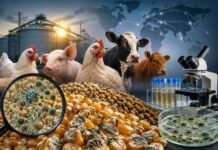
Despite this progress, feed cost remains a major challenge, accounting for approximately 65–75% of total poultry production costs (Aderemi, 2020; Ayoola et al., 2024). Dependence on conventional ingredients such as maize and soybean meal (SBM), coupled with growing demand from the livestock and human food industries, has increased concerns over their price volatility and availability. Conventional feed production also raises environmental sustainability concerns, highlighting the need for more efficient and diversified feed resources.
In addition, conventional soybean production is associated with environmental concerns, including deforestation, biodiversity loss and greenhouse gas emissions (Affoh et al., 2022). Another concern is the environmental impact of inefficient nutrient utilisation in poultry production. Excessive nitrogen and phosphorus excretion through manure can contribute to ammonia emissions, greenhouse gas production, eutrophication of water bodies and groundwater contamination (Malomo et al., 2018; Zhu et al., 2020; Liu et al., 2023).
Consequently, increasing attention is being given to locally available, economical and sustainable alternatives, including agricultural by-products, agro-industrial residues and underutilised biomass. Their utilisation can help reduce dependence on conventional ingredients while supporting resource efficiency and circular agriculture (Olaseinde and Aderemi, 2023).
In this context, water hyacinth (Eichhornia crassipes), an invasive aquatic weed with rapid biomass production potential, has attracted research interest as an alternative feed resource. Its nutritional composition and widespread availability offer opportunities for exploration in poultry nutrition, provided appropriate processing and safety measures are adopted.
Water Hyacinth: An Underutilised Biomass Resource
Water hyacinth (Eichhornia crassipes) is a free-floating perennial aquatic plant belonging to the family Pontederiaceae. Widely distributed across tropical and subtropical freshwater ecosystems, it is characterised by glossy green leaves, swollen spongy leaf stalks, fibrous roots and violet flowers.
It is considered one of the world’s most invasive aquatic weeds due to its rapid growth and ability to form dense floating mats across lakes, rivers, canals and ponds. Under favourable conditions, its biomass can double within 6–15 days, with reported annual production of 60–140 tonnes per hectare.
Uncontrolled growth can obstruct waterways, disrupt irrigation and navigation, reduce dissolved oxygen levels and threaten aquatic biodiversity. It can also adversely affect fisheries, hydroelectric power generation and water transport, while creating breeding habitats for mosquitoes and other disease vectors.
Given the considerable resources required to manage this invasive species, converting harvested water hyacinth into useful agricultural products offers an opportunity for its productive utilisation. Its rapid biomass production, availability and nutritional potential have attracted research interest in its use as an alternative livestock and poultry feed resource with the potential to partially replace conventional ingredients such as maize and soybean meal.
 However, its suitability for poultry nutrition depends on appropriate harvesting, processing, nutritional evaluation and safety assessment.
Nutritional Composition and Feeding Potential
Water hyacinth contains varying amounts of crude protein, carbohydrates, amino acids, vitamins, minerals and biologically active compounds. Its nutritional composition depends on the plant part, maturity, growing conditions, harvesting season, water quality and processing method.
On a dry matter basis, its crude protein content generally ranges from 10 to 25%, while crude fibre ranges from 20 to 30%. It also contains amino acids such as lysine and methionine, carotenoids, xanthophylls, phenolic compounds, flavonoids and minerals, including calcium, phosphorus, iron and magnesium. Water hyacinth leaf protein concentrate has been reported to contain valuable pigments that may contribute to the pigmentation of broiler skin, shanks and egg yolk.
Despite its nutritional potential, the direct use of raw water hyacinth in poultry diets is limited by its high fibre content, relatively low metabolizable energy and the presence of antinutritional compounds such as tannins, phytates, oxalates, saponins, phenolics and hydrocyanic acid. These compounds may interfere with nutrient digestion, absorption and protein utilisation.
 Its ability to absorb minerals and heavy metals from the surrounding aquatic environment is another important safety concern. Therefore, water hyacinth should be harvested from uncontaminated water bodies and evaluated for potential contaminants before being considered for animal feeding.
Processing Methods to Improve Feed Value
Appropriate processing can improve the nutritional quality and feeding value of water hyacinth. Methods such as washing, chopping, sun-drying, oven-drying, grinding, ensiling and microbial fermentation have been investigated for this purpose.
Among these, microbial fermentation has received particular attention for its potential to break down structural carbohydrates and reduce certain antinutritional factors. This can improve nutrient digestibility, amino acid availability and phosphorus utilisation. Fermentation may also promote the production of beneficial bioactive compounds and organic acids that support intestinal microbial balance, gut health and nutrient absorption.
Studies on fermented water hyacinth meal have reported encouraging results in broiler and layer chickens. In broilers, its inclusion at appropriate dietary levels has been associated with improvements in growth performance, feed conversion efficiency, carcass characteristics, meat quality and protein utilisation.
In laying hens, reported benefits include improved calcium retention, eggshell quality, internal egg quality and oviduct development, along with improvements in egg shelf life.
Overall, processing, particularly microbial fermentation, offers potential for improving the suitability of water hyacinth for poultry nutrition. However, its effectiveness depends on processing conditions, final nutrient composition and dietary inclusion levels.
Proximate Composition and Amino Acid Profile of Water Hyacinth
The nutritional composition of water hyacinth varies depending on the plant part, growing conditions and processing method. Its proximate composition and amino acid profile indicate its potential as a supplementary feed resource for livestock and poultry.
Water Hyacinth in Broiler Diets
Studies evaluating water hyacinth in broiler nutrition have demonstrated its potential as a supplementary feed ingredient when incorporated at appropriate dietary levels.
Dietary inclusion of water hyacinth meal (WHM) at 2.5%, 5.0% and 7.5% has been reported to maintain final body weight, body weight gain and feed conversion ratio without adverse effects compared with the control diet. Among the tested levels, 2.5% WHM produced the highest numerical body weight gain and final body weight, while feed intake was significantly higher in birds receiving 2.5% and 7.5% WHM. Adebayo et al. (2025) reported that inclusion of 2.5–7.5% water hyacinth meal-maintained growth performance and feed efficiency while improving meat quality.
Another study investigated water hyacinth leaf meal as a phytogenic feed additive at 1, 2, 3 and 4 g/100 kg of feed. Supplementation enhanced growth performance, with 1–2 g/100 kg producing the most favourable responses without adversely affecting bird health or carcass characteristics.
The potential benefits of water hyacinth in broiler diets are associated with its protein, mineral, vitamin and antioxidant phytochemical content. However, its naturally high fibre content and antinutritional factors can limit nutrient utilisation, making appropriate processing essential. Drying and microbial fermentation can improve its feeding value by breaking down complex fibre fractions, reducing certain antinutritional compounds and enhancing nutrient digestibility.
Fermentation may also support intestinal health by promoting beneficial microbial activity and the production of organic acids and other bioactive metabolites. In addition, antioxidant compounds such as flavonoids and phenolics may help reduce oxidative stress, while carotenoids and chlorophyll can contribute to skin pigmentation. These properties offer potential benefits for nutrient utilisation, physiological health and meat quality.
Overall, the findings suggest that water hyacinth meal can be incorporated into broiler diets at tested levels of up to 7.5%, with 2.5–5% emerging as a promising inclusion range in the reported studies. Water hyacinth leaf meal, at much lower supplementation levels of 1–2 g/100 kg feed, has also shown potential as a phytogenic feed additive. These two applications should be considered separately when evaluating its use in commercial poultry nutrition.
Water Hyacinth in Layer Diets
Research has also indicated potential benefits of fermented water hyacinth in layer nutrition. A study by Nhara et al. (2026), evaluating fermented water hyacinth at a 5% dietary inclusion level, reported improvements in the morphometric characteristics of the oviduct, suggesting positive effects on reproductive tissue development and functionality.
The study also reported improvements in internal egg quality, including albumen consistency, yolk integrity and Haugh unit values, compared with the control group. Eggs from hens receiving fermented water hyacinth also retained their quality for longer during storage, with slower deterioration of albumen quality.
These improvements may be associated with the nutritional and bioactive properties of water hyacinth, along with changes brought about by fermentation. The fermentation process can reduce certain antinutritional factors and complex fibre fractions while improving nutrient availability and digestibility. It may also enhance the availability of minerals such as calcium and phosphorus, which are important for reproductive functions and eggshell formation.
Furthermore, beneficial organic acids and microbial metabolites produced during fermentation may support intestinal microbial balance and nutrient absorption. The antioxidant compounds present in water hyacinth may also contribute to maintaining egg quality during storage.
These findings highlight the potential of fermented water hyacinth as a supplementary ingredient in layer diets, particularly in relation to reproductive tissue development, internal egg quality and storage stability.
Conclusion
Beyond its nutritional potential, the utilisation of water hyacinth as a poultry feed ingredient offers environmental and economic opportunities. Harvesting this invasive aquatic weed can help manage its excessive growth, improve water flow and reduce its adverse effects on aquatic ecosystems. Converting the harvested biomass into animal feed also creates value from an otherwise underutilised resource.
From a feed industry perspective, water hyacinth could help diversify feed resources, partially reduce dependence on conventional ingredients and support more efficient biomass utilisation. However, its commercial application will depend on economical processing technologies, consistent nutrient composition, appropriate dietary inclusion levels and strict monitoring for heavy metals and other contaminants.
Further research on processing methods, nutrient digestibility, long-term bird performance and commercial-scale economics is essential to establish its practical viability. With appropriate processing and quality control, water hyacinth offers an interesting opportunity to transform an environmental challenge into a potentially valuable resource for sustainable poultry production.
By Dr Monika.M, Scientist (Poultry Science) & Dr U. Rajkumar, Principal Scientist and Head of the Poultry Genetics, ICAR-Directorate of Poultry Research, Hyderabad