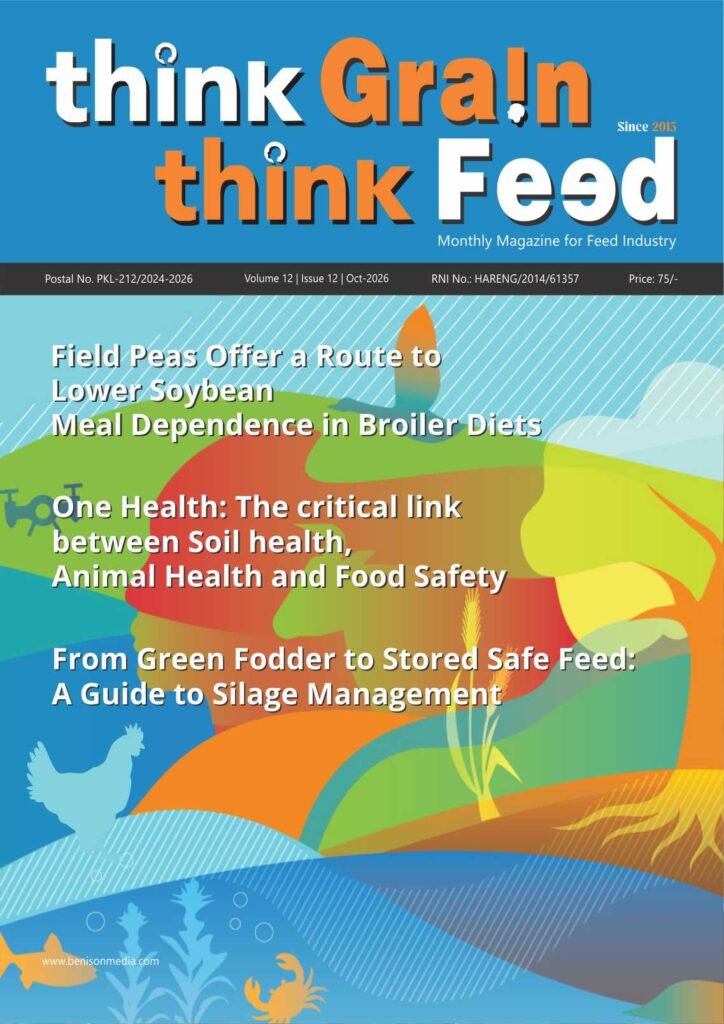

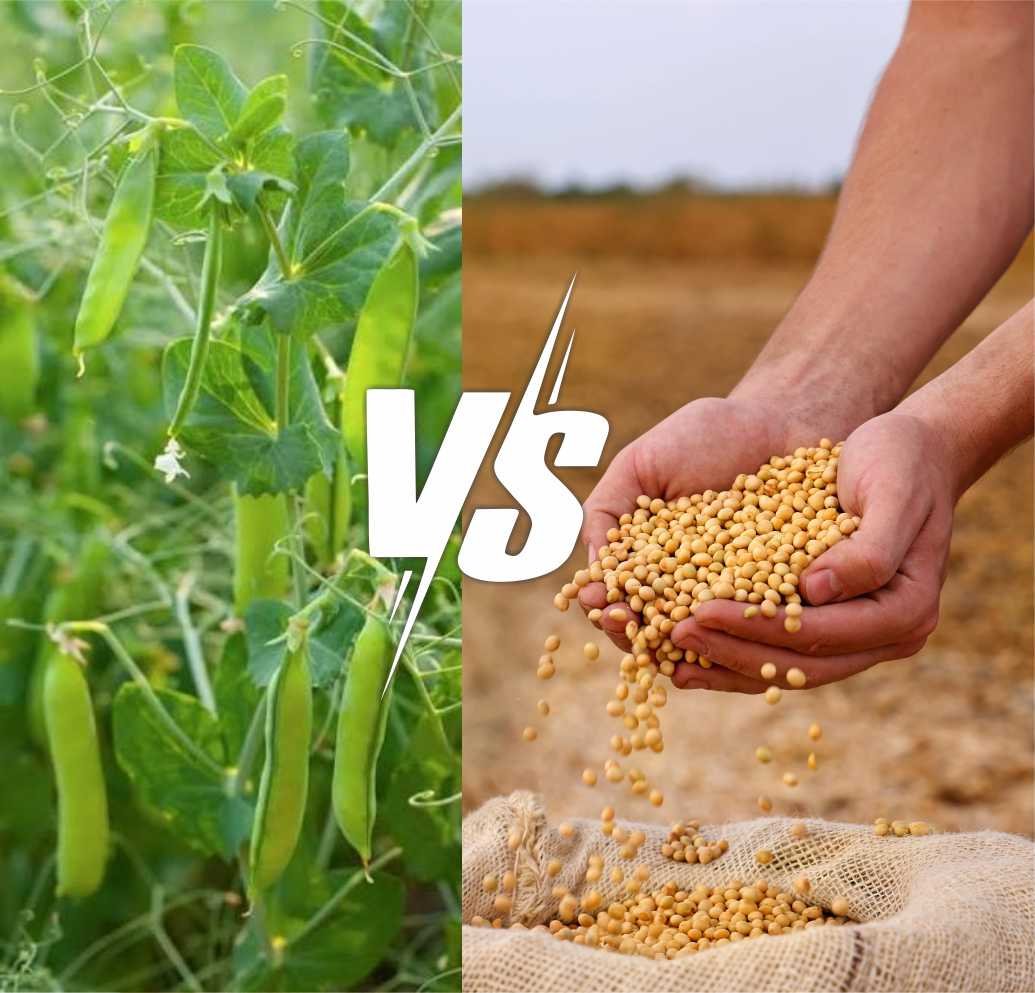
Soybean meal (SBM) remains a major protein source in commercial broiler diets, but dependence on it exposes feed manufacturers to fluctuations in availability, prices and supply-chain risks. Diversifying protein sources is therefore an important area of feed formulation research. A study conducted by researchers at the Poultry Research Foundation, University of Sydney, Australia, has examined the potential of field peas to reduce soybean meal inclusion while maintaining broiler performance.
The 42-day feeding trial involved 300 Ross 308 broilers, randomly allocated to 60 pens and six dietary treatments. Researchers evaluated different levels of soybean meal, with and without field pea inclusion, across four feeding phases: starter, grower, finisher and withdrawal. Field pea inclusion increased progressively from 50 to 120 g/kg of feed, replacing approximately 45% to 100% of soybean meal, depending on the feeding phase and dietary treatment.
The results indicated that field pea inclusion improved growth performance. Body weight gain increased by up to 2.9% over the 42-day period, while feed conversion ratio (FCR) improved by approximately 2.04%. The researchers also reported no significant adverse effects on carcass yield, breast meat yield or fat pad weight.
Field peas offer nutritional characteristics that make them relevant for broiler feed formulation. In the study, they contained approximately 23.2% crude protein and 48.8% starch. Their contribution is not limited to protein; they also influence the dietary starch-to-protein balance. However, their nutritional value must be assessed alongside amino acid availability and digestibility when formulating commercial diets.
One of the study’s important findings was the feasibility of formulating finisher and withdrawal diets without soybean meal. These diets included field peas and higher levels of non-bound amino acids, indicating that amino acid balancing is central to successful SBM reduction. The researchers suggested a phase-feeding approach, with field pea inclusion of approximately 5% in starter, 8% in grower, 10% in finisher and 12% in withdrawal diets.
The study also found higher nitrogen retention in birds receiving diets without soybean meal compared with those fed conventional soybean meal levels (72.73% versus 70.26%). This suggests improved utilisation of dietary nitrogen under the tested conditions.
Source: Based on research published by Kandel et al. in Animal Nutrition (2025), Volume 22, pp. 113–126. DOI: 10.1016/j.aninu.2025.03.011