

The increasing reliance on synthetic amino acids (AAs) in modern poultry nutrition has significantly improved feed efficiency while enabling reductions in crude protein (CP) levels. However, recent global disruptions in the supply of key amino acids such as DL-methionine, lysine, and threonine have exposed vulnerabilities in precision feed formulation systems.
These challenges have prompted a shift in approach—from dependence on synthetic supplementation to a more holistic strategy focused on biological efficiency. By leveraging natural ingredient optimization, enzyme technologies, gut health management, and energy-protein balancing, nutritionists can sustain performance while minimizing economic and environmental impacts.
Rethinking the Ideal Protein Concept
Modern poultry nutrition is built on the ideal protein concept, where digestible amino acids are supplied in precise ratios relative to lysine. This approach has enabled a 2–3% reduction in crude protein, improving nitrogen efficiency and reducing environmental load. However, heavy dependence on crystalline amino acids such as DL-methionine and L-lysine has made feed formulations susceptible to supply disruptions.
According to Kidd and Tillman (2016), methionine, often is the first limiting amino acid in corn-soy diets, plays a critical role in growth, feather development, and immune function. During shortages, nutritionists must move beyond precision supplementation and focus on optimizing natural nutrient availability.
Optimizing Natural Amino Acid Sources
Protein ingredients differ significantly in their amino acid profiles and digestibility. Strategic use of complementary proteins becomes essential when synthetic amino acids are limited.
- Soybean meal is rich in lysine but deficient in methionine
- Corn gluten meal provides methionine but is low in lysine
- Animal protein sources offer more balanced amino acid profiles
Such ingredient synergy enhances digestible amino acid supply without significantly increasing formulation costs (Ravindran et al. 2014). Complementation improves net protein utilization (NPU) and reduces the risk of limiting amino acid deficiencies.
Balancing Crude Protein Levels
Increasing crude protein is a common response to amino acid shortages. However, excessive protein inclusion can lead to increased nitrogen excretion (Nahm, 2007), poor litter quality, and elevated ammonia emissions.
A more balanced approach involves:
- Limiting crude protein increase to 1–1.5%
- Supporting higher protein levels with improved digestibility strategies
This ensures better nitrogen retention efficiency while minimizing environmental impact.
Flexibility in Amino Acid Ratios
While the ideal protein concept emphasizes precision, short-term flexibility can be beneficial under supply constraints. Minor deviations (up to 5%) from ideal amino acid ratios generally have minimal impact on growth performance (Baker, 2009). However, prolonged imbalances can affect carcass yield and immune function.
Key biological roles include:
- Methionine: muscle deposition
- Threonine: gut mucin production and immunity
- Cysteine: antioxidant defence
This strategy is best suited for short-term adjustments rather than long-term formulation practices.
Feed Enzymes: Unlocking Nutritional Value
Feed enzymes play a crucial role in reducing dependence on synthetic amino acids by improving nutrient availability.
- Protease enhances protein hydrolysis
- Xylanase releases encapsulated nutrients
- Phytase breaks phytate-protein complexes
These enzymes can improve amino acid digestibility by 2–5%, significantly enhancing feed efficiency (Cowieson et al. 2010). Essentially, they convert “undigestible nutrients” into “available nutrients,” making them indispensable tools during supply constraints.
Exploring Alternative Protein Sources
Diversifying protein sources increases resilience in feed formulation.
- DDGS provides energy and sulfur amino acids (Stein & Shurson, 2009)
- Rapeseed meal offers a balanced amino acid profile but contains anti-nutritional factors
- Sunflower meal supplies methionine but has high fiber content
However, variability in digestibility and risks such as mycotoxin contamination—especially in DDGS—necessitate stringent quality control measures.
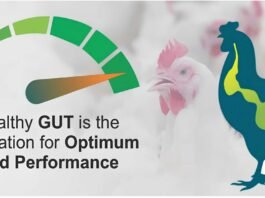
Gut Health: The Hidden Driver of Efficiency
High crude protein diets can result in excess undigested protein reaching the hindgut, promoting pathogen proliferation (Clostridium perfringens), dysbiosis, and wet litter conditions. Excess protein fermentation further contributed to the formation of harmful metabolites such as ammonia and biogenic amines (Apajalahti & Vienola, 2016).
Maintaining gut health is therefore critical for efficient nutrient utilization.
Key strategies include:
- Supplementing probiotics to improve digestion and microbial balance
- Using organic acids to control pathogenic bacteria
- Including butyrate to support gut integrity and nutrient absorption
Improved gut health enhances amino acid utilization and overall feed efficiency.
Energy–Protein Interactions
Protein metabolism generates a high heat increment, which can reduce efficiency, especially under stress conditions. Maintaining an optimal energy-to-protein ratio is essential for maximizing growth performance (Leeson & Summers, 2005).
Key strategies include:
- Increasing oil inclusion by 0.5–1%
- Enhancing metabolizable energy (ME)
- Reducing heat stress
Improved energy availability enhances amino acid utilization and overall feed efficiency.
An Integrated Nutritional Approach
Addressing amino acid shortages requires a systems-based approach tailored to the severity of the constraint:
- Mild shortage: Enzyme use and amino acid adjustments → minimal performance loss
- Moderate shortage: Increased CP and alternative proteins → stable growth
- Severe shortage: Integrated strategies → controlled performance decline
This reflects the principles of precision nutrition adapted to real-world constraints.
Conclusion
Synthetic amino acids will continue to play a vital role in poultry nutrition. However, current supply challenges highlight the need for adaptive and resilient feeding strategies.
Key priorities include:
- Optimizing digestible amino acid supply
- Leveraging ingredient complementarity
- Enhancing nutrient availability through enzymes
- Maintaining gut health
- Balancing energy and protein dynamics
Ultimately, the focus must shift from achieving theoretical precision to maximizing biological efficiency.
Core Principle:
Maximizing biological efficiency is more critical than achieving theoretical precision during nutrient constraints.