Scientists at Guru Angad Dev Veterinary and Animal Sciences University (GADVASU), Ludhiana, are working with IIT Delhi, the Indian Agricultural Research Institute (IARI) and PGIMER Chandigarh on a three-year National One Health Mission project to strengthen surveillance of aflatoxin contamination in dairy feed and fodder.
A key component of the project is the development of a portable aflatoxin detection device that could enable testing closer to the point of sale or farm. The initiative will also map contamination across Punjab to identify high-risk areas. GADVASU has separately announced plans for a laboratory-on-wheels equipped for feed, fodder, silage, aflatoxin and milk testing.
Aflatoxin Risk Profile
Aflatoxin B1 (AFB1), produced mainly by Aspergillus fungi, is a particular concern in feed ingredients such as maize and groundnut cake. An ICAR study found these ingredients to be highly prone to AFB1 contamination, with higher incidence during the monsoon. The study also identified geographical and seasonal variation in contamination, highlighting the importance of risk-based sourcing and testing.
Earlier Indian research has also detected AFB1 in cottonseed cake, groundnut cake, soybean cake, sunflower cake, maize, wheat bran and other feed ingredients, demonstrating that contamination can enter the feed chain through multiple raw materials.
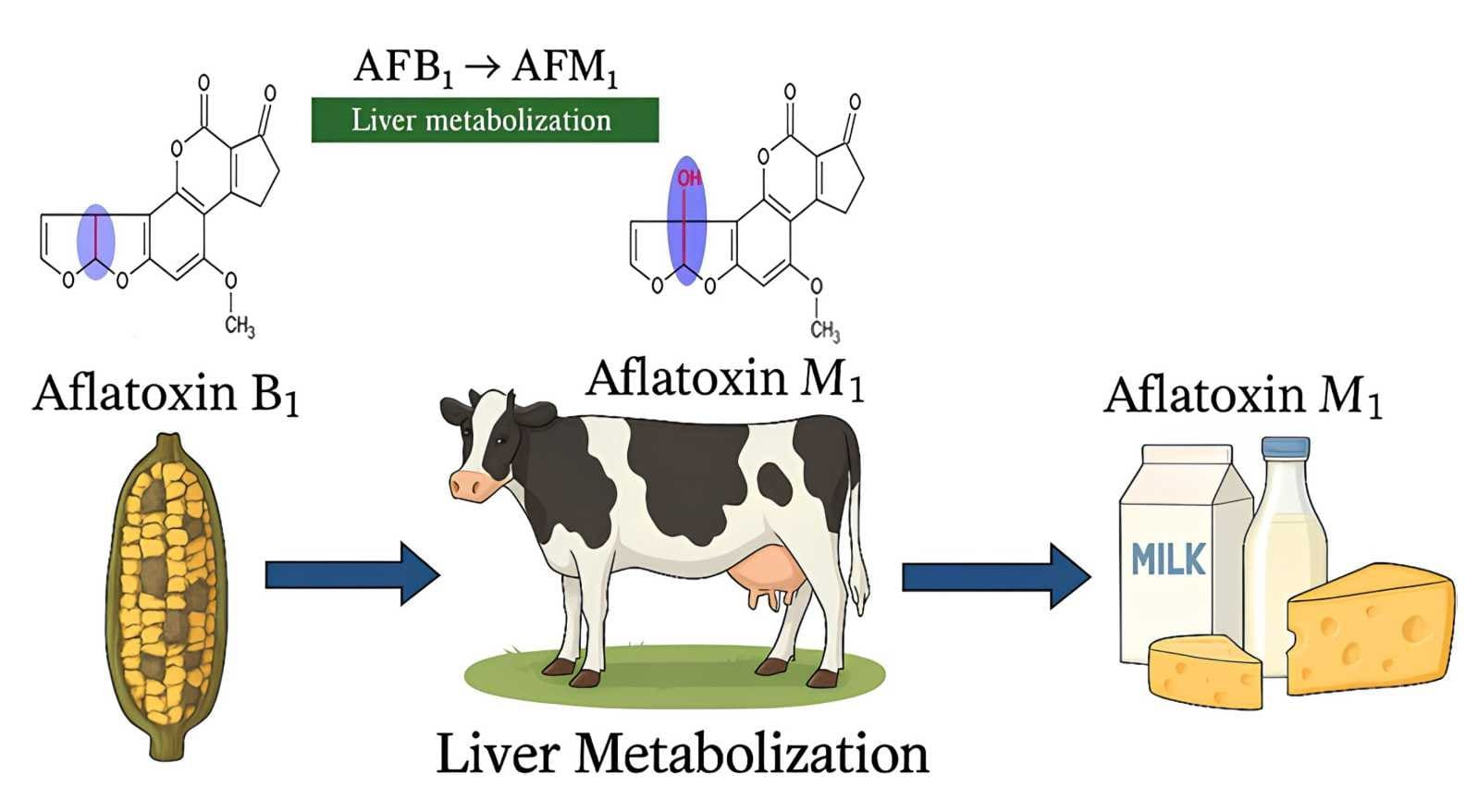
The dairy sector faces an additional food-safety concern because AFB1 consumed through feed can be metabolised to aflatoxin M1 (AFM1) and excreted in milk.
Way Forward
In dairy animals, ingested aflatoxin B1 can be converted in the liver to aflatoxin M1, which is subsequently excreted in milk. Scientists therefore emphasise prevention through proper drying and storage, alongside monitoring and appropriate feed-management measures.
Rapid, portable testing could enable screening of incoming raw materials, storage lots and finished feed, allowing contaminated consignments to be identified before they enter the dairy production chain. When combined with laboratory confirmation, proper storage, moisture control, traceability and validated mitigation strategies, such technology could shift aflatoxin management from periodic testing to a more proactive, risk-based surveillance system.
For India’s dairy sector, integrating portable testing with mobile laboratories, digital mapping and farm-level advisory services could provide a practical pathway towards stronger feed-to-milk safety.