Introduction
Over the past few decades, the poultry industry has progressed from traditional rearing systems to highly efficient commercial production systems. This transformation has been driven by continuous improvements in genetic selection, precision nutrition, disease prevention and control, and farm management practices. As a result, modern broilers are now capable of reaching market weight within 35–42 days while maintaining excellent feed conversion efficiency.
This progress has made poultry meat more affordable and widely available to consumers. However, rapid growth and high nutrient intake have also increased the physiological demand on the gastrointestinal tract (GIT). The intestine must now digest large quantities of nutrient-dense feed, absorb essential nutrients efficiently, maintain microbial balance, and protect the bird from enteric diseases. Therefore, gut health has become a critical determinant of productivity, bird welfare, and the economic sustainability of modern poultry farming (Ducatelle et al., 2023).
 In commercial poultry production, even a minor disturbance in digestion can quickly lead to measurable economic loss. Since feed usually accounts for about 60–70% of total production costs, efficient digestion and nutrient utilization are essential for profitability. When feed is not properly digested and nutrients pass through the bird unused, producers may observe increased feed intake, poor body weight gain, delayed market age, wet litter, increased medication costs, uneven flock performance, and a higher feed conversion ratio (FCR).
Although these losses may appear small at the individual-bird level, they become substantial when multiplied across large commercial flocks. Among the digestive disorders responsible for such hidden losses, Feed Passage Syndrome (FPS) has emerged as an important but often underestimated challenge in today’s poultry production systems.
Feed Passage Syndrome: Definition and Significance
Feed Passage Syndrome (FPS) refers to the passage of partially digested or undigested feed particles in the droppings. This occurs when digestion is incomplete, nutrient absorption is impaired, intestinal transit is accelerated, or intestinal integrity is compromised (Butcher et al., 1997).
FPS should not be viewed as a single infectious disease; rather, it is the visible result of a chain of events involving nutrition, gut microbiota imbalance, infectious agents, environmental stress, and management practices. In most flocks, mortality due to FPS may remain low, but the economic damage can be considerable because affected birds often eat more feed to gain less weight.
Over time, this results in poorer FCR, reduced flock uniformity, wet litter, increased ammonia load, greater susceptibility to secondary enteric infections, and reduced profitability. Understanding how FPS develops, therefore, is essential for understanding the various factors responsible for the feed passage syndrome.
Major Causes and Risk Factors Associated with Feed Passage Syndrome
Feed Passage Syndrome develops through multiple interacting factors rather than a single cause.
- Nutritional Factors
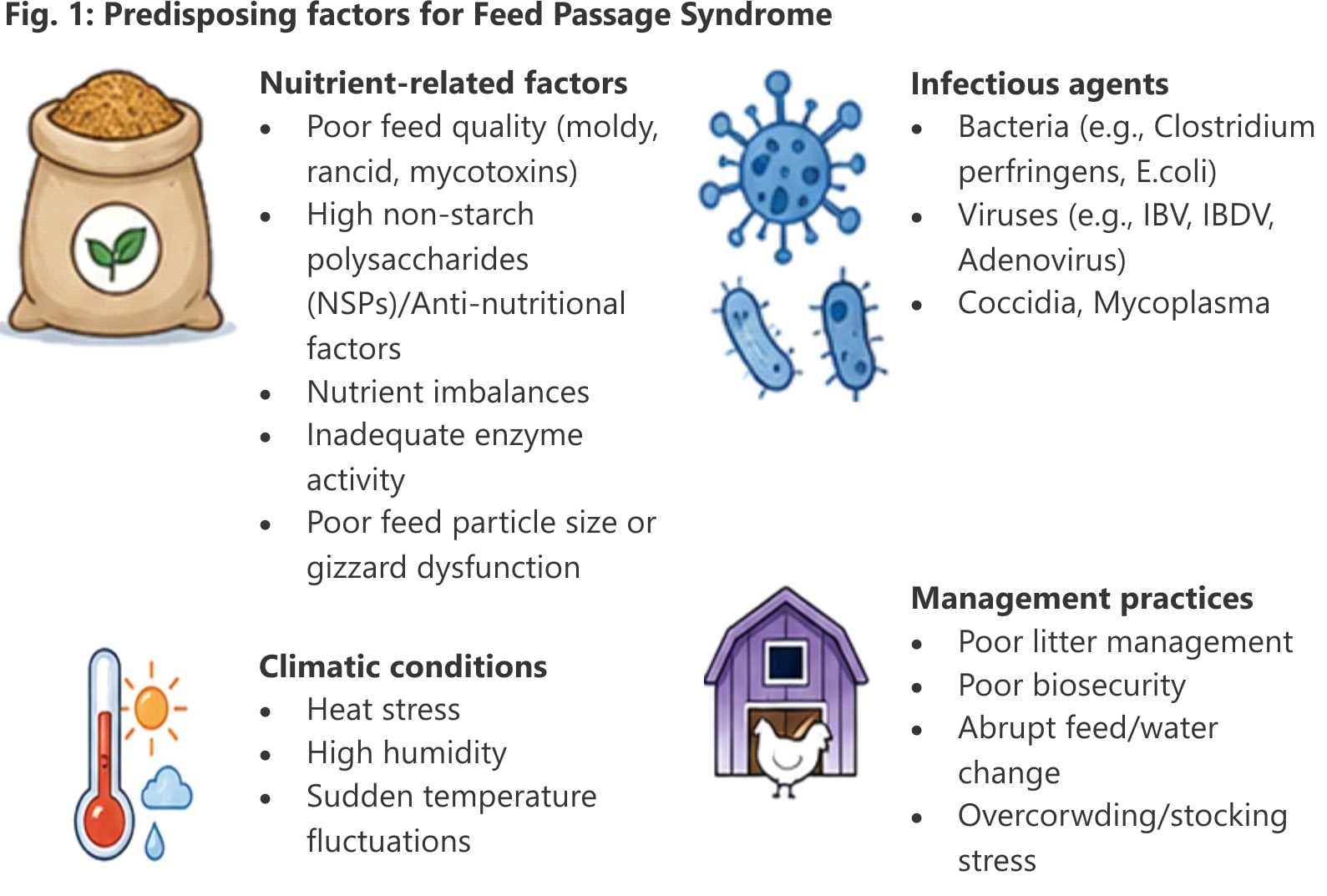
Dietary composition plays a central role in maintaining digestive efficiency. Poor-quality ingredients, excessive crude protein, improper feed processing, oxidized fats, mycotoxin contamination, and high levels of non-starch polysaccharides (NSPs) can reduce nutrient digestibility.
NSPs present in wheat, barley, and rye increase intestinal viscosity, interfere with enzyme activity, and reduce nutrient absorption. Increased undigested nutrients reaching the lower intestine provide substrates for harmful bacterial fermentation, promoting dysbiosis and intestinal inflammation (Bedford and Cowieson, 2012).
Variation in feed particle size also influences digestive efficiency. Finely ground diets reduce gizzard development and accelerate intestinal transit, whereas appropriately coarse particles improve gizzard activity and nutrient utilization (Svihus, 2011).
- Infectious Causes
Several enteric pathogens can contribute to FPS by damaging intestinal tissues. Coccidiosis, caused by Eimeria species, damages intestinal epithelial cells during parasite development, resulting in villus destruction, reduced absorption, and impaired digestion (Chapman et al., 2016).
 Necrotic enteritis, primarily caused by Clostridium perfringens, causes severe intestinal mucosal damage through toxin production. Subclinical necrotic enteritis can significantly reduce feed efficiency even without high mortality (Timbermont et al., 2011).
Other pathogens, including rotavirus, astrovirus, adenovirus, Salmonella, and pathogenic E. coli, may contribute to intestinal dysfunction and nutrient malabsorption.
- Intestinal Microbial Dysbiosis (Dysbacteriosis)
The poultry intestine contains a complex microbial ecosystem that contributes to digestion, immune development, and pathogen resistance. Beneficial bacteria such as Lactobacillus, Bifidobacterium, and Faecalibacterium produce short-chain fatty acids (SCFAs), particularly butyrate, which supports epithelial health and intestinal barrier integrity (Oakley et al., 2014).
However, stress, imbalance, inappropriate antibiotic use, and infections can disturb microbial equilibrium, resulting in dysbiosis. Dysbiosis is characterized by reduced beneficial microorganisms and increased growth of opportunistic pathogens such as Clostridium perfringens and pathogenic Escherichia coli.
Microbial imbalance increases intestinal inflammation, damages epithelial cells, reduces nutrient absorption, and contributes significantly to Feed Passage Syndrome (Yadav and Jha, 2019).
- Environmental and Management Factors
Environmental and management-related stressors play an important role in the development of intestinal disorders. Among these, heat stress is one of the most critical factors affecting digestion in poultry.
When birds are exposed to elevated temperatures, oxidative stress increases, intestinal blood flow is altered, tight junction proteins are disrupted, and intestinal permeability becomes higher, thereby compromising gut integrity (Lara and Rostagno, 2013).
Along with heat stress, poor ventilation, high ammonia concentration, wet litter, overcrowding, contaminated drinking water, and inadequate biosecurity further increase physiological stress on birds. These conditions weaken intestinal barrier function, disturb normal digestion, predispose birds to enteric infections, and ultimately increase the risk of Feed Passage Syndrome.
Pathophysiology of Feed Passage Syndrome
The development of FPS involves a complex sequence of physiological disturbances. Initially, nutritional imbalance, infection, or stress reduces digestive enzyme activity and damages intestinal morphology. Reduced digestion allows increased quantities of undigested nutrients to enter the lower intestine.
These leftover nutrients promote microbial fermentation and pathogen proliferation, resulting in dysbiosis. The altered microbial population produces harmful metabolites that damage epithelial cells and stimulate inflammatory responses.
Chronic inflammation reduces villus height, increases crypt depth, decreases digestive enzyme production, and compromises nutrient absorption. Damage to tight junction proteins increases intestinal permeability, commonly described as “leaky gut.”
Oxidative stress further worsens epithelial damage by producing reactive oxygen species that affect cell membranes, DNA, mitochondria, and antioxidant defence systems (Surai, 2016).
Ultimately, reduced digestive capacity combined with accelerated intestinal movement results in the passage of incompletely digested feed particles.
Clinical Signs
The major clinical indicators of Feed Passage Syndrome include:
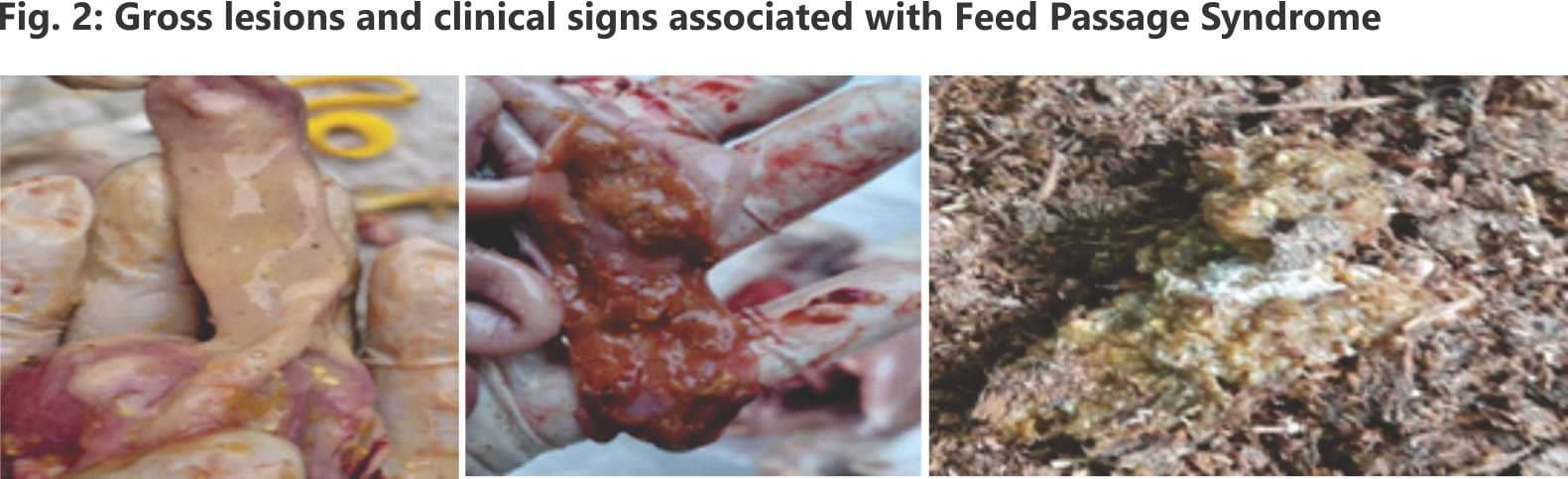
- Visible undigested feed particles in droppings
- Wet and poorly formed faeces
- Poor weight gain
- Increased FCR
- Uneven flock growth
- Wet litter condition
- Increased ammonia production
Gross lesions are usually nonspecific but may include watery intestinal contents, intestinal distension, mucus accumulation, and mild enteritis.
Histopathological examination commonly reveals:
- Reduced villus height
- Increased crypt depth
- Inflammatory cell infiltration
- Epithelial degeneration
- Reduced villus-to-crypt ratio
Diagnosis requires integration of clinical observations, nutritional evaluation, necropsy findings, microbiological testing, and intestinal histopathology.
Prevention and Control Strategies
Feed Passage Syndrome (FPS) is not caused by a single factor. Therefore, its prevention and control must be planned as a stepwise, whole-flock gut health programme that begins before feed reaches the bird and continues through nutrition, intestinal microbial balance, disease control, farm environment and routine monitoring.
The first and most important step is to reduce the entry of poorly digestible or harmful dietary components into the digestive tract. This requires the use of high-quality, fresh and highly digestible feed ingredients, proper storage of raw materials, regular testing for mycotoxins, avoidance of oxidized fats in diets, maintenance of correct particle size and pellet quality, and formulation of diets with balanced energy, amino acids, minerals and vitamins.
Diets containing high levels of wheat, barley, rye or other non-starch polysaccharide (NSP)-rich ingredients should be managed carefully because NSPs increase intestinal viscosity, slow enzyme access to nutrients, disturb digestion and allow more undigested material to reach the lower intestine, where harmful bacterial fermentation may begin.
Therefore, exogenous enzymes such as xylanase, β-glucanase, protease, amylase and phytase are valuable tools in the early nutritional control of FPS, as they break down anti-nutritional components, improve nutrient release, reduce the quantity of undigested protein, starch and phosphorus entering the hindgut, support better feed conversion and indirectly help stabilise intestinal microbiota (Bedford and Cowieson, 2012).
Once feed digestibility is secured, the next chronological focus should be the development and maintenance of a favourable intestinal microbial population.
A healthy gut microbiota supports digestion, produces short-chain fatty acids, improves immune function and protects against pathogen colonisation; however, stress, poor diet,
contaminated water, unnecessary antibiotic use and enteric infections can shift this balance towards dysbiosis.
For this reason, probiotics, prebiotics and synbiotic should be incorporated strategically to promote beneficial bacteria such as Lactobacillus and Bifidobacterium, enhance competitive exclusion of pathogens, stimulate short-chain fatty acid production and improve mucosal immunity.
In addition, postbiotics have become important modern alternatives because they contain microbial metabolites, cell components and bioactive compounds that can strengthen the epithelial barrier, reduce inflammation, improve antioxidant status and support gut integrity without depending on live microbial survival (Żółkiewicz et al., 2020).
After microbial stability is supported, feed additives that directly improve the intestinal environment should be considered. Organic acids lower intestinal pH, suppress harmful bacteria and improve nutrient digestion, while butyrate is especially useful because it serves as an energy source for enterocytes, promotes epithelial repair, improves villus development, strengthens tight junctions and supports mucosal defence mechanisms (Guilloteau et al., 2010).
Phytogenic additives such as Aegle marmelos, Camellia sinensis, thymol, carvacrol, curcumin, garlic extract, oregano oil and other essential oils may provide additional benefits through antimicrobial, antioxidant, anti-inflammatory and digestive-stimulating effects, helping reduce intestinal irritation and improving overall performance. However, nutritional measures alone are not sufficient unless infectious causes are controlled at the same time.
Coccidiosis, necrotic enteritis, viral enteritis, Salmonella, pathogenic Escherichia coli and other enteric challenges damage villi, increase mucus secretion, reduce absorptive surface area and accelerate passage of undigested feed; therefore, effective vaccination, anticoccidial programmes, biosecurity, cleaning and disinfection, rodent and insect control, and rapid diagnosis of enteric disease are essential components of FPS prevention (Chapman et al., 2016; Timbermont et al., 2011).
The final layer of control is farm management, because even a well-formulated diet can fail when birds are exposed to stress. Good ventilation, ammonia control, clean and cool drinking water, dry litter, proper stocking density, heat stress management, brooding temperature control and uniform feed and water access reduce physiological stress and help maintain normal intestinal motility and barrier function.
Regular monitoring of droppings, litter moisture, body weight, flock uniformity, feed intake, water intake and FCR allows early detection before visible economic losses become severe. This is important because FPS often causes more financial loss through poor feed efficiency, delayed market age, uneven flock growth, wet litter, increased medication cost and reduced profitability than through mortality.
Thus, an effective FPS control programme should move chronologically from preventing dietary problems, improving digestion, stabilising microbiota, strengthening the intestinal barrier, controlling enteric infections and reducing environmental stress to continuous flock monitoring; only this integrated approach can protect gut health, improve nutrient utilization and sustain profitable poultry production.
Conclusion
Feed Passage Syndrome represents an important multifactorial digestive disorder affecting modern poultry production. The syndrome results from complex interactions among nutritional factors, microbial imbalance, intestinal inflammation, environmental stress, and management factors.
The intestine is central to poultry productivity, and maintaining intestinal integrity is essential for achieving optimal growth performance and feed efficiency. Prevention of FPS requires a comprehensive gut health strategy involving precision nutrition, enzyme supplementation, microbiome modulation, effective disease control, and improved farm management.
Future advances in microbiome analysis, nutrigenomics, metabolomics, and precision poultry nutrition will provide new opportunities to predict, prevent, and control Feed Passage Syndrome. A proactive approach toward intestinal health will remain essential for sustainable and profitable poultry production.
References are available upon request.
By Dr Nagesh Sonale, Techno-Commercial Manager, Immeureka Animal Health