
Introduction
Volatility has become a constant in India’s feed marke. Price and availability of maize, soybean meal, rapeseed, sunflower meal, rice bran, and other raw materials fluctuate rapidly. However, the greater challenge today is not just price volatility—it is quality variability. Inconsistent nutrient density, processing differences, rising mycotoxin pressure, and occasional adulteration mean that the “least-cost” formula on paper can ultimately become the most expensive at the farm level.
This raises a critical strategic question: are we optimizing the lowest cost per kilogram of feed, or the lowest cost per litre of milk? The answer should increasingly be the latter.
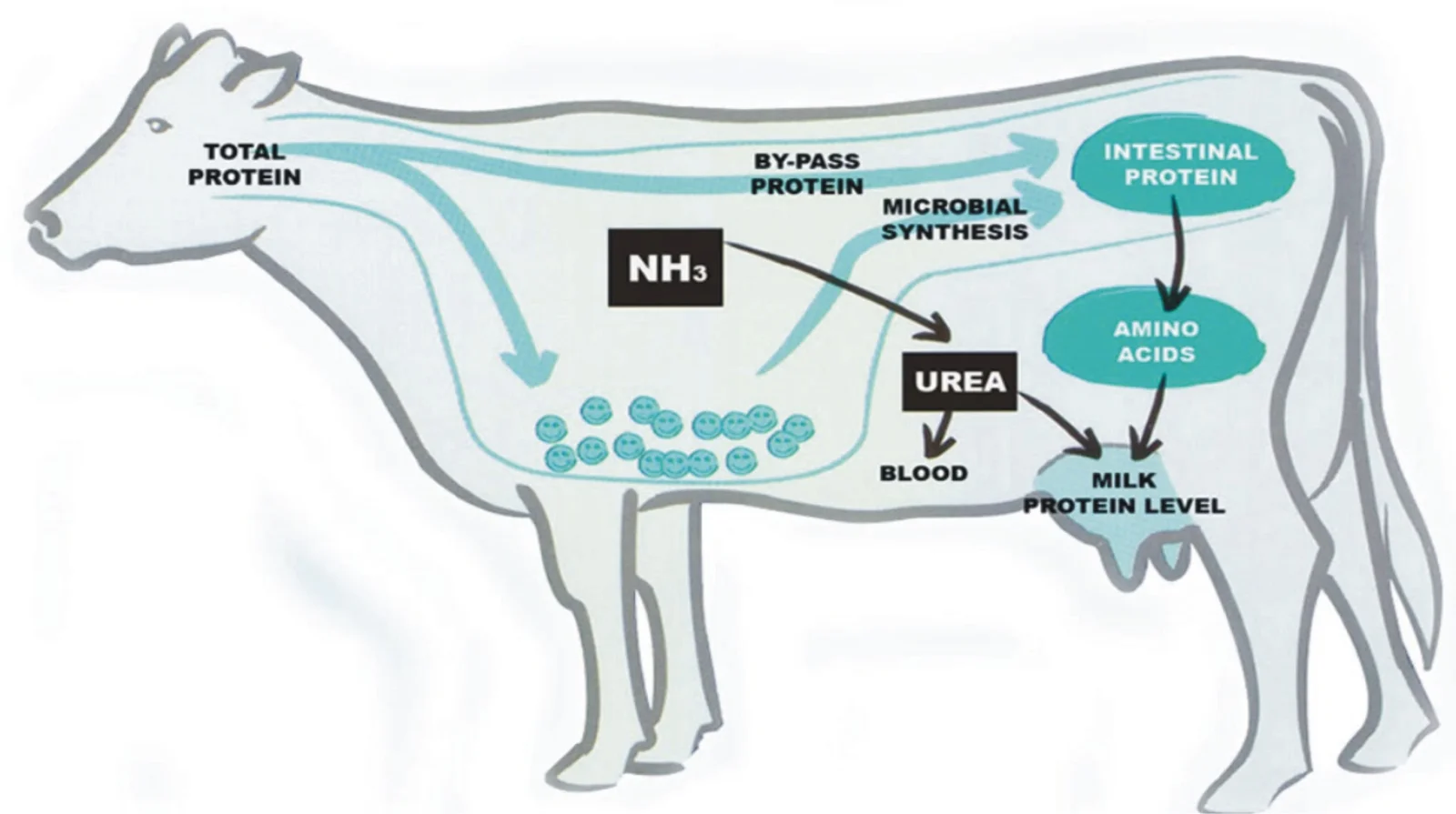
This article argues for a protein strategy that protects animal performance during reformulation rather than focusing solely on reducing feed cost. Traditionally, nutritionists have relied on RDP (Rumen Degradable Protein) and RUP (Rumen Undegradable Protein) to switch between raw materials such as soybean meal, rapeseed meal, sunflower meal, DDGS, and other co-products while maintaining rumen stability without unnecessarily increasing crude protein (CP). While the industry is already familiar with these two pillars, the time has now come to focus critically on the third pillar: amino acid balance.
The protein system has three pillars:]
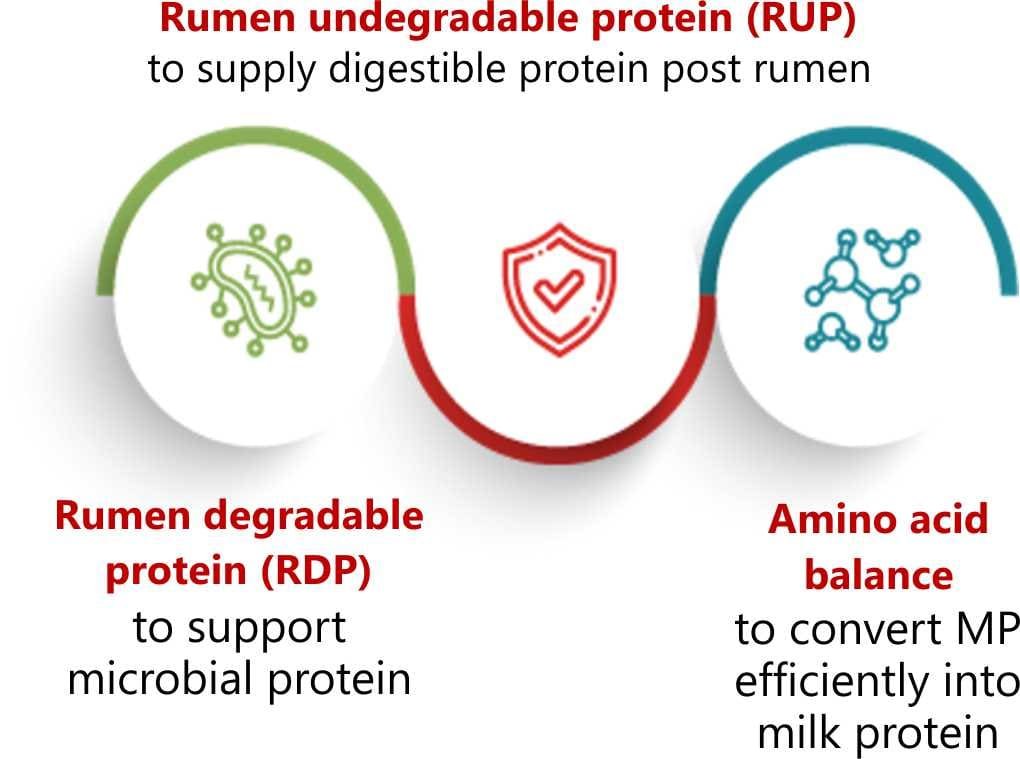
- Shift the objective of reformulation: from “cheapest formulation” to “most stable output”
The first and most important shift is strategic rather than mathematical. Many nutritiontists begin formulation with the question: “How do we reduce formulation cost?” In volatile markets, a better question is: “How do we protect milk yield, milk components, and feed efficiency while still managing cost?”
In practice, this means developing formulations that can tolerate raw material variation without causing major performance fluctuations. Reformulation should increasingly focus on digestible nutrients, fibre and starch behaviour, effective fibre, and metabolizable protein (MP) supply rather than only crude nutrient specifications.
These nutritional levers help maintain intake consistency and rumen function even when ingredient quality changes, resulting in more predictable animal performance and fewer complaints from farmers.
- Stop designing protein strategy purely on crude protein (CP)
Crude protein percentage has long been used as a shortcut indicator of feed quality. However, CP alone can be misleading. Two feeds with identical CP levels may produce completely different milk responses, especially when reformulation alters protein degradability and amino acid supply.
Crude protein measures only the total nitrogen content of a feed. It does not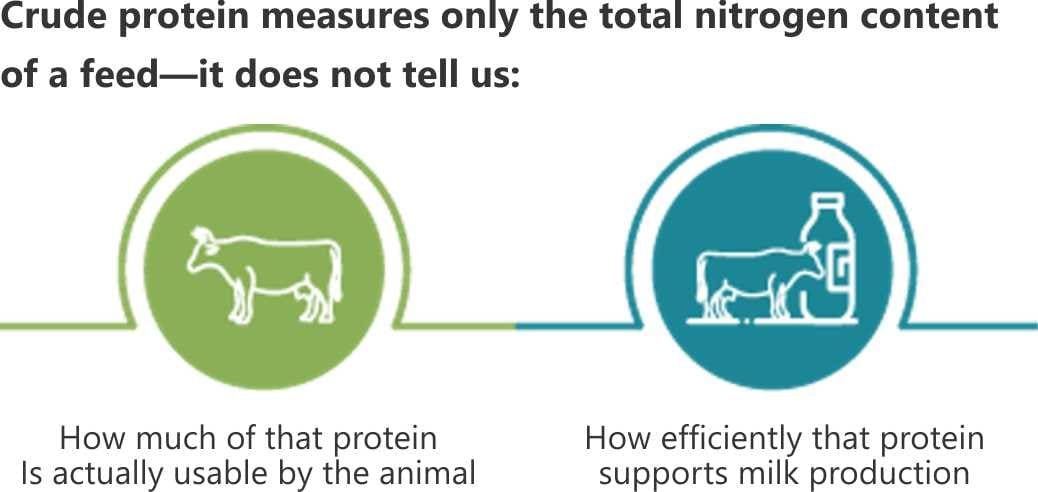 indicate:
- How much protein is digestible
- The balance between RDP and RUP
- The amino acid profile available to the animal
- The efficiency of microbial protein synthesis
As raw materials change frequently, formulations based only on CP% can silently alter protein quality:
- CP may remain constant while nutrient value changes
- RDP/RUP balance may shift
- Microbial protein synthesis may decline
Therefore, protein strategy should no longer depend solely on identifying the cheapest protein source available each month. Instead, the focus should be: if soybean meal becomes expensive or unavailable, what combination of alternative proteins can maintain MP supply and amino acid balance without overfeeding CP?
This approach reduces formulation shocks, minimizes nitrogen wastage, and improves milk consistency. In modern ruminant nutrition, metabolizable protein adequacy—not crude protein percentage—should become the true benchmark of formulation quality.
- Lower CP is not cost-cutting—it is efficiency building
Reducing crude protein is not merely a cost-saving exercise. It is fundamentally about improving biological efficiency and reducing nutrient waste.
By optimizing metabolizable protein and amino acid supply rather than chasing higher CP levels:
- Nitrogen utilization improves
- Feed efficiency increases
- Nutrient wastage declines
- Milk production becomes more stable
- Environmental nitrogen losses are reduced
 In volatile markets, efficiency becomes the most stable currency. If feed quality is ultimately measured by animal performance, then the most relevant protein metric is not crude protein, but metabolizable protein (MP)—the protein actually absorbed and utilized by the animal for maintenance and milk synthesis.
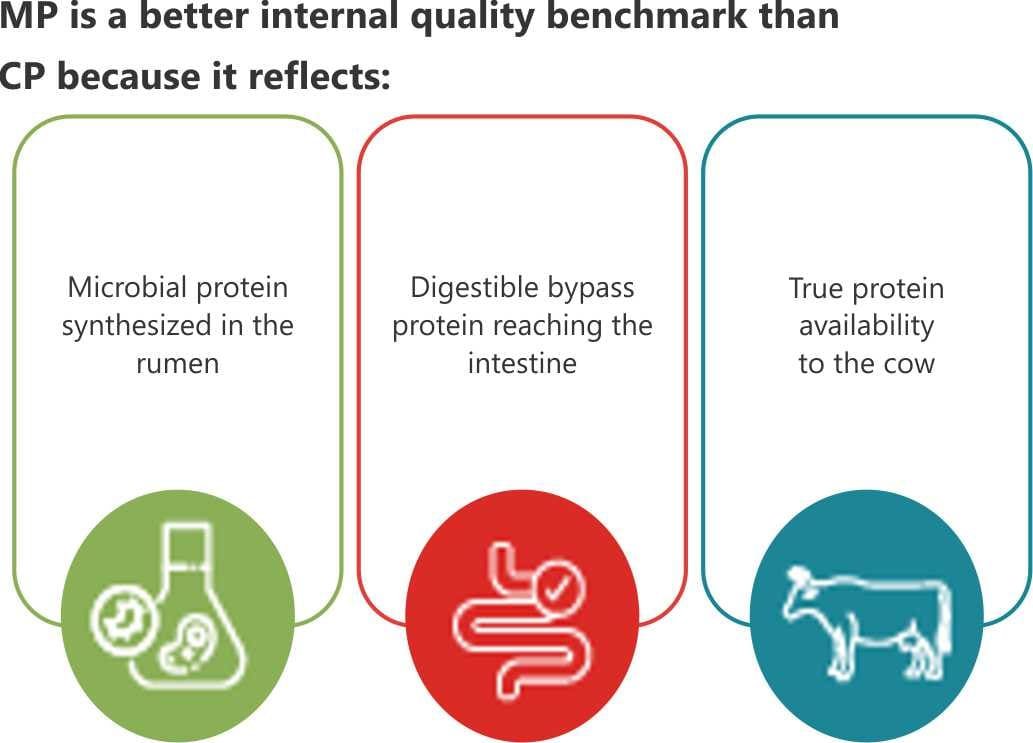
- Treat amino acids as nutrients, not premium add-ons.
Amino acids play a critical role in protecting performance when protein sources become unstable. Traditionally, amino acids have been treated as premium additives reserved for high-end feeds, making them among the first components removed when raw material prices increase. However, modern nutrition increasingly recognizes amino acids as essential nutrients rather than optional supplements.
Amino acid balancing helps maintain:
- Milk production consistency
- Protein utilization efficiency
- Lower CP formulations
- Greater reformulation flexibility under volatile conditions
Lysine and methionine, in particular, should be viewed as mandatory components of a precision protein strategy—not optional additions.
- Strengthen quality and consistency over aggressive cost-cutting
During volatile market conditions, quality risks rise significantly due to:
- Greater ingredient variability
- Increased adulteration risk
- Frequent raw material substitution
As a result, consistency control becomes more important than aggressive cost reduction.
Feed manufacturers should tighten raw material acceptance standards and closely monitor nutrient variability when switching ingredients. A cheaper raw material with inconsistent quality often creates higher hidden costs through reduced animal performance and customer dissatisfaction.
Putting it together: the new definition of feed quality
In today’s volatile geopolitical and market environment, a high-quality ruminant feed should be defined not by crude protein percentage alone, but by its ability to:
- Maintain intake stability
- Support rumen function
- Deliver consistent metabolizable protein
- Optimize amino acid supply
- Sustain milk output efficiently despite reformulation
The future competitive advantage will belong to those who can reformulate confidently without compromising animal performance. Ultimately, the goal remains unchanged: Optimize cost per litre of milk by protecting efficiency—not simply by lowering the feed bill.
You can apply several nutritional strategies to manage volatility, but the discussion always returns to one central question: “What is your protein strategy?”
A modern protein strategy cannot rely solely on crude protein or the cheapest CP percentage on paper. It must protect metabolizable protein supply, improve efficiency, and maintain milk performance consistently through reformulation.
By Dr. Medha Singh and Dr. Sudhir Singh, Kemin Industries South Asia