China’s Ministry of Agriculture and Rural Affairs has officially approved a groundbreaking bioengineered protein derived from carbon dioxide (CO₂) for use as animal feed. This innovative material, reported by China Daily, marks a significant step towards sustainable agricultural practices.
The new protein is produced using Yarrowia lipolytica yeast through a bio-fermentation process. This technology captures CO₂ emissions from heavy industries like coal chemistry, natural gas processing, and steelmaking, transforming them into high-value yeast protein. This offers an incredibly efficient alternative to traditional protein sources for animal feed.
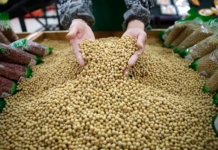
One of the key advantages is production efficiency: a 10-hectare facility can yield 100,000 tonnes of high-quality protein annually. This amount is equivalent to the soy protein output from approximately 40,000 hectares of cultivated land, highlighting its scalability and reduced land footprint.
Beyond efficiency, the yeast protein boasts high nutritional value, featuring a balanced composition of essential amino acids, trace elements, and polysaccharides, ensuring it’s both palatable and digestible for livestock.
With China consuming around 70 million tonnes of feed protein in 2024 and relying on imports for over 80% of it, this domestically produced, CO₂-based protein could significantly reduce dependence on imported soybeans and fishmeal. This innovation promotes a circular, low-emission agricultural model, aligning with China’s environmental goals and food security initiatives.