Introduction
India faces a green fodder deficit of about 32% and a dry fodder deficit of around 23%, as per ICAR report. However, whenever, there is an excess green fodder production, part of this could be preserved through controlled fermentation under anaerobic conditions, as “Silage” In fact, silage making is a practical way to conserve surplus fodder harvested during the monsoon and spring seasons, to be used during lean periods. However, the quality of silage depends on its proper preparation, storage and management. Drawing on guidance from extension services, peer-reviewed research and Indian institutions, this article presents a practical guide to silage production and preservation. The objective is not merely to store green fodder, but more importantly, to retain its nutritional value, minimise spoilage, and protect animal health and with no negative effect on food safety from the animal products.
Choose the Right Crop and Harvest it at the Right Stage
According to NDDB, maize, sorghum and oats are among the forage crops suitable for silage production in India. Indian extension sources also recommend pearl millet (bajra) and hybrid Napier as silage crops. Maize is widely used because of its high yield potential, energy-rich forage and adequate fermentable sugar content, which supports efficient fermentation in rumen.
Crop selection should consider local agroclimatic conditions, irrigation availability, expected yield, nutritional requirements and the available storage system.
Harvest maturity affects digestibility, starch content, moisture and ease of compaction. In maize, harvesting is generally recommended when the grain reaches approximately the half to three-quarter milk line, although the optimum stage varies with the hybrid and growing conditions. This helps achieve a suitable balance between grain development, whole-plant dry matter and ensiling quality.
Moisture management is equally important. NDDB guidance indicates a dry matter content of approximately 30–35% as a practical starting point for suitable fodder, although the optimum range varies by crop and ensiling method. Excessively wet forage can produce nutrient-rich effluent and promote undesirable fermentation, while overly dry material is difficult to compact, allowing air pockets to form and increasing the risk of heating and mould growth. Measuring dry matter before ensiling provides a more reliable assessment of moisture than visual estimation alone.
Before harvesting, producers should assess crop health and avoid incorporating visibly mouldy or severely damaged material. Ensiling does not reliably eliminate mycotoxins already present in contaminated forage. Suspected contamination should therefore be investigated through appropriate sampling and testing, as discussed in the feed safety section below.
Chopping, Filling and Compaction: Establishing Optimal Fermentation Conditions
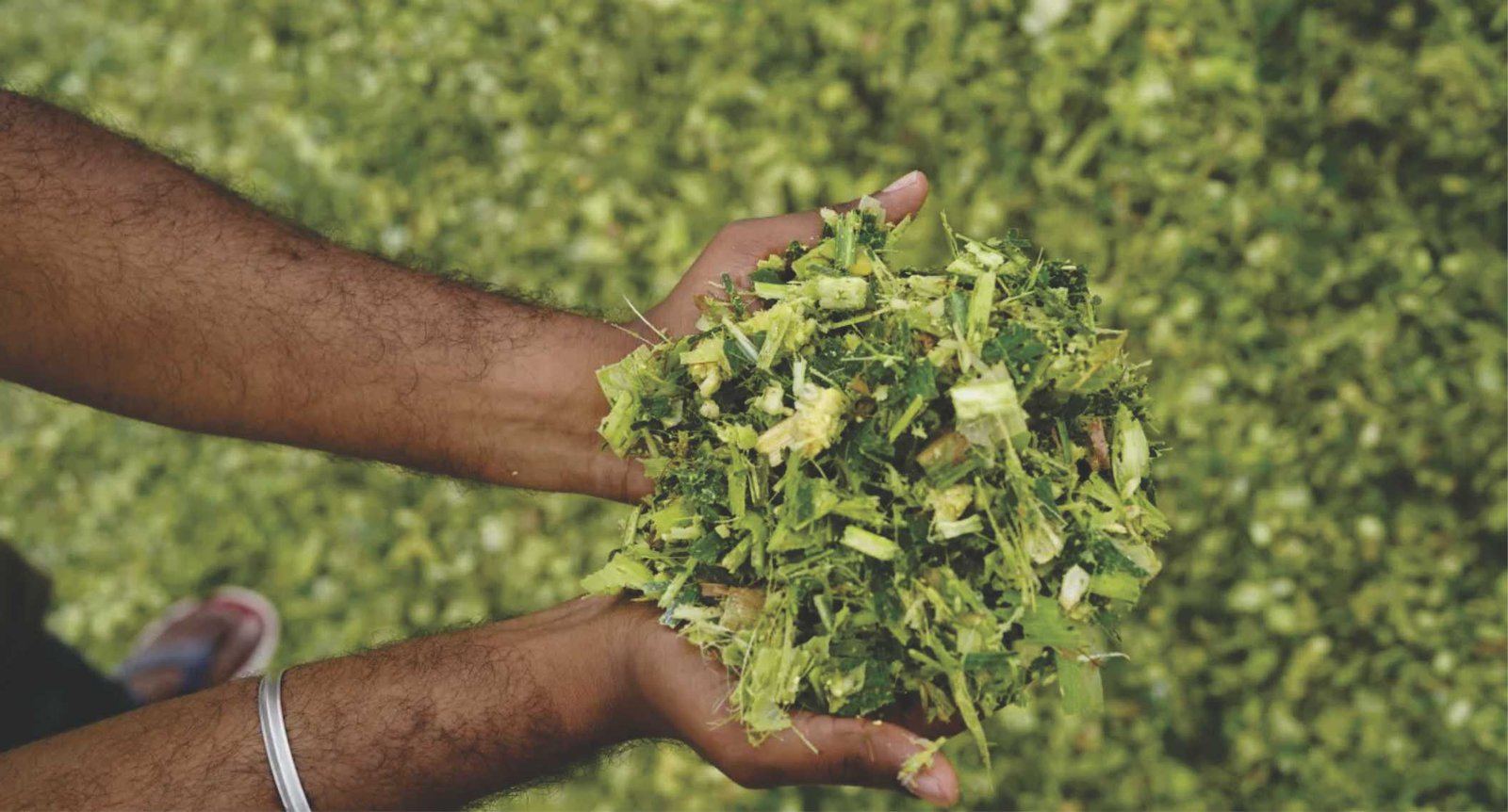
Harvested forage should generally be chopped into 2–3 cm pieces, as recommended by the National Dairy Development Board (NDDB). Excessively long forage can be difficult to compact, leaving air pockets that increase the risk of spoilage. In maize silage, kernel processing is also important: cracking the kernels improves starch accessibility and utilisation by the animal. Inadequate kernel processing is a recognised silage-management mistake.
Appropriate chop length facilitates uniform filling and effective compaction while helping minimise air entrapment. However, particle size should also be considered alongside crop dry matter, harvesting equipment and the feeding system. When silage is incorporated into the ration, its particle size and inclusion level should help maintain adequate physically effective fibre for normal rumination. During harvesting and handling, care should be taken to prevent contamination with soil, manure and other foreign materials.
The silo should be filled, compacted and sealed as quickly as practicable to minimise oxygen exposure. Spread the chopped forage in uniform layers of approximately 30–45 cm and compact each layer thoroughly before adding the next. Effective compaction expels trapped air and promotes the anaerobic conditions required for effective fermentation.
Under anaerobic conditions, lactic acid bacteria ferment water-soluble carbohydrates into organic acids, principally lactic acid. The resulting decline in pH suppresses many undesirable microorganisms and helps preserve nutrients. Inadequate compaction or delayed sealing prolongs oxygen exposure, increasing the risk of heating, nutrient losses and spoilage.
Sizing a Pit: Calculating Storage Requirements
Well-compacted maize silage may weigh approximately 20–25 kg per cubic foot, although actual density varies with dry matter content, chop length and compaction. A farm with 10 adult animals consuming 20 kg of fresh silage per head per day would require 200 kg daily. Over a 180-day lean season, this amounts to 36 tonnes of silage.
At an assumed density of 20–25 kg per cubic foot, the calculated storage volume would be approximately 1,440–1,800 cubic feet (41–51 cubic metres), before accounting for storage and feed-out losses. Additional capacity should be provided based on expected losses and the farm’s feeding and storage practices. The silo dimensions should also allow sufficient silage to be removed from the exposed face each day to minimise deterioration during feed-out.
Commercial operations should use suitable machinery and ensure that silo structures can safely withstand filling and storage loads. Personnel must remain clear of moving machinery and avoid standing on unstable or steep silage faces. Safe operating procedures are essential throughout filling, compaction and subsequent feed-out.
Sealing and Fermentation: Protecting the Stored Crop
Immediately after filling and compaction, seal the silo with a good-quality polythene sheet or oxygen-barrier silage cover. Secure the edges tightly to minimise oxygen entry and prevent rainwater infiltration. Ensure effective compaction before sealing, protect the cover from punctures caused by birds, rodents, sharp objects or machinery, and inspect it regularly. Repair any damage promptly using compatible repair materials, and provide adequate drainage to prevent water accumulation around the silo.
Oxygen ingress caused by inadequate compaction, delayed sealing or damaged covers encourages yeast and mould growth, resulting in heating, nutrient losses and deterioration of silage quality. Effective sealing is particularly important during prolonged storage and in regions experiencing heavy rainfall or fluctuating temperatures.
Once sealed, the silo should remain closed during fermentation. Under anaerobic conditions, lactic acid bacteria convert water-soluble carbohydrates into organic acids, primarily lactic acid. The resulting decline in pH helps preserve the forage by suppressing many undesirable microorganisms.
NDDB recommends allowing silage to ferment for at least 45 days before opening for feeding. This should be treated as a practical minimum rather than a guarantee of quality or safety, as the fermentation process and final silage quality also depend on the crop, dry matter content, packing, sealing and storage conditions.
Microbial Hazards and Other Feed Safety Risks
- Listeriosis: Listeria monocytogenes is an environmental bacterium found in soil and decaying organic matter that can contaminate forage during harvesting and handling. Poorly fermented silage, particularly material exposed to air at the surface, silo edges or damaged areas, can provide conditions favourable for its persistence or growth. Listeriosis can cause neurological disease, reproductive losses and abortion in livestock, with sheep and goats being particularly susceptible to the neurological form.
- Prevention depends on minimising soil contamination, achieving rapid acidification, maintaining effective compaction and sealing, and promptly repairing damaged covers.
- Botulism: Botulism is a potentially fatal disease caused by toxins produced by Clostridium botulinum. In silage, a major risk arises when carcasses of rodents, birds or other small animals contaminate the forage, particularly when fermentation is inadequate and the pH remains high. Contamination from manure or poultry litter can also introduce clostridial organisms into the forage.
- Prevention involves inspecting fields before harvesting, avoiding soil and manure contamination, ensuring rapid and effective fermentation, and excluding animal carcasses from stored forage.
- Clostridial (Butyric) Fermentation: Clostridial fermentation can occur when forage is excessively wet, contains insufficient fermentable sugars or is contaminated with soil. Instead of desirable lactic acid fermentation, clostridia may produce butyric acid, ammonia and other undesirable fermentation products, reducing the nutritional value and palatability of silage. A strong rancid or putrid odour, high moisture content and poor acidification can indicate faulty fermentation. Feeding such silage may reduce intake and milk production and increase the risk of metabolic disorders, including ketosis, in dairy cows.
- Moulds and Mycotoxins: Mycotoxins are toxic secondary metabolites produced by certain fungi that can contaminate forage before harvest or develop during storage under favourable conditions. Field fungi, including Fusarium species, can produce mycotoxins such as deoxynivalenol (DON) and zearalenone, while storage moulds, including Penicillium roqueforti, may grow wherever oxygen enters poorly sealed or damaged silage. Other mycotoxins, including aflatoxins and fumonisins, may also occur, depending on the crop and contamination conditions.
- Although effective ensiling helps preserve forage through desirable fermentation, it does not reliably eliminate mycotoxins already present in contaminated material. Moreover, mycotoxins may be present even when no visible mould is detected. Aflatoxin B1 warrants particular attention in dairy production because cattle can metabolise it into aflatoxin M1, which may be excreted in milk and pose a food safety concern.
- Prevention involves growing healthy crops, harvesting at the appropriate stage, minimising soil contamination, and ensuring effective compaction, airtight sealing and proper storage. Careful feed-out management also helps limit oxygen exposure and storage mould growth. Where persistent problems such as reduced feed intake, reproductive disturbances or unexplained health issues arise, appropriate sampling and laboratory testing can help assess potential mycotoxin contamination.
- Nitrates: Nitrate accumulation can occur in forage crops such as sorghum, maize and pearl millet when growing conditions or nitrogen fertilisation favour excessive nitrate uptake. The risk may increase during drought, prolonged cloudy weather or irregular rainfall, particularly when nitrogen fertiliser has been applied heavily. High nitrate concentrations in forage can cause toxicity in livestock, especially ruminants.
- Although ensiling can reduce nitrate concentrations, the extent of reduction varies and the process does not guarantee that the resulting silage is safe. Under certain conditions, fermentation can also release nitrogen oxides. Raising the cutting height may help reduce nitrate intake because concentrations can be higher in the lower stem. Crops suspected of nitrate accumulation should therefore be tested before feeding.
Recognising and Investigating Suspect Silage
Good-quality silage generally has a clean, pleasantly fermented or acidic smell, with no extensive visible mould or signs of putrefaction. Abnormal heating, sliminess, heavy mould growth, a rotten odour or substantial soil contamination are warning signs of deterioration. However, these observations provide only preliminary indications of quality. Apparently normal silage may still contain mycotoxins, while visual inspection and smell cannot identify specific toxins or confirm their absence.
Where mould growth, unusual heating, suspected contamination or unexplained animal-health and milk-quality problems raise concerns, isolate the affected material and seek advice from a veterinarian, animal nutritionist or feed-testing laboratory. Representative samples should be collected and analysed by a suitably accredited laboratory. Mycotoxin-binding or detoxification products, if required, should be used only under professional guidance, with demonstrated efficacy against the specific toxin and in accordance with applicable regulations.
Feed-Out Management: Maintaining Silage Quality After Opening
Opening the silo exposes silage to oxygen, allowing yeasts and other aerobic microorganisms to become active. Their growth can cause heating, nutrient losses and deterioration, even when the forage was initially well preserved.
To minimise aerobic spoilage, expose only the area required for feeding and maintain a firm, even silo face. Remove silage cleanly without unnecessarily loosening or disturbing the remaining material, and minimise the time the exposed face remains in contact with air. The daily removal rate should be sufficient to limit deterioration and will depend on silo dimensions, ambient temperature, silage stability and feeding requirements. Protect stored silage from rainwater and avoid leaving loose material exposed to air for prolonged periods.
During feed-out, inspect silage for abnormal heating, discolouration, visible mould, unusual odours and other signs of deterioration. Segregate suspect material and do not mix it with good-quality feed to conceal spoilage. Normal appearance and smell do not guarantee the absence of mycotoxins.
Incorporate silage into a balanced ration according to its nutrient composition and the animals’ requirements. The appropriate inclusion rate depends on species, body weight, milk yield, stage of lactation, physiological status and silage quality. Introduce dietary changes progressively and seek advice from a qualified animal nutritionist or veterinarian where necessary, particularly when formulating rations for high-producing dairy animals.
Maintain clean feed bunks, storage areas, mixing and feeding equipment. Remove spoiled residues promptly, minimise prolonged feed exposure and excessive refusals, and provide continuous access to clean drinking water. These practices help maintain feed hygiene and reduce avoidable losses.
Silage Additives: Useful Tools, Not Substitutes for Good Practice
Silage additives can support desirable fermentation and help improve aerobic stability when selected and applied appropriately. Microbial inoculants containing suitable lactic acid bacteria strains can promote fermentation, while selected chemical additives may inhibit yeasts and moulds or improve stability during feed-out. Their effectiveness depends on the crop, dry matter content, prevailing conditions, application method and specific product formulation.
Additives cannot compensate for excessively wet or dry forage, inadequate compaction, delayed sealing or damaged silo covers. Conventional silage additives should not be assumed to eliminate mycotoxins already present in contaminated forage. Product selection should be based on the intended outcome, scientific evidence of efficacy, label instructions and advice from a qualified livestock nutritionist or extension professional.
Sound silage-making practices remain the foundation of successful preservation. Additives should be used selectively to address specific management needs rather than as a substitute for good harvesting, compaction, sealing and storage practices.
The Indian Picture: Growing Adoption of Silage Production
Silage production in India is expanding, particularly in the north-west, supported by initiatives from dairy institutions, agricultural research organisations and state agencies. Different storage systems and production models are helping farmers adopt silage-making according to their scale of operation and feeding requirements.
- NDDB initiatives: It has promoted silage-making using surface silo bunkers with capacities ranging from 3 to 500 tonnes. Its models include a low-cost cooperative model at Mujkuva in Anand, Gujarat, and Katewadi in Baramati, Maharashtra, alongside a large-scale commercial model in Guntur, Andhra Pradesh. Demonstrations have supported the adoption of silage-making technology across several Indian states.
- ICAR-Indian Institute of Maize Research (IIMR), Ludhiana: It promotes the maize silage value chain in Punjab and Haryana. Its initiatives include pit, drum, bag and bale silage systems suited to farmers with different storage capacities. More than 1,000 farmers and dairy stakeholders have been trained, and feeding trials reported milk yield improvements of 10 to 20 per cent with whole-plant maize silage.
- Punjab Agro Industries Corporation (PAIC): PAIC produces baled maize silage in 100 kg and 400 kg formats, wrapped in UV-resistant stretch film. The reported specifications include a shelf life of approximately 18–24 months, a target pH of 3.7–4.2 and a dry matter content of 30–38%.
- Baled silage for smallholders: Baled silage can be particularly useful for small dairy farms that cannot consume large quantities of pit-stored silage quickly enough after opening. Each bale functions as an individually small sealed silo, helping limit oxygen exposure until opened. However, the plastic wrap must remain intact. Any punctures or tears should be repaired promptly with suitable silage tape.
- Evidence from Punjab: A 2026 study published in the Indian Journal of Dairy Science surveyed 385 silage-making farmers in Punjab. Most respondents used pit silos, while others used stack silos. The silage samples were generally reported to be of good quality, with an average pH of approximately 4.3 and dry matter content of around 29.5%.
Building a Reliable and Safe Silage Supply Chain
Safe silage production requires coordinated quality management across the dairy value chain. Farmers need practical training in crop selection, dry matter assessment, harvesting and silo management, while contractors and commercial silage producers must ensure appropriate chopping, effective compaction, airtight sealing and systematic quality control.
For India’s dairy sector, wider adoption of silage should be supported by access to moisture-measurement tools, suitable storage infrastructure, regular inspections and risk-based laboratory testing. Maintaining records of crop origin, harvest date, dry matter content, additives used, storage conditions and silo opening dates can improve traceability and help identify recurring quality problems. Dairy cooperatives, feed manufacturers, veterinarians, animal nutritionists and testing laboratories can further support quality assessment, balanced ration formulation and timely investigation of suspected contamination.
By combining sound silage-making practices with effective quality assurance and collaboration across the value chain, India’s dairy sector can preserve forage nutrients, reduce avoidable losses and improve year-round fodder availability. However, good preservation does not guarantee freedom from mycotoxins or other contaminants. Risk-based testing, appropriate corrective measures and professional guidance remain essential whenever feed safety is uncertain. Together, these measures can strengthen feed safety while supporting animal health, dairy productivity and milk safety.
By Think Grain Think Feed