
Why India’s dairy future will depend not only on better animals, but on better nutrition
Introduction
India produced 247.87 million tonnes of milk in 2024–25, an increase of 3.58% over the previous year, while per-capita milk availability reached 485 grams per day. Dairying continues to be an important source of income for millions of rural households. Yet, behind this growth lies a less visible question: How can India consistently meet the nutritional requirements of the animals producing this milk?
The fodder challenge is often expressed simply in terms of shortage. In reality, the issue extends well beyond volume to include availability, quality, seasonality, preservation, storage, consistency and the cost of delivering usable nutrition to the animal. Fodder therefore needs to be viewed not merely as chaara, but as an essential component of dairy infrastructure. The transition ahead is from fodder deficit to nutrition security.
Genetics Create Potential. Nutrition Realises It.
India has made significant investments in genetic improvement, breeding, artificial insemination and animal selection, but dairy productivity ultimately depends on the interaction of three interconnected factors: animal genetics, farm management and nutrition.
Improved genetics enhance an animal’s productive potential, effective farm management enables that potential to be expressed, and nutrition provides the biological inputs required to translate genetic potential into milk production. This establishes an important principle: better genetics create greater nutritional responsibility. An animal with superior genetic potential cannot perform to its capacity when its nutritional supply is inadequate or inconsistent. The next phase of dairy development must therefore extend beyond genetic improvement to creating the nutritional environment required for animals to express their potential consistently and economically.
India’s Fodder Problem Is Bigger Than the Deficit Number
ICAR-IIMR cites deficits of around 32% for green fodder and 23% for dry fodder. While these figures indicate the magnitude of the challenge, a deficit measured in tonnes does not fully capture the nutritional dimension of the problem. Fodder may be available on a farm while still failing to meet the animal’s requirements because of inadequate dry matter, energy, protein, digestibility or overall quality. The more relevant question, therefore, is not simply how much fodder is available, but how much usable nutrition can be reliably delivered to the animal, at what cost and for how much of the year. This shift—from measuring physical fodder availability to assessing nutritional availability—is fundamental to the broader concept of nutrition security.
| Parameter | ICAR-IIMR Indicative Range | Quality-Focused Organised Production |
| Dry Matter (DM) | 25-35% | Consistent DM within the appropriate range, depending on crop and ration requirements |
| Starch | Around 20% | Consistent starch contribution through appropriate hybrid selection and harvest maturity |
| Crude Protein | Around 8-10% DM | Maintained within an appropriate range while balancing energy and fibre |
| NDF | About 45-50% DM | Managed with consideration to intake and digestibility rather than a single target |
| ADF | About 25-30% DM | Influenced through crop selection and harvest maturity |
| pH / Fermentation | Appropriate anaerobic fermentation | Consistent fermentation supported by disciplined storage and handling |
The Animal Does Not Follow the Crop Calendar
Agricultural production is inherently seasonal, but an animal’s nutritional requirement is continuous. Green fodder availability is influenced by rainfall, crop cycles, land availability and local agro-climatic conditions, with periods of abundance often followed by periods of scarcity. During such gaps, farmers may have to depend on lower-quality alternatives or purchase fodder at higher prices, increasing the cost of milk production. This creates a fundamental mismatch: the crop follows the season, but the animal requires nutrition every day. Addressing this mismatch requires more than increasing fodder production during periods of abundance; nutritional resources must also be conserved and stored so that their value can be carried forward into periods of scarcity. Scientific fodder conservation is therefore becoming an important component of dairy infrastructure and year-round nutritional security.
A Kilogram of Fodder Is Not a Kilogram of Nutrition
Fodder economics cannot be assessed adequately by comparing feeds solely on their price per kilogram. Fresh green fodder contains significant amounts of water, while preserved forages can differ considerably in dry-matter concentration and nutrient composition. Consequently, two feeds with similar or even very different purchase prices may provide substantially different quantities of usable nutrition. A meaningful assessment should consider the dry matter delivered, energy and digestible fibre supplied, protein contribution, consistency of quality, nutritional losses between harvest and feeding, and the ultimate cost of delivering the required nutrition to the animal. These considerations become increasingly important as dairy farms adopt scientific ration formulation and TMR-based feeding. The future of fodder economics cannot be built around INR/kg alone; it must increasingly be evaluated in terms of the cost of delivering usable nutrition.
The objective of quality-focused silage production is not to force every batch into a single laboratory specification, because agricultural production will inevitably involve variation. The greater objective is to manage that variation and maintain predictable nutritional quality. A professional silage producer should therefore focus on consistency while recognising that the optimum specifications ultimately depend on the complete ration, production system and category of animal being fed. Quality management at the fodder stage can consequently play an important role in improving the predictability of the overall feeding programme.
Whole-Crop Thinking Can Unlock More Nutrition
Agricultural biomass that is commonly regarded as residue can represent a significant source of energy and nutrients when appropriately utilised. Maize provides a useful example. Traditional agricultural economics often separates the grain from the rest of the plant because the grain has a clearly defined market value, while stalks and leaves may be treated as residue. Whole-crop maize changes this perspective. When harvested at the appropriate stage, the cob, grain, leaves and stalk form a single forage resource, with the grain contributing starch and energy and the vegetative portion contributing fibre. ICAR identifies maize as particularly suitable for silage because of its biomass production, starch content, digestibility and storage characteristics. Well-managed whole-crop maize silage can therefore make a meaningful contribution to dietary energy and starch, although its precise nutritional value will vary with hybrid, agronomic practices, harvest maturity, dry matter and composition.
The broader principle is significant: what appears to be fodder or agricultural residue can represent substantial usable nutrition when appropriately harvested and conserved. The opportunity lies in converting available biomass into valuable animal nutrition rather than viewing it merely as crop residue.
Forage Is the Foundation of the Ration
As dairy nutrition becomes increasingly scientific, forage needs to be considered a fundamental component of the ration rather than simply a filler. It provides the structural fibre required for healthy rumen function while also contributing energy and other nutrients, with the appropriate proportion depending on the animal, its production level and the formulation of the overall diet. Forage quality is therefore critical. Poor-quality forage can limit intake and reduce the effectiveness with which other feed ingredients are utilised. This becomes particularly important in TMR-based systems, where consistency in the major ingredients is essential for maintaining a predictable nutrient profile. Significant variation in forage quality from one batch to another can consequently alter the composition of the ration, with implications for intake, animal performance and feed economics. As Indian dairy farming moves towards more precise nutrition management, consistency in forage quality will become increasingly important to achieving consistent feeding and production outcomes.
Silage Changes the Way We Think About Fodder
Silage is often described simply as green fodder preserved for later use, but its significance extends well beyond preservation. Scientific silage involves harvesting forage at an appropriate stage of maturity, preserving it through controlled fermentation and storing it under conditions that help retain its nutritional value beyond the normal harvesting window. This transforms fodder from a seasonal resource into a feed that can be produced, preserved, stored, quality-assessed, transported and utilised when required, creating a more systematic approach to fodder management. The practice is also evolving beyond individual farms, with ICAR undertaking work on mechanised harvesting, scientific silage production, different silage formats and model silage-bale-making units for demonstration, training, quality management and entrepreneurship. The significance therefore extends beyond silage as a feed product; it points towards the emergence of a more organised fodder value chain connecting crop production, harvesting, preservation, storage, logistics and dairy nutrition. As this system develops, fodder has the potential to move from a predominantly seasonal and locally managed resource towards a more predictable component of the dairy feeding system.
India’s “Chaara” Problem—and the “Chaara” for It
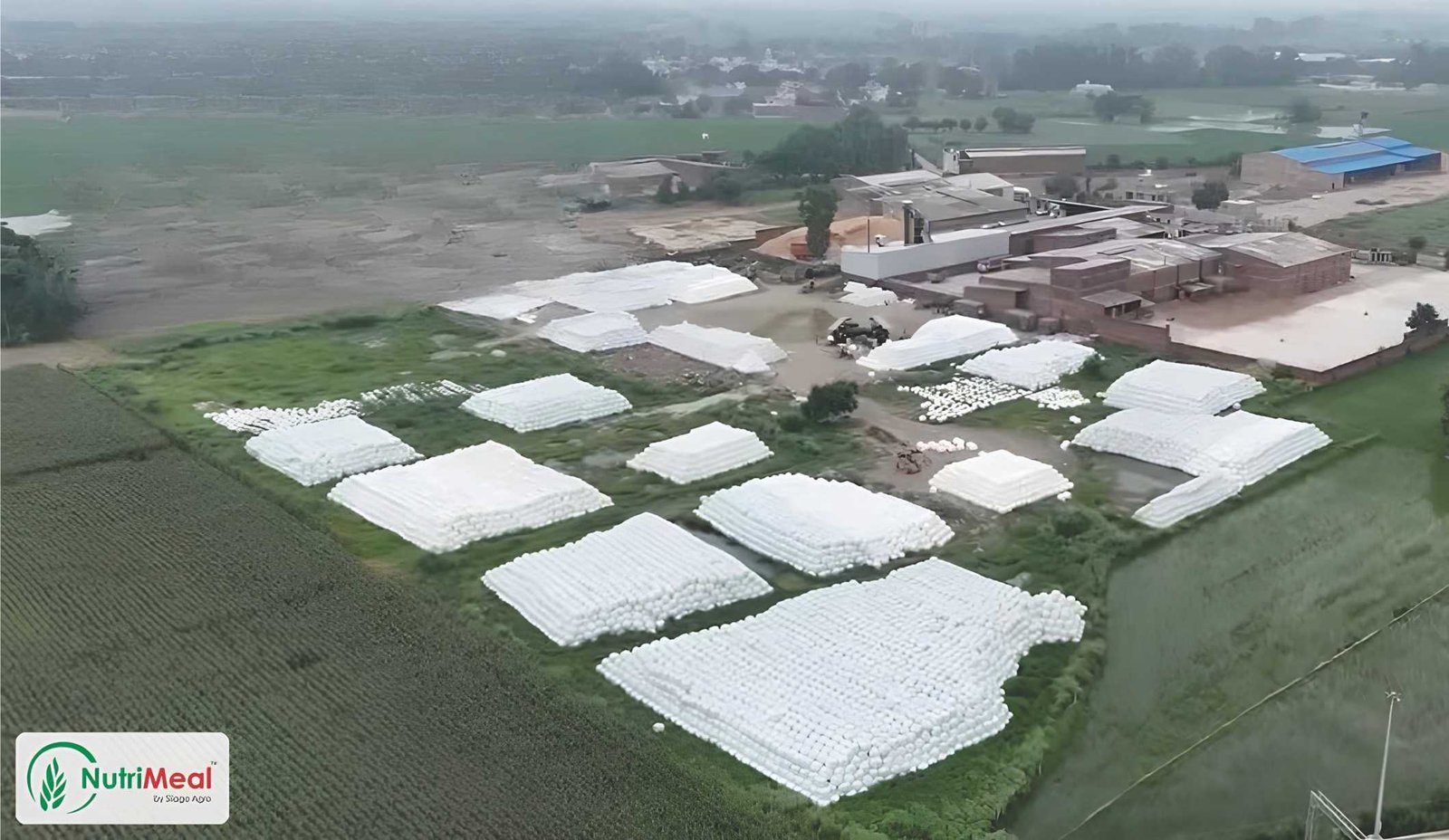
There is an interesting linguistic dimension to India’s fodder challenge. In Hindi, chaara refers to fodder, while the same word can also signify a means, remedy, option or course of action. This provides an appropriate metaphor for the changing approach to fodder management: addressing the chaara problem may require rethinking chaara itself. For generations, fodder has largely been treated as a basic agricultural commodity—produced, harvested, transported and fed through fragmented and predominantly local systems. However, the nutritional requirements of modern dairy animals call for a more systematic approach, involving the production of appropriate forage, harvesting at the right stage, preservation of nutritional value, adequate storage and reliable year-round availability. This transition requires investment in infrastructure and organised supply chains. A commercial silage facility in Khanna, Punjab, operated by Silage Agro, provides an illustration of this emerging model. According to company-provided figures, the facility has approximately 40,000 tonnes of maximum silage storage capacity at a single location. The scale is significant not merely because of the volume involved, but because it demonstrates how fodder can increasingly be managed as an organised resource rather than as an informal, locally sourced agricultural input. Such a system can encompass crop planning, specialised harvesting, chopping, preservation, baling, storage, quality management, logistics and feeding, thereby connecting agricultural production more closely with dairy nutrition. As fodder production and distribution become more organised, the focus can shift from simply asking where fodder will be sourced to considering how a reliable system can be established to meet the nutritional requirements of dairy animals throughout the year. In that context, the chaara for India’s fodder problem lies not merely in producing more fodder, but in building a reliable, quality-focused and nutrition-oriented fodder system.
Beyond Price per Kilogram: The Importance of Nutritional Value
Consider two silages: Silage A is offered at INR 7.00/kg and contains 25% dry matter (DM), while Silage B costs slightly more, at INR 7.50/kg, but contains 32% DM. Now compare these with commonly fed green fodders such as green jowar and other grasses, which typically contain much lower dry matter. To a farmer comparing only the purchase price, Silage A appears cheaper than Silage B, while green fodder appears cheaper than both. However, this is an apples-and-oranges comparison because the price of fresh fodder does not indicate how much dry matter—and therefore how much usable nutrition—is actually being purchased.
| Parameter | Silage A | Silage B | Green Jowar | Other Green Grass |
| Purchase price/kg (INR) | 7 | 7.5 | 3 | 3 |
| Dry matter | 25% | 32% | 12% | 10% |
| Starch | 15% | 25% | 10% | 8% |
| Cost/kg DM (INR) | 28 | 23.44 | 25 | 30 |
Using these illustrative values, Silage B costs approximately 7% more per kilogram on a fresh-weight basis, but delivers 28% more dry matter per kilogram than Silage A. As a result, its cost per kilogram of DM is approximately 16% lower. The comparison becomes even more meaningful when the broader nutritional characteristics of the feed are considered. Dry matter is only the starting point; starch, fibre characteristics, fermentation quality, contamination risk, palatability and storage losses also influence the nutritional value ultimately delivered to the animal. Fodder economics therefore need to move beyond INR /kg towards the cost of delivering usable nutrition.
The values above are illustrative; actual nutrient composition and economics will vary according to crop, variety, harvest stage, preservation method, storage conditions and batch quality.
The Next Challenge Is Consistency, Not Simply Availability
India does not need to abandon traditional fodder systems. Crop residues, green fodder, hay, grazing resources, concentrates and preserved forage will continue to have roles depending on geography, farm size, water availability and economics. The greater challenge is to make the overall feeding system more predictable. The next generation of fodder management will require better forage crops and varieties, scientific harvest timing, mechanised harvesting, effective preservation, adequate storage infrastructure, regional supply networks, quality testing and stronger integration between crop production and dairy nutrition. The objective is not to replace chaara, but to bring greater science, consistency and reliability to its production and utilisation, so that the nutritional requirement of the animal is not dictated by the availability of fodder at a particular point in the crop calendar.
From Fodder Deficit to Nutrition Security
The dairy animal does not distinguish whether a fodder shortage arises from a poor monsoon, a gap between crop cycles, competing demand for agricultural residues or a logistics constraint; its nutritional requirement remains continuous. The next phase of dairy development should therefore be viewed not only through milk production and genetic potential, but also through the strength of the nutritional infrastructure supporting those animals. India has made significant progress in genetics, dairy infrastructure and milk production, but strengthening the nutritional foundation will be essential to translating that progress into consistent animal performance. The future of fodder is not simply about producing more tonnes; it is about producing, preserving, measuring and delivering more nutrition—consistently and economically. This requires fodder to be viewed as an essential component of dairy infrastructure rather than simply an agricultural input. India’s dairy future will depend not only on better animals, but also on a system capable of feeding them better and more consistently throughout the year. This is the transition from fodder deficit to nutrition security.
About the Author:
Rohit Sharda is Founder & Director of Silage Agro Pvt. Ltd. (SAPL), behind NutriMeal, India’s leading baled-silage manufacturer. Since 2015, he has focused on building a scalable silage ecosystem spanning crop sourcing, mechanised harvesting, fermentation, storage, logistics and institutional dairy supply. He holds an MBA from IMT Ghaziabad.