Introduction
 Heat stress is one of the most significant environmental challenges affecting poultry production worldwide. Modern poultry strains, genetically selected for rapid growth, high feed efficiency, and elevated egg production, possess limited ability to tolerate elevated temperatures. Unlike mammals, poultry lack sweat glands and rely mainly on panting for evaporative cooling. When environmental temperature and humidity exceed the thermoneutral range—approximately 18–24°C for laying hens and 18–22°C for broilers—birds experience physiological stress that disrupts metabolic and endocrine functions (Lara & Rostagno, 2013).
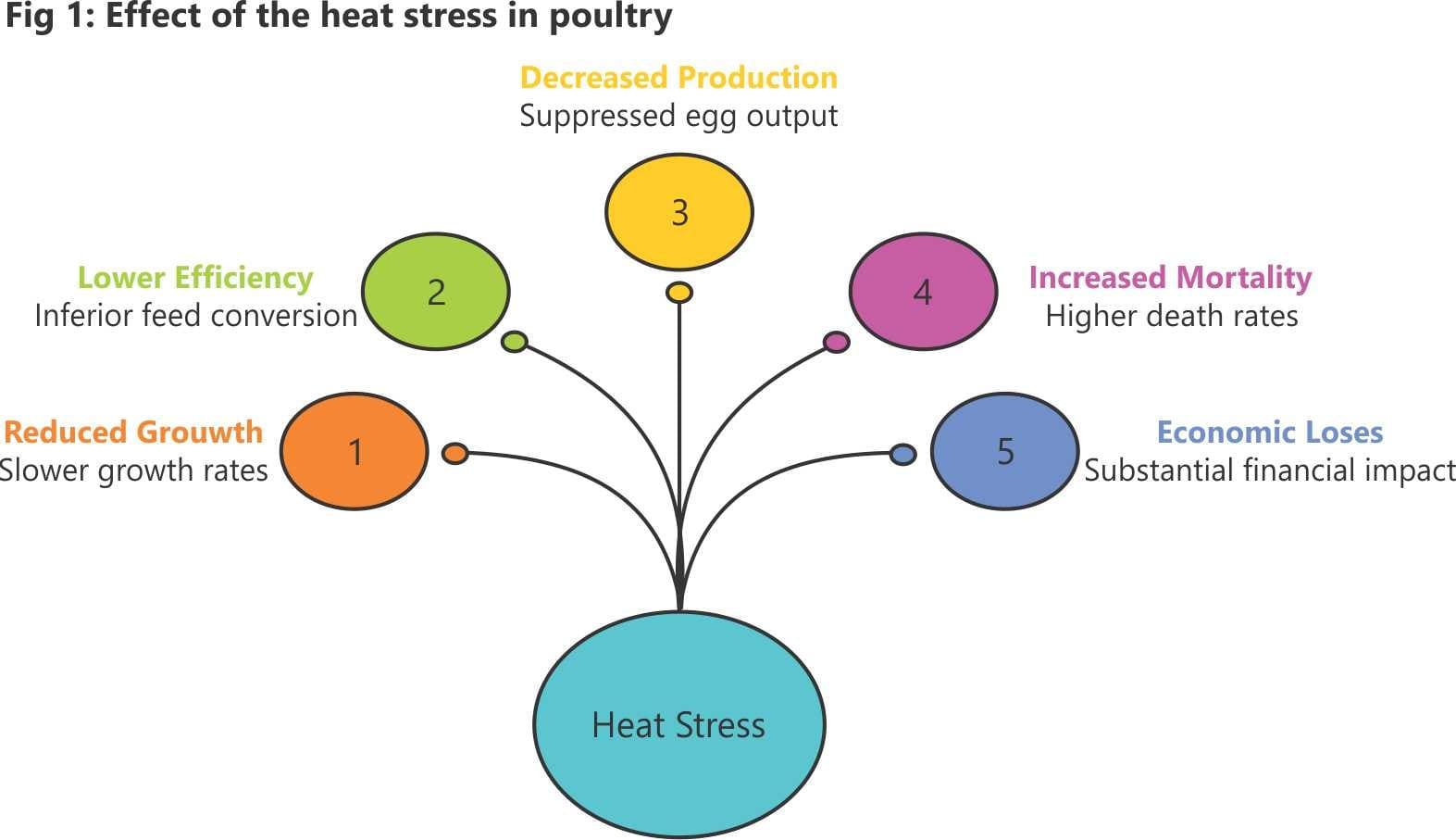
Climate change has further intensified the frequency and duration of heat waves, particularly in tropical and subtropical countries such as India. As a result, heat stress has evolved from a seasonal issue into a persistent production-limiting factor. High ambient temperatures not only compromise bird welfare but also cause substantial economic losses through reduced growth, poor feed efficiency, lower egg production, impaired reproduction, increased mortality, and rising mitigation costs (Renaudeau et al., 2012).
Although the biological effects of heat stress are well documented, its economic implications are often underestimated. Economic losses include both direct effects, such as mortality and reduced productivity, and indirect effects, including poor carcass quality, increased disease incidence, infrastructure investment, and labour inefficiency. In developing poultry economies like India, these losses are particularly severe due to dependence on naturally ventilated housing systems and limited access to climate-controlled infrastructure. Therefore, understanding the economic consequences of heat stress is essential for improving sustainability and profitability in poultry production.
Physiological Basis of Heat Stress
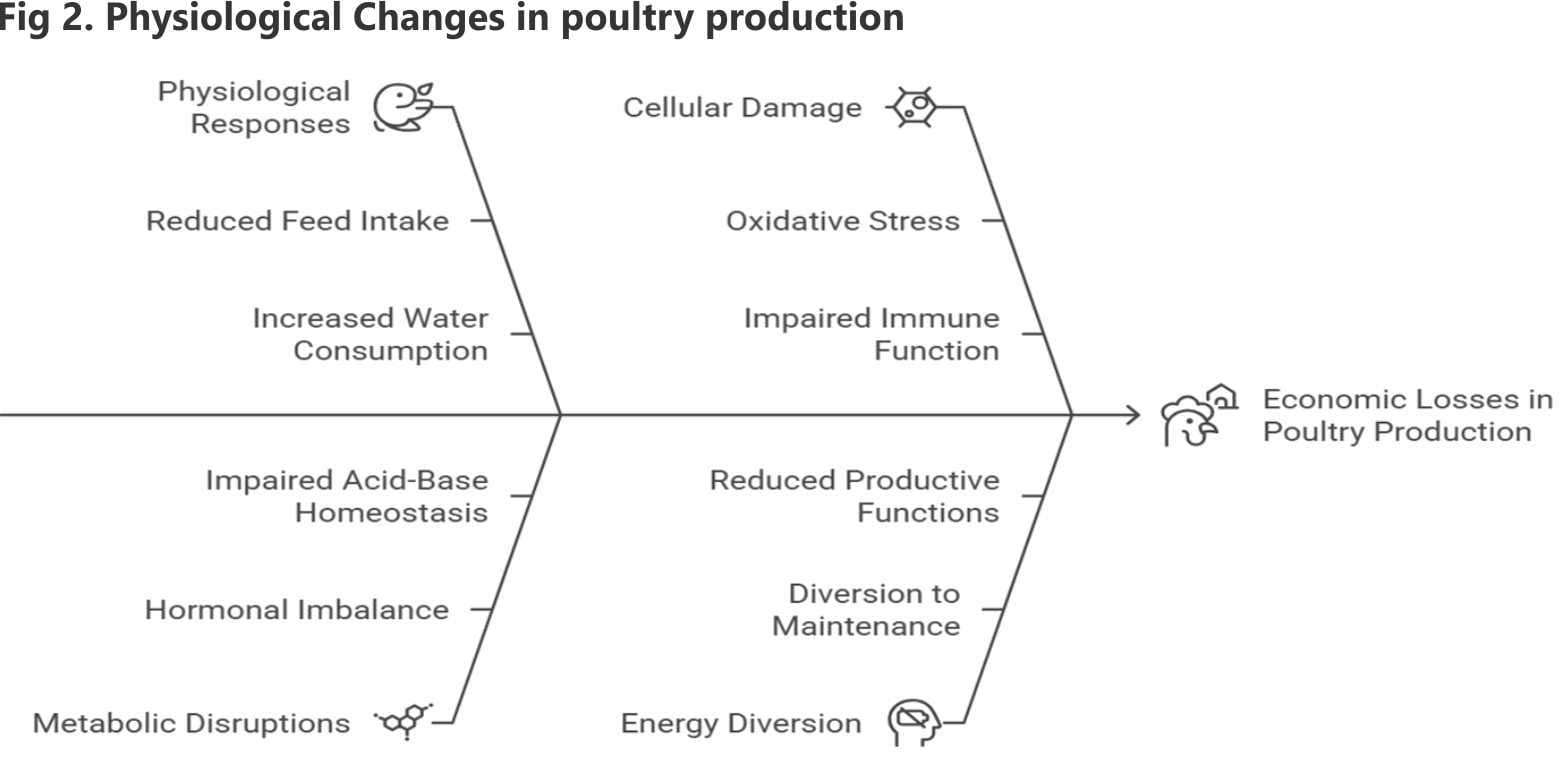
The economic impact of heat stress is closely linked to the physiological and metabolic disturbances caused by elevated temperatures. Under heat stress conditions, birds reduce physical activity, increase water consumption, and elevate respiratory rate to dissipate excess heat through panting. However, prolonged panting can lead to respiratory alkalosis, electrolyte imbalance, and disruption of acid–base balance, negatively affecting metabolism and performance (Lin et al., 2006).
One of the earliest responses to heat stress is reduced feed intake. Birds lower feed consumption to minimize metabolic heat production associated with digestion. However, this protective response reduces nutrient availability, compromising growth, egg production, and reproductive performance. Heat stress also alters hormonal balance by increasing corticosterone levels while suppressing thyroid hormones such as triiodothyronine (T3), resulting in reduced metabolic activity and protein synthesis (Mujahid et al., 2007).
 At the cellular level, heat stress induces oxidative stress through excessive production of reactive oxygen species (ROS). When antioxidant defence systems become overwhelmed, oxidative damage affects lipids, proteins, and nucleic acids, impairing cellular integrity and immune function. Consequently, heat-stressed birds become more susceptible to infectious diseases. Energy and nutrients are diverted from productive functions toward survival and maintenance, ultimately reducing production efficiency and increasing economic losses.
Major Economic Consequences of Heat Stress in Poultry
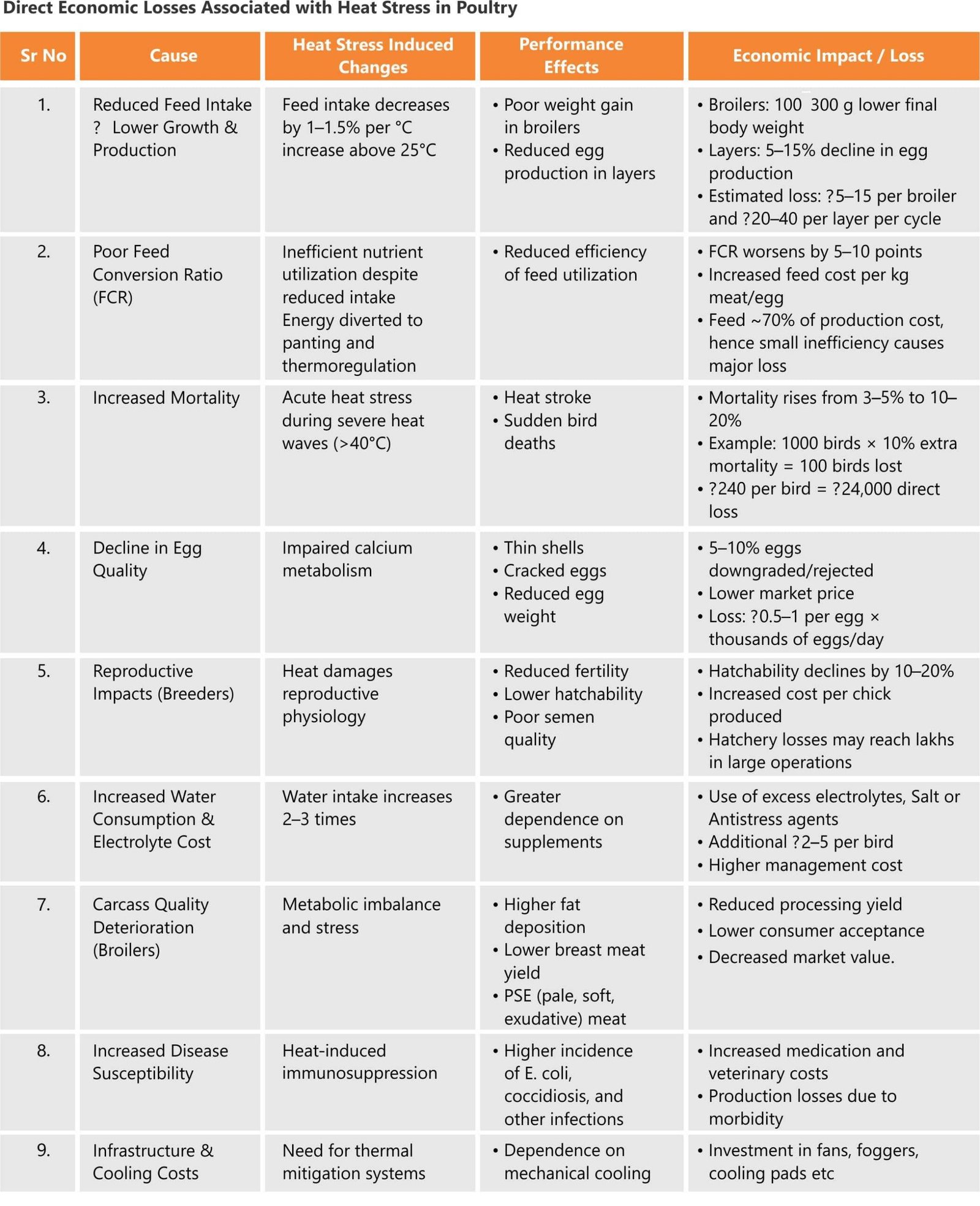
Heat stress significantly affects growth performance in broilers and egg production in layers. Studies indicate that feed intake decreases by approximately 1–1.5% for every 1°C rise in temperature above 25°C. Reduced feed intake leads to lower body weight gain, delayed market age, and decreased production efficiency (Quinteiro Filho et al., 2010).
Feed conversion ratio (FCR) also deteriorates during heat stress because a greater proportion of dietary energy is diverted toward thermoregulation instead of growth or egg formation. Since feed contributes nearly 70% of total poultry production costs, even small declines in feed efficiency substantially increase production expenses (Niu et al., 2009).
 Heat stress is a major cause of mortality during severe summer conditions, especially when temperatures exceed 40°C. Fast-growing broilers are particularly vulnerable due to their high metabolic heat production. Mortality rates can increase from a normal 3–5% to as high as 15–20%, leading to direct financial losses from bird deaths, wasted feed investment, and underutilized housing capacity (Donkoh, 1989).
In laying hens, heat stress reduces egg production and negatively affects egg quality. Impaired calcium metabolism results in thin-shelled, cracked, and downgraded eggs with lower market value. In breeder flocks, fertility and hatchability decline because of reduced semen quality and poor embryonic viability, thereby increasing the cost per chick produced (McDaniel et al., 2004).
Indirect and Hidden Economic Losses
Beyond obvious production losses, heat stress imposes substantial indirect and hidden economic costs that are often underestimated. Heat-stressed birds exhibit weakened immune function, making them more susceptible to bacterial, viral, and parasitic infections such as Escherichia coli and coccidiosis. Increased disease incidence raises expenditure on medications, vaccines, and veterinary services while also reducing flock productivity (Hirakawa et al., 2020).
Heat stress negatively affects carcass quality in broilers. Birds exposed to high temperatures often show increased fat deposition, reduced breast meat yield, and a higher incidence of pale, soft, and exudative (PSE) meat. These defects reduce processing efficiency and consumer acceptance, lowering returns across the poultry value chain (Zhang et al., 2012).
Heat stress significantly increases water consumption, often reaching two to three times normal levels. Producers must also invest in electrolyte supplementation, antioxidant vitamins, and anti-stress additives to maintain bird survival and performance. Additionally, cooling infrastructure such as fans, foggers, evaporative cooling pads, and climate-controlled housing increases both capital and energy costs.
Hidden losses also include uneven flock growth, poor uniformity, delayed market age, and labour inefficiencies. Although less visible, these factors collectively reduce overall farm efficiency and profitability.
Economic Burden Under Indian Conditions
Under Indian climatic conditions, heat stress causes substantial financial losses in poultry production. Field observations suggest losses of approximately ₹10–30 per broiler and ₹25–60 per layer per production cycle. When indirect costs are included, losses may increase to ₹30–65 per broiler and ₹40–85 per layer.
For a 10,000-bird broiler farm, losses can approach ₹2 lakhs in a single production cycle during peak summer conditions. Large integrated operations may experience losses ranging from ₹1–5 lakhs per flock. Such cumulative financial burdens significantly erode profitability and threaten the sustainability of poultry enterprises (Lara & Rostagno, 2013; Renaudeau et al., 2012).
Mitigation Strategies
Reducing the economic impact of heat stress requires an integrated approach involving nutrition, management, housing, and genetics.
Nutritional strategies such as electrolyte balancing, antioxidant supplementation (vitamins C and E, selenium, and phytobiotics), and dietary energy adjustment help reduce oxidative stress and improve heat tolerance. Proper water management is equally important for maintaining hydration and electrolyte balance.
Housing modifications, including improved ventilation, reflective roofing, reduced stocking density, and evaporative cooling systems, can substantially lower heat load on birds. Although these interventions require investment, their long-term benefits often outweigh the costs through improved productivity and reduced mortality.
Genetic selection for heat-tolerant strains and better farm management practices can also improve resilience under high-temperature conditions.
 Conclusion
Heat stress is not merely an animal welfare issue but a major economic constraint in poultry production, particularly in tropical and subtropical regions. Its direct and indirect impacts significantly reduce productivity, profitability, and overall farm efficiency. With climate change increasing the frequency and intensity of heat waves, the economic burden of heat stress is expected to rise further.
Therefore, adopting scientifically supported nutritional, managerial, and housing interventions is essential for minimizing losses and ensuring the long-term sustainability of the poultry industry. Proactive heat stress management will be critical for protecting both bird performance and farm profitability in the years ahead.
References are available upon request.
By Dr Nagesh Sonale, Immeureka Animal Health