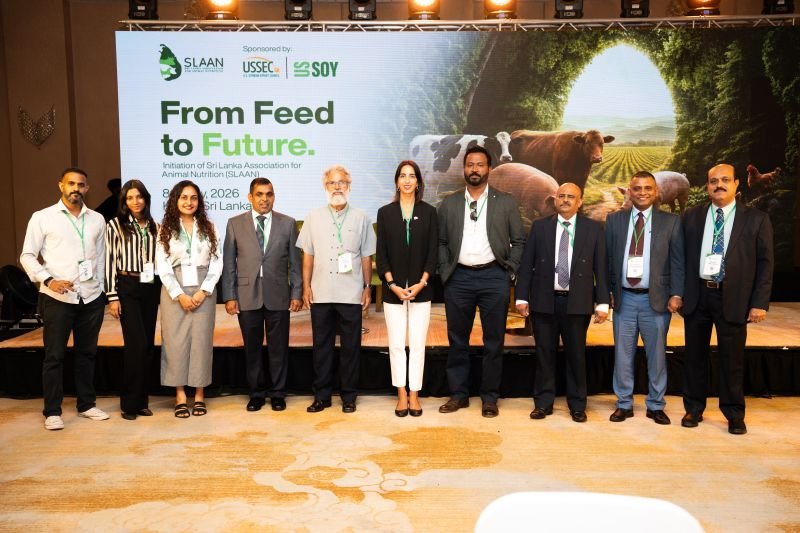
Sri Lanka’s livestock and poultry sectors have entered a new era with the launch of the Sri Lanka Association of Animal Nutrition (SLAAN). Unveiled in Kandy in collaboration with the US Soybean Export Council (USSEC), the professional body aims to drive the country’s livestock industry forward using science, innovation, and sustainable practices.
The launch comes at a time when Sri Lanka’s poultry sector is expanding rapidly, playing a critical role in the nation’s food security. To feed this growth, the local animal feed industry now produces roughly 1.3 million tons of feed every year. Poultry farming is the primary consumer of this feed, heavily relying on high-quality imports like US soybean meal, which has seen a massive 30% year-over-year increase. In 2025, Sri Lanka officially became the world’s largest market for containerized US soybean meal, importing 255,000 tons. Containerized shipping has become the industry’s preferred choice because it offers better flexibility in procurement and easier handling.
According to USSEC Executive Director Kevin Roepke, Sri Lanka is now South Asia’s largest market for US soybean meal. Local experts note that prioritizing US Soy has made the domestic supply chain highly resilient to trade disruptions. The ingredient offers specific “4D” advantages: naturally sun-dried, lower damage, higher digestibility, and deforestation-free production. These traits improve animal growth, boost profits, and reduce the need for expensive synthetic amino acids.
Sustainability has become a major focus for the industry. To date, 16 Sri Lankan poultry producers and feed millers have licensed the “Sustainable US Soy” label for their packaging. Verified under the US Soy Sustainability Assurance Protocol (SSAP), companies must source at least 60% of their soy from SSAP-verified suppliers to use this label, marking a clear shift toward eco-friendly agriculture.