Low Pathogenic Avian Influenza (LPAI) H9N2 subtype has led to significant economic losses to the poultry industry around the world. These losses are primarily due to a substantial decline in egg production, respiratory illness and complications, and mortality. The H9N2 G1-W lineage infections are been increasingly reported in Nepal and are now widely prevalent across poultry, posing a serious threat to poultry industry
Despite the availability of commercial H9N2 vaccines internationally, their effectiveness in Nepal has remained uncertain due to antigenic differences between imported vaccine strains and the locally circulating field strains. This mismatch often leads to suboptimal protection and increases the risk of vaccine failure under field conditions.
To address this challenge, Ventri Biologicals a leading manufacturer of poultry vaccines in India registered the low pathogenic avian influenza H9N2 vaccine in Nepal. This vaccine was launched and used in India, since December 2024. The introduction of this vaccine in India played a crucial role in strengthening the respiratory disease control programs, reducing economic losses, and improving the livelihoods of poultry farmers.
The technology was developed by ICAR-National Institute of High Security Animal Diseases (NIHSAD), India to control antigenically diverse H9N2 strains prevalent in the region. Under the Government’s technology transfer policy, the vaccine technology “Inactivated Low Pathogenic Avian Influenza (H9N2) Vaccine for Chickens” was transferred from ICAR-NIHSAD, Bhopal to M/s Venkateshwara Hatcheries Pvt. Ltd., Pune. This transfer was facilitated by Agrinnovate India Ltd. (AgIn), New Delhi. As part of this initiative, hands-on training on the inactivated H9N2 vaccine was conducted at NIHSAD, Bhopal for ‘Ventri Biologicals’ production team. Ventri Biologicals established a state-of-the-art Biosafety Level-3 (BSL-3) vaccine manufacturing facility dedicated to avian influenza vaccine production. The facility incorporates advanced process automation, including semi-automatic chick embryo inoculation systems, automated allantoic fluid harvesting, closed-system inactivation, and automated formulation, filling, and labeling processes.
Ventri Biologicals had branded the vaccine as “VENGEM”, symbolizing a valuable solution aimed at safeguarding poultry health and enhancing productivity. In future, Ventri Biologicals has plans to expand its Vengem vaccine portfolio with a series of related products, including concentrated formulations and combination vaccines with other viral antigens.
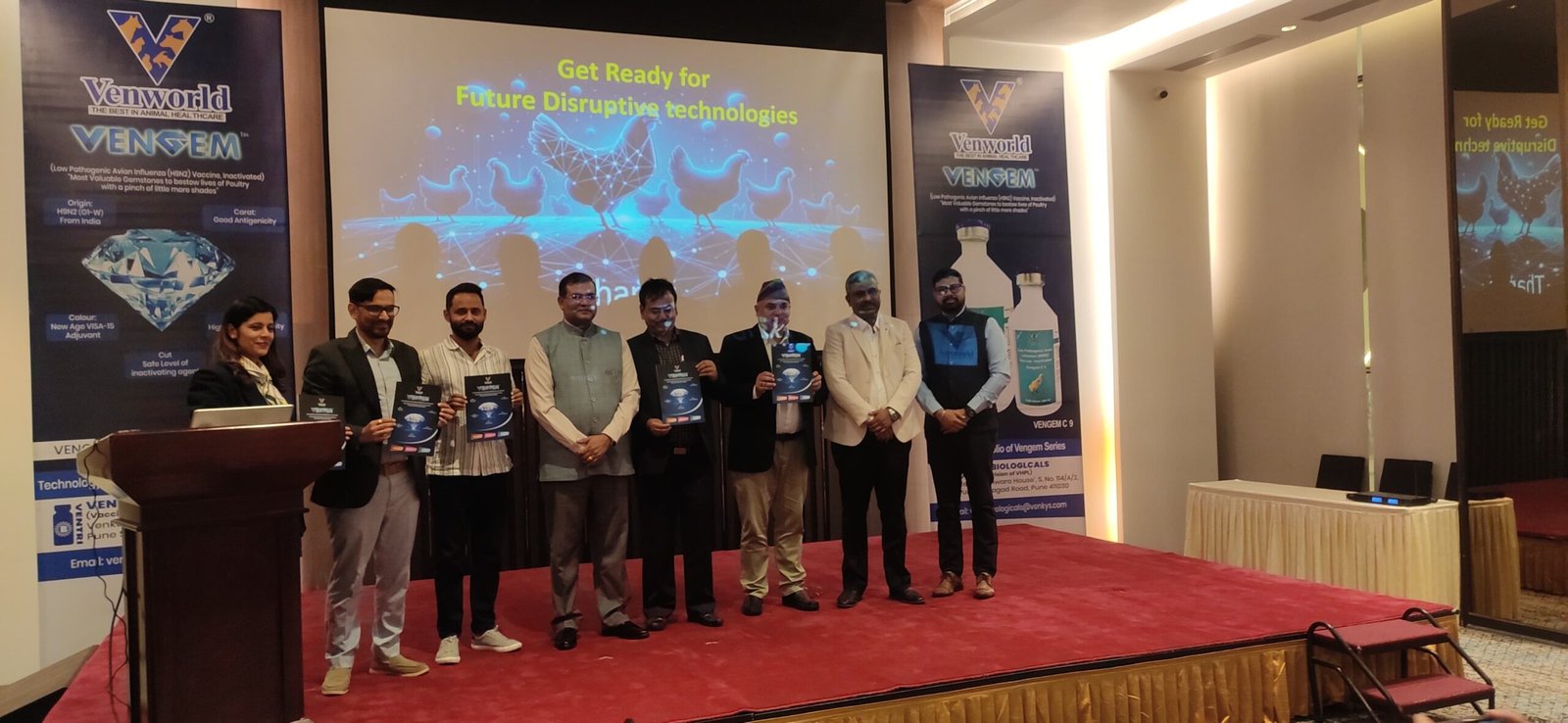
To create awareness and share insights on the VENGEM vaccine, a series of meetings with poultry farmers and veterinary consultants were conducted in Nepal at Kathmandu and Chitwan on 6th and 8th April 2026 respectively. The vaccine was officially introduced by Dr. Prakash Reddy, with a comprehensive presentation on effective disease control strategies, emphasizing how Vengem strengthens flock immunity and minimizes economic losses caused by Low Pathogenic Avian Influenza (LPAI). The sessions included an introductory address by Mr. Chita Sahoo, coordination by Dr. Sambhaji Nimbalkar, and a vote of thanks by Mr. Jivan Kunwar.
The launch of VENGEM marks a significant milestone in strengthening disease control strategies in the poultry sector in Nepal.