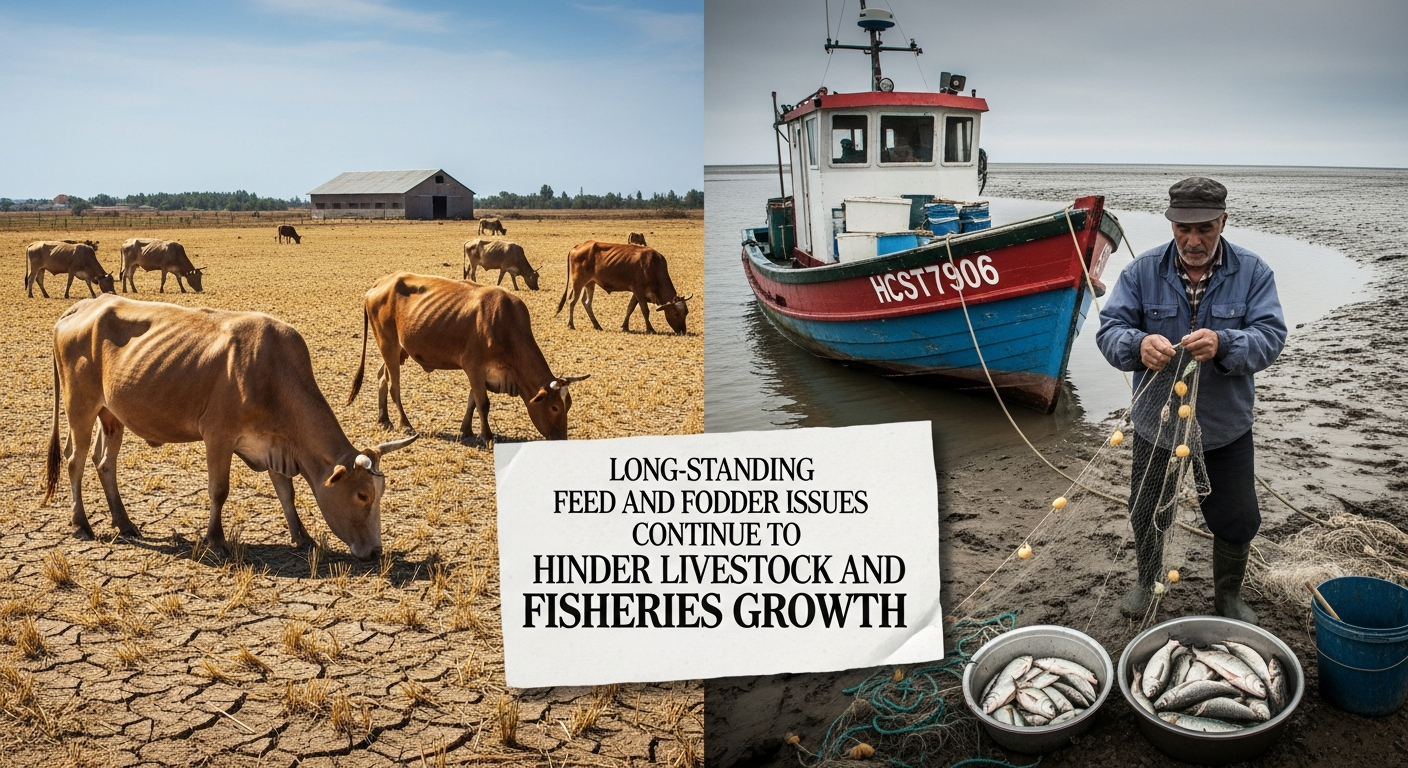
Feed and fodder shortages, infrastructure gaps, and dependence on a narrow export basket remain major hurdles for India’s livestock and fisheries sectors, according to the Economic Survey tabled in Parliament on January 29, 2026. Despite these constraints, both sectors have shown strong growth over the past decade.
Between 2014–15 and 2023–24, the livestock sector recorded a compound annual growth rate (CAGR) of 12.77% at current prices, with gross value-added rising nearly 195%. Fish production grew by over 140% during 2014–25, reaching 88.14 lakh tonnes, highlighting the increasing role of allied sectors in boosting farm incomes.
The Survey emphasized that feed and fodder shortages remain the most critical challenge. With only 9.13 million hectares under fodder crops (4.61% of gross cropped area), feed accounts for more than 70% of milk production costs. Studies by ICAR estimate demand-supply gaps of 11–32% in green fodder, 23% in dry fodder, and 28–40% in concentrates, underscoring the need for targeted interventions to ensure feed security.
In fisheries, value addition and processing capacity need rapid expansion to reduce export dependency. Persistent gaps exist in post-harvest handling, cold chains, and logistics, particularly in inland and remote areas. Strengthening aquatic animal health, biosecurity, and quality standards is also critical as production intensifies.
The Survey noted that livestock growth has been supported by indigenous technologies, including artificial insemination (AI). Annual inseminations rose from 76.23 million in 2017–18 to 88.32 million in 2024–25, increasing AI coverage of breedable bovine females from 25% to 40% across 126 districts.