According to the April 2026 USDA report, the global poultry trade is undergoing a major realignment as China emerges as a dominant force, surpassing Brazil and closing in on the U.S. in production.
The Rise of a Poultry Powerhouse
China’s production is forecast to hit 17.3 million tons in 2026. This surge is driven by high grandparent stock inventories, government subsidies, and increased industrial integration. Because domestic consumption remains low—just 11kg per capita compared to 43kg for pork—China is redirecting its massive surplus to international markets.
Shifting Export Flows
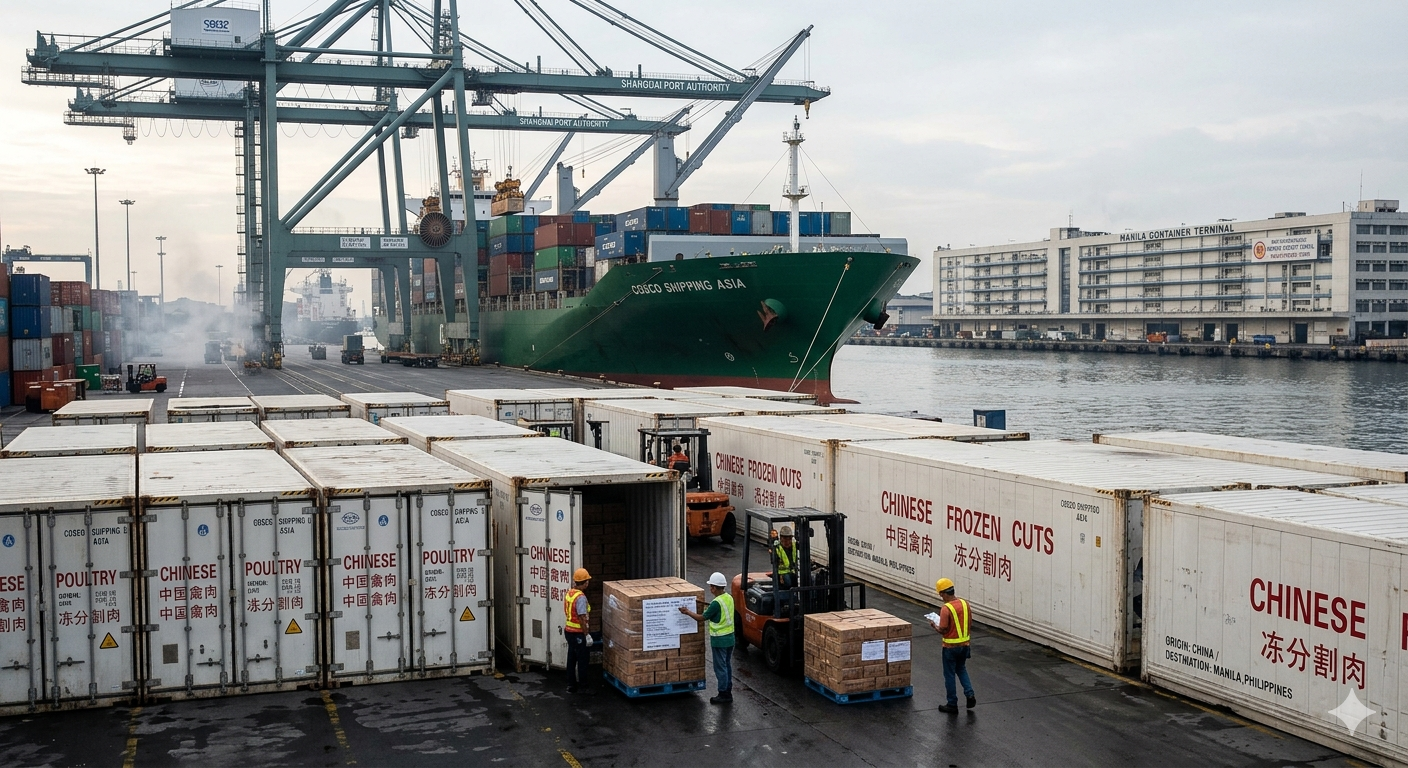
In 2024, China officially became a net exporter. By 2026, exports are projected to reach 1.4 million tons, nearly triple their 2020 levels. The destination of these exports has fundamentally shifted:
-
Declining Traditional Markets: Japan and Hong Kong, which once accounted for 79% of China’s exports, dropped to just 37% by 2025.
-
New Growth Hubs: China is aggressively penetrating price-sensitive economies in Southeast and Central Asia.
-
Rapid Expansion: In 2025, imports of Chinese poultry spiked in the Philippines (+45%), Malaysia (+49%), and Cambodia (nearly 300%). Other major buyers now include Russia, Kyrgyzstan, and Iraq.
Product Evolution & Competitive Pressure
The export mix has pivoted from processed goods to frozen cuts, which now account for 55% of shipments. This shift allows China to compete directly with low-cost suppliers like Brazil and Thailand. While China remains restricted in the EU and U.S., its ability to provide affordable protein is making it the primary supplier for developing nations.
Key Insight: As China’s pork supply stabilizes, poultry is filling the remaining protein gap. Asia has become the central stage for the global trade, where affordability and volume are redefining the market.