Introduction
 Loose droppings in poultry are one of the most important early indicators of disturbances in digestion, gut integrity, renal function, or overall systemic health. In healthy birds, droppings exhibit a clearly defined tri-layered structure consisting of a firm brown faecal mass, a distinct white urate cap, and a thin surrounding layer of urine. Under normal physiological conditions, moisture content remains approximately 20–25%, allowing droppings to dry rapidly after excretion and helping maintain good litter quality and farm hygiene (Mozūrienė et al., 2016; Mozūrienė et al., 2024).
The diagnostic value of droppings lies in their rapid response to internal physiological changes. Subtle disturbances within the digestive system are often reflected in droppings well before birds exhibit visible clinical illness. As highlighted by Dunlop et al. (2016) and Leeson & Summers (2009), alterations in droppings texture, moisture, or colour commonly appear 12–24 hours prior to overt disease signs. These early alterations originate from disruptions in intestinal transit time, water absorption, renal regulation, and gut barrier integrity, making droppings a practical and non-invasive tool for early flock health monitoring.
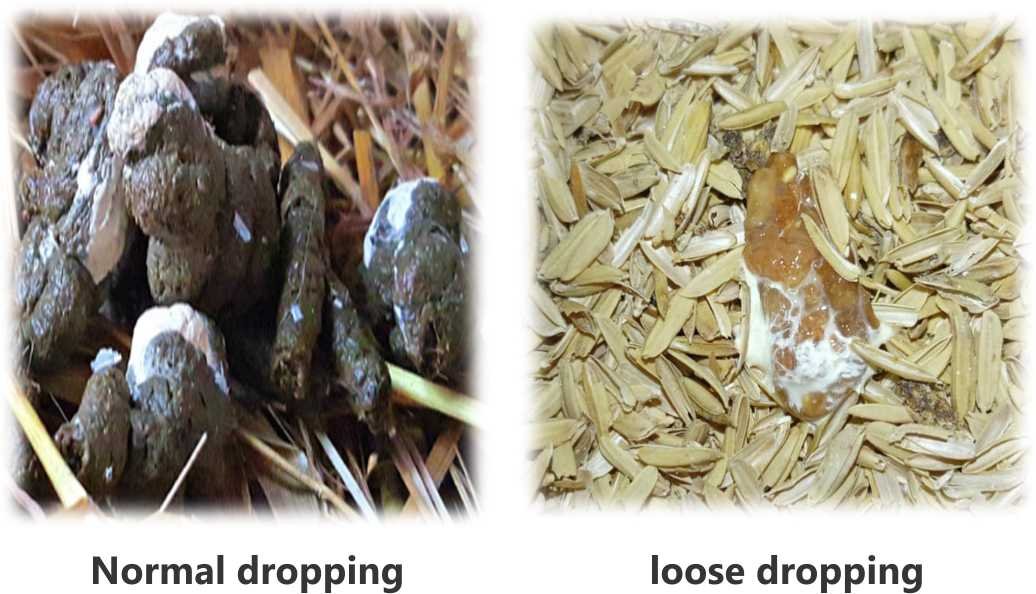 As gut function deteriorates, birds begin excreting excess water through the intestine. When droppings moisture rises beyond 75–80%, the normal tri-layered structure collapses, and droppings lose their form, becoming loose, watery, or foamy. Such changes indicate reduced nutrient absorption and increased intestinal permeability.
With further progression, droppings colour provides additional diagnostic clues:
- Greenish droppings are often associated with dysbiosis and altered bile metabolism.
- Yellow discoloration may indicate specific infectious challenges.
- The presence of blood typically reflects severe intestinal damage, particularly during coccidial infection (McDevitt et al., 2012; Williams, 2005).
Beyond individual birds, persistent loose droppings negatively affect litter quality, increase ammonia production, compromise bird welfare, reduce productivity, and elevate food‑safety risks. Therefore, understanding the development, indicators, and implications of loose droppings is critical for timely diagnosis, effective intervention, and sustainable poultry production. Continuous monitoring of droppings quality provides an accessible and highly effective means of detecting gut health problems early and preventing avoidable economic losses (Van Immerseel et al., 2021).
Types of Loose Dropping
Loose droppings in poultry can be broadly classified into non-infectious and infectious causes. Non-infectious factors primarily disturb water balance, digestion, and gut physiology, whereas infectious causes directly damage intestinal or renal tissues, leading to diarrhoea or watery excreta
Non infectious
Non‑infectious causes of loose droppings in poultry are mainly associated with environmental stressors, nutritional imbalances, and disruptions in gut physiology rather than direct pathogen involvement.
Heat stress is one of the most important factors; elevated temperatures increase water intake and impair intestinal tight‑junction integrity, resulting in excessive faecal moisture (Lara & Rostagno, 2013; Quinteiro‑Filho et al., 2010).
Poor ventilation, high humidity, overcrowding, and elevated ammonia levels damage intestinal epithelium and alter gut motility, predisposing birds to persistent wet litter (Miles et al., 2004; Dunlop et al., 2016).
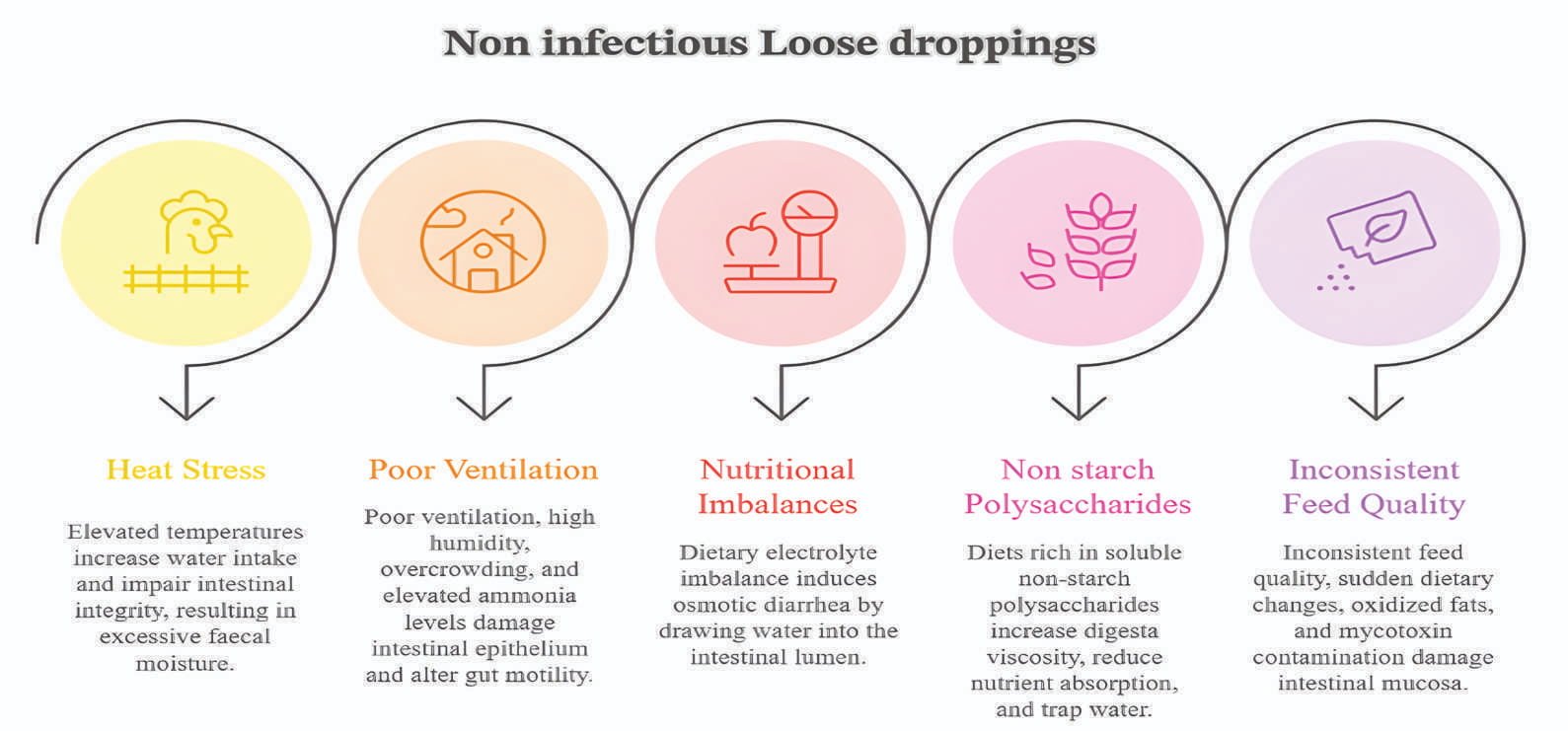 Nutritional factors also play a central role, particularly dietary electrolyte imbalance, where excess sodium, potassium, or chloride induces osmotic diarrhoea by drawing water into the intestinal lumen (Borges et al., 2004; Mushtaq et al., 2007). Diets rich in soluble non‑starch polysaccharides from cereals such as wheat and barley increase digesta viscosity, reduce nutrient absorption, and trap water, unless appropriate enzymes are included (Choct & Annison, 1992; Choct, 2009).
Inconsistent feed quality, sudden dietary changes, oxidized fats, and mycotoxin contamination damage intestinal mucosa and disrupt the microbiota, causing dysbacteriosis and malabsorption (Dibner & Richards, 2005; Bryden, 2012).
Collectively, these non‑infectious factors reduce nutrient utilization, worsen litter quality, and negatively affect poultry performance.
Infectious Causes
Infectious causes of loose droppings in poultry arise from direct damage to the intestinal or renal tissues by pathogens, leading to impaired absorption and excessive fluid loss.
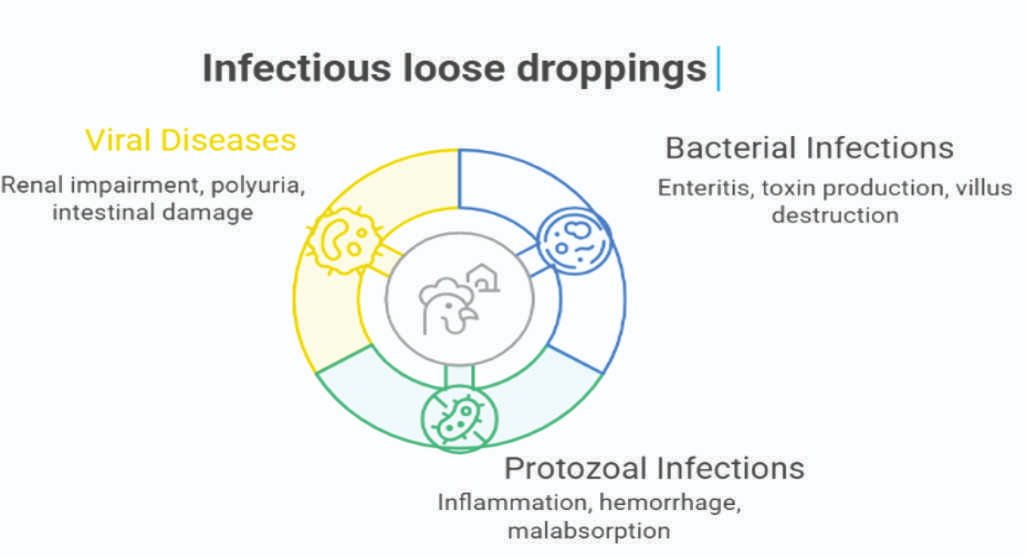 Bacterial infections such as Escherichia coli, Salmonella spp., and Clostridium perfringens induce enteritis, toxin production, villus destruction, and increased intestinal permeability, resulting in watery or mucus laden droppings (Van Immerseel et al., 2009; Timbermont et al., 2011).
Protozoal infections, especially coccidiosis caused by Eimeria species, damage intestinal epithelial cells, causing inflammation, haemorrhage, malabsorption, and watery to bloody droppings (Williams, 2005; Chapman et al., 2013).
Viral diseases also contribute significantly; nephropathogenic strains of Infectious Bronchitis Virus impair renal function and cause polyuria, producing watery faeces, while viscerotropic Newcastle Disease Virus leads to greenish, foamy diarrhoea due to intestinal damage (Cavanagh, 2007; Alexander et al., 2020).
Early diagnosis and pathogen specific control are essential to limit productivity losses.
Prevention and treatment
Prevention and treatment of loose droppings in poultry require an integrated approach targeting environmental management, nutrition, biosecurity, and timely medical intervention.
Prevention
Prevention is the most effective strategy and focuses on maintaining optimal house conditions, including proper ventilation, temperature control, and low litter moisture, as these factors directly preserve gut integrity and reduce stress induced water loss (Dunlop et al., 2016; Yahav, 2009).
Nutritional management is equally crucial; balanced diets with correct electrolyte levels, controlled non starch polysaccharides, gradual feed transitions, and good quality water help prevent osmotic diarrhoea and dysbacteriosis (Choct, 2009; Borges et al., 2004).
Routine use of probiotics, phytogenic, and toxin binders enhances gut microbial balance, improves intestinal barrier function, and mitigates non-infectious loose droppings (Awad et al., 2013; Kogut, 2019).
Probiotics help control non-infectious loose droppings in poultry by restoring gut microbial balance, increasing short chain fatty acid production, and excluding pathogenic bacteria. Species such as Lactobacillus acidophilus, L. casei, L. rhamnosus GG, Saccharomyces boulardii, and Bifidobacterium lactis strengthen intestinal barrier integrity, enhance mucin secretion, bind enterotoxins, improve nutrient digestion, and promote water absorption, resulting in firmer droppings and better litter quality (Krysiak et al., 2021; McFarland, 2010; Anjum et al., 2021).
Herbal gut modulators including Kutaja, Bael, and Pomegranate further support gut health through astringent, antimicrobial, and anti-inflammatory actions that reduce intestinal hypersecretion (Kirtikar & Basu, 2014; Jurenka, 2008). In addition, natural adsorbents such as charcoal, bentonite, and zeolite bind toxins, excess ions, and moisture, stabilizing gut function and minimizing wet litter (Huwig et al., 2001; Mumpton & Fishman, 1977).
Treatment
Treatment of loose dropping depends on accurate diagnosis:
- Non-infectious cases respond to corrective nutrition, probiotics, electrolytes, and stress reduction.
- Infectious cases require etiologyn specific therapies such as anticoccidials for coccidiosis, antibiotics based on sensitivity testing for bacterial enteritis, and vaccination with supportive care for viral diseases (Chapman, 2014; Timbermont et al., 2011; Saif et al., 2020).
Early intervention and integrated gut health management are essential to restore faecal consistency, improve performance, and minimize economic losses.
Trial Overview
Evaluation of Dietary Supplementation Through Feed on Growth Performance and Reduction of Loose Droppings in Broiler Birds
A field trial was conducted to evaluate the effect of a dietary supplement on growth performance, with particular emphasis on body weight gain and reduction of loose droppings.
At the time of trial initiation, the broiler flock exhibited visible loose droppings, indicating compromised digestive health. The study was conducted under field conditions at a commercial broiler farm in Gopiballavpur, West Bengal.
A total of 11,200 Cobb-430 broiler birds aged 16 days were included. The supplement was incorporated into feed at a dosage of 1 kg per tonne and administered continuously for 10 days during the mid-growing phase. Uniform mixing ensured consistent intake across the flock.
Parameters studied
Production and faecal parameters were evaluated to assess the effect of supplementation.
- Growth performance was assessed using body weight gain as the primary productivity indicator.
- Qualitative evaluation of droppings was conducted to monitor changes in digestive efficiency and gut health.
Result and Discussion
Production Performance
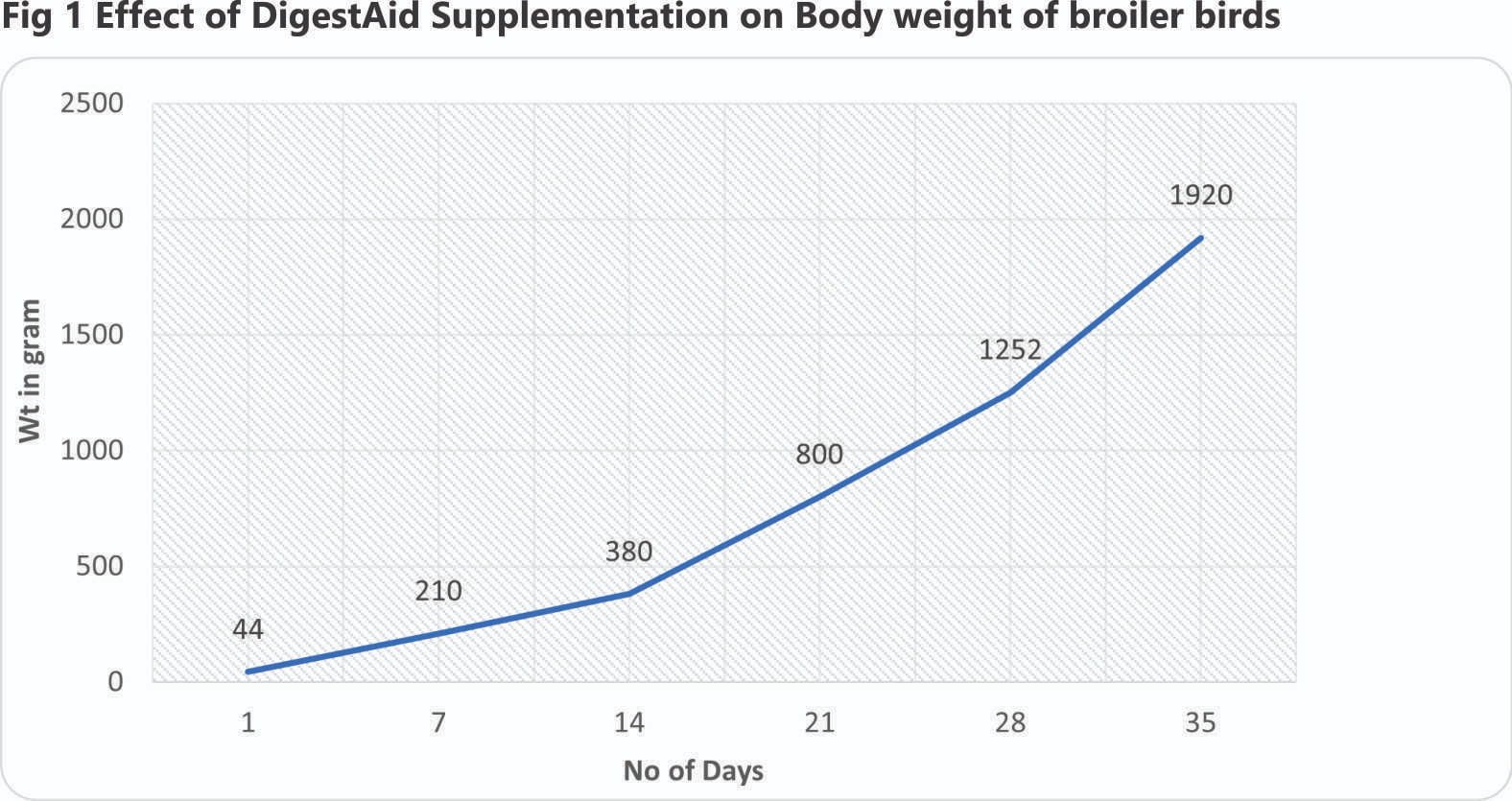
Following supplementation at 1 kg per tonne of feed, broiler birds showed a consistent increase in average body weight throughout the growing period, reaching optimal market weight by 35 days. The uniform growth pattern suggests efficient nutrient utilization and improved digestive performance.
Qualitative Evaluation of Droppings
At the start of the trial, birds exhibited loose and watery droppings, indicating compromised digestive function.
Following supplementation:
- Feed intake improved from Day 1.
- By Day 2, droppings became firmer and more uniform.
- From Day 3 to Day 4, overall flock health and uniformity improved noticeably.
- By Day 6, consistent digestive benefits were evident across the flock.
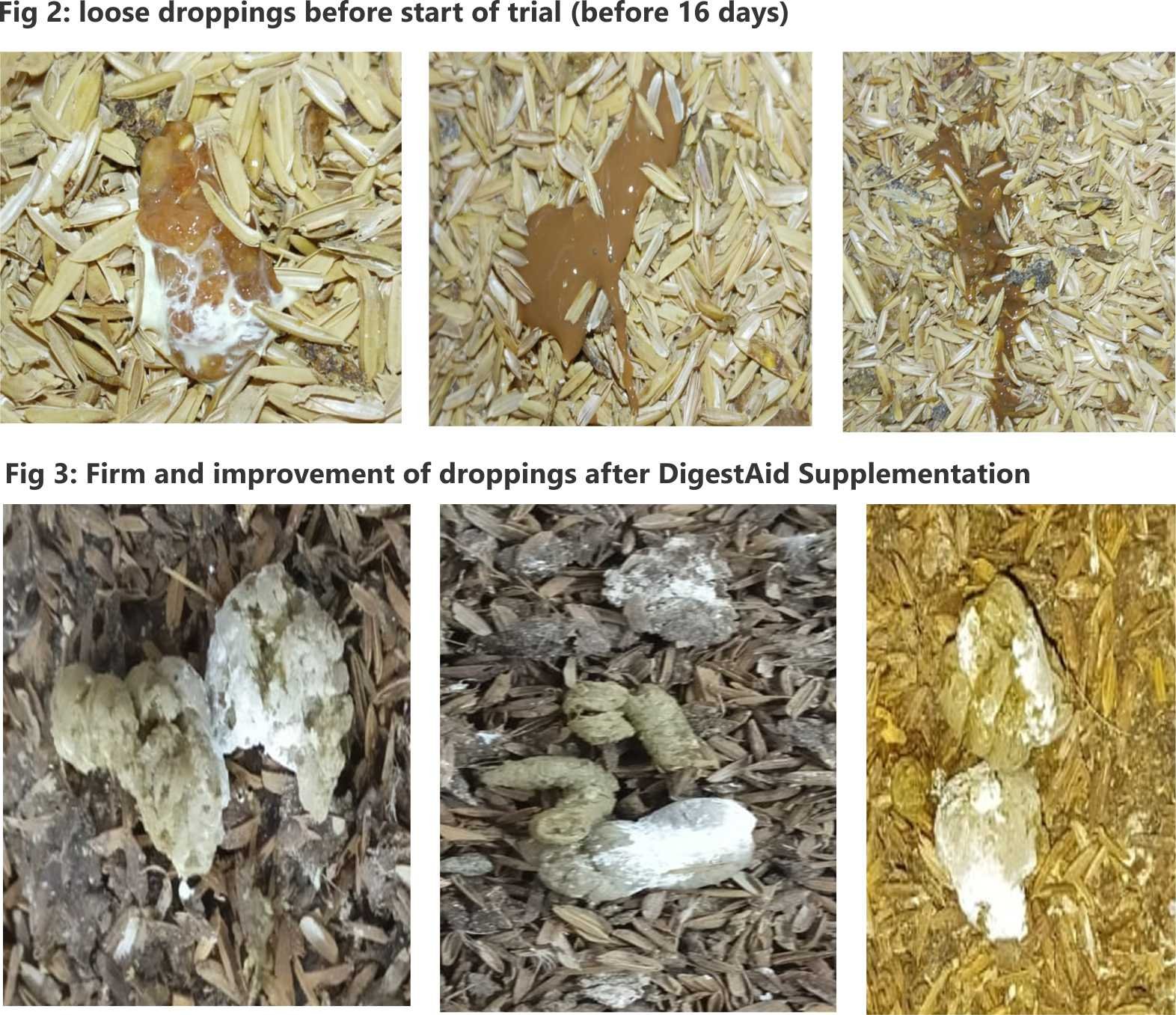 Post-supplementation, well-formed, dry, and firm faecal matter was observed, reflecting enhanced gut health, improved nutrient utilization, and better overall flock condition.
Conclusion
Supplementation at 1 kg per tonne of feed demonstrated a positive effect on both growth performance and digestive health in broiler birds under field conditions.
Birds initially affected by loose and watery droppings showed marked improvement in faecal consistency following supplementation, indicating enhanced gut function. This improvement was accompanied by steady body weight gain and improved flock uniformity, suggesting better nutrient utilization.
Overall, the trial findings indicate that targeted dietary supplementation can be an effective strategy for reducing loose droppings and improving broiler production performance.
by Dr. Nagesh Sonale, Immeureka Animal Health