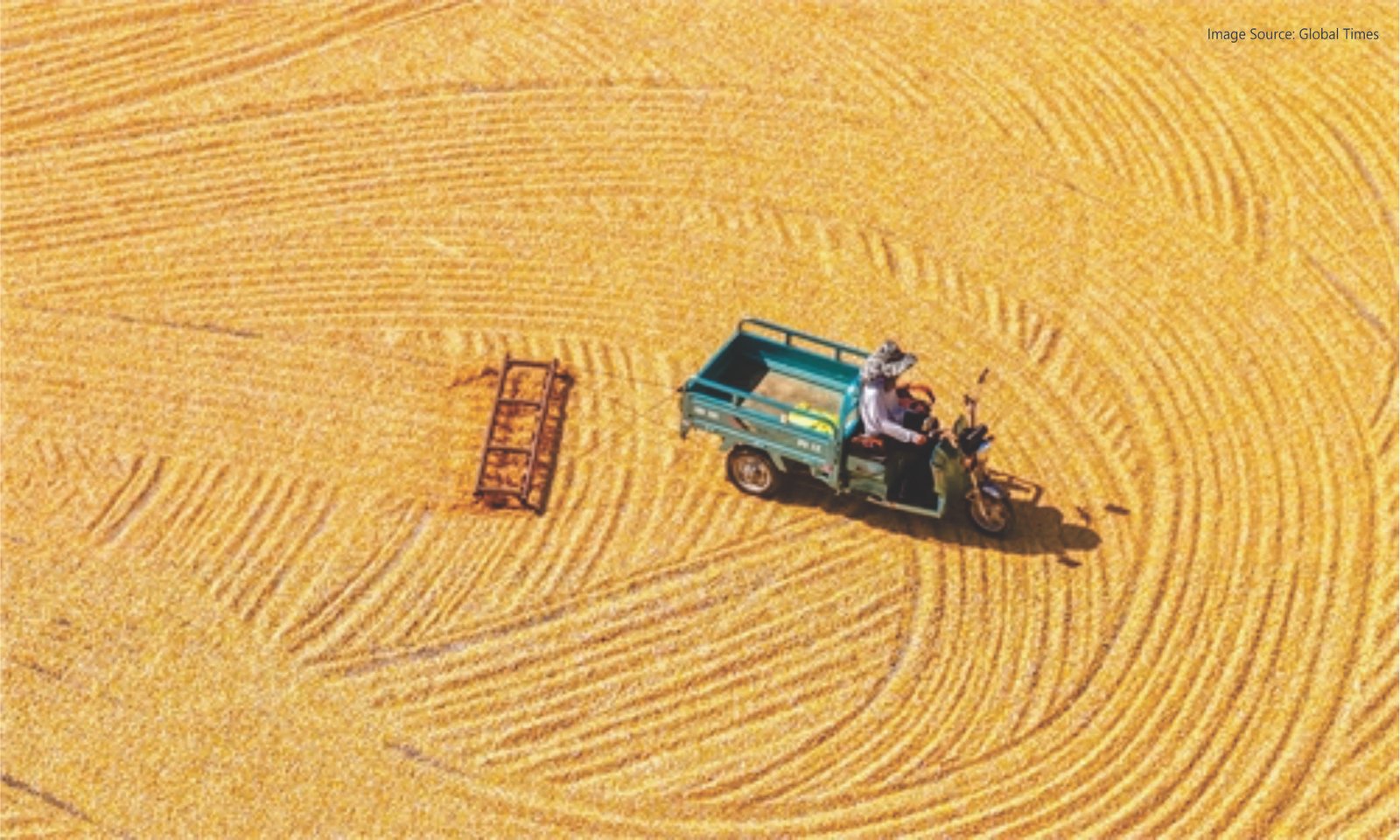
China’s National Development and Reform Commission (NDRC) has announced a new initiative to increase grain production capacity by 100 billion jin (50 billion kilograms), prioritizing corn and soybean output while consolidating staple grain production, according to the commission’s official account.
The move aims to accelerate agricultural and rural modernization in line with China’s broader modernization goals. Key objectives include strengthening agricultural production capacity, improving quality and efficiency, and ensuring stable and secure supplies of grain and other essential agricultural products.
In addition to corn and soybeans, the NDRC plans to expand high-quality forage crops such as silage corn and alfalfa, while advancing large-scale yield improvement programs for major crops, increasing the production of specialty varieties, and aligning production with domestic demand. The initiative also emphasizes arable land protection, balanced land use, and optimization of agricultural land allocation.
Experts note that the focus on corn and soybeans reflects changing consumption patterns. While staple grain consumption is gradually declining, demand for feed grains continues to grow, with soybeans facing a significant domestic supply gap and high import reliance. According to Li Guoxiang, research fellow at the Rural Development Institute of the Chinese Academy of Social Sciences, the expansion aims to enhance domestic supply resilience and strategic autonomy, rather than serve export markets.
China’s corn output reached 301.235 million tons in 2025, while soybean production stood at 23.932 million tons, according to the National Bureau of Statistics (NBS) on December 12. Total grain output in 2025 hit 1.43 trillion jin, exceeding 1.4 trillion jin for the second consecutive year, with per capita grain availability surpassing 500 kilograms, well above the internationally recognized food security threshold.
This initiative reflects a strategic shift toward effective capacity expansion, ensuring domestic grain security amid rising global trade uncertainties while stabilizing reliance on imports for key crops like soybeans.