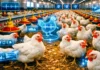
Maharashtra’s poultry sector is undergoing one of the most significant transformations in its history. Over the past five years, the industry has evolved from a scattered, semi-formal network of open houses into a more integrated, technology-driven, and sustainability-aware ecosystem. As it stands today, Maharashtra is not only meeting domestic demand but also contributing significantly to regional poultry supply, particularly to neighboring Gujarat. However, this growth comes with new challenges that require strategic responses from both industry stakeholders and policymakers.
Key Shifts Reshaping Maharashtra’s Poultry Landscape
- Integration Takes Over
A seismic shift has occurred in farm structures. While just a few years ago, 20–25% of poultry operations ran as open houses, today over 95% have moved under integration models. The vertical integration approach has enhanced efficiencies but also created structural dependency, requiring more data-driven collaboration among large integrators.
- Rise of EC Houses
Environment-Controlled (EC) houses now account for approximately 20% of the total production capacity. This shift marks a move towards better biosecurity, improved bird performance, and controlled environments, critical for year-round production consistency.
- Robust Growth Trajectory
Maharashtra’s poultry industry has shown a strong annual growth of 7–8% (excluding COVID-impacted years), with monthly chick placements increasing from 3.5–4 crore to 6–6.5 crore. The numbers speak of an industry expanding its capacity and reach at an unprecedented rate.
- Geographical Diversification
Once concentrated in regions like Nasik, Sangli, Satara, and Panvel, poultry farming is now seeing marked expansion into Vidarbha, Marathwada, Aurangabad, and Amravati. This not only decongests the traditional belts but also fosters rural economic development.
- Youthful Drive & Hygiene Focus
The sector is seeing increasing involvement from young, educated entrepreneurs who are bringing fresh energy, hygiene-centric practices, and digital adaptation to the fore.
Upcoming Trends: Opportunities and Warning Signs
Retail and Infrastructure Boom
What began with hygiene-centric stores in Pune and Mumbai is now a statewide phenomenon. Most districts now boast poultry hygiene retail, reflecting both supply chain maturity and consumer demand. Additionally, the spread of cloud kitchens and delivery platforms into rural areas is reshaping consumption patterns and logistics models.
Rural-Urban Divide Narrows
Traditional consumption habits are shifting. The urban-rural divide is shrinking rapidly, with rural consumption increasing significantly. Lifestyle changes and better road infrastructure are critical enablers of this transition.
Industry Consolidation on the Horizon
With 10 integrators controlling nearly 70% of the market, we are likely to witness further consolidation. The processed chicken segment is also gaining traction and is set to see robust growth.
Industry Overload: The Dark Side of Expansion
Rapid expansion has led to another challenge—overproduction. Few major integrators have ramped up placements. Higher average body weights are contributing to a glut in supply, which could severely impact small and mid-level integrators.
Strategic Recommendations
- Maintain market weight at 2–2.25 kg to avoid consumer resistance and oversupply.
- Fortnightly data-driven coordination among major integrators to regulate production.
- Encourage consumer awareness regarding meat quality and production sustainability.
Green Energy Initiatives: Powering Sustainability
Poultry farms are increasingly embracing renewable energy, with biogas-based electricity projects showing promising returns.
Case in Point
At Anand Agro, we are producing 4,000 units of electricity daily by using manure of 1.2 lakh birds. The model:
- Reduces dependence on grid power.
- Cuts disease risk through better waste management.
- Provides free slurry to local farmers, creating circular benefits.
Key Enablers
- Combined subsidy of up to 70% from state (40%) and central (30%) governments.
- ROI achievable within 2.5–3 years for medium-to-large operations.
- Carbon credit and agri-sustainability recognition as potential future benefits.
Awaited Policy Shift: Recognizing Poultry as Agriculture
The Maharashtra Assembly has declared poultry under the agriculture sector, but the official notification remains pending. Once notified, the sector can expect:
- Access to agri-loans at subsidized interest rates.
- Exemption from pollution certification norms.
- Reduction in Gram Panchayat taxes.
- Inclusion in solar pump subsidy programs.
However, clarity is needed on loan thresholds and classification (weekly vs. monthly capacities) before banks and departments can implement the benefits effectively.
Conclusion: A Shared Future Requires Shared Responsibility
Maharashtra’s poultry sector stands at a pivotal point. Growth must now be tempered with responsibility. Large integrators, who dominate the market, must:
- Invest in data transparency.
- Limit overproduction.
- Set up 5–10 hygienic retail outlets of their own to gauge consumer preferences directly.
A balance between scale, sustainability, and quality is not just beneficial—it is essential. Consumer trust, economic viability, and environmental responsibility will determine the future of poultry in Maharashtra.
Let us choose thoughtful evolution over reckless expansion.