Introduction
One of the major challenges in poultry production is the high cost of formulated compound feed, which accounts for nearly 70% of the total production cost. The poultry feed industry relies heavily on maize and soybean meal as the primary sources of energy and protein. However, due to price volatility, limited availability, and occasional import dependence, the cost of these ingredients often fluctuates. This situation particularly affects small-scale and mid-scale poultry farmers, leading to reduced profit margins.
Therefore, there is an increasing need to identify alternative and cost-effective feed resources that can partially replace conventional ingredients without compromising bird health and performance. One promising approach is the utilization of unconventional feed ingredients, such as hatchery waste and feather meal, which are often discarded as industrial waste but possess significant nutritional value.
The concept of converting waste materials into valuable feed ingredients not only helps reduce feed costs but also supports sustainable poultry production and improved environmental management.
What is Waste to Wealth?
“Waste to Wealth” refers to the efficient utilization of by-products and waste materials that are generally discarded but have significant nutritional and economic value.
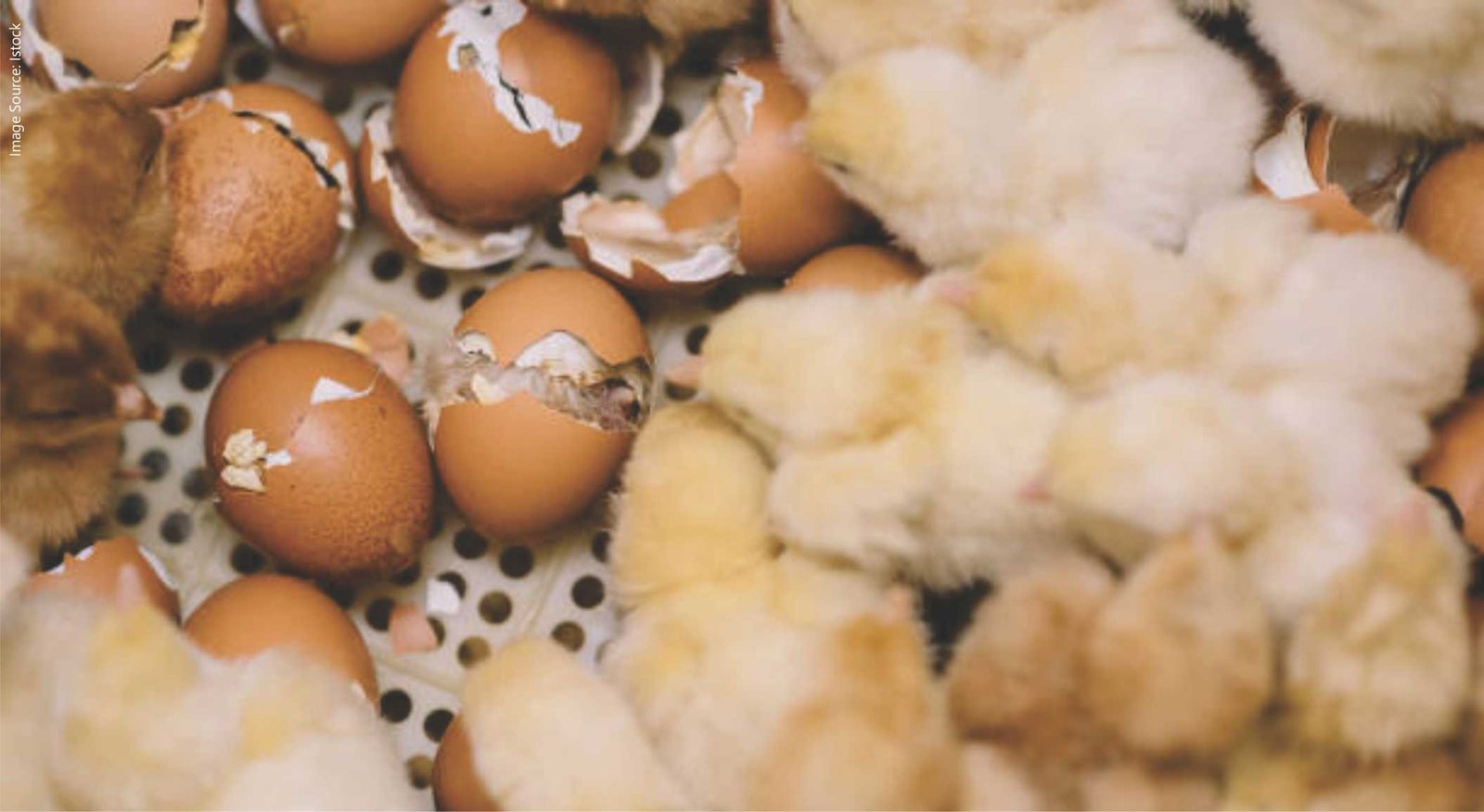
In the poultry industry, materials such as hatchery waste and feathers are generated in large quantities. Hatchery waste includes infertile eggs, eggshells, broken eggs, membranes, and dead embryos. These materials are rich in protein, fat, minerals, and calcium. Through proper processing methods such as rendering, heat treatment, or fermentation, hatchery waste can be converted into nutritionally valuable feed ingredients.
Similarly, feathers produced during poultry processing are rich in keratin protein. When feathers undergo proper hydrolysis, the keratin becomes digestible and is converted into feather meal, which can be used as a protein supplement in poultry and fish feed.
By safely processing and utilizing these materials, poultry producers can reduce feed costs, minimize environmental pollution, and move toward a circular and sustainable production system.
Potential Waste Products and Their Processing Techniques
- Hatchery Waste
Hatchery waste consists of infertile eggs, eggshells, membranes, and dead embryos generated during the hatchery process. These materials can be converted into valuable products through several industrial processing methods.
One of the most common methods is rendering combined with heat treatment, similar to the process used for producing meat and bone meal or organic fertilizers. Rendering helps remove moisture, destroy pathogens, and produce a stable product suitable for further processing.
Alternative heat treatment methods include boiling infertile eggs at 100°C for approximately 1 hour and boiling dead embryos at 100°C for around 30 minutes, followed by sun drying for about four days. These methods help reduce microbial contamination and increase the shelf life of the product.
Advanced methods such as autoclaving and extrusion processing with ingredients like soybean meal or maize are also used. However, these techniques often require specialized facilities and infrastructure. In regions where such facilities are limited, on-site methods such as ensiling and fermentation offer practical alternatives. These processes lower pH levels and inhibit microbial spoilage.
Research indicates that ensiling fresh hatchery waste with a carbohydrate source and lactic acid–producing bacteria for two weeks results in a microbiologically safe and nutritionally stable product. Similarly, preservation using 7% of a 1:1 mixture of formic acid and propionic acid helps maintain nutrient quality and ensures microbial safety.
- Feather Meal
Feather meal is a high-protein feed ingredient containing approximately 87% crude protein. The primary protein in feathers is keratin, which constitutes about 80–100% of the feather structure.
However, keratin in its natural form is highly resistant to digestion, with digestibility reported to be less than 5%. This resistance is due to the high cysteine content (around 8%), which forms strong disulfide bonds that create tightly folded protein structures.
To improve digestibility, feathers must undergo hydrolysis, which breaks these bonds and makes the protein more accessible to digestive enzymes.
Typically, feather hydrolysis is carried out under high pressure and temperature conditions such as steam pressure of 60–65 pounds per square inch and a temperature around 140–143°C for about 30–40 minutes.
After hydrolysis, the material is dried at 90–110°C for approximately five hours, cooled, and then ground using equipment such as a hammer mill. The final product is sieved and stored under appropriate conditions to maintain quality.
Hydrolyzed feather meal can then be used as a protein supplement in poultry, fish, and livestock feeds.
Conclusion
The concept of waste to wealth offers a promising strategy for improving the sustainability and economic efficiency of the poultry industry. By utilizing waste materials such as hatchery waste and feathers, the poultry sector can reduce dependence on expensive conventional feed ingredients like maize and soybean meal.
Proper processing techniques ensure that these by-products are nutritionally valuable, safe, and environmentally sustainable. Adoption of such practices can help poultry producers lower feed costs, reduce environmental pollution, and promote a circular agricultural economy.
Going forward, increased research, improved processing technologies, and greater awareness among farmers will be key to unlocking the full potential of alternative feed resources in poultry nutrition.
by Gautam Shukla (4th year BVSC &AH) and Subarno Saha (3rd Year BVSc & AH)