Introduction
 In the evolving world of poultry production, especially in regions like India, producers are constantly looking for feed ingredients that deliver performance, gut health, and economic sustainability. One such solution, gaining traction in parts of Maharashtra, is the inclusion of Sunflower Deoiled Cake (SFDOC) at 2–3% in broiler diets—not just as a protein source, but as a functional fiber contributor.
Traditionally dismissed for its high crude fiber content, SFDOC, a by-product of oil extraction from Helianthus annuus, is now being recognized for its positive effects on gastrointestinal development, microbial balance, and gut resilience, especially under stress-prone conditions such as the Indian monsoon season.
Nutritional Profile of Indian SFDOC
SFDOC is a by-product obtained after oil is mechanically pressed or solvent extracted from sunflower seeds. The nutritional value of Indian SFDOC varies with processing methods and dehulling extent.
Typical Indian SFDOC Composition:
- Crude Protein: 24–28%
- Crude Fiber: 20–32%
- Ash: ~6%
- Ether Extract: >1.5%
- Acid Insoluble Ash: ~1.5%
- Rich in non-starch polysaccharides (NSPs) and lignocellulosic components
- Amino Acid Highlights (less balanced compared to soybean meal):
- Lower in lysine
- Relatively higher in methionine and cysteine
Imported SFDOC, often pelleted, may contain 30–35% protein and <20% fiber, making it more nutrient-dense but also more expensive.
Types of Fiber in SFDOC:
SFDOC contains both insoluble and soluble/fermentable fiber components, each playing distinct roles in gut health management:
- Insoluble Fiber – The Mechanical Activator
- Comprises cellulose, hemicellulose, and lignin.
- Enhances gizzard function, increases retention time, and improves nutrient utilization.
- Stimulates mucosal growth and enzyme secretion, aiding digestion and absorption.
Sources: Mateos et al., 2012; Svihus, 2011
- Soluble and Fermentable Fiber – The Microbial Modulator
- Includes pectins and arabinoxylans.
- Partially fermented in the hindgut, leading to short-chain fatty acid (SCFA) production (e.g., butyrate)
- SCFAs improve intestinal barrier integrity, support immune modulation, and lower gut pH—creating an environment less favorable to pathogens.
This dual action—mechanical and microbial—makes SFDOC a unique source of functional fiber that can act synergistically to promote gut health in broilers.
SFDOC at 2–3%: Gut Health Benefits Without Performance Loss
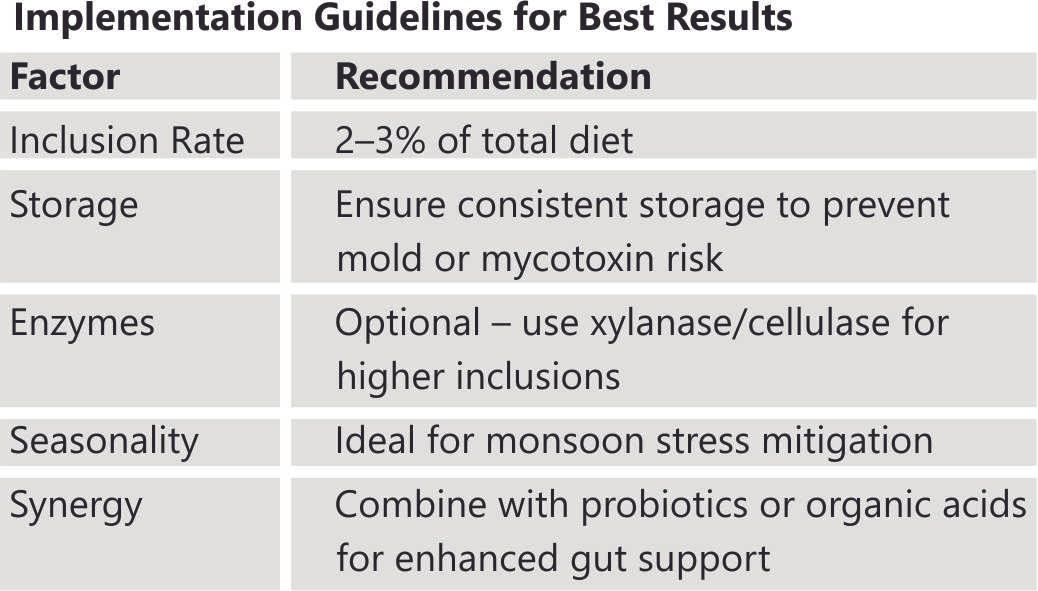
Recent research has demonstrated that low-level inclusion of SFDOC, especially in the range of 2–3%, can deliver measurable improvements in gut health and digestive function without compromising growth performance. At these levels, the fiber contribution is sufficient to enhance gastrointestinal tract development without overloading the system with undigestible matter that could reduce energy or protein digestibility.
- Enhanced Gizzard Development: Increases gizzard weight and muscle tone, enhancing grinding and nutrient extraction.
- Intestinal Morphology: Boosts villus height and crypt depth—improving nutrient absorption which is further linked to mucosal stimulation provided by moderate levels of insoluble fiber.
- Microbial Balance: Promotes beneficial bacteria (Lactobacillus, Bifidobacterium), inhibits harmful microbes like Clostridium perfringens (Jiménez-Moreno et al., 2009).
- Anti-inflammatory Action: Butyrate production enhances tight junction integrity and reduces intestinal inflammation.
Performance Parameters and Economic Considerations
Multiple studies have confirmed that SFDOC can replace part of the protein source in broiler diets without adverse effects on performance. When used at 2–3%, it contributes positively to gut health while preserving or even improving feed efficiency:
- Brenes et al. (2008) showed that broilers fed diets with up to 3% SFDOC and xylanase supplementation had better feed conversion ratios and improved body weight gain compared to control groups.
- Nobakht et al. (2011) found no negative impact on average daily gain or FCR when SFDOC was included at up to 15%, but optimal gut health benefits were observed with lower inclusion rates (2–5%).
- Enzyme Synergy: The use of fiber-degrading enzymes such as xylanases or cellulases enhances the digestibility of SFDOC by breaking down NSPs, releasing entrapped nutrients and reducing gut viscosity, especially when slightly higher inclusion levels are used.
Monsoon Advantage
The Indian monsoon brings high humidity, wet litter, and a surge in enteric disease pressure. Incorporating SFDOC at 2–3% in broiler diets during this period provides strategic advantages:
- Gut Health Resilience
- Enhances gizzard activity, improves mechanical digestion and lowers pH in the upper gut, which can reduce pathogen load.
- Butyrate from fiber fermentation improves tight junctions, reduces leaky gut.
This makes birds more resilient to gut-related stress common in monsoon conditions.
- Improves Litter Quality
- Firmer droppings from fiber modulation led to drier litter, reducing footpad dermatitis and ammonia.
- Fiber content in SFDOC, particularly insoluble fractions, helps normalize gut transit time and reduce diarrhea or wet droppings.
- Reduces Antibiotics Dependence
- Supports microbial balance and gut immunity—offering natural pathogen resistance
- Reduce gut permeability and leaky gut syndrome
- Lower subclinical infections naturally
- Supports Immune Function
- Methionine and cysteine in SFDOC contribute to immune-related amino acid pools
- SCFA activity enhances mucosal immune responses.
 Conclusion: SFDOC—From By-product to Gut Health Enabler
Incorporating SFDOC at 2–3% in broiler diets, especially during the Indian monsoon season, is proving to be a smart, strategic move. It enhances gut integrity, helps manage moisture-related challenges, supports microbial balance, and serves as an economical protein–fiber source. Its value becomes even more apparent as the industry shifts toward antibiotic-free, climate-resilient poultry production.
Historically underutilized due to its fiber content, sunflower meal and its variants are now gaining recognition as functional feed ingredients that contribute meaningfully to poultry gut health. At appropriate inclusion levels, SFDOC promotes gizzard development, improves intestinal morphology, and fosters a favorable microbial environment, all without compromising performance.
Its unique combination of insoluble fiber and moderate fermentable fractions stimulates mechanical digestion and short-chain fatty acid production—both vital for maintaining a healthy and efficient gastrointestinal system. As the global poultry sector move toward antibiotic-free poultry production, sunflower meal is positioned not only as a protein source but as a strategic tool for gut health management, offering a dual benefit of enhanced bird welfare and economic viability.
References are available upon request.