In India’s competitive dairy feed industry, feed mills invest heavily in formulating high-performance products to improve productivity. However, a largely unseen challenge—subclinical mastitis—can significantly influence how farmers perceive feed effectiveness.
While this condition shows no visible symptoms in dairy cows, it can result in reduced milk yield, lower productivity, and farmer dissatisfaction. These outcomes may affect how feed performance is perceived and ultimately impact feed sales, brand reputation, and customer loyalty.
What is Subclinical Mastitis?
Subclinical mastitis is an inflammation of the udder that is not detected through visual inspection.
- Milk appears normal, but somatic cell count (SCC), a key indicator of milk quality, is elevated.
- The condition often goes unnoticed for weeks.
- Milk yield losses may range from 5% to 25%, depending on infection severity, stage of lactation, and herd management practices.
- Elevated SCC can reduce milk processability for procurement companies. For example, high SCC can lower paneer yield and reduce the shelf life of milk products.
Subclinical mastitis is primarily a herd-level management challenge. Nutrition alone cannot prevent or cure the condition. However, appropriate nutrition can support immune function, tissue integrity, and overall cow health, thereby helping reduce the risk and severity of subclinical mastitis.
Prevalence in India
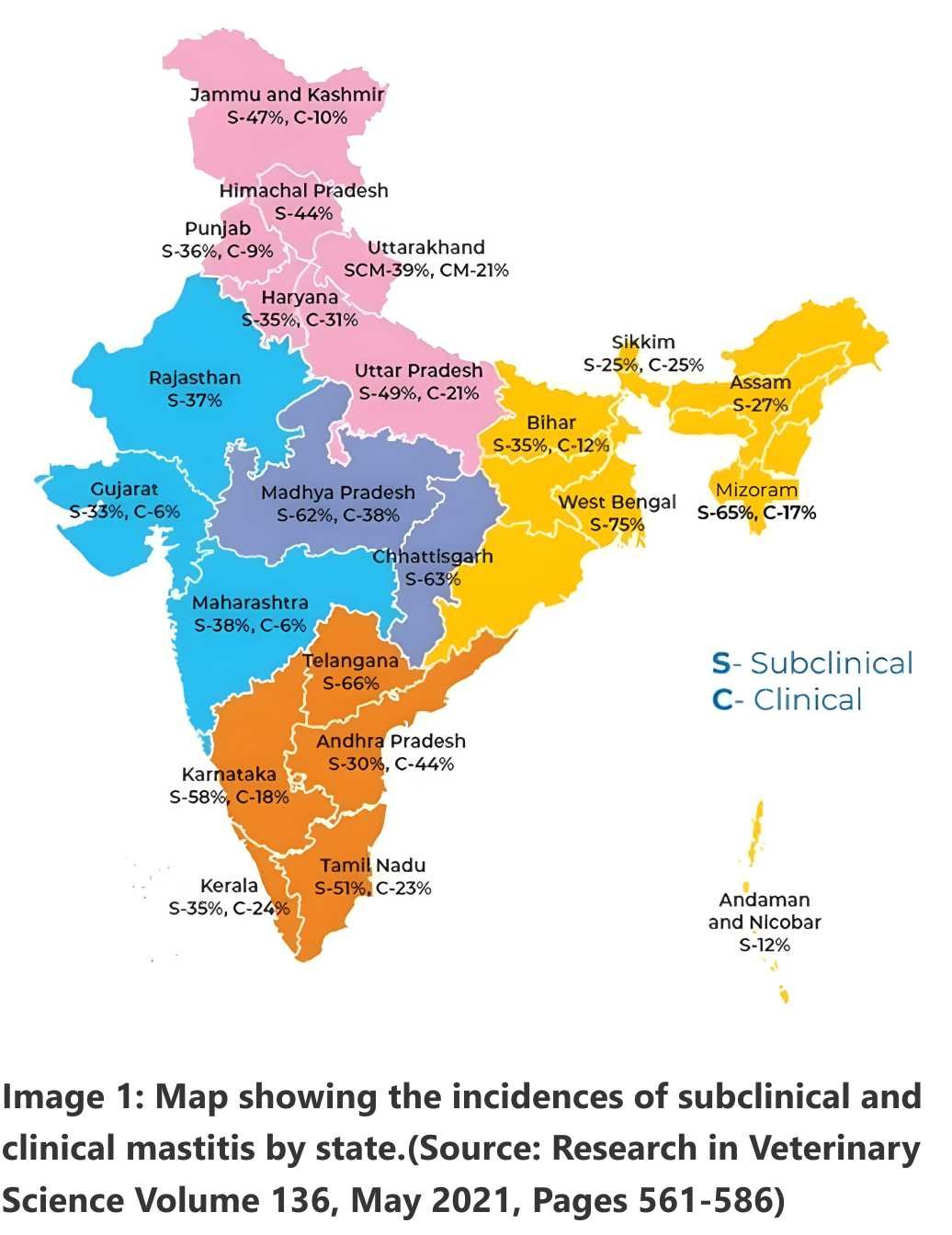
This condition affects 12–70% of lactating cows depending on farm hygiene, region, and herd size (Krishnamoorthy et al., 2021). These figures reflect industry-wide observations and are not linked to specific feed or nutrition programs.
As shown in image 1, subclinical mastitis is prevalent across all regions of India and represents a significant economic burden for farmers, as well as for the feed and dairy industries.
The Overlooked Challenge for Feed Mills
At first glance, a feed miller might not associate subclinical mastitis with feed performance. However, subclinical mastitis can influence how farmers evaluate their feed programs, especially when milk yield does not meet expectations.
 When cows face health or management challenges, farmers may attribute reduced milk yield to feed quality—even when nutrition is not the root cause. This can undermine confidence in a feed brand and prompt farmers to explore alternative nutritional strategies, potentially affecting purchasing patterns and customer retention.
Because feed is closely linked to animal performance, variations caused by on-farm conditions, especially subclinical mastitis, can make it difficult for feed mills to demonstrate the true value of premium formulations. As a result, sales and technical support teams may spend more time addressing farmer concerns, reducing the time available for new business development.
Economic Impact for a 1,000 MT Feed Mill (Monthly)
Consider a feed mill producing 1,000 metric tons of feed per month. Assuming an average consumption of 5 kg per cow per day, this volume supports approximately 6,500 cows monthly.
If 30% of these cows consume 0.5 kg less feed per day due to subclinical mastitis, the mill would lose approximately 30 metric tons of feed sales per month, nearly 3% of total production. This represents lost opportunity within the existing customer base.
At an assumed feed price of INR 25 per kg, this equates to a potential monthly revenue loss of approximately INR 7 lakh.
What Can Feed Mills Do?
Feed mills seeking to maintain customer satisfaction and support udder health have several options.
- Optimize Nutritional Strategies
Micronutrients, particularly trace minerals can play an important role in supporting immune function and tissue integrity. However, not all mineral sources are equal.
Highly bioavailable trace minerals should be prioritized. Bis-chelated organic trace minerals have demonstrated superior absorption compared to inorganic forms, ensuring that a greater proportion of supplemented minerals is utilized by the cow.
- Support Farmer Education
Feed mills serve a diverse customer base, and not all farmers may be fully aware of the management factors that influence udder health, milk yield, and overall dairy performance.
Providing guidance on:
- Udder hygiene best practices
- Proper milking routines
- Monitoring SCC trends
- Understanding the role of micronutrients in cow performance
can strengthen farmer knowledge while enhancing the mill’s credibility and advisory role.
- Encourage Herd-Level Monitoring
Promoting regular SCC testing and subclinical mastitis screening as part of herd health management allows farmers to evaluate feed programs alongside on-farm practices. This ensures a more complete and accurate understanding of cow performance.
Conclusion
By supporting farmers with practical information, management insights, and consistent nutritional programs, feed mills can strengthen customer relationships, reinforce brand trust, and protect business performance against challenges that may otherwise be misattributed to feed quality.
References are available upon request
By Gnanasekar (GS) Rangasamy, Novus