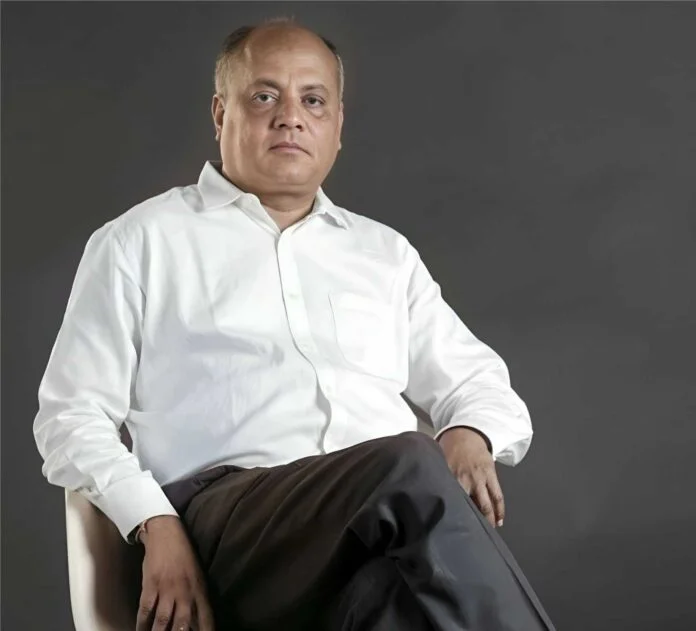
On the occasion of National Farm Animals Day, the spotlight turns to the indispensable role of livestock in shaping India’s agricultural and economic landscape. From ensuring nutritional security to sustaining millions of rural livelihoods, farm animals remain at the heart of the country’s agri-food ecosystem. As India navigates rising demand for protein-rich food and the need for more efficient, sustainable farming practices, the livestock sector stands at a critical juncture. In this context, Godrej Agrovet Limited continues to play a pivotal role in advancing science-led nutrition, improving productivity, and promoting responsible livestock management. In an interaction with Think Grain Think Feed, Capt. (Dr.) A.Y. Rajendra, CEO – Animal & Aqua Feed Business, shares insights on strengthening the sector for a more resilient and future-ready India.
On National Farm Animals Day, how would you describe the role of farm animals in India’s food security and rural economy?
Farm animals play a very important role in India’s agri-food system, contributing not only to food security but also to rural livelihoods. Over time, livestock has evolved from being a supplementary activity into a core pillar of the agricultural economy, supporting both nutrition and income for millions of households. As demand for protein-rich food continues to rise, the importance of livestock will increase further, making it essential to strengthen the sector through more efficient and science-led practices.
India’s position as the world’s largest milk producer highlights this significance, with strong domestic supply ensuring access to nutrition. At the same time, livestock remains a critical economic asset, contributing nearly 30 percent of agricultural Gross Value Added and supporting millions of dairy farmers, many of whom are small and marginal.
However, despite its scale, the sector continues to face productivity constraints. Per-animal output remains below global benchmarks, with feed and fodder gaps affecting efficiency. Going forward, improving productivity through better nutrition, genetic improvement, and animal health management will be key to meeting rising demand, while strengthening rural incomes and long-term food security.
How is Godrej Agrovet Limited contributing to sustainable and responsible livestock practices?
At Godrej Agrovet Limited, our livestock approach focuses on improving productivity through science-led nutrition, efficient management, and technology adoption, while ensuring sustainability and farmer profitability. Lifecycle-based, stage-specific feed solutions enable precise nutrient delivery, improving biological efficiency and overall output—particularly important in India, where quality feed gaps persist.
By shifting from unstructured feeding to balanced, scientifically formulated feed, we help improve consistency, reduce inefficiencies, and lower production costs. Our solutions, including Pride Hog for pigs, have demonstrated gains in growth and reduced mortality. Through strong farmer engagement, training, and advisory programmes, we enable the adoption of scientific practices, driving more efficient, sustainable livestock systems and better farmer incomes.
What role do animal nutrition and health play in enhancing livestock productivity?
Animal nutrition and health are central to livestock productivity, directly impacting output, efficiency, and farmer profitability. In India, where growth has largely been scale-driven, strengthening nutrition and preventive healthcare is key to improving per-animal productivity and building a more sustainable ecosystem. Balanced, scientifically formulated feed enhances feed conversion efficiency, translating inputs into higher milk yield, weight gain, and better reproductive performance—making it critical in addressing persistent feed and fodder gaps.
At Godrej Agrovet Limited, our feed portfolio—including Doodh Vriddhi, Samrudhi, and Dhanalaxmi—delivers precise nutrition to improve yield quality, lactation, and animal health, while solutions like Summer Kool help manage heat stress. Alongside nutrition, preventive healthcare—covering vaccination, hygiene, and biosecurity—reduces disease risk and economic losses. Together, these enable a shift towards efficiency-led growth, boosting farmer incomes while promoting sustainable livestock farming.
How can the industry ensure ethical treatment and welfare of farm animals alongside productivity?
Ensuring the ethical treatment and welfare of farm animals is not just a moral responsibility but also a key driver of productivity, efficiency, and long-term sustainability. Improved welfare practices are increasingly linked to better health outcomes, higher output, and stronger farm profitability, with studies indicating productivity gains of 9–15%, along with improved feed efficiency and reduced disease incidence. Animals that are well-managed and free from stress deliver better milk yield, growth, and reproductive performance, while factors such as heat stress, poor housing, and inadequate nutrition can significantly reduce output.
Balanced nutrition, continuous access to clean water, and sound genetics play a critical role in improving animal health and resilience. At Godrej Agrovet Ltd, our solutions are designed to support both productivity and animal health, complemented by strong biosecurity practices that improve resilience in high-risk segments. A proactive approach to preventive healthcare through vaccination, hygiene, and biosecurity helps reduce mortality, minimise economic losses, and ensure more stable productivity outcomes. Strengthening farmer awareness and leveraging technology for monitoring and data-driven decisions will be key to advancing welfare outcomes. Ultimately, a balanced approach that combines productivity with responsible animal care is essential for sustainable growth and improved farmer incomes.
Could you share insights into its current organizational structure, the scale of its farmer network, and its market reach?
At Godrej Agrovet Limited, our approach is anchored in a strong, integrated feed ecosystem that operates at scale while staying closely connected to farmers. Our Animal Feed business is among India’s leading organised players, supported by over 30 manufacturing plants and a diverse portfolio spanning cattle, poultry, aqua, and specialty feed. At the core of our innovation is the Nadir Godrej Centre for Animal Research & Development (NGCARD), where advanced research is focused on improving livestock productivity through scientifically developed, high-impact nutrition solutions.This scientific foundation ensures that what reaches the farmer is not just a product, but a well-researched solution built for real-world impact.
Farmer engagement is central to our model. We work directly with over 10,000 dairy farmers through structured advisory programmes, driving the adoption of scientific practices. Initiatives like the Krishnagiri dairy programme reflect this approach, that supported more than 6500 farmers and more than 21000 animals through 250+ veterinary camps, combining capacity building with veterinary outreach. We also promote inclusive sourcing by procuring grains locally, integrating smallholders into our supply chain. Supported by strong last-mile advisory, ration balancing, and multilingual customer care, our focus remains on expanding reach, strengthening farmer partnerships, and scaling sustainable, high-efficiency livestock systems.
What more can corporates and policymakers do to strengthen support for small and marginal livestock farmers?
Smallholders are the backbone of India’s livestock sector, owning nearly 80% of the livestock and playing a vital role in rural livelihoods and food security. However, gaps in access to quality feed, veterinary care, and scientific knowledge persist. Bridging the nutrition gap is critical, as feed accounts for nearly 70% of input costs yet remains imbalanced in a fragmented ecosystem. Scaling the adoption of balanced compound feed can significantly improve productivity, reduce inefficiencies, and enhance farmer incomes.
Stronger collaboration between industry and policymakers is essential—through a National Feed Security roadmap, improved last-mile veterinary services, and expanded public-private partnerships for training. Digital advisory tools, along with continuous on-ground awareness, can drive better decision-making. Strengthening extension systems, scaling initiatives like digital animal IDs, and promoting agri-tech solutions such as mobile vet services and IoT tools—along with targeted support for women farmers—will be key to building a more inclusive and future-ready livestock ecosystem.
What piece of advice would you give to young entrepreneurs entering the livestock/agri sector?
For young entrepreneurs, the key shift is that livestock is moving from scale-led to efficiency-led growth. Despite having the world’s largest livestock population, per-animal productivity in India remains low—creating a significant opportunity to improve output per unit of input rather than simply expanding herd size. Nutrition-led value creation is central to this, as feed is the single largest lever impacting productivity, animal health, and sustainability.
The future is increasingly science- and technology-driven, with a growing focus on precision nutrition, specialised formulations, and performance-enhancing additives. On farms, technologies such as automated feeders, IoT systems, and sensors are enabling real-time monitoring and smarter decision-making. For entrepreneurs, leveraging AI and IoT for solutions like ration balancing, disease alerts, and digital advisory platforms offers strong potential. Ultimately, success will depend on improving feed efficiency, enhancing animal health, and delivering consistent, sustainable productivity gains.