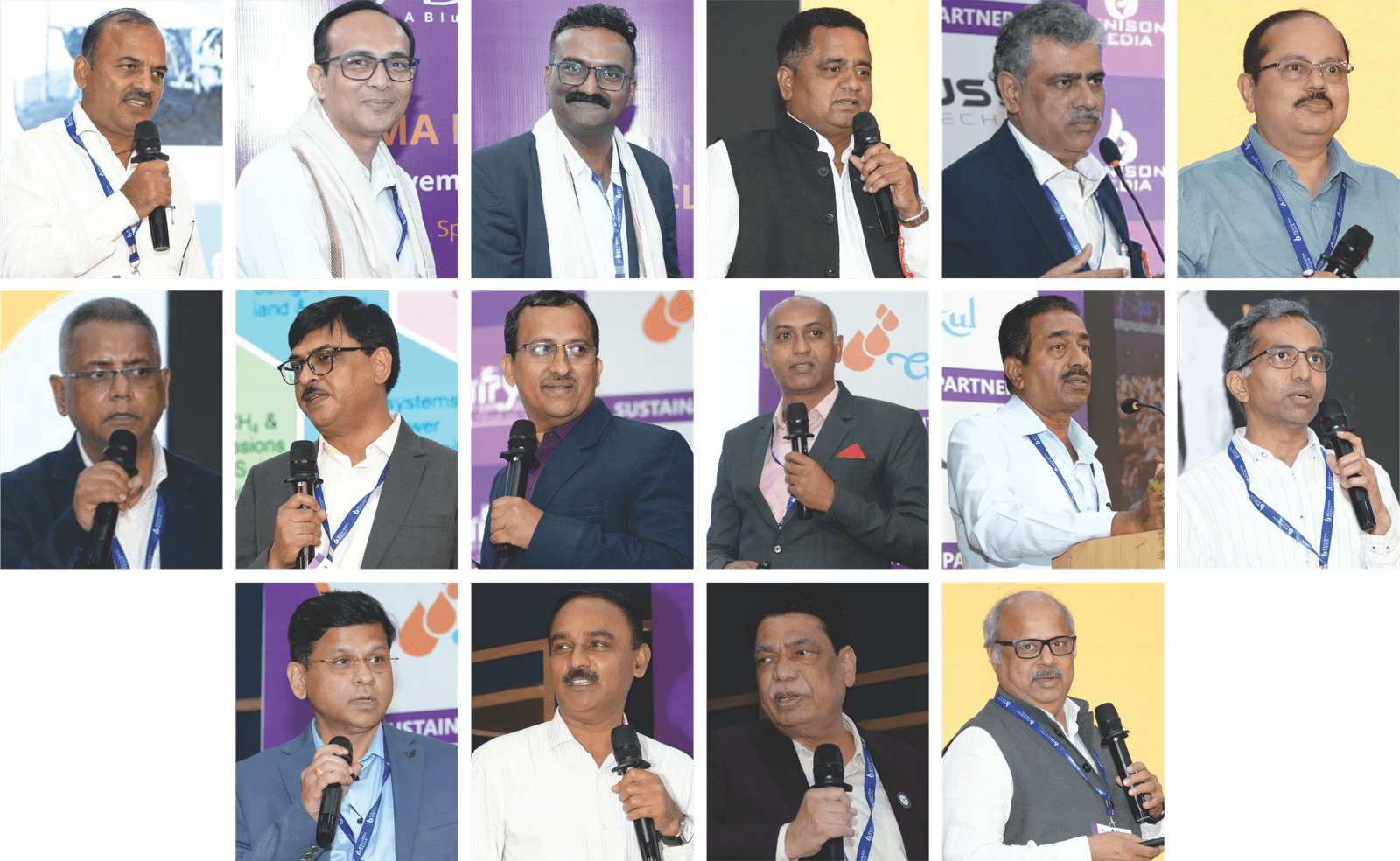
The 9th edition of Feed Tech Expo & Dairy Industry Expo welcomed 5,320 visitors from 21 states across India, with 17% attending from outside Maharashtra. The event was proudly sponsored by Gokul, Zeus Biotech, and Adisseo.
CLFMA of India supported the event for the ninth consecutive year, continuing its association since the very first edition. CLFMA also conducted its MC meeting on the second day of the expo.
The three-day event featured a series of conferences centered on the theme “Making Sustainability Profitable,” along with discussions on emerging technologies such as TMR, which have the potential to significantly increase farmers’ income.
Lessons from Feed & Dairy Conference 2025
Dairy Farm Profitability
Dairy Farming Innovation: A Tool for Sustainable Dairy Farming
- Low-cost, integrated dairy farming models—combining breeding, manure utilisation,
 and value-added product development—represent the future of sustainable dairy operations.
 - Affordable innovations such as crop-residue flooring, grooming brushes costing only INR 400, and low-cost cooling systems have enabled farmers to scale their operations from small units of 600 farms to more than 4,000 farms.
- Consistent nutrition significantly enhances digestibility, milk quality, and overall milk yield.
- Aflatoxin remains a critical challenge in silage-making; hydroponics provides a nutrient-dense source of green fodder and is a strong alternative.

Takeaway Message:
In dairy farming, cost is not the biggest barrier—mindset and intent matter more. The right exposure and learning can accelerate farm growth dramatically.
Optimizing Dairy Productivity and Profitability with Scientific Nutrition
- The nutritional needs of dairy animals vary with physiological stages of lactation. The
 ration of animals must contain the right proportion of protein, energy, minerals, and vitamins.
 - Proper NDF (Neutral Detergent Fibre) and ADF (Acid Detergent Fibre) balance ensures healthy digestion and optimal rumen function.
- Rumen microbes supply up to 70% of a cow’s energy, making efficient rumen fermentation essential for productivity.
- Current feeding patterns show that 45–50% of diets rely on crop residues; green fodder availability remains seasonal, while cattle feed penetration is still only 13–14%, indicating significant market potential.
- Unscientific feeding practices prevent animals from achieving their genetic potential. Green fodder quality and digestibility play a crucial role in ration formulation.

NDDB’s Ration Balancing Programme:
- Implemented across more than 30,000 villages, covering 28 lakh animals.
- Achieved an average increase of 300 g/day in milk yield, INR 26/day additional profit, and a 13.7% reduction in enteric methane emissions.
- In 1962, a digital tool was developed enabling farmers to enter milk yield, fat%, feeding details, etc., to instantly receive balanced ration recommendations.
Economic Benefits:
- TMR feeding can improve profitability by INR 35–40 per animal per day.
Takeaway Message:
High-quality green fodder is the most economical nutrition source. Feeding good-quality fodder alone can improve profitability by INR 30–35 per animal per day. Scientific, balanced feeding is essential to unlock an animal’s full potential.
Importance of Animal Health in Dairy Profitability
Animal health forms the foundation of a profitable dairy enterprise. Four key pillars define overall herd well-being: Udder health, Rumen health, Reproductive health, and Hoof health.
Subclinical Mastitis:
Early detection is crucial to avoid invisible losses. A monthly CMT test—readily available in the market—is recommended. An undetected cow with subclinical mastitis can lose 200–250 litres of milk per lactation.
Milking Machine Maintenance:
Liners should be replaced every 2,500 milkings or at least once every six months, whichever occurs first.
Water Management:
With milk composed of more than 85% water, cows require 4–5 litres of water for every litre of milk produced. Clean, fresh water must be available 24×7 at multiple accessible points.
Farm Size Planning:
Setting clear targets for animal numbers is crucial. Herd size should align with available resources—fodder, labour, land, and local market demand. Accurate breeding records are essential for maintaining a high-quality herd.
Silage Preparation:
Profitability depends on harvesting corn at the correct stage and moisture content. Bunker size should match daily silage requirements; a 1 ft × 1 ft × 1 ft bunker stores approximately 16–17 kg of silage.
Housing & Management:
Stress-free animals perform better. Loose housing systems, high-quality silage, clean water, comfortable bedding, stage-wise feeding, proper calf and delivery care, and regular testing for subclinical infections significantly improve herd sustainability.
Takeaway Message:
Profitable dairy farming begins with strong animal health management. Focusing on udder, rumen, reproductive, and hoof health—along with the early detection of subclinical mastitis—prevents major hidden losses. Consistent, scientific management across these areas ensures healthier animals, higher productivity, and a more sustainable dairy enterprise.
Scope and Challenges in the Indian Feed Sector
Poultry Feed and Sustainability Outlook
- India has 100 crore poultry birds—52% broilers, 38% layers, and 10% country chicken—
 constituting an industry valued at INR 2.3 trillion (2024).
 - The country hosts 3,500 registered feed mills; however, large fluctuations in feed ingredient prices—such as corn dropping from INR 27/kg in 2024 to below INR 20/kg in 2025—highlight the need for robust forecasting systems and diversified ingredient sourcing.
- The future of the poultry sector lies in processed meat, circular economy models, eco-friendly packaging solutions, water conservation, and emission reduction practices.
- A greater emphasis on efficient Feed Conversion Ratio (FCR), climate resilience, and zero-waste farming will steer the industry’s transition from volume-driven growth to value-driven development.
Takeaway Message:
The poultry sector must move from volume to value through circular economy principles, efficient feed use, and sustainable, climate-smart practices.
Dairy Feed Efficiency and Farmer Empowerment
- India’s feed industry is growing at 6%, with an overall feed potential of 183 MMT for
 2024–25 based on total animal population; however, 92% of the cattle feed market remains untapped. This gap is currently being filled by raw materials such as mustard meal, cottonseed meal, groundnut cake, and other oil meals and grains.
 - Cow milk accounts for 55% of India’s total milk pool, while buffalo milk contributes 45%.
- Despite India having the world’s largest buffalo population, there is no nutrient-specific feed available for buffaloes, representing a major untapped opportunity for the feed sector.
- Precision nutrition and nutrient optimization are crucial for dairy productivity. While the impact of nutrients on milk production is well-documented for dairy cows, buffaloes still require updated nutritional guidelines to improve feed efficiency and productivity.
- A dedicated, service-oriented approach—evaluating key feed resources at the farm level and developing nutrient-balanced Total Mixed Rations (TMR)—is essential, as it can enhance milk yields by 10–15%, significantly improving farmer profitability.

Takeaway Message:
Empowering farmers with nutrient-based, service-oriented feed solutions can unlock India’s 92% untapped dairy feed potential and enhance milk yields sustainably.
Aquaculture Feed and Future Readiness
- India produces 19.5 MMT of fish, ranking second globally, yet current aquafeed
 production stands at only 2 MMT across 28 feed mills.
 - By 2047, national feed requirements are projected to rise to 30 MMT (based on an FCR of 1.5), necessitating major expansion in feed manufacturing capacity.
- Shrimp feed production currently exceeds demand (capacity: 1,900 tons/day; demand: 1,100 tons/day), though disease challenges and seasonal fluctuations continue to affect the sector.
- Future solutions include developing season-, system-, and species-specific feeds, utilizing fish silage, and implementing blockchain-led traceability systems.
- Precision nutrition has already helped reduce production costs by INR 12 per kg, demonstrating its effectiveness and value.

Takeaway Message:
India’s aquafeed future lies in innovation—customized feeds, traceability, and precision nutrition to balance productivity, profitability, and sustainability.
Scope and Opportunities of the Indian Feed Sector
- The Indian livestock sector’s Gross Value Added (GVA) has increased by approximately
 13% from FY 2013–14 to FY 2022–23.
 - The livestock industry is projected to reach USD 350 billion by 2030, driven by strong annual growth across the poultry, dairy, and aquaculture segments.
- Milk production in the dairy industry is growing at 5.6%, the layer segment at 6.9% (expected to reach 10% by 2030), while broiler meat is forecast to grow by 3–8%. The aquaculture sector continues to expand at a rate of 7–10%, driven by market conditions, export policies, and environmental factors.
- As India is a consumption-driven market, there is a pressing need to adopt precision nutrition for improved productivity and sustainability. This includes shifting focus towards critical nutrients such as amino acids and fatty acids rather than crude protein and edible fats, particularly in dairy, while adopting enhanced nutritional strategies in poultry and aquaculture to achieve better FCR.
- Surveys indicate that by 2025 India will face a deficit of 40% in green fodder, 23% in dry fodder, and 38% in cattle feed concentrate, with shortages expected to widen by 2030.
- The industry mindset must shift from “least-cost formulation” to “best-cost formulation,” supported by advanced nutritional interventions and digital tools to enhance value, efficiency, animal performance, and overall livestock farmer profitability.

Takeaway Message:
As the livestock sector is growing steadily, contributing a significant GVA to Agriculture GDP, industry must focus on adopting new nutritional strategies, especially on precision nutrition, considering the importance of critical nutrients like amino acids and fatty acids over ingredients.
Scope of Commercial TMR
Role of FPO in the Total Mixed Ration (TMR) Supply Chain
- Indian dairying is the backbone of the rural economy, and small herd sizes offer distinct
 advantages including lower methane emissions, significant scope for productivity enhancement, etc.
 - TMR can be a transformative solution for the dairy sector, provided the mixture remains uniform and consistent. For long-term sustainability, TMR must be both nutritionally balanced and economically viable.
- Recommended Composition:
- 45–50% Maize/Sorghum Silage
- 12–15% Jowar Hay / Wheat Straw / Oat Hay
- 32–36% Concentrate Mixture
- 5–6% Premix
- Mycotoxin remains a major challenge in TMR production and storage.
- Documented benefits of feeding TMR include:
- 12% increase in milk yield
- 11% increase in fat percentage
- 2% improvement in SNF
- Reduction in mastitis incidence

Green and dry fodder production can be significantly enhanced by forming FPOs and adopting advance contracting models with farmers.
Takeaway Message:
The commercial TMR project is the preparation for the future to address unavailability of good quality of fodder by initiating the entrepreneurship among farmers, establishing supply chain and fulfilling demand by setting up multiple centers and targeting dairy farming clusters. Balanced nutrition through TMR significantly improves milk production, reproductive efficiency, and overall—boosting long-term farm profitability eventually will keep dairy farming mindset live among farmers.
Scientific & Commercial Review of Commercial TMR
Key Points
- India generates nearly 500 million tonnes of crop residues annually, of which 140 million
 tonnes are burned. Efficient utilisation of these residues through TMR can address major environmental and fodder-management challenges.
 - Dry TMR is ideal for farmers who grow their own green fodder; an optimal combination of green fodder, dry fodder, and TMR ensures nutritional adequacy.
- TMR helps optimise feed costs, improves nutrient consistency, reduces digestive disorders, and enhances overall farm profitability.

Trial outcomes demonstrate:
-
- 24% increase in lactation yield (against an expected 15%)
- 48% increase in net farm income
- Key challenges include meeting the rising market demand and ensuring the consistent supply of high-quality TMR.
Takeaway Message:
The utilization of local resources effectively, value addition and preventing wastage are important milestones leading to successful commercial TMR project. The TMR will save the future of Indian dairying. It can bridge the fodder shortage, enhance milk production, and attract the next generation to be smart, efficient, and sustainable dairy farming.
Commercial TMR: Benefiting Small Dairy Farms
- Total Mixed Ration (TMR) is an optimal blend of dry fodder, green fodder, and
 concentrate, ensuring that each bite delivers uniform nutrition. Feeding twice daily with a 7-hour interval helps maintain gut health.
 - Under the National Livestock Mission, farmers are eligible for up to 50% subsidy for installing TMR plants—up to INR 1 crore (or INR 50 lakh for investments above INR 1 crore).
- Production-purpose TMR is available at INR 16/kg, while maintenance-purpose TMR is priced at INR 13/kg.
- Trials conducted with NDDB on 31 early- to mid-lactation cows recorded an increase of ≥0.5 kg in DMI and a rise of 2–3 kg in milk yield per cow per day.
- Feeding TMR ensures consistent fulfilment of nutritional requirements, improves body condition score, enhances animal health and fertility, increases milk yield, fat%, and SNF%, improves ROI by reducing feeding costs, and saves time and labour.
- To strengthen raw material security, Banas Dairy is expanding TMR production through a new plant and has initiated contract farming to ensure reliable green fodder supply.

Takeaway Message:
TMR offers small dairy farmers a cost-effective way to deliver balanced nutrition, improve animal health and productivity, and quality. It makes dairy farming cost efficient, reduce labour cost and ultimately increasing profitability. The balanced TMR feeding is the most effective way of reducing carbon emissions by improving the production efficiency.
TMR & Milk Quality
- Concentrate feed alone cannot meet the nutritional requirements of cattle; high-quality
 fodder is essential, and TMR remains one of the most effective methods for ensuring uniform, balanced feeding.
 - TMR has a shorter shelf life (approximately 7 days) compared to conventional cattle feed (up to 2 months).
- Feeding should be customized according to the animal’s life stage and requirements.
- Silage is commonly outsourced, but contract farming provides greater control over silage quality.
- Water intake rises when animals are fed TMR; hence loose housing systems tend to offer better performance results.
- TMR significantly improves animal health: milk production increases by 10–15%, repeat breeding and mastitis cases decline, milk yield remains consistent across lactation, and somatic cell count and aflatoxin levels decrease—resulting in better milk quality and higher farm income.
- Adoption of TMR can potentially raise farm-level milk output by up to 11,000 litres per month.
Takeaway Message:
The genetics improvement program needs strong hand holding of balanced feeding and can’t meet by just feeding concentrate feed. The agriculture is the backbone of successful dairying. There is need to look at dairy farming in an innovative way by focusing consumers. The progressive and educated newer generation must enter into dairy farming with scientific feeding practices, strong record-keeping and long-term planning. The growing demand of quality milk for baby foods can be fulfilled through balanced and quality TMR. With the right approach, TMR can enhance milk quality, increase yields, and drive sustainable profitability.
Making Sustainability Profitable
Holistic Sustainability
- True agricultural and livestock sustainability requires an integrated approach that
 combines farmer-centric financing, well-defined production standards, and strong collaboration across public, private, and institutional stakeholders.
 - IFC is leveraging global expertise to advance Sustainable Agribusiness, encompassing sustainable crop production, sustainable proteins, resilient supply chains, and enhanced food safety and loss-prevention systems.

Takeaway Message:
Supportive government policies and multilateral partnerships – such as those driven by IFC, World Bank, and national development bodies – are vital to scaling sustainable agriculture models and mitigating systemic risks.
Making Sustainability Profitable for Dairy Farmers
- India contributes 24% of global milk production, with per-capita consumption increasing
 at 8%, although exports remain low at 3–4%.
 - A study across 140 farms shows milk production costs ranging from INR 21–46 per litre. The core challenge is low milk yield per cow:
- India: 3,200 kg per cow per year
- USA: 11,000 kg per cow per year
The average body condition score of Indian cattle is below 2.75, whereas European cattle typically score above 4.
Four pillars of sustainable dairy development include:
- Breed improvement
- Feed and nutrition
- Management
- Disease control
- Transitioning animals to loose housing with fewer animals per unit area has resulted in more than 20% increase in milk yield.
- Good management practices can further enhance production by 15–20%.
- Key welfare essentials include access to 24×7 clean drinking water, nutritious feed, comfortable bedding, and ensuring cows are not tied too tightly.
- Ethno-Veterinary Medicine (EVM) provides a natural cost effective alternative to reduce antibiotic usage in the animal treatment & ultimately controls residues in milk. Currently available for 13 diseases, EVM demonstrates up to 98% efficacy in most conditions and typically costs only 1% of conventional allopathic treatments.
Takeaway Message:
Sustainable dairy becomes profitable when farmers improve breeds, nutrition, and management, adopt better housing and welfare practices, and use cost-effective ethno-veterinary treatments to boost milk yield, reduce losses, and ensure safer milk.
Rumen Dynamics & pH: Impact on Milk Quality
- Milk fat and SNF are the strongest indicators of milk quality and long-term farm
 sustainability.
 - A 2019 national survey reported that one-third of milk samples failed to meet minimum fat and SNF standards, primarily due to nutritional gaps at the farm level.
- The rumen acts as a 150-litre microbial fermenter, producing up to 2.5 kg of microbial protein per day, supporting ~10 litres of milk production.
- The forage-to-concentrate ratio is a key determinant of both fat and SNF levels; a 60:40 ratio is generally recommended.
- Cows should rest for 12–14 hours daily and ruminate for around 8 hours to generate adequate saliva, maintain rumen pH, and ensure optimal digestion.
- Total ration should contain 4–5% fat for optimal performance.
- TMR must be a scientifically balanced blend of forage, concentrate, supplements, and additives.
- Clean drinking water (preferably under shade) should be provided 7–8 times a day.

Takeaway Message:
Enhancing nutrition, housing, health, and welfare practices is central to improving milk quality, productivity, and farm longevity—linking animal well-being directly to economic resilience. An optimal forage-to-concentrate ratio, along with proper infrastructure, remains key to profitable dairying.
Waste to Wealth
- Although poultry and livestock waste can negatively affect ecosystems and human
 health, it becomes a valuable resource when scientifically managed.
 - Selecting highly digestible feed ingredients reduces undigested protein and ammonia formation; for instance, excessive soybean meal increases ammonia levels, whereas insoluble fibre functions as a prebiotic—enhancing beneficial microbes while reducing proteolytic activity.
- Using corn cobs as bedding lowers moisture, ammonia, and odour. Acidifying the bedding further inhibits bacterial growth and increases the fertiliser value of poultry waste.
- Organic fertiliser derived from treated waste can be sold for INR 5–100 per kg, generating economic returns while promoting healthier poultry environments.
- Slaughter waste is now efficiently converted into protein-rich ingredients (with or without high calcium and phosphorus content), while the remaining material is managed similarly to dead birds. Ash generated through incineration can also be utilised as nutrient-rich organic fertiliser.
Takeaway Message:
Waste is no longer a burden—it is a valuable resource. Converting livestock and poultry waste into value through composting, biogas, and recycling reduces pollution, lowers input costs, and supports circular, resource-efficient agriculture.
Plastics and Sustainability
- India’s PET consumption is rising rapidly, with 5-year and 10-year CAGR of
 approximately 12%, and a recent 3-year CAGR of 18%.
 - Globally, 500 million MT of PET has been used for food-contact, with 25 trillion bottles consumed safely over 40 years.
- PET outperforms glass across most environmental impact categories.
- India has one of the world’s highest PET recycling rates—90–95%—as recognised by the MoEF in the Rajya Sabha.
- PET and rPET contribute significantly to SDG 2030 goals:
- Nearly 4 million waste pickers rely on post-consumer recycled (PCR) PET
- rPET production reduces carbon footprint by ~60% (NAPCOR study)
- The top 13 Indian states, which account for ~73% of PET consumption, achieve almost 100% recycling. Four states recycle 2.5–3 times their consumption, effectively processing waste from neighbouring regions.
- Innovations such as PET caps or tethered caps, label-free bottles, and similar design improvements can further strengthen recycling initiatives.

Takeaway Message:
When responsibly designed and effectively recycled, plastic packaging—especially PET—supports food safety, extends shelf life, and promotes sustainability. The key challenge is developing strong recycling systems and empowering consumers to participate actively.
The insights shared during the sessions are expected to guide the industry in adopting more efficient practices, strengthening the feed and dairy value chain, and enabling farmers to benefit from emerging technologies. The organizers look forward to an even more impactful edition next year.