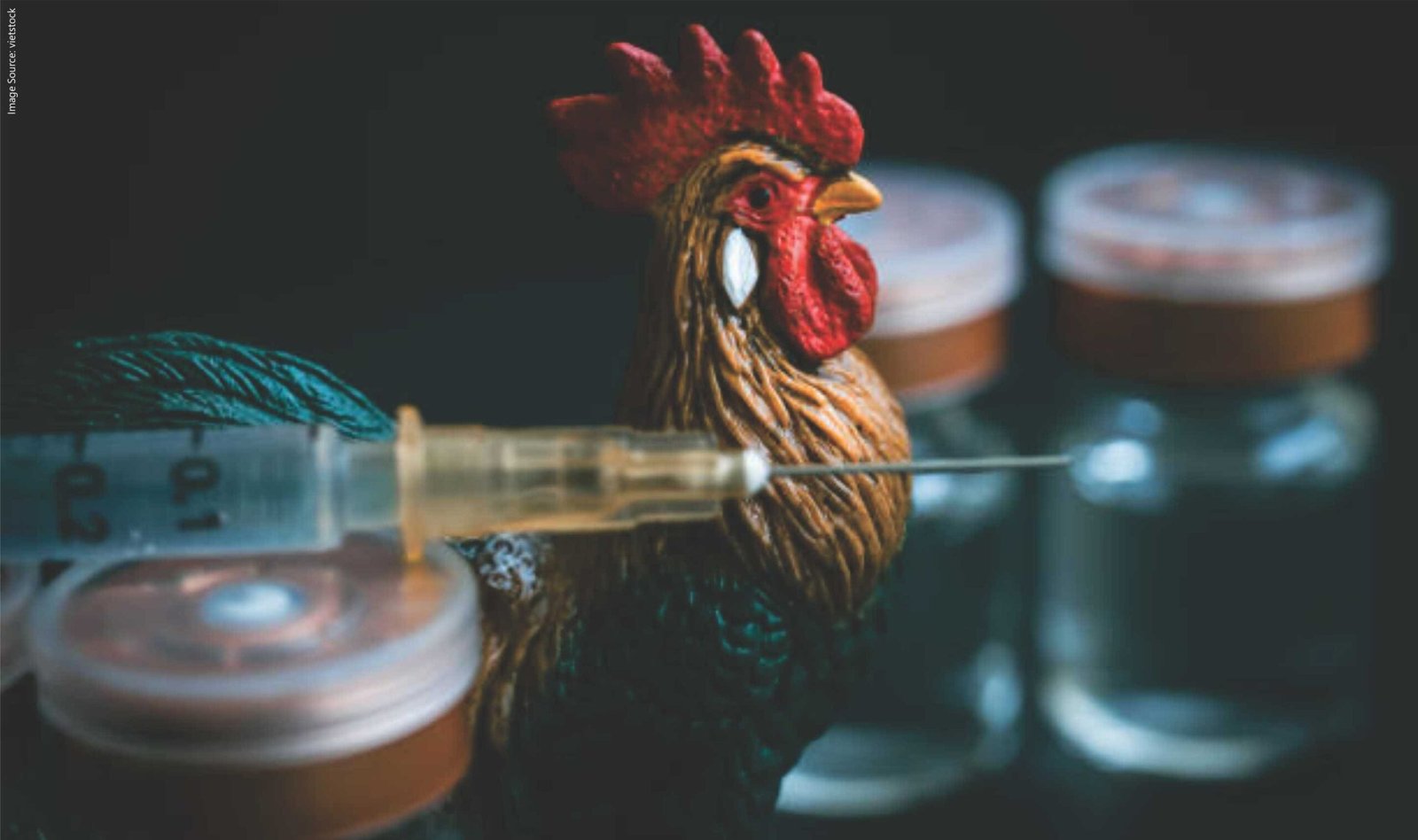
 The Department of Animal Husbandry & Dairying (DAHD), Government of India, has announced a significant policy advancement by establishing a structured regulatory pathway for the import, evaluation, and potential use of Highly Pathogenic Avian Influenza (HPAI) vaccines in India’s poultry sector.
This initiative marks a major milestone in strengthening India’s animal health preparedness and reflects a science-driven approach to disease prevention and control.
According to Dr. Shirish Nigam, the policy represents a forward-looking framework that balances innovation, biosecurity, and scientific validation while enhancing national readiness against HPAI.
Key Features of the New Regulatory Framework
The structured pathway includes:
- Approval from CDSCO for import of vaccine strains
- Bridging studies using circulating Indian field virus strains
- Evaluation under guidance of the High Security Animal Disease Laboratory (HSADL), Bhopal
- Regulatory review prior to commercialization
- Mandatory surveillance, reporting, and data-sharing requirements post-deployment
The framework ensures that all vaccine candidates undergo rigorous scientific evaluation before being considered for field use.
Strengthening India’s Poultry Health Ecosystem
The policy is expected to:
- Improve preparedness against HPAI outbreaks
- Support poultry farmers in safeguarding flock health
- Strengthen veterinary disease control capabilities
- Enable access to scientifically validated vaccination tools where required
- Encourage participation from both Indian and global animal health companies
Dr. Nigam noted that the initiative reflects a balanced integration of innovation and biosecurity, which is essential for building a resilient poultry health system.
Industry Collaboration and Collective Effort
The development has been supported through sustained engagement by key industry bodies, including:
- INFAH
- Poultry Federation of India (PFI)
- CLFMA of India
- All India Poultry Breeders Association
Dr. Nigam also acknowledged the constructive role of Team INFAH, highlighting its continued technical inputs and policy advocacy in shaping industry perspectives.
He emphasized that the policy outcome reflects effective collaboration between government, industry, and scientific institutions.
Key Clarifications on Implementation
Timeline:
The framework establishes a phased regulatory process. Timelines will depend on completion of import approvals, bridging studies, and regulatory evaluations.
Role of Vaccination:
Vaccination will serve as a complementary tool and not a replacement for biosecurity measures such as surveillance, hygiene, movement control, and good management practices. Where scientifically justified and approved, vaccination can further complement these measures as part of an integrated disease-control strategy.
Efficacy Evaluation:
All vaccine candidates will undergo testing against Indian field strains at designated high-security laboratories, followed by post-introduction monitoring.
Industry Impact:
The policy is expected to promote investment in vaccine R&D and strengthen India’s domestic veterinary biotechnology ecosystem. It will create opportunities for Indian manufacturers, research institutions and high-containment laboratories to work together in generating locally relevant scientific data, thereby enhancing India’s preparedness against emerging animal diseases.
A Step Toward a Resilient Future
Dr. Nigam concluded that this initiative marks an important step toward a science-led, globally aligned, and resilient poultry health system. He emphasized that sustained success will depend on robust implementation, continuous surveillance, and strong collaboration among regulators, academia, and industry stakeholders.
About the Perspective
This statement reflects the professional views of Dr. Shirish Nigam, shared in the context of India’s evolving poultry health and disease preparedness landscape.