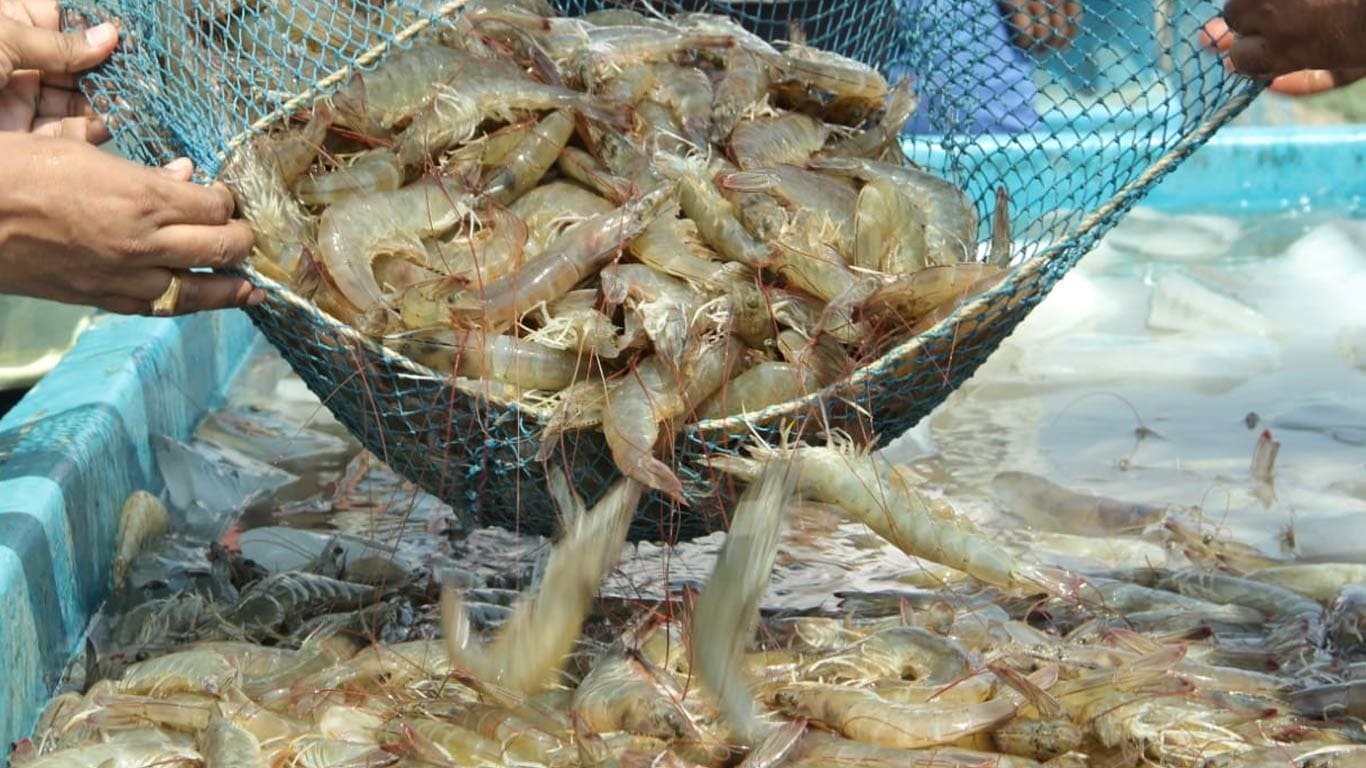
Shrimp farmers across Andhra Pradesh have urged the Central government to retain the existing restrictions on importing specific pathogen-free (SPF) shrimp broodstock from South East Asian countries, expressing concerns over the possible entry of new diseases into India. Their appeal comes amid indications that the Centre may review the ban imposed in 2013 following outbreaks of early mortality syndrome (EMS) and acute hepatopancreatic necrosis syndrome (AHPNS) in several South East Asian nations.
Currently, India imports SPF broodstock mainly from the Hawaii Islands in the United States, and occasionally from Ecuador and Madagascar. All imports undergo stringent disease screening at the Aquatic Quarantine Facility (AQF) in Chennai to ensure they are free from listed pathogens. Farmers argue that allowing imports from countries such as Thailand, China, Vietnam and Malaysia could expose Indian shrimp farming to unknown pathogens that domestic testing systems may not be able to detect in time.
Prakasam District Prawn Farmers Association president D. Gopinadh said the existing restrictions had protected Indian farmers from heavy losses. He warned that testing mechanisms are designed to detect only known diseases and recalled the severe impact of Enterocytozoon hepatopenaei (EHP) when it first emerged. He noted that Andhra Pradesh contributes more than 70% of India’s shrimp production, supporting thousands of farmers and lakhs of people engaged in allied activities such as feed supply, transport and processing. Any major disease outbreak, he said, could severely affect the state’s economy.
However, scientists and fisheries officials have dismissed these concerns. B. Madhusudana Rao, principal scientist at ICAR–Central Institute of Fisheries Technology, Visakhapatnam, said the AQF in Chennai is fully equipped to detect shrimp diseases. Officials added that ICAR–Central Institute of Brackishwater Aquaculture (CIBA), along with several central and state agencies, actively monitors and safeguards the shrimp ecosystem in the country.