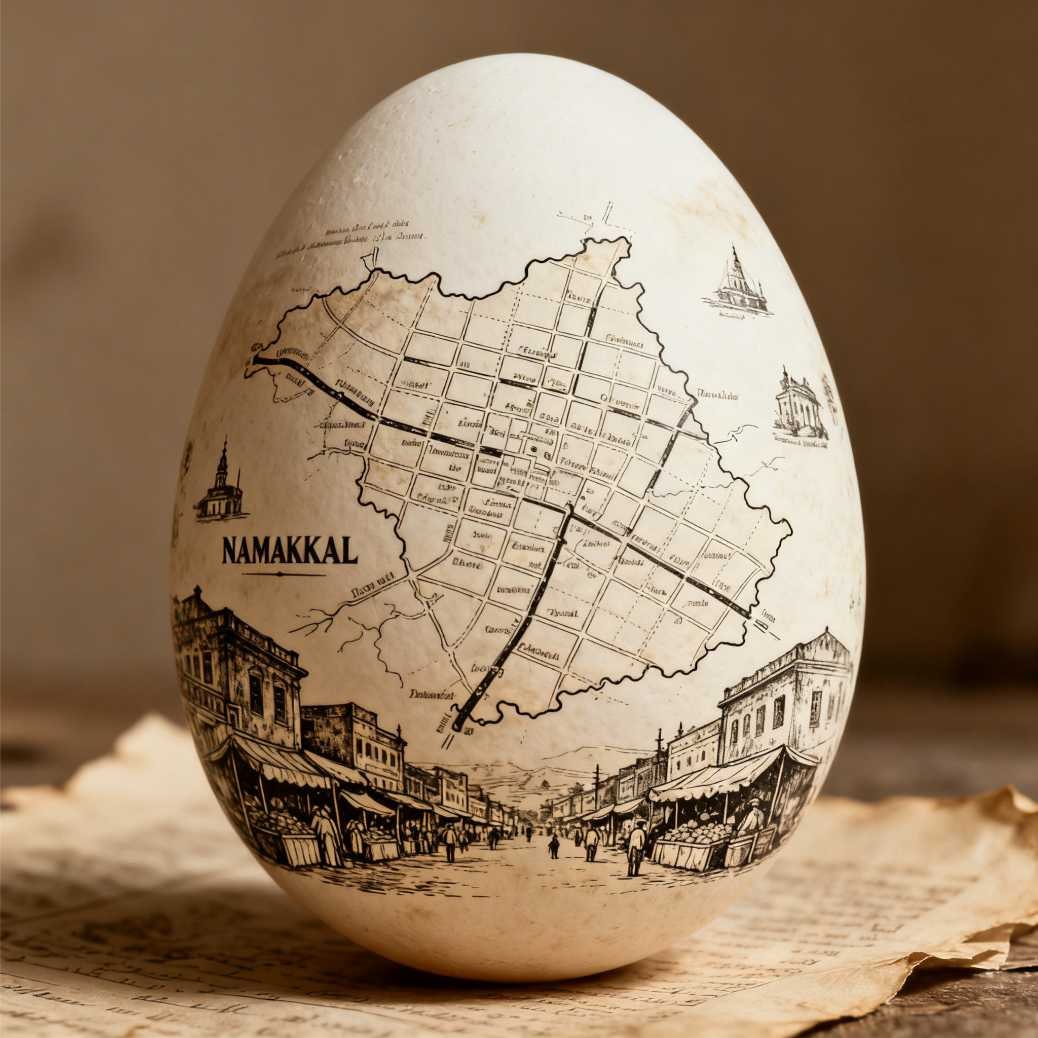
India’s leading poultry hub, Namakkal, is facing a severe market disruption as egg exports to West Asia have stalled, triggering a sharp fall in domestic prices and mounting financial losses for farmers and exporters. Widely known as the “Egg City of India,” Namakkal produces over 6–7 crore eggs daily and plays a critical role in supplying both domestic and international markets.
The region has long depended on exports to stabilise prices, with key destinations including the United Arab Emirates, Qatar, and Oman. However, recent geopolitical tensions linked to the Iran–Israel conflict have disrupted shipping routes, forcing exporters to suspend operations. As a result, the Namakkal poultry cluster is estimated to be incurring losses of nearly INR 5 crore per day.
With export channels blocked, eggs originally intended for overseas markets are now flooding the domestic supply chain. Farms and storage facilities are struggling to manage the sudden surplus, leading to a sharp correction in prices. The National Egg Coordination Committee has reduced benchmark procurement prices multiple times in response to the oversupply. Over a short period, prices in Namakkal have dropped from around INR 5.40 per egg to approximately INR 4.30 per egg, with some farmers reporting even lower realizations in certain markets.
The crisis is further compounded by weak seasonal demand. Egg consumption typically declines during the summer months, and this trend is amplified during periods such as Ramzan and Lent, when dietary patterns shift across several regions. The combined effect of reduced demand and excess supply has intensified downward pressure on prices, significantly affecting farm profitability.
In response, industry stakeholders are calling for immediate government support. Key recommendations include facilitating access to alternative export markets, providing logistical assistance, and introducing measures to absorb surplus production within the domestic system. Without timely intervention, prolonged low prices could threaten the financial sustainability of poultry farms, particularly smaller and mid-sized operations.
Despite the current challenges, Namakkal remains a cornerstone of India’s poultry ecosystem, with over 1,000 farms supported by a well-developed network of hatcheries, feed mills, and exporters. While price recovery is expected once exports resume and demand stabilise, the ongoing disruption highlights the sector’s vulnerability to external shocks and the need for more resilient market strategies.