The Myth vs Reality
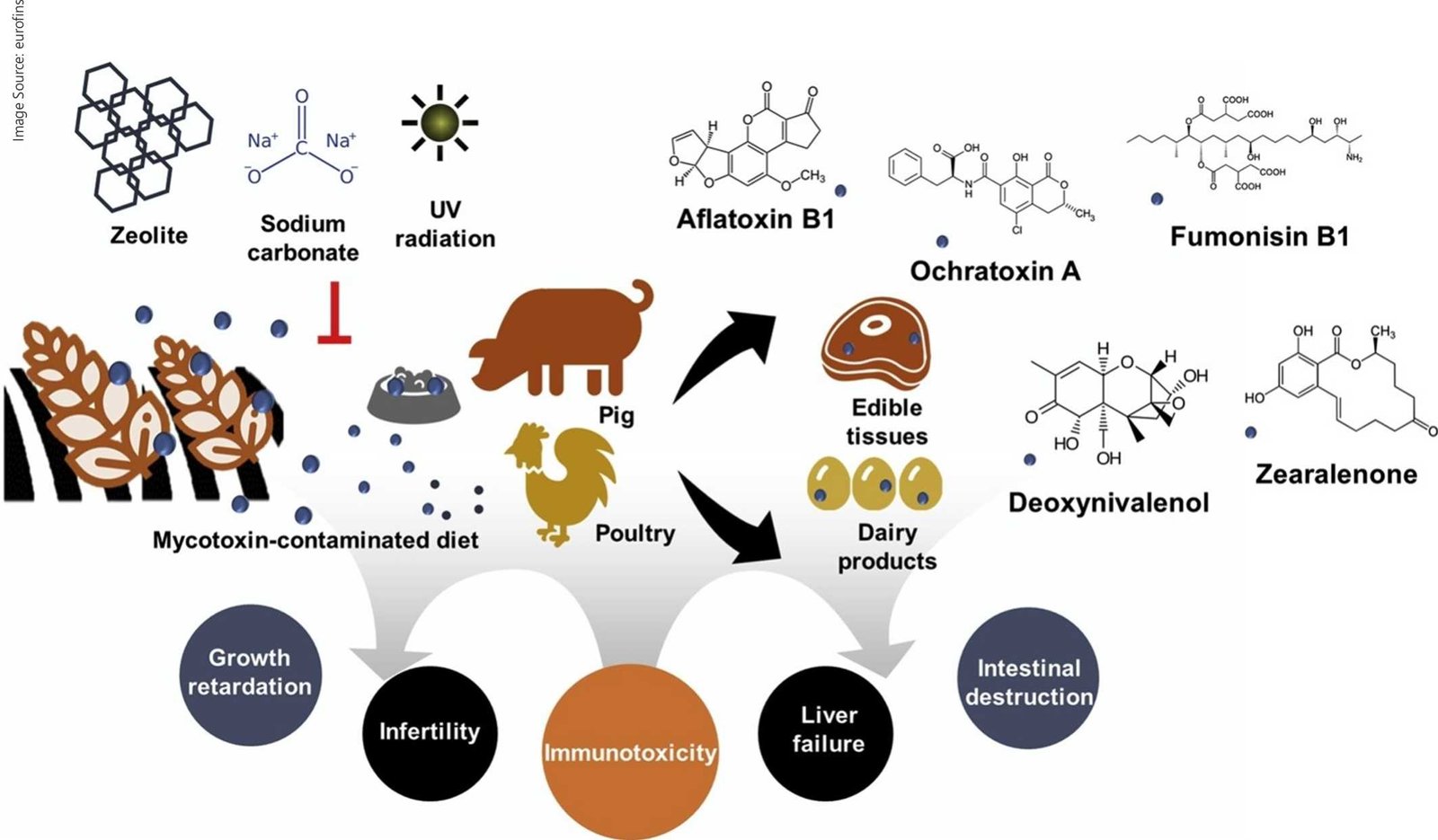
One of the most common misconceptions in raw material quality assessment is the belief that visual inspection alone can identify contaminated grain. In reality, mycotoxins are invisible chemical compounds produced by fungi and do not alter the appearance, smell, or texture of ingredients. A batch may appear clean and intact while still carrying dangerously high toxin loads that can impair animal health and performance.
This is why analytical testing—not visual inspection—is the only reliable method to detect and quantify mycotoxins. Relying solely on visual checks creates a false sense of security and exposes feed mills and farms to significant, often unnoticed, economic and biological risks. Mycotoxin management must therefore be science-driven, supported by validated testing methods and routine monitoring across the supply chain.
Key Industry Snapshot (2025 Survey Highlights)
- 97% of samples contaminated
- 77% above performance risk thresholds
- 73% samples with 3 or more mycotoxins
- 14,352 analyses conducted
These numbers clearly establish that mycotoxin contamination is not an exception—it is the norm.
The Scale of the Problem
Cargill India’s extensive survey, covering diverse raw materials and geographies, provides one of the most comprehensive datasets in the industry. The findings highlight a deeply concerning reality: contamination is widespread, persistent, and often present at levels that directly impact poultry performance.
More importantly, contamination is no longer a single-toxin issue.
The Multi-Toxin Reality
A common industry assumption is that contamination occurs in isolation. However, the survey data reveals a far more complex picture:
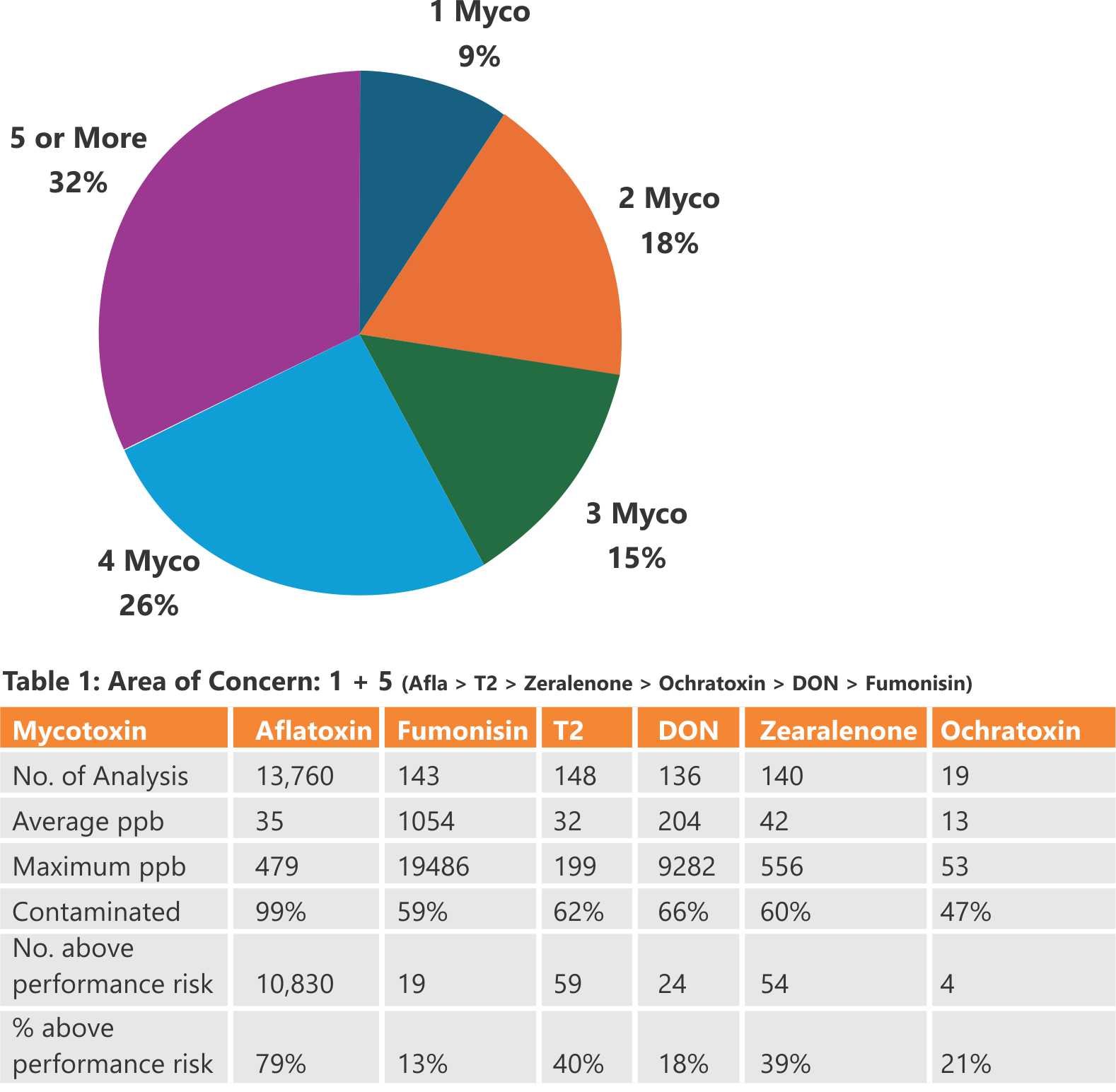
- Only 9% of samples contained a single mycotoxin
- 18% contained two toxins
- A significant 73% contained three or more toxins
Specifically, 15% of samples contained three toxins, 26% contained four, and a significant 32% contained five or more.
This widespread co-occurrence creates additive and often synergistic effects, where the combined impact of toxins is significantly greater than individual exposure.
Even when individual toxin levels appear “safe,” their combined effect can lead to:
- Immune suppression
- Poor gut health
- Reduced feed efficiency
- Lower growth and egg production
 India’s tropical climate, combined with moisture stress, storage challenges, and raw material variability, creates ideal conditions for multi-toxin contamination.
The “1 + 5” Risk Framework
A key insight from the survey is the identification of a “1 + 5 Area of Concern”—the six most impactful mycotoxins affecting poultry production in India.
At the top is Aflatoxin, the most dominant and performance-limiting toxin, driven by tropical climate conditions and high prevalence across raw materials.
It is followed by five additional high-impact toxins:
- T2 toxin – damages gut lining and suppresses immunity
- Zearalenone – disrupts reproductive performance
- Ochratoxin – affects kidney function and immunity
- DON (Vomitoxin) – reduces feed intake and gut health
- Fumonisin – amplifies the effects of other toxins in multi-toxin scenarios
Together, this group represents the core risk cluster requiring continuous monitoring and targeted mitigation.
Aflatoxin: The Dominant Threat
Among all toxins, Aflatoxin stands out as the most critical risk factor in India’s feed ecosystem.
- 13,760 analyses conducted
- 99% contamination rate
- Average: 35 ppb | Maximum: 479 ppb
- 79% samples above risk thresholds
This clearly indicates that Aflatoxin is not just present—it is present at levels capable of significantly reducing productivity and compromising flock health.
Beyond Aflatoxin: The Hidden Contributors
While Aflatoxin dominates, other mycotoxins collectively pose substantial risks:
Fumonisin
Detected in 59% of samples, with strong synergistic effects when combined with DON and Aflatoxin.
T2 Toxin
Highly potent, with 40% of samples exceeding risk thresholds despite relatively low concentrations.
DON (Vomitoxin)
Widely prevalent (66%), with significant impact on appetite and gut integrity.
Zearalenone
Detected in 60% of samples; a major concern for reproductive performance.
Ochratoxin
Lower prevalence (47%) but high impact on kidney function and immunity.
Ingredient-Wise Risk Patterns
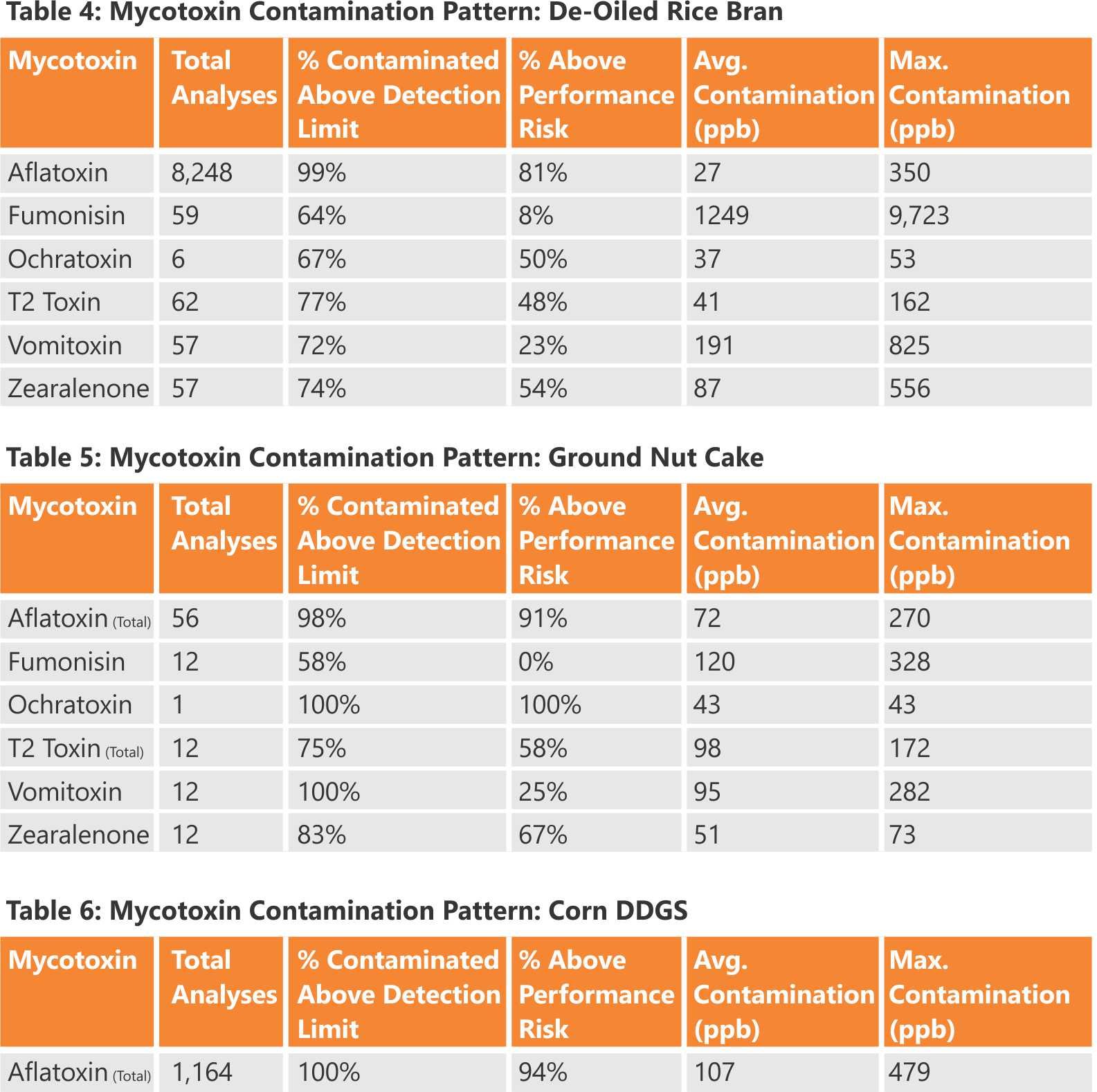
Mycotoxin contamination in India is both multi-toxin and ingredient-dependent.
High-Risk Ingredients
- Corn and Corn DDGS
- Groundnut cake/meal
- De-oiled rice bran
These ingredients show high contamination levels, particularly for Aflatoxin, Fumonisin, and Zearalenone.
Relatively Lower-Risk Ingredients
- Soybean meal
- Wheat and wheat bran
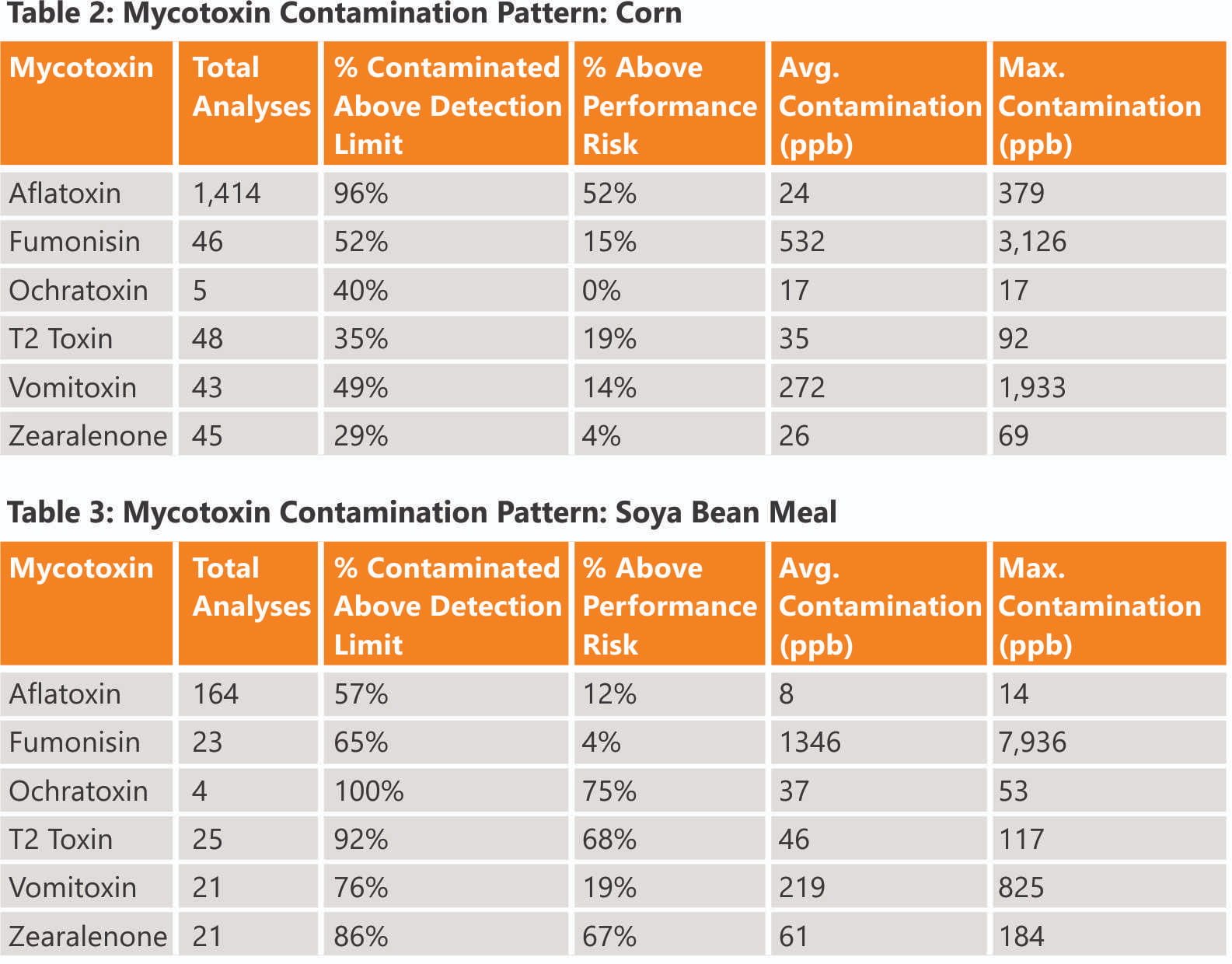
 However, even these are not risk-free and may show spikes in DON and T2 toxin.
Key Takeaway
No ingredient is uniformly “safe,” and contamination patterns vary based on season, sourcing, and storage.
Expert Insight: Industry Perspective
To validate and expand on these findings, Think Grain Think Feed interacted with Dr. Nidhi Manwat.
She notes that mycotoxin pressure in 2025 is significantly higher than last year, with strong mid-year spikes driven by monsoon-linked moisture stress. Maize and cereal supply chains are particularly affected, making the May–July period critical for monitoring and control.
Despite representing only a portion of the industry, she emphasizes that the survey’s scale and consistency make it a reliable directional indicator, reflecting broader risk patterns across India.
Testing Technologies: From Lab to Field
Effective mycotoxin management relies on a combination of technologies:
Gold Standard Methods
- HPLC, LC–MS/MS
- Highly accurate and can detect multi-toxin
- Slower and resource-intensive
Rapid Testing Methods
- ELISA (lab-based screening)
- Lateral Flow Tests (on-site, quick results)
These enable real-time decision-making, particularly at procurement and intake stages.
Emerging biosensor-based technologies are expected to further enhance speed and precision in detection.
From Risk to ROI
Mycotoxin management is not just a cost—it is a high-return investment.
The cost of inaction includes:
- Reduced productivity
- Poor feed conversion
- Increased mortality
- Rejected consignments
While 100% risk elimination is not realistic, the goal is effective risk reduction, ensuring toxin levels remain below performance-impacting thresholds.
Practical Strategies for Risk Mitigation
Given India’s climate, the focus must shift to control, not avoidance:
- Maintain optimal storage conditions (moisture, aeration, hygiene)
- Implement strict FIFO practices
- Use rapid testing at procurement points
- Adopt seasonal risk-based sourcing
- Avoid mixing high-risk contaminated lots
- Strengthen supplier quality programs
The Role of Digital Intelligence
Digital tools and predictive analytics are emerging as powerful enablers in mycotoxin management.
They help:
- Predict weather-driven contamination risks
- Optimize sampling strategies
- Enable faster, data-driven decisions
While they cannot eliminate risk, they significantly improve preparedness and response.
Conclusion: A Shift from Perception to Precision
The mycotoxin challenge in India is far more complex than traditionally perceived. It is highly prevalent, multi-toxin in nature, and deeply influenced by climate and supply chain variability.
The dominance of Aflatoxin, combined with widespread co-occurrence of other toxins, makes it clear that mycotoxin risk is a multi-dimensional issue—not a single-toxin problem.
As the Cargill Mycotoxin Survey demonstrates, nearly every feed ingredient carries some level of risk—often exceeding performance thresholds.
by Dr. Nidhi Madnawat, Cargill