A Conversation with Amit Mittan, DeHeus, and Dr. Avinesh Sharma, Sunjin
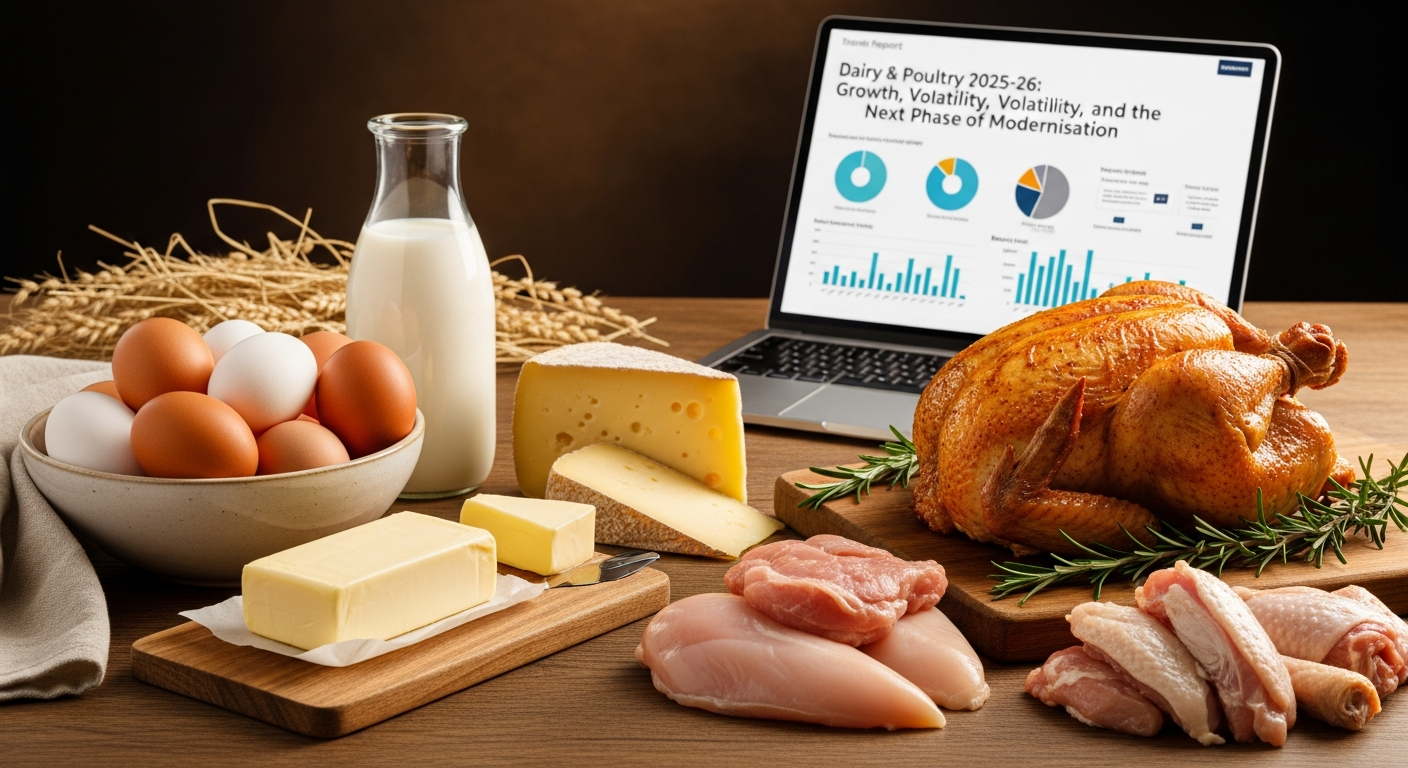
India’s livestock sector is growing fast, but rising feed costs, climate stress, disease risks, and structural gaps continue to challenge the industry. Two international feed leaders with production facilities in Punjab offer their perspective. DeHeus, a Dutch company, entered India in 2017 and recently launched a greenfield factory with an investment of USD 17 million for poultry and livestock feed. Sunjin, a South Korean firm, is investing INR 120 crore to set up a feed plant in Rajpura with an annual capacity of 200,000–350,000 MT. Mr. Amit Mittan and Dr. Avinesh Sharma discuss the current state and future of dairy and poultry in India.
From a market and strategy perspective, what is fundamentally changing the playbook for dairy and poultry in 2025–26?
Amit Mittan:
What’s reshaping the playbook in both dairy and poultry is the farmer’s growing focus on feed efficiency and risk management. Feed remains the single largest controllable cost in animal production, so today the feed narrative in India is essentially a combination of raw-material dynamics and quality compliance. Farmers are no longer asking only, “What will maximize output?” They are now asking, “What will stabilize margins?”
In Dairy: The Shift from Quantity to Quality
In dairy, we are witnessing a clear transition from volume-driven production to a quality-linked payment ecosystem. SNF- and fat-based procurement pricing, expansion of organized milk collection, and product diversification are pushing farmers toward balanced rations and performance minerals, especially in high-output belts.
The implementation phase of White Revolution 2.0 (2024–25 to 2028–29) is significant. Strengthening cooperatives and organized procurement systems typically improves adoption of scientific feeding, mineral supplementation, and standardized feed quality systems. Organized systems reward quality and quality begins with nutrition.
However, a large share of milk still flows through mixed organized and unorganized channels, which directly affects how consistently farmers access extension services, balanced feed, and veterinary support.
In Poultry: Commercial Discipline and Volatility Management
The poultry sector is far more commercially structured. Data from the Department of Animal Husbandry and Dairying (BAHS) highlights the dominant contribution of commercial systems, while backyard production remains meaningful but secondary.
Commercialisation has deepened integration models — feed, health, and procurement are increasingly managed as a single ecosystem. However, volatility in realizations and periodic disease shocks keep integrators and farmers extremely focused on least-cost formulation and quality assurance. Margin discipline is immediate and unforgiving, accelerating the shift toward compound feed, tighter formulation control, and structured testing systems.
Dr. Avinesh Sharma (Dairy Sector):
India remains the world’s largest milk producer, yet average milk yields per animal remain below potential in many regions. The gap stems from uneven adoption of scientific breeding, balanced feeding, and structured herd management.
Fodder continues to be a structural bottleneck. India faces a deficit of nearly 25–30% in green fodder and 15–20% in dry fodder. Rising raw material prices have increased milk production costs at the farm level. While the dairy feed industry is emerging with more nutritive and scientifically formulated products, feed alone cannot ensure a healthy herd. Farm management, disease control, and veterinary support remain equally vital.
Cold-chain gaps and inconsistent milk quality further limit price realization. Without strong veterinary outreach and professional nutrition advisory at the grassroots level, sustained improvement remains difficult.
What are the core growth drivers powering dairy and poultry in 2025–26?
Amit Mittan:
Growth today is demand-led but efficiency-enabled.
- Consumption Patterns: There is sustained growth in demand for affordable animal protein, particularly eggs and chicken, which remain the most accessible protein sources for a large population. Dairy consumption is moving up the value chain, with stronger demand for curd, cheese, whey-based beverages, and other processed products. This shift toward value-added dairy strengthens organized procurement systems and supports higher-quality feeding practices at the farm level.
- Productivity Upgrades: Genetics, housing, management systems, and scientifically balanced nutrition are helping farmers extract more output per animal rather than merely expanding herd size. The focus is increasingly on performance per unit of feed.
- Policy & Institutional Support: Expansion of cooperative networks and private procurement infrastructure has strengthened milk collection systems. Organized procurement improves quality-linked payments, incentivizing adoption of balanced rations and mineral supplementation.
- Raw-Material Availability: Final crop estimates for 2024–25 placed maize production at 434.09 LMT and soybean at 152.68 LMT. This improved formulation flexibility and feed economics, though price volatility remains a structural feature.
In summary, growth is being driven by rising protein consumption, supported by productivity gains, policy backing, and relatively improved ingredient availability — all managed under constant price and supply volatility.
How is the focus on precision nutrition and scientific feeding shaping productivity and growth in India’s dairy sector?
Dr. Avinesh Sharma:
At the macro level, rising domestic and global consumption of dairy products remains the primary engine.
Precision nutrition has become central, with feed formulations increasingly emphasizing digestibility, intake, palatability, and nutrient efficiency. Instead of expanding herd sizes, the focus has shifted to higher milk yields and better reproductive performance from existing animals.
Scientific feeding, when implemented correctly, can increase milk yields by:
- 15–20% in crossbred cows
- 8–10% in indigenous breeds
The growing use of feed additives, including trace minerals, yeast cultures, enzymes, and buffers, has improved feed efficiency and overall animal performance. The industry is moving toward:
- Precision and specialized nutrition
- Technology-enabled formulation
- Higher-quality compounded feed
- Expansion into under-served regions
Policy support has reinforced this momentum. Initiatives such as Rashtriya Gokul Mission, Kisan Credit Card, and National Programme for Dairy Development have strengthened genetic improvement, farm modernization, and access to finance. Institutional backing from NDDB and NABARD continues to promote scientific feeding and dairy entrepreneurship.
Which regions offer the highest growth potential?
Amit Mittan:
India is a clustered feed market, not a single uniform one. Geography is critical to understanding feed demand.
Dairy: North, West, and Central Strength
In 2024–25, the top milk-producing states were:
- Uttar Pradesh – 15.66%
- Rajasthan – 14.82%
- Madhya Pradesh – 9.12%
- Gujarat – 7.78%
- Maharashtra – 6.71%
Together, they contribute ~54% of national milk output. Peri-urban milk sheds and organized procurement hubs in these regions drive demand for:
- Compound cattle feed
- Bypass protein supplements
- Mineral mixtures
- Structured silage solutions
Poultry: A Southern Production Corridor
Egg production remains South-led, with leading states in 2024–25:
- Andhra Pradesh – 18.37%
- Tamil Nadu – 15.63%
- Telangana – 12.98%
- West Bengal – 10.72%
- Karnataka – 6.67%
This represents >64% of national egg production, giving feed businesses a “southern corridor” throughput advantage. Integration and infrastructure improvements in Eastern and Central India are creating additional growth headroom.
Highest Growth Potential
- East & Central India – Rising protein consumption, expanding cold chain and processing infrastructure, and new poultry integrations create strong momentum. Organized dairy procurement is also expanding, improving compound feed adoption.
- Peri-Urban Milk Sheds in North & West India – Strengthened procurement networks and quality-linked payments accelerate adoption of premium cattle feed, mineral supplements, and performance nutrition.
Dr. Avinesh Sharma:
- Uttar Pradesh – immense untapped potential due to large cattle population
- Gujarat & Rajasthan – high milk yields and organized markets support feed volume growth
- Andhra Pradesh, Karnataka & Tamil Nadu – rapidly emerging as high-potential markets
- Punjab & Haryana – organized systems and high-yielding herds drive demand for premium feed
Under-served regions like Uttar Pradesh, Rajasthan, Madhya Pradesh, Gujarat, and the North Eastern states present strong future growth opportunities.
Why is Punjab often cited as a dairy feed benchmark?
Dr. Avinesh Sharma:
Punjab is widely regarded as a benchmark because it combines strong farm fundamentals with a structured industry ecosystem.
Key strengths include:
- Strong dairy consumption culture and commercial mindset
- Dense, productive dairy cattle population
- High adoption of crossbred and HF animals
- Systematic farm management practices
- Advanced fodder planning, particularly high-quality maize silage
- Proactive veterinary services and vaccination programs
For over two decades, global and national feed manufacturers have invested in Punjab, supported by scientists, veterinarians, nutritionists, cooperatives, and progressive farmers.
A recent example is the INR 120-crore Sunjin investment in Rajpura, establishing a feed plant with 200,000–350,000 MT annual capacity. Organized procurement, scientific feeding awareness, fodder availability, and policy support form a virtuous cycle: higher productivity drives feed adoption, which sustains commercial investment. Punjab is well-positioned to maintain its leadership for the next decade.
What can be replicated from the Punjab model?
Dr. Avinesh Sharma:
Key practices that can be adapted elsewhere include:
- Near 100% artificial insemination coverage
- High-quality compound feed at affordable prices
- Systematic fodder planning and silage preparation
- Proactive veterinary services and vaccination programs
- Strong cooperative awareness around balanced nutrition
Closing Thought
India’s dairy and poultry sectors are expanding — but the next phase will belong to those who combine productivity, precision nutrition, structured procurement, and disciplined risk management.
The transformation has begun, but the scale of opportunity ahead is far greater than what has been achieved so far.