India’s aquaculture sector is gaining strong momentum, driven by innovative use of underutilised land and expanding global market opportunities. Recent developments highlight how inland shrimp farming and export diversification are reshaping the country’s seafood landscape.
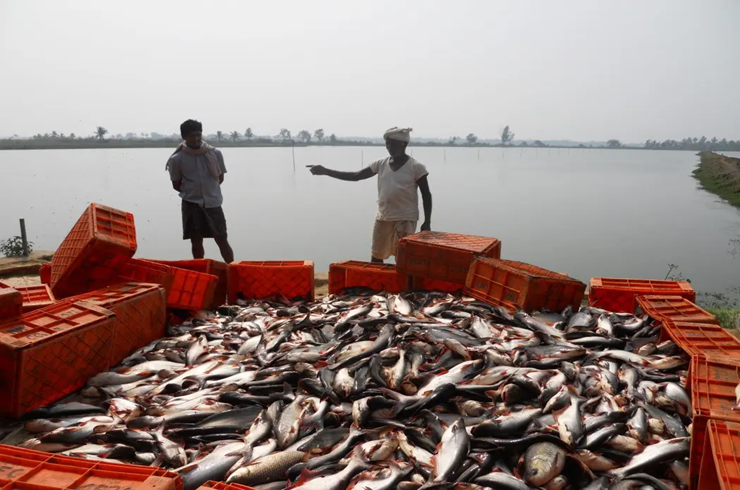
In Haryana, particularly across the Gurugram–Faridabad–Nuh belt, saline and waterlogged lands are being successfully converted into productive aquaculture zones under the state’s “Blue Revolution” strategy. Farmers are increasingly adopting the cultivation of Litopenaeus vannamei, a species well-suited to brackish water conditions. This shift has enabled the transformation of previously unproductive land into high-value shrimp farms, significantly improving farm incomes.
The growth trajectory is notable. Shrimp production in Haryana rose from around 11,000 metric tonnes in 2023–24 to nearly 14,966 metric tonnes in 2024–25, marking an increase of about 36%. With an estimated 58,000 hectares of saline-affected land available for aquaculture, the scope for further expansion remains substantial. Farmers adopting intensive practices are achieving yields of 11–12 tonnes per hectare, with net returns ranging between INR 8–10 lakh per hectare—far exceeding conventional crop earnings on such land.
This expansion is supported by policy initiatives such as Pradhan Mantri Matsya Sampada Yojana, along with the adoption of advanced systems like biofloc and recirculatory aquaculture. Additionally, proximity to major logistics hubs, including Delhi’s export infrastructure, is strengthening the farm-to-market ecosystem through improved cold-chain and processing facilities.
At the national level, India’s shrimp export sector is also witnessing a strong recovery. Export revenues have crossed INR 50,000 crore, with projected growth of 13–15%, driven largely by improved realizations due to currency depreciation. While export volumes are growing at a moderate pace of 6–7%, the industry is successfully offsetting reduced shipments to the US by expanding into alternative markets. Countries such as Vietnam, the European Union, and China have recorded strong double-digit growth, supporting overall export performance.
Looking ahead, export volumes are expected to grow further, supported by rising aquaculture production and improving global demand. Stable operating margins and strong financial fundamentals indicate resilience within the sector.
Together, these trends underline the growing importance of aquaculture as a high-potential segment within India’s agri-economy—offering scalable income opportunities, efficient land use, and a strong export-driven growth pathway.