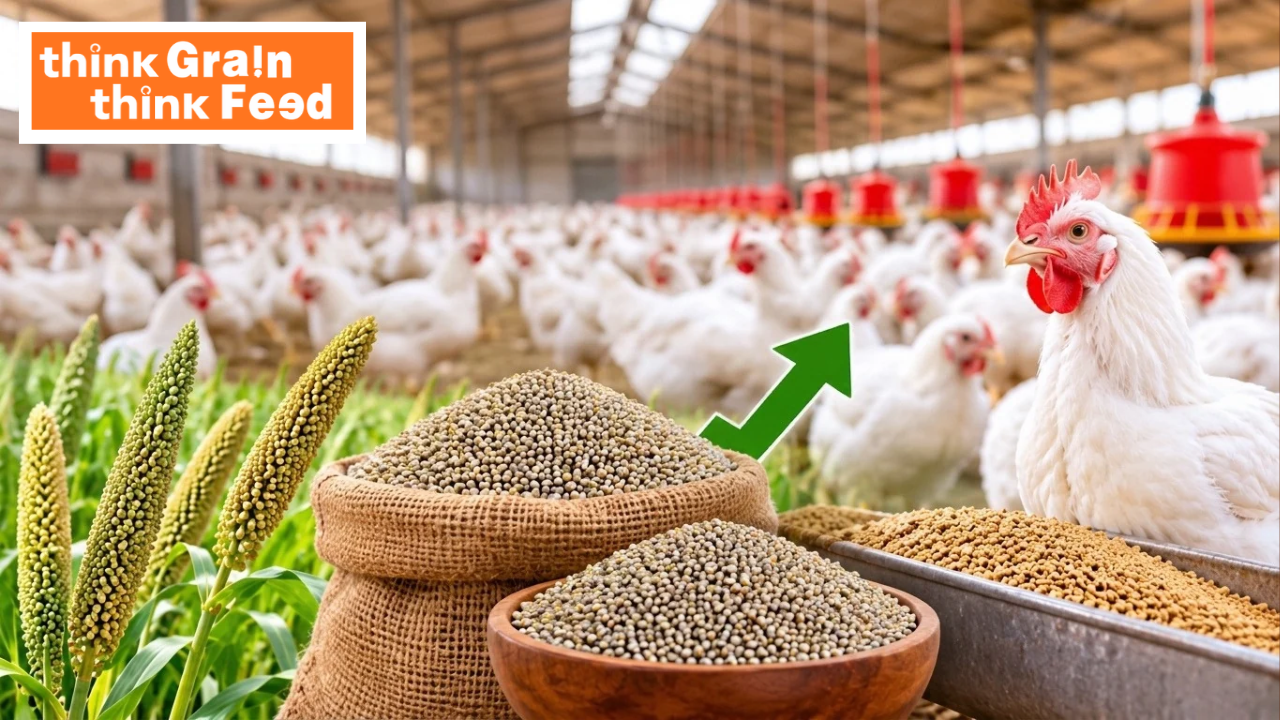
Indian bajra prices have strengthened modestly, with gains of around ₹25 per quintal reported in selected mandis, supported by increased procurement from poultry feed manufacturers. Buyers are replenishing inventories to meet processing requirements, while sellers are maintaining firm offers amid steady demand.
The rising cost of maize and other feed ingredients has renewed interest in bajra as an alternative energy source in poultry rations. Its price competitiveness is encouraging feed manufacturers to diversify raw-material sourcing, although inclusion levels depend on nutritional requirements and formulation economics.
International Market Trends
International millet quotations from Ukraine and China remain largely stable to slightly higher. In Ukraine, yellow hulled millet seed quotations at Odesa (FOB) increased from €0.307 to €0.318, while other conventional and organic grades remained largely unchanged. In China, organic yellow millet kernels (FOB Beijing) were quoted at €0.96, while conventional kernels stood at €0.88, indicating a mildly firm market.
Supply and Demand
Domestic bajra arrivals remain normal for the season, but stronger procurement from poultry feed manufacturers is helping absorb available supplies. Elevated prices of maize and oilseed meals, alongside concerns over feed availability, are encouraging greater consideration of alternative grains. Globally, supplies from Black Sea origins and China remain accessible, limiting the possibility of a sharp price escalation.
Market Fundamentals and Outlook
The current firmness in Indian bajra is primarily demand-driven rather than a result of acute supply shortages. Weather-related uncertainties and uneven monsoon conditions in some parts of India remain factors to watch, although available supplies are currently adequate to meet nearby requirements.
In the short term, the domestic market is expected to remain cautiously firm, supported by poultry feed demand and steady seller offers. However, increased arrivals from the new crop could limit further gains. International quotations are likely to remain broadly stable, with a slightly positive undertone.
Feed manufacturers may consider staggered procurement while comparing bajra’s landed cost and nutritional value against maize and other energy ingredients.
Source: CMB News