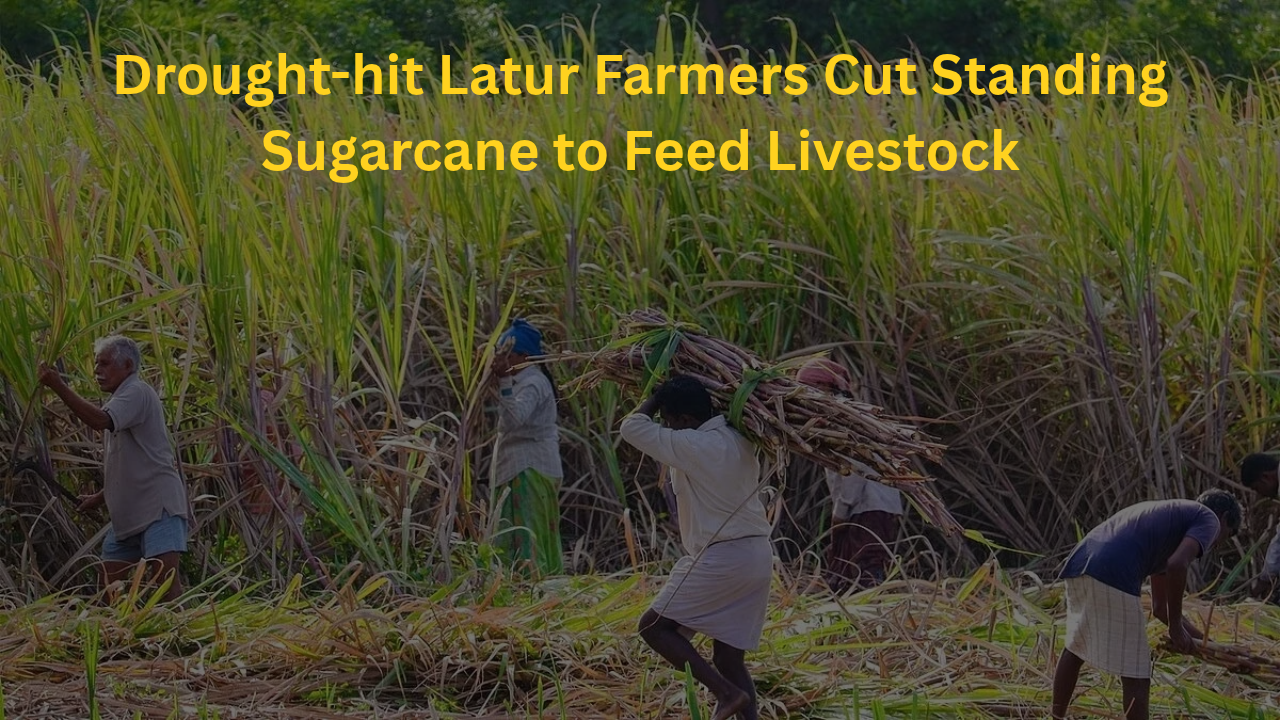
Farmers in drought-hit Latur district of Maharashtra are cutting standing sugarcane crops to feed their livestock as poor rainfall and depleted fodder reserves intensify the shortage of animal feed. The move is forcing farmers to sacrifice potential crop earnings to protect their cattle.
With grazing lands drying up and green fodder becoming scarce, farmers are turning to standing sugarcane as an emergency feed source. The crisis has also affected milk production, adding pressure to already strained farm incomes.
Narayan Gude, a farmer from Kavha village who owns seven buffaloes, two cows and several calves, said his herd’s daily milk output had fallen to just 10–12 litres. He requires nearly half a tonne of sugarcane each day to feed the animals. His soybean crop has also suffered extensive damage, with yields expected to fall below half a quintal per acre. He is now feeding chopped sugarcane mixed with soybean residue to his livestock.
The Maharashtra government declared drought in 265 of the state’s 358 talukas in September 2026 and announced relief measures, including crop-loan restructuring, land-revenue concessions and power-bill subsidies.
The fodder crisis has prompted farmers to seek government intervention, including the establishment of fodder camps. For livestock-dependent households in Marathwada, declining milk yields and the diversion of standing crops into feed are creating losses on both the crop and dairy fronts.