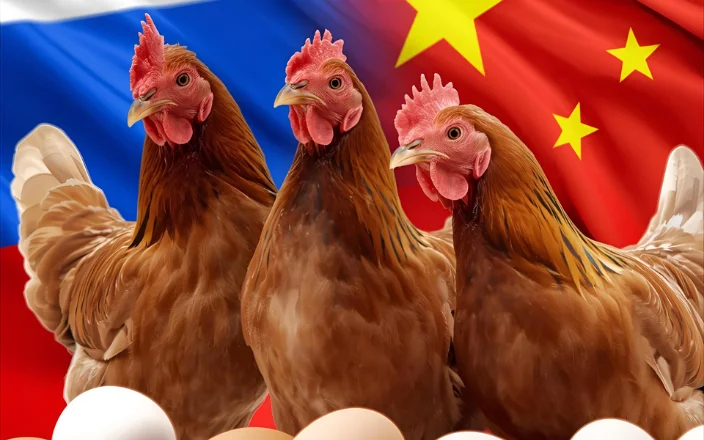
China’s rapid growth in poultry production is reshaping trade flows across Asia, reinforcing poultry’s position as the fastest-growing segment in the global animal protein market. According to the latest report by the US Department of Agriculture, China’s poultry output is projected to reach 17.3 million tonnes in 2026, surpassing Brazil and moving closer to the United States.
This surge is driven by expanding integrated operations, higher grandparent stock availability, and government support. However, relatively low domestic consumption—around 11 kg per capita compared to significantly higher pork intake—has led China to channel surplus production into export markets.
Exports are expected to reach 1.4 million tonnes in 2026, nearly tripling since 2020. China became a net exporter in 2024, with exports projected to account for about 8% of total production. While traditional markets such as Japan and Hong Kong remain relevant, their share has declined sharply, giving way to emerging destinations.
Countries like the Philippines, Cambodia, and Malaysia are driving demand growth, alongside new markets in Central and West Asia. These regions are increasingly sourcing affordable poultry to meet rising protein needs.
China’s export mix is also evolving, with frozen cuts and whole birds now dominating shipments, reflecting demand from price-sensitive economies. Despite restricted access to premium markets such as the EU and UK, China is intensifying competition with established exporters like Brazil and Thailand in developing markets.
With Asia emerging as a key consumption hub, China’s expanding supply is expected to further influence global poultry trade patterns, making the region central to future growth in the protein economy.