Abstract
India’s poultry sector is a critical component of national food security, rural livelihoods, and agribusiness growth. Constrained by volatile feed costs, fragmented farm practices, and recurrent disease outbreaks, the sector requires a coordinated strategy that reduces production cost while improving productivity and biosecurity. This article proposes a comprehensive, evidence-guided strategic framework that integrates (1) cost-effective, nutritionally balanced feed formulation, using alternative raw materials and precision nutrition; (2) integrated farm practices spanning housing, environment control, waste and water management, and value chain integration; and (3) robust disease prevention, surveillance and response systems incorporating vaccination, bio surveillance, and antimicrobial stewardship. The framework is operationalized through policy instruments, capacity development, public–private partnerships, and market-based incentives. Implementation at scale will require coordinated efforts among central and state governments, research institutions, industry, and producer collectives. The proposed framework aims to increase flock productivity, reduce feed costs as a proportion of production cost, lower disease incidence, and improve environmental and economic sustainability of Indian poultry production.
- Introduction
Poultry production in India has witnessed rapid expansion in recent decades, driven by rising incomes, changing diets, and urbanization. Despite growth, the sector faces persistent structural challenges: feeds constitute 60–70% of production costs, raw material price volatility (notably maize and soybean) undermines margins, farm practices are often heterogeneous and suboptimal, and infectious diseases (including avian influenza, ND, and bacterial enteritis) periodically cause substantial losses. In addition, concerns about environmental impacts, antimicrobial resistance (AMR), and welfare standards influence market access, especially for export and organized retail.
A systems approach—linking feed science, on-farm management, veterinary public health and value chain organization—is necessary to achieve sustainable intensification. This article outlines a strategic framework that integrates cost-effective feed formulation, integrated farm practices, and disease control measures tailored to India’s agro-ecological and socio-economic context. The framework prioritizes measurable performance indicators, scalability, and policy levers.
- Objectives and guiding principles
2.1 Primary objectives
- Reduce feed cost per kg live weight/egg produced by 15–30% within 3–5 years through alternative ingredients, precision nutrition and supply-chain efficiencies.
- Improve flock productivity metrics (e.g., feed conversion ratio (FCR), average daily gain (ADG), egg mass per hen) by 10–20% via integrated farm management.
- Reduce disease incidence and mortality by 40–60% through strengthened preventive measures and rapid response systems.
- Minimize antimicrobial usage growth and support AMR mitigation.
2.2 Guiding principles
- Contextualization: Solutions must be regionally adapted (feed resource base, climate, farm scale).
- Cost-effectiveness: Prioritize interventions with high benefit-cost ratios.
- Sustainability: Environmental and social sustainability embedded (waste recycling, resource efficiency, worker safety).
- Evidence-based: Use research, pilot trials and monitoring to iterate interventions.
- Inclusiveness: Smallholders and contract farmers included via cooperatives and aggregation models.
- Regulatory alignment: Align with national animal health, feed, and environmental regulations.
- Component A — Cost-effective feed formulations
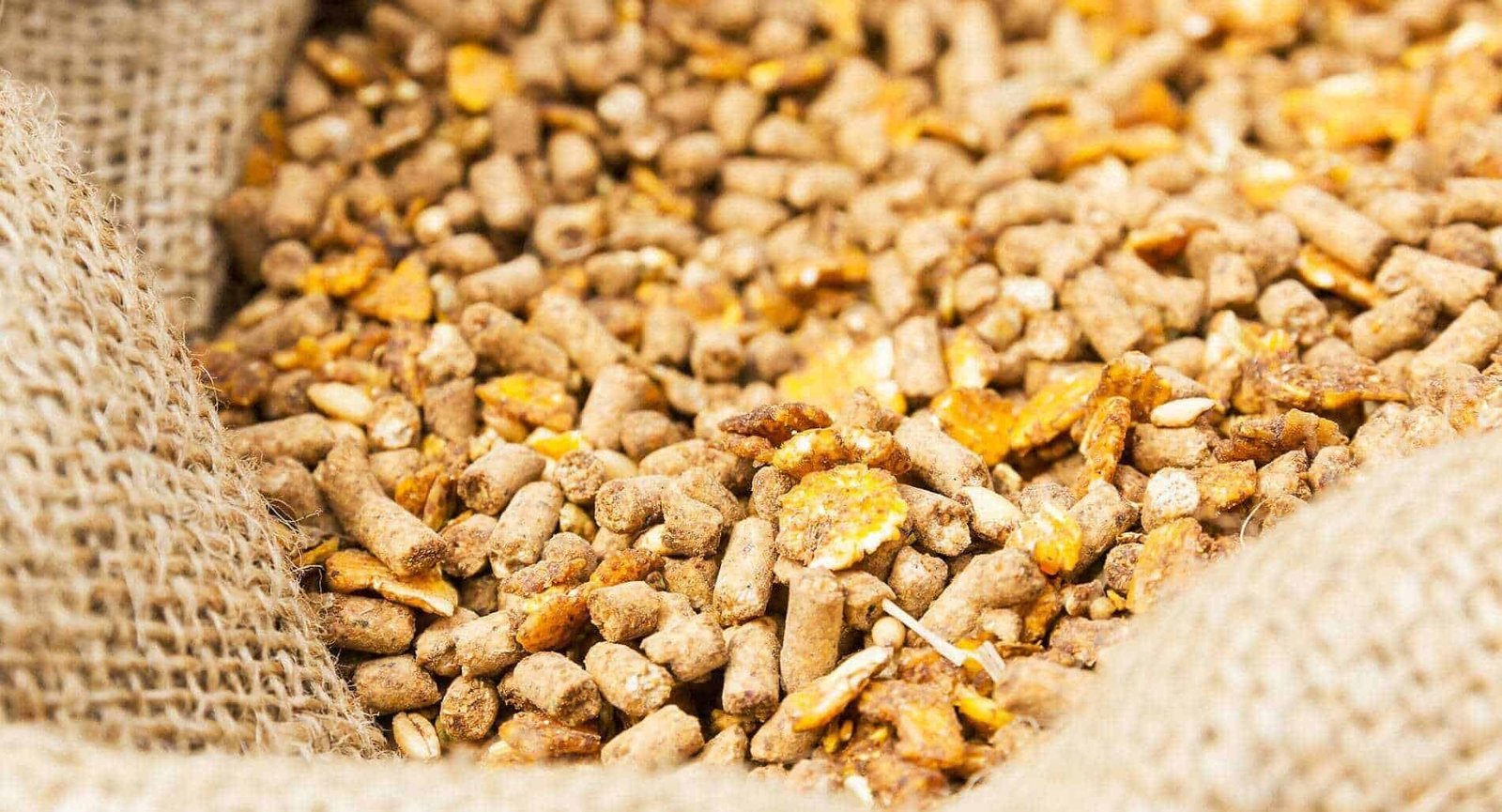
Feed cost reduction requires both supply-side and formulation innovations. This component has five pillars: alternative raw materials, ingredient processing and value addition, precision nutrition and phase feeding, feed manufacturing efficiency, and market/institutional mechanisms.
3.1 Alternative raw materials and ingredient diversification
- Objective: Reduce dependence on maize and soybean meal by sourcing locally available, lower-cost alternatives while preserving nutrient density.
- Potential alternatives:
- Cereals: broken rice, bajra (pearl millet), sorghum;
- Oilseed cakes: mustard cake, de-oiled rice bran (DORB) treated for palatability;
- Legumes and pulses: dehulled pulses, guar meal (with detoxification);
- Agro-industrial byproducts: brewer’s dried grains, distillers dried grains with solubles (DDGS), oilseed meals from castor (detoxified), groundnut cake (graded for aflatoxin);
- Novel ingredients: insect meal (black soldier fly larvae), single-cell proteins, algae (microalgae) for specialty nutrients where economically viable.
- Action points:
- Conduct region-wise ingredient availability mapping and digestible nutrient profiles.
- Implement small-scale trials to validate ingredient inclusion levels and effects on performance and product quality.
- Develop detoxification and processing protocols (e.g., heat, solvent extraction, fermentation) to render certain byproducts usable.
3.2 Ingredient processing and value addition
- Techniques: Fermentation (improves protein digestibility, reduces anti-nutrients), extrusion, pelleting (improves FCR), enzyme treatment (phytase, carbohydrases), heat treatment for toxin reduction.
- Benefits: Improves nutrient bioavailability, reduces need for expensive synthetic additives, and allows inclusion of higher levels of local byproducts.
3.3 Precision nutrition and phase feeding
- Concept: Match nutrient supply to the bird’s physiological stages (starter/grower/finisher; layers’ phase feeding), and use digestible amino acid formulation rather than crude protein to reduce nitrogen excretion and feed cost.
- Tools: Least-cost formulation software using local ingredient price feeds; adoption of digestible amino acid systems (SID amino acids) and net energy models where feasible.
- Additives for efficiency: Enzymes (phytase, xylanase), probiotics/prebiotics, organic acids, and feed flavor enhancers to improve intake and nutrient utilization. Evaluate cost/benefit before adoption.
3.4 Feed manufacturing and logistics optimization
- Scale-appropriate manufacturing: Encourage community feed mills and contract manufacturing to lower logistics costs for smallholders.
- Quality control: Establish standardized quality and adulteration checks (moisture, mycotoxins, nutrient assays), supported by public labs or mobile testing kits.
- Supply contracts and buffer stocking: Price hedging via forward contracts, cooperative bulk purchasing and strategic reserves to smooth price volatility.
3.5 Institutional and market mechanisms
- Public support: Incentives for R&D in alternative ingredient processing; tax relief for local feed mills; subsidies or low-interest loans for feed processing facilities.
- Extension services: Training extension agents and feed formulators at state livestock universities and Krishi Vigyan Kendras (KVKs) to promote alternate ingredient use.
- Quality assurance labelling: Develop a voluntary certification indicating nutrient adequacy and safety to build buyer confidence.
- Component B — Integrated farm practices
Improved on-farm practices enhance resource use efficiency, bird welfare and disease resilience. This component covers farm design and housing, environmental control, nutrition management, water and waste management, and integration with value chains.
4.1 Housing and environmental control
- Design principles: Thermal comfort, ventilation, ease of cleaning, bio secure entry points, and modularity for flock segmentation.
- Climate adaptation: Insulation, evaporative cooling or tunnel ventilation where necessary, and microclimate control for tropical and semi-arid regions.
- Flooring and litter management: Use of deep litter systems with periodic turning, or slatted floors where feasible, coupled with composting of litter to recycle nutrients.
4.2 Stocking density and welfare standards
- Adopt density guidelines that optimize productivity and reduce stress. Incorporate enrichment and lighting programs to improve growth and egg production.
4.3 Feed and water management at farm level
- Feeding management: Proper feeder design to minimize spillage; scheduled feeding to reduce wastage; use of phase-specific rations.
- Water quality: Regular testing, filtration where necessary; water medicators for precise therapeutic delivery when indicated.
4.4 Biosecurity and farm hygiene
- Entry controls: Footbaths, change of clothing, visitor logs.
- Segregation: Separate newborns and growers from older flocks; all-in/all-out system for commercial units.
- Cleaning protocols: Standard operating procedures (SOPs) for cleaning, disinfection, downtime between flocks.
4.5 Waste management, circularity and resource efficiency
- Manure to value: Biogas digesters for energy, composting for manure fertilizer, and palletisation for sale as organic fertilizer.
- Water recycling: Treatment ponds and constructed wetlands for effluent management.
- Energy efficiency: Solar water heating, solar panels for lighting and pump systems.
4.6 Integration with value chains and market linkages
- Collective models: Farmer producer organizations (FPOs), cooperatives, and contract farming to secure inputs and output markets.
- Traceability: Simple recordkeeping and barcoding for larger operations to meet quality and export standards.
- Value addition: On-farm primary processing (e.g., egg grading and packaging), cold-chain linkages for market premium.
- Component C — Disease control, surveillance and antimicrobial stewardship
Disease control is the backbone of productivity and market access. India requires integrated animal health systems combining prevention, surveillance, laboratory diagnostics, outbreak response, and rational antimicrobial use.
5.1 Preventive veterinary measures
- Vaccination programs: Structured vaccination schedules based on risk profiling (ND, IBD, IB, avian influenza where appropriate) and cold chain management. Promote locally validated vaccines and autogenous vaccines when indicated.
- Biosecurity upgrade: Farm-level interventions described above with emphasis on human behaviour change and enforcement.
5.2 Surveillance and early warning
- Passive and active surveillance: Strengthen routine reporting from veterinary field units, strengthen syndromic surveillance, and periodic Sero-surveys.
- Laboratory network: Upgrade regional veterinary diagnostic labs for rapid pathogen identification (molecular diagnostics) and antimicrobial susceptibility testing.
- Data systems: Centralized, real-time data dashboards to detect anomalies and trigger responses.
5.3 Outbreak response and contingency planning
- Preparedness plans: Standardized contingency plans for major notifiable diseases with defined roles, compensation mechanisms, and movement controls.
- Rapid response teams: Trained multi-disciplinary teams for ring vaccination, culling (where needed), decontamination, and communication.
5.4 Antimicrobial stewardship and AMR mitigation
- Guidelines: Implement evidence-based therapeutic guidelines; restrict growth-promoter antibiotics; encourage prophylaxis only under veterinary prescription.
- Monitoring: Track antimicrobial sales and farm-level use; integrate AMR testing into surveillance.
- Alternatives: Encourage vaccines, improved biosecurity, probiotics, competitive exclusion products as alternatives to routine antibiotic use.
5.5 Human health interface and One Health
- Cross-sector coordination: Strengthen coordination with public health for zoonotic disease surveillance (influenza strains, salmonella, campylobacter).
- Worker safety: Provide PPE, training, and occupational health measures to farm workers to limit zoonotic risks and assist early detection.
- Enablers—Policy, finance, capacity and research
For the framework to be implemented at scale, specific enabling actions are required.
6.1 Policy and regulatory interventions
- Feed regulation modernization: Facilitate registration and safe use of novel feed ingredients and additives; transparent standards for mycotoxin limits and ingredient claims.
- Incentives: Tax incentives or capital subsidies for processing units, modular housing upgrades, solar installations and waste-to-energy projects.
- Trade and market rules: Export promotion for processed poultry products and standards harmonization.
6.2 Finance and risk management
- Credit models: Collateral-free micro-credit for smallholders tied to technical assistance; blended finance for medium-scale integrators.
- Insurance: Index-based livestock insurance covering disease outbreaks, extreme weather, and feed price shock mitigation.
- Price risk tools: Commodity exchanges and futures for maize/soy to allow hedging by larger feed mills and integrators.
6.3 Capacity building and extension
- Training modules: Develop standardized curricula on feed formulation, biosecurity, and farm management delivered through universities, KVKs, NGOs, and industry.
- Digital extension: Mobile apps for feed formulation calculators, disease reporting, and access to veterinary telemedicine.
- Demonstration farms and pilots: Regional demonstration units to showcase best practices and cost-benefit evidence.
6.4 Research and innovation
- R&D priorities: Nutrient digestibility of local ingredients, mycotoxin mitigation, insect protein scaling, vaccine development for local pathogen variants, and socio-economic studies on adoption constraints.
- Public–private partnerships (PPP): Incentivize industry collaboration with research institutes for translational R&D.
- Implementation roadmap and monitoring
7.1 Phased implementation
- Phase 1 (0–12 months): Baseline assessments—ingredient mapping, hotspot identification for disease and feed insecurity; pilot projects in diverse agro-ecologies.
- Phase 2 (12–36 months): Scale up successful feed formulations and farm models; roll out vaccination and surveillance strengthening; create market linkages and finance mechanisms.
- Phase 3 (36–60 months): Institutionalize best practices, expand laboratory networks, integrate AMR surveillance, and evaluate socio-economic impacts.
7.2 Monitoring and evaluation (M&E)
- Key performance indicators (KPIs): Feed cost/kg live weight, FCR, mortality rate, egg production per hen, antimicrobial usage metrics, incidence of notifiable diseases, adoption rates of feed alternatives and biosecurity measures.
- Data collection: Periodic farm surveys, veterinary reporting, feed mill QC reports and market price monitoring.
- Learning loops: Quarterly reviews to refine formulations, vaccine schedules, and extension materials.
- Case scenarios—hypothetical illustrations
8.1 Smallholder cluster in semi-arid region
A group of 100 smallholders forms an FPO and establishes a community feed mill that processes millet, treated DORB and mustard cake into a cost-optimized grower mash. With enzyme inclusion and pelleting, FCR improves by 8% and feed cost per kg reduces by 20%. Litter composting and a communal biogas plant provide cooking fuel, while a coordinated vaccination schedule reduces mortality.
8.2 Medium commercial integrator in humid coastal state
An integrator shifts 15% soybean inclusion to defatted insect meal produced from local organic waste, improves housing ventilation, and adopts phase feeding. Laboratory surveillance detects low-level ND seroconversion prompting booster vaccination — outbreak averted. AMU decreases by 35% through improved biosecurity and targeted therapeutics.
- Risks, barriers and mitigation
9.1 Barriers
- Acceptability and perception: Farmers may distrust novel ingredients or changes in practice.
- Quality control challenges: Upgrading labs and ensuring consistent feed quality is resource-intensive.
- Market volatility: Persistent price shocks in staple cereals could undercut gains.
- Regulatory bottlenecks: Slow approval for novel feed ingredients or vaccines.
9.2 Mitigation strategies
- Behavioural change programs: Demonstration plots, farmer field schools and financial incentives for early adopters.
- Public lab network: Invest in regional diagnostic and feed testing centres and mobile kits.
- Risk pooling: Promote cooperatives and insurance to buffer price volatility.
- Regulatory fast tracks: Time-bound pilot approvals for novel inputs with post-market surveillance.
- Policy recommendations
- National feed strategy: Develop a national feed security roadmap mapping alternate ingredient potential, processing infrastructure and quality assurance.
- Incentivize decentralized feed mills: Subsidies or low-interest loans for community mills and pelletizers.
- Strengthen veterinary extension and diagnostics: Expand lab capacities and integrate digital disease reporting.
- AMR action plan enforcement: Implement stewardship in poultry with monitoring and enforceable guidelines on growth promoters.
- Support R&D: Funding for translational research on insect protein scaling, fermentation of agro-byproducts and vaccine innovation.
- Market facilitation: Support formation of FPOs, cold-chain infrastructure and grade-and-pack standards for eggs and meat.
- Conclusion
India has the opportunity to transform its poultry sector into a more productive, resilient and sustainable industry by adopting a deliberately integrated strategy that targets the three interdependent levers: cost-effective feed formulations, integrated farm management, and robust disease control systems. Economic gains from reduced feed costs and improved productivity, combined with better disease outcomes and lower antimicrobial reliance, will strengthen farmer livelihoods and national food security. Success depends on multi-stakeholder collaboration, regionally adapted interventions, and sustained public investment in research, capacity building and regulatory modernization. The proposed strategic framework provides a pragmatic pathway for policy makers, researchers, industry and producers to operationalize this transformation.
by Prof (Dr) P K Shukla, Department of Poultry Science, College of Veterinary Science and Animal Husbandry, Mathura