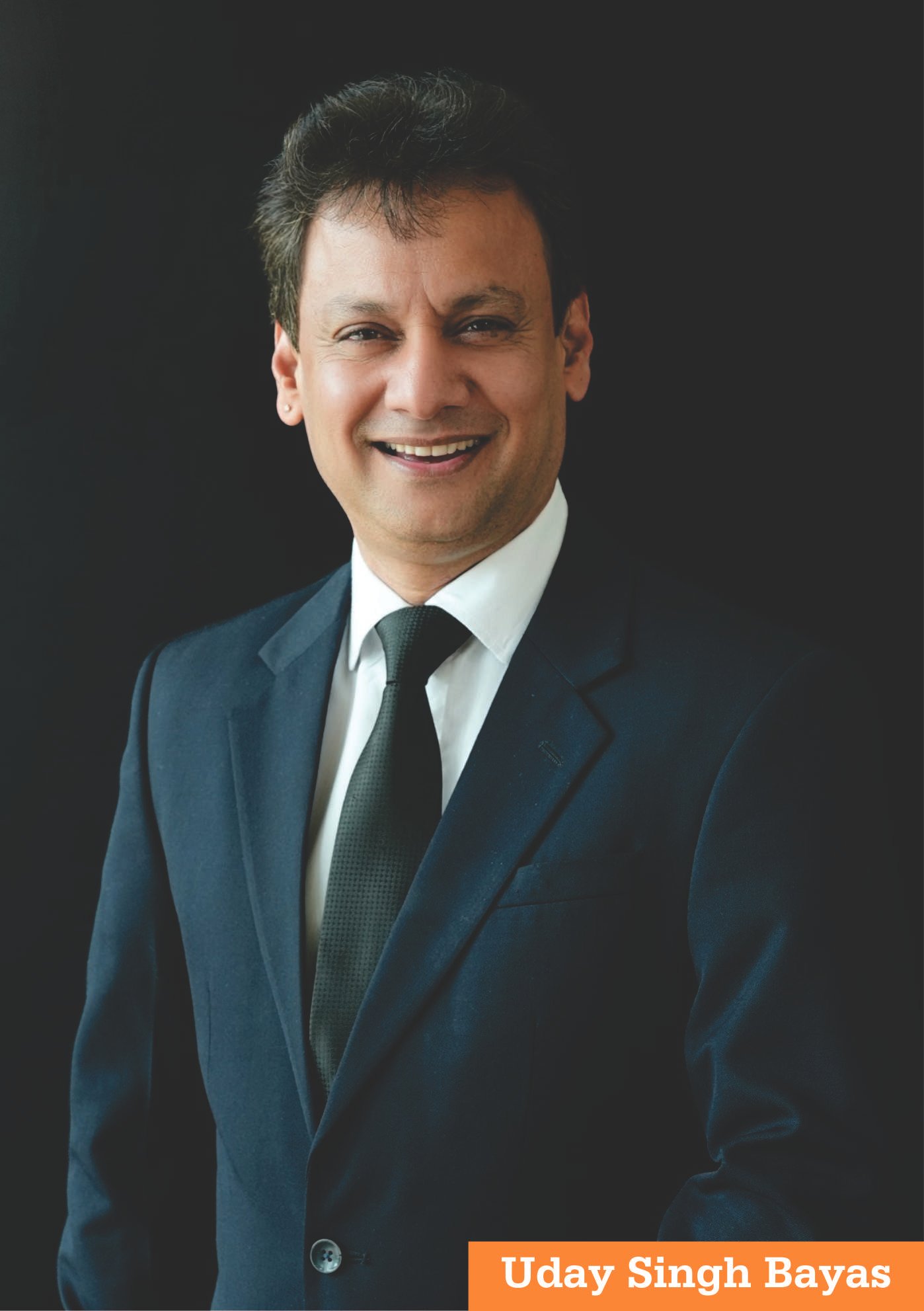
In an exclusive interaction with Think Grain Think Feed, Uday Singh Bayas, President, IPEMA–Poultry India, shares his insights on the growth and global positioning of India’s poultry sector, the vision behind the 18th Poultry India Expo 2026, and the role of Poultry Knowledge Day in driving innovation and productivity. He also discusses key industry challenges, including feed raw material price volatility, export opportunities, policy engagement and the need for stronger industry–academia collaboration to build a competitive and sustainable poultry ecosystem.
Poultry India has evolved into a prominent platform for the poultry industry since its inception in 2007. What is the vision for the 18th edition, and what key developments set this year’s event apart?
The vision for the 18th Poultry India Expo 2026 is to further establish it as the world’s largest international poultry exhibition under the theme “One Nation, One Expo”—a unified platform bringing the entire global poultry value chain to India.
Since its inception in 2007, the event has grown from a modest, single-hall exhibition into a major international gathering, alongside established global platforms such as IPPE Atlanta and EuroTier.
Building on last year’s record participation of over 500 exhibitors and 51,251 industry visitors across 35,000 sq. metres in seven air-conditioned halls, this year we are targeting 550+ exhibitors and more than 51,000 industry professionals from over 125 countries.
The 2026 edition will place greater emphasis on innovation, collaboration and knowledge sharing, supported by stronger international participation through partnerships with more than 20 overseas poultry associations and 40+ national bodies. Beyond scale, our focus is on creating meaningful business opportunities, encouraging technology adoption and facilitating industry dialogue in line with India’s poultry growth story and the vision of Viksit Bharat.
Poultry Knowledge Day is an integral part of the event. What are the key themes and technical topics being covered this year, and how will they help the industry address emerging challenges and improve productivity?
Scheduled for 24 November 2026 at HICC/Novotel, Hitech City, Hyderabad, Poultry Knowledge Day is IPEMA’s flagship technical conference, expected to bring together over 2,000 delegates.
With more than 10 national and international speakers, the conference will cover key areas including poultry health and biosecurity, precision nutrition, feed efficiency, farm automation, smart farming, sustainability and technology adoption.
The discussions will address some of the industry’s pressing challenges, including disease threats, rising input costs and resource optimisation. By bringing scientific research and global best practices closer to farmers and industry professionals, the sessions aim to offer practical insights that can be applied at the farm level.
The larger objective is to encourage knowledge exchange among scientists, veterinarians, farmers and industry stakeholders, helping improve productivity, strengthen animal health, reduce losses and support sustainable growth across the poultry value chain.
Volatility in feed raw material prices remains a major concern for India’s poultry sector. How can Poultry India Expo facilitate dialogue, knowledge sharing and technology adoption to help stakeholders manage feed costs and improve production efficiency?
Feed raw material price volatility, particularly concerns around maize cost and availability, continues to be a major challenge for India’s poultry sector. Poultry India Expo provides an important platform for farmers, feed manufacturers, nutritionists, researchers, equipment suppliers and policymakers to exchange ideas and explore practical solutions.
Poultry Knowledge Day will address areas such as precision nutrition, feed planning, enzyme and feed additive technologies, and feed optimisation. Meanwhile, the exhibition will showcase advanced feed milling equipment, automation and precision feeding solutions that can help improve feed conversion and minimise wastage.
IPEMA also works throughout the year to bring industry concerns into wider discussions. Through its engagement with the CII National Committee on Animal Agriculture, government bodies and industry associations, it contributes to dialogue on issues affecting the poultry value chain, including maize availability, feed prices and production efficiency.
Technical seminars and platforms such as VETCONVERGENCE 2026, which brought together over 30 Vice-Chancellors and scientific and industry leaders, further strengthen knowledge sharing and collaboration between industry and academia.
With global demand for poultry products growing, what opportunities does India have to strengthen its export presence? What are the key challenges that need to be addressed in terms of disease management, food safety, infrastructure and international market access?
India’s poultry sector is growing steadily, supported by rising domestic demand, increasing purchasing power and greater awareness of protein-rich nutrition. India is the world’s second-largest egg producer, with production increasing from 142.77 billion eggs in 2023–24 to 149.11 billion in 2024–25. It also ranks among the top four broiler-producing nations.
With chicken meat production growing at 8–10% and egg production at 6–8% annually, India has considerable potential to strengthen its position in international markets. Growing demand from Gulf countries such as the UAE and Oman, along with opportunities in egg products, offers scope for further export expansion. Recent export growth also reflects the sector’s ability to serve international markets.
However, realising this potential will require sustained efforts in disease management and farm biosecurity, food safety, processing standards, modern infrastructure and cold-chain logistics. Compliance with international sanitary and phytosanitary (SPS) requirements, along with improved cost competitiveness and market access, will be equally important.
Poultry India Expo 2026 provides a platform to facilitate global partnerships and exchange of knowledge and technology, helping the industry address these challenges and strengthen India’s export readiness.
How is IPEMA engaging with government bodies, industry associations and research institutions to address key industry concerns, promote technological advancement and support the sustainable growth of India’s poultry sector?
IPEMA–Poultry India actively engages with government bodies, industry associations and research institutions to address key concerns and support the long-term development of India’s poultry sector. Our engagement includes the Department of Animal Husbandry & Dairying, state governments and national platforms such as the National Livestock Mission. IPEMA is also part of the CII National Committee on Animal Agriculture, collaborating on the initiative “Unlocking the Potential of India’s Poultry Sector.”
We work closely with over 40 national poultry associations, including NECC, TPF, PFI and IPSA, more than 20 international poultry associations, and leading research institutions such as ICAR. Our engagements include interactions with Telangana State Animal Husbandry Minister Shri Vakiti Srihari, participation in the National Dialogue on Poultry Meat Exports at ICAR–NMRI, and representation at the Telangana Rising 2047 Summit.
These platforms help bring industry concerns relating to maize availability, feed costs, marketing, education, antimicrobial resistance (AMR) and export readiness into policy discussions, including engagements with the governments of Telangana and Uttar Pradesh.
Industry–academia collaboration is another important focus. Initiatives such as the Vice-Chancellors’ Conclave in Lonavala, the AMR Stewardship Drive at ICAR–NIVEDI and IPSACON 2025 have created opportunities for scientific exchange. VETCONVERGENCE 2026, the second Vice-Chancellors’ Conclave held in Hyderabad, brought together over 30 Vice-Chancellors and leaders from science and industry to strengthen this collaboration.
Through policy advocacy, technical dialogue, research partnerships and industry alliances, IPEMA aims to encourage technological advancement, strengthen biosecurity, promote sustainability and support farmers, nutritional security and rural livelihoods.
What message would you like to share with poultry farmers, feed manufacturers, equipment suppliers and other industry stakeholders attending Poultry India Expo 2026? What opportunities should they look forward to at this year’s event?
I warmly invite poultry farmers, feed manufacturers, equipment suppliers, integrators, veterinarians, researchers and all industry stakeholders to join us at the 18th Poultry India Expo 2026 at HITEX Exhibition Centre, Hyderabad.
Under the banner “One Nation, One Expo,” the event will bring together the global poultry community to explore new technologies, automation, nutritional innovations, biosecurity solutions and sustainable practices. It will also provide valuable opportunities to interact with industry leaders and build business connections with participants from over 125 countries.
Aligned with the Hon’ble Prime Minister Narendra Modi’s vision of Atmanirbhar Bharat, Viksit Bharat and Vision 2047, we believe that a strong, self-reliant and technologically advanced poultry ecosystem is essential for India’s development.
I encourage all stakeholders to make the most of this platform to exchange ideas, explore new opportunities and contribute to a more productive and competitive poultry sector.
I look forward to welcoming you all to Hyderabad!