As antimicrobial resistance (AMR) emerges as one of the most pressing challenges to animal and public health, India’s dairy sector is increasingly adopting preventive, science-based approaches to ensure responsible antibiotic use. The National Dairy Development Board (NDDB) has been at the forefront of this transformation through its One Health framework, promotion of Ethno-Veterinary Medicine (EVM), digital herd health management, and farmer-centric capacity building initiatives.
In this exclusive e-interaction, Dr. Meenesh Shah, Chairman, National Dairy Development Board (NDDB), shares insights into India’s progress in antimicrobial stewardship, the measurable impact of NDDB’s initiatives on reducing antibiotic use, the growing role of EVM, and the roadmap for building a healthier, more sustainable dairy sector.
How serious is antimicrobial resistance (AMR) in India’s dairy sector today? How has antibiotic usage changed over the past decade?
AMR is one of the most significant threats to animal health, public health, and food security. In India’s dairy sector, where millions of smallholder farmers depend on livestock, preserving the effectiveness of antibiotics is essential.
Antibiotics remain indispensable for treating bacterial infections. However, their indiscriminate or preventive use has contributed to the emergence of resistant pathogens. Consequently, dairy health management is increasingly shifting from treatment to prevention through better nutrition, vaccination, biosecurity, hygiene, early diagnosis, and scientifically validated alternatives such as Ethno-Veterinary Medicine (EVM).
Today, antibiotics are viewed not simply as therapeutic tools but as valuable resources that should be used judiciously under veterinary supervision.
In some milk unions where the project has been implemented since 2017–18 and, EVM formulations have been propagated extensively, a reduction of up to around 70% in antibiotic procurement has been observed.
Could you elaborate on NDDB’s overall strategy for reducing antimicrobial use and promoting responsible antibiotic stewardship in dairy systems? How many milk unions, dairy cooperatives, and farmers are currently covered?
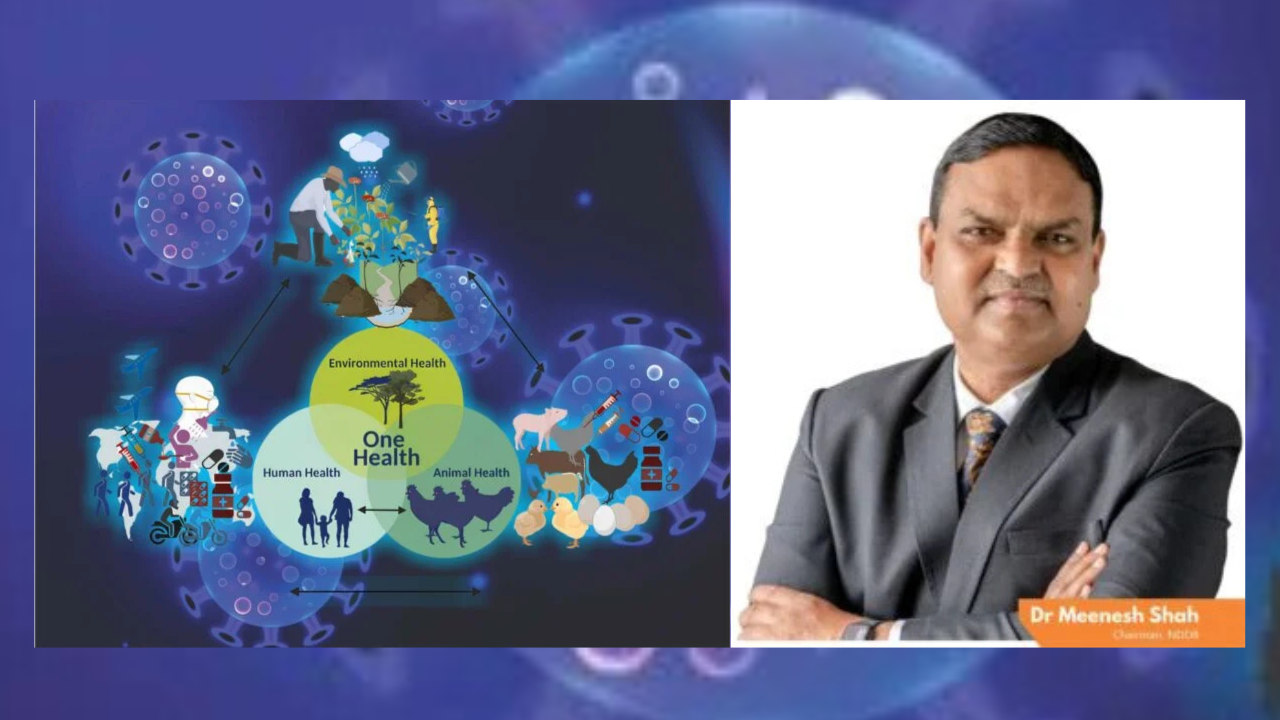
NDDB follows a One Health approach that integrates animal health, human health, and environmental sustainability.
Its strategy focuses on:
The objective is not to eliminate antibiotics but to ensure they are used only when necessary and under veterinary guidance.
This initiative was launched as a pilot in one milk union during 2015-16. Since then, it has expanded significantly and is currently being implemented across 12 milk unions (MUs) and producer companies (PCs) in eight states, covering approximately 1200 villages.
NDDB has been at the forefront of promoting Ethno-Veterinary Medicine (EVM). How does EVM contribute to reducing antibiotic dependence while maintaining animal health and productivity? How many EVM formulations have been scientifically validated and officially recommended?
EVM combines traditional livestock knowledge with scientific validation. NDDB has standardized several formulations for conditions such as mastitis, diarrhoea, indigestion, fever, and reproductive disorders.
These remedies are prepared using locally available medicinal plants and natural ingredients, making them affordable, accessible, and environmentally sustainable. EVM is particularly useful for early-stage and non-specific conditions, helping reduce unnecessary antibiotic use while encouraging timely veterinary consultation whenever required. Rather than replacing modern veterinary medicine, EVM complements it as part of an integrated animal health strategy.
Empirical data from more than 13 lakh cases (which includes over 1 lakh individual animal records) treated by EVM for 30 common ailments in bovines have recorded an overall efficacy of more than 80%. The details of these formulations are freely available on the NDDB Dairy Knowledge Portal and YouTube in 12 vernacular languages including English.
To strengthen the scientific evidence base, NDDB has collaborated with institutions such as St. Thomas College, Palai (Kerala) and the Indian Institute of Science (IISc), Bengaluru, to scientifically validate the ethnoveterinary formulations for the management of mastitis and fever to decipher its molecular mechanisms. The findings on the mastitis formulation have already been published in a peer-reviewed journal, with additional publications in progress. In addition, institutions such as the University of Trans-Disciplinary Health Sciences and Technology (TDU), Bengaluru, and the Tamil Nadu Veterinary and Animal Sciences University (TANUVAS) have also conducted scientific studies on these formulations.
What measurable impact has EVM had on antibiotic consumption, treatment costs, and AMR reduction in milk unions? Could you also shed light on the economics, adoption levels, and efficacy of EVM-based interventions? Has milk yield or animal productivity improved following EVM adoption? If so, could you kindly share the supporting data or figures?
Field implementation of EVM across participating milk unions and producer companies has delivered encouraging results in reducing antibiotic use, lowering treatment costs, and improving animal productivity.
Reduced antibiotic use lowers the selection pressure that drives antimicrobial resistance while also reducing treatment costs. Although the direct impact on AMR requires long-term surveillance, these interventions contribute significantly to antimicrobial stewardship by minimizing unnecessary antibiotic use. NDDB continues to generate scientific evidence to further strengthen the evidence base for EVM.
The impact has also been reflected in animal productivity. In 18,078 individually recorded mastitis cases across participating milk unions and producer companies, animals treated successfully with EVM showed an average increase of 1.27 litres of milk per animal per day following recovery. These data were recorded by project coordinators through NDDB’s online project monitoring portal, providing valuable field evidence of the productivity benefits associated with EVM adoption.
Subclinical mastitis affects an estimated 12–70% of lactating cows, making it one of the largest contributors to antibiotic use in dairy animals. What key trends have emerged from NDDB’s monitoring of mastitis-causing pathogens and antimicrobial resistance patterns? Additionally, what lessons have been learned from NDDB’s mastitis control programmes?
Mastitis remains one of the most economically important diseases in dairy animals and a major driver of antibiotic use. NDDB’s surveillance shows that environmental and opportunistic Gram-positive bacteria—particularly non-aureus staphylococci, streptococci, and enterococci—are the predominant pathogens. Staphylococcus aureus, Streptococcus agalactiae, and Escherichia coli have also been isolated, with S. aureus occurring more frequently than E. coli, although environmental pathogens continue to dominate.
AMR surveillance indicates resistance to commonly used antibiotics, including ampicillin and amoxicillin, highlighting the need for a “test-and-treat” approach rather than indiscriminate antibiotic use. At the same time, many isolates remain susceptible to several therapeutic options.
Our mastitis control programmes have shown that prevention—through good milking hygiene, clean housing, dry cow management, proper nutrition, and regular screening—is more effective and economical than treatment. Equally important are farmer awareness, capacity building, and preventive healthcare. NDDB has also demonstrated that Ethno-Veterinary Medicine (EVM) can serve as an effective first-line intervention in many cases, helping reduce unnecessary antibiotic use.
Could you compare the economics of Ethno-Veterinary Medicine (EVM) with conventional antibiotic-based treatment? How do the two approaches differ in terms of treatment costs, recovery time, milk production losses, and overall cost-effectiveness for dairy farmers?
EVM offers an economically viable alternative to conventional antibiotic therapy for many common livestock ailments, particularly when used for appropriate indications and supported by good management practices. Besides reducing treatment costs, EVM minimizes production losses and supports sustainable dairy farming by reducing reliance on antibiotics.
Compared with conventional antibiotic-based treatment, EVM offers several advantages:
- Easy to prepare: EVM formulations are prepared using ingredients that are commonly available at the household level, providing farmers with an immediate treatment option, particularly in remote areas with limited veterinary coverage.
- No milk withdrawal losses: Unlike antibiotics, validated EVM treatments generally do not require milk withdrawal period, allowing farmers to continue marketing milk without income loss. Although, in clinical mastitis cases, abnormal quality milk needs to be discarded.
- Comparable recovery in suitable cases: For mastitis and several other common bovine ailments, EVM can achieve recovery rates comparable to conventional treatment when administered appropriately.
- Reduce milk production losses and improved milk quality: By promoting faster restoration of udder health and enhancing the animal’s natural immunity, EVM helps minimize milk production losses. Its judicious use, with antibiotics reserved only when absolutely necessary, also reduces the risk of antibiotic residues in milk, thereby improving milk quality and safety.
- Greater overall cost-effectiveness: Lower treatment costs, reduced milk wastage, decreased antibiotic use, and improved herd health make EVM a highly cost-effective approach for dairy farmers while supporting antimicrobial stewardship and One Health objectives. For example, Nair et al. (2022) reported that the average treatment cost for mastitis was reduced from INR 3,000 to INR 120 per episode, representing a 96% cost saving. Similarly, treatment costs were reduced by 91.6% for maggot wounds, 68.9% for bloat and indigestion, 86.0% for repeat breeding, 42.9% for cowpox, 48.2% for foot-and-mouth disease, and 66.8% for diarrhoea, demonstrating the substantial economic benefits of validated ethno-veterinary practices over conventional allopathic treatment.
The Dairy Integrated Safety and Health Action (DISHA) Project is a significant initiative under NDDB’s One Health framework. What are its key objectives, and how is it expected to strengthen AMR mitigation in the dairy sector? Could you also share the current status, key findings, and learnings from the pilot projects implemented so far? What is the roadmap for scaling the programme nationally?
The Dairy Integrated Safety and Health Action (DISHA) Project is NDDB’s flagship One Health initiative for improving food safety, animal health, environmental sustainability, and antimicrobial stewardship.
Pilot projects have demonstrated that integrated interventions—including hygiene, vaccination, biosecurity, farmer awareness, and surveillance—can improve animal health while reducing dependence on antimicrobials.
The learnings are now helping develop scalable models for wider implementation across dairy cooperatives. It would also support the Government of India to take informed policy decisions.
How can digital platforms support AMR mitigation?
Digital technologies are transforming livestock management by making scientific information accessible even to smallholder farmers.
INAPH was developed as a comprehensive digital ecosystem for animal identification, breeding, health management, and productivity enhancement, and its framework now underpins the Government of India’s Bharat Pashudhan platform. Through the 1962 Farmer App, farmers can securely access information related to their animals, including health, breeding, and productivity records.
The availability of real-time data supports early disease detection, targeted interventions, efficient health monitoring, informed veterinary decisions, evidence-based treatment, and reduced antibiotic use. Going forward, the integration of artificial intelligence, predictive analytics, and genomic tools will enhance disease forecasting and herd management, enabling more resilient and sustainable dairy systems, particularly for India’s millions of smallholder producers.
What policy interventions do you believe are necessary to promote responsible antimicrobial use in livestock production?
Effective AMR mitigation requires coordinated action under the One Health framework.
Dairy cooperatives, producer companies, and private dairy enterprises have an important role to play in accelerating adoption through farmer outreach, awareness programmes, capacity building, and field-level monitoring.
Your message for stakeholders?
India’s dairy sector has grown through the efforts of millions of farmers. Ensuring its long-term sustainability requires preserving the effectiveness of antibiotics while strengthening preventive animal healthcare. Prevention must take precedence over cure, and innovation must go hand in hand with traditional wisdom.
Responsible antimicrobial use is a shared responsibility of farmers, veterinarians, researchers, policymakers, and the dairy industry. By combining One Health principles, digital technologies, preventive healthcare, and scientifically validated traditional practices, India can build a more resilient dairy sector while contributing to the global fight against antimicrobial resistance.
Acknowledgement: We sincerely thank Dr. A. V. Harikumar, General Manager (Animal Health), National Dairy Development Board (NDDB) for coordinating and facilitating this interview.