


Page 11 - Think Grain Thin Feed Oct 2025
P. 11
www.benisonmedia.com  ARTICLE  Think Grain Think Feed - Volume 11 | Issue 12 | Oct 2025  Think Grain Think Feed - Volume 11 | Issue 12 | Oct 2025  www.benisonmedia.com


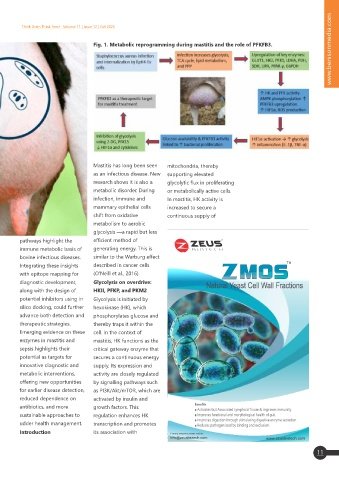
                                  Fig. 1. Metabolic reprogramming during mastitis and the role of PFKFB3.
 Image Source: Laboratorios LABIS


                                  Mastitis has long been seen   mitochondria, thereby
                                  as an infectious disease. New   supporting elevated
                                  research shows it is also a   glycolytic flux in proliferating
                                  metabolic disorder. During   or metabolically active cells.
                                  infection, immune and     In mastitis, HK activity is
                                  mammary epithelial cells   increased to secure a
                                  shift from oxidative      continuous supply of
                                  metabolism to aerobic
                                  glycolysis —a rapid but less
 Mastitis and Metabolism:   pathways highlight the   efficient method of
                                  generating energy. This is
        immune metabolic basis of
 The Overlooked Connection  bovine infectious diseases.   similar to the Warburg effect
                                  described in cancer cells
        Integrating these insights
                                  (O'Neill et al., 2016).
        with epitope mapping for
 “During mastitis, immune cells accelerate glycolysis to support   diagnostic development,   Glycolysis on overdrive:
 defence, while invading bacteria exploit host metabolism to   along with the design of   HKII, PFKP, and PKM2
 drive their growth.”  potential inhibitors using in   Glycolysis is initiated by
        silico docking, could further   hexokinase (HK), which
 by Sundram Singh and Swati Sangolgi, Master's (Animal Biochemistry), ICAR-NDRI, Karnal
        advance both detection and   phosphorylates glucose and
        therapeutic strategies.   thereby traps it within the
 Abstract  through HIF-1α–mediated cytokine
        Emerging evidence on these   cell. In the context of
 Mastitis, one of the costliest diseases   production. At the same time,
        enzymes in mastitis and   mastitis, HK functions as the
 in dairy herds, is increasingly   disruption of the tricarboxylic acid
        sepsis highlights their   critical gateway enzyme that
 recognized not only as an infectious   (TCA) cycle leads to the accumulation
        potential as targets for   secures a continuous energy
 disorder but also as a metabolic one.   of succinate—a pro-inflammatory
        innovative diagnostic and   supply. Its expression and
 During infection, mammary and   metabolite—and itaconate, which
        metabolic interventions,   activity are closely regulated
 immune cells undergo profound   exerts antibacterial and anti-
        offering new opportunities   by signalling pathways such
 metabolic reprogramming that fuels   inflammatory effects.
        for earlier disease detection,   as PI3K/Akt/mTOR, which are
 both defence and inflammation.   The pentose phosphate pathway (PPP)
        reduced dependence on     activated by insulin and
 Glycolysis is rapidly upregulated,   is also redirected to produce NADPH,
        antibiotics, and more     growth factors. This
 driven by key enzymes such as   sustaining reactive oxygen species
        sustainable approaches to   regulation enhances HK
 hexokinase (HK), phosphofructokinase   (ROS) generation that contributes to
        udder health management.  transcription and promotes
 (PFK), and pyruvate kinase (PK), which   pathogen clearance but also causes
        Introduction              its association with
 amplify inflammatory signalling   tissue damage. These interconnected
 10                                                                                                             11

